
Great pet content earns attention; smart internal links earn revenue. If your blog, hubs, and product pages do not guide visitors toward the next best action, you leave add-to-cart and booking opportunities untapped.
This article focuses on conversion‑oriented internal linking patterns for pet blogs, hubs, and product or service pages. You will learn where to place contextual CTAs, how to structure related content, and which schema‑aware blocks reliably move visitors from information to action.
Internal links do more than connect pages; they transmit context. When links are placed inside problem‑solving paragraphs, they signal relevance and shorten the path to products or services. Research in SEO implementation notes that internal links connect related content, increase page visibility, and strengthen topical cohesion, which supports rankings and discovery[1]. For strategic grounding, align link patterns with the architecture recommended in Pet SEO: The Complete Guide to AI-Powered Growth for Pet Brands, Retailers, and Services.
Intent mapping turns scattered links into purposeful routes. Identify informational, commercial, and transactional queries, then match each to products, categories, or services. Movement research shows choices are shaped by internal state and environmental cues; navigation is likewise guided by context and need clarity[2]. Use this lens to ensure every paragraph proposes a logical “next step” that aligns with user intent.
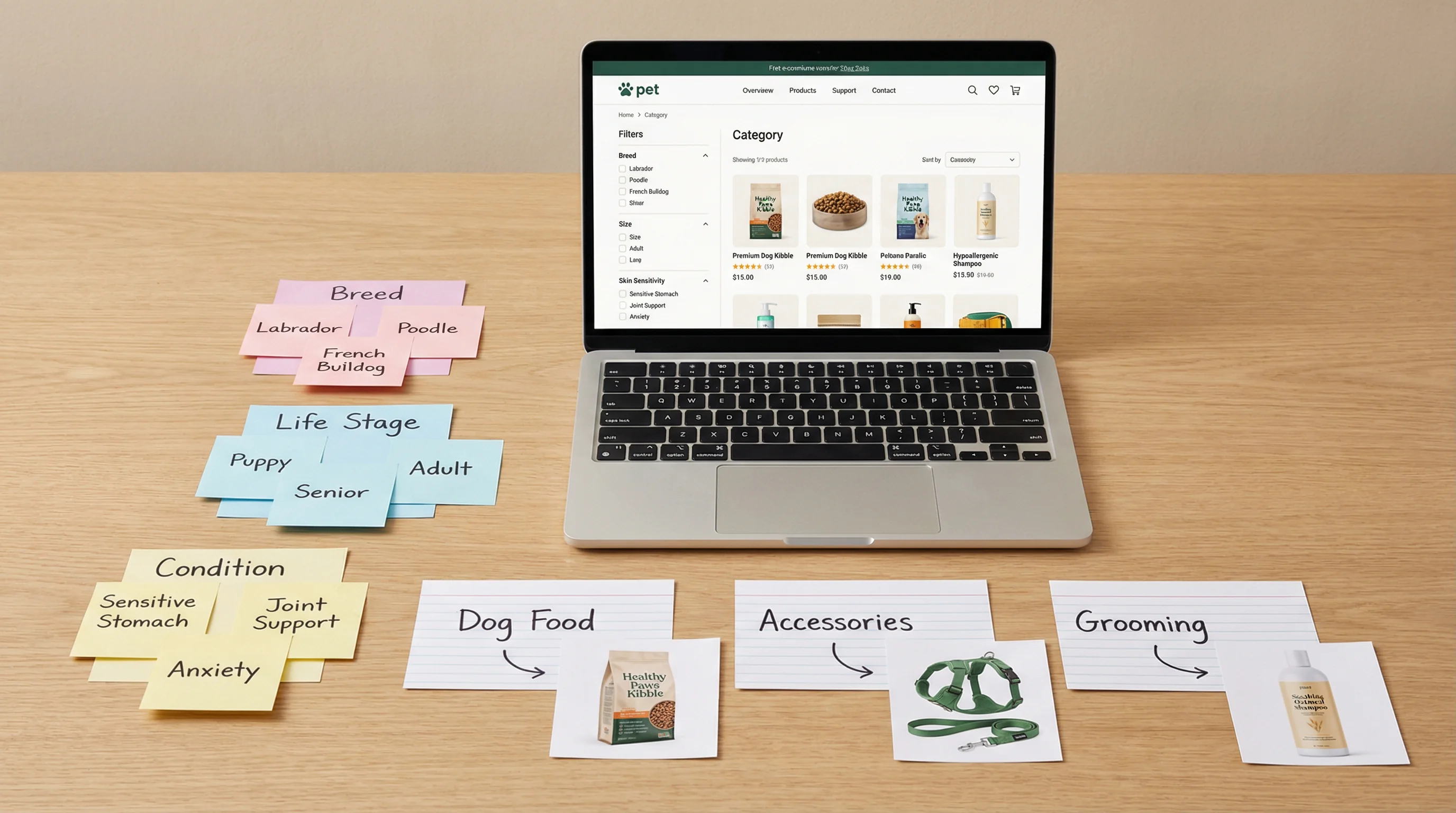
Cluster your content by breed, life stage, and condition to mirror how shoppers filter choices. These clusters enable contextual linking for pet blogs, surface relevant SKUs or services, and support pet eCommerce internal links that move from education to purchase without friction.
Adopt programmatic hub and spoke structures to templatize links from spokes (blogs) to hubs (categories) and high‑intent targets (products/services). Programmatic guidance across a system improves efficiency and consistency—principles echoed in “guided linking” models that optimize connections across components[3].
Retailers benefit from deep product hierarchies tied to attributes; service providers benefit from geographic breadth and procedure clarity. Map both with a capped click depth (ideally three or fewer) and reinforce paths with breadcrumbs and cross‑links.
Link directly from benefit statements to matching SKUs or services. Example: from “reduce shedding in 30 days” to a compatible grooming tool or package. Keep anchors descriptive, avoid generic “here,” and place the first contextual link within the opening 400 words.
Embed inline cards where readers are evaluating options. Include:
Inline cards routinely outperform sidebars for pet product page SEO because they match immediate context and intent.
Use a “Still deciding?” block with 2–3 focused articles that resolve objections (size, safety, ingredients, recovery time). Then present a short list of top converting products/services for the topic to simplify final selection.
Mark up product cards with Product, Offer, and AggregateRating to reinforce relevance and eligibility for rich results. Pair schema with precise anchors to boost pet eCommerce internal links. For platform implementation specifics, see technical setup, speed, and schema checklists.
Service snippets should carry LocalBusiness and Service markup, including area served, opening hours, and service descriptions. Link these snippets from blogs and hubs to raise discovery, strengthen entity signals, and support pet services conversion optimization.
Use BreadcrumbList across blog, hub, category, product, and service templates. Add an FAQ at the bottom to address objections and deepen topical relevance. Clear routing improves connection success in complex networks, a principle echoed in path‑oriented systems research[4].
Open with one contextual link and one inline product or service card above the fold. Add a mid‑article card if context warrants. Conclude with a concise FAQ. For teams scaling product‑linked content, consider Start Now to generate SEO‑optimized, research‑backed posts that respect intent flow.
Provide clear filters by breed, life stage, size, or condition. Surface a dynamic “Top converting products/services for this topic” block that pulls items with the highest assisted conversions from linked posts. Rotate seasonal landing pages (e.g., winter paw care) with current availability.
Add “Learn more” links to 2–3 educational articles addressing objections. Provide structured specs, reviews, and before‑after content. For service pages, include location modules, availability, and a short form next to FAQs to reduce drop‑off.
Design each template to answer one question: “What is the next best action right here?” Then link only to that action and the minimum supporting resources required.
Use anchors that mirror the shopper’s mental model: “grain‑free salmon kibble for senior dogs,” not “best food.” Vary phrasing across pages to avoid sitewide repetition. Keep intent primary; brand modifiers come second.
Place the first contextual link and/or card above the fold, then test mid‑article placements. Monitor assisted conversions and scroll depth. Early links capture ready buyers; later links help evaluators complete research and commit.
PlacementTypical ImpactAbove‑the‑fold contextual linkHigh CTR, strong assisted add‑to‑cart/bookingsMid‑article inline cardBalanced engagement and conversion for evaluatorsSidebar widgetLower engagement; suitable as supplemental navigation
Establish a baseline for assisted add‑to‑cart, service inquiries, and session depth from blog entries. Then measure internal link impact with conversion KPIs by template. Systems research suggests that guided connections across components reduce overhead and improve outcomes—organize tests accordingly[3].
Test cohorts by traffic source and intent. Run A/B template trials for four weeks minimum; segment outcomes by seasonality. Research shows path selection depends on context; your cohorts should reflect that variability in decision making[2].
Limit duplicate links to the same target on a page. Prune stale SKUs and retired services. Maintain tight crawl paths with BreadcrumbList and consistent canonical rules to keep bots focused on high‑value targets[1].
Automate link placement by taxonomy: when a new SKU maps to “sensitive skin,” inject it into relevant blogs and hubs. Auto‑rotate seasonal modules and “Top converting” lists based on assisted conversions and inventory status.
From “how to choose harness size” blogs, link to size‑filtered category pages, then to two bestsellers via inline cards. Add a seasonal landing page (e.g., travel safety) linking to curated accessories with inventory‑aware badges.
From symptom and recovery articles, link to procedure pages marked up with Service and FAQ, then to booking. Reinforce locality with LocalBusiness metadata and a location selector to streamline availability and contact steps.
From behavior guides, link to program overviews and local schedules. Inline service snippets should include duration, format, and rating. Keep “next step” blocks limited to enrollment or inquiry to protect conversion focus.

Prioritize 3–6 highly relevant links: 1–2 to products or services aligned with the query, 1–2 to supporting articles, and 1 to a hub or category. Quality and intent match matter more than count.
Use descriptive, benefit‑led anchors that match search intent, such as “grain‑free salmon kibble for senior dogs” rather than generic labels. Avoid repeated exact‑match anchors sitewide.
Inline product cards near relevant paragraphs typically outperform sidebars for engagement and add‑to‑cart. Place the first card above the fold and repeat once mid‑article if context fits.
Combine LocalBusiness, Service, and FAQ with BreadcrumbList. Mark up procedure pages and link them from related blogs to reinforce relevance and improve discovery.
Track assisted add‑to‑cart, service inquiry clicks, and session depth from linked blog entries. Run template‑level A/B tests and monitor changes in ranked keywords and click‑through on linked targets.
Conversion‑oriented internal linking is about momentum: each sentence, card, and schema block signals the next best step. By aligning anchors to intent, deploying schema‑aware blocks, and testing placements, pet brands convert education into measurable outcomes. Pair purposeful pathways with rigorous measurement and governance. The result is a resilient framework for pet product page SEO and pet services conversion optimization—an experience where visitors never wonder “what now?” because the right link appears exactly when they need it.