
Great pet content should answer a question and quietly open a path to purchase. The most effective posts educate first, then guide readers to relevant categories, products, or service pages.
This guide shows how to structure blog posts that naturally move from topic to offer using offer mapping, comparison modules, and internal linking patterns proven to lift add-to-cart and booking conversions.
Product-led pet content connects advice to a curated set of offers without interrupting the reading experience. It uses clear pathways—topic to category to product or service tier—ensuring discovery, fit, and frictionless action. For fundamentals, see our comprehensive pet content writing guide.
Every post targets an intent: informational, commercial, or transactional. Map intent to the next step—assortment exploration for categories, feature proof for product detail pages, or scheduling for services—to align content with purchase momentum.
Internal links act as micro-CTAs. Contextual anchors, comparison modules, and “what’s next” blocks gently direct readers to relevant choices, lifting clickthrough, consideration depth, and downstream conversions in pet ecommerce SEO workflows.
Next steps: Evaluate how your advice pages point to new arrivals that match current demand.
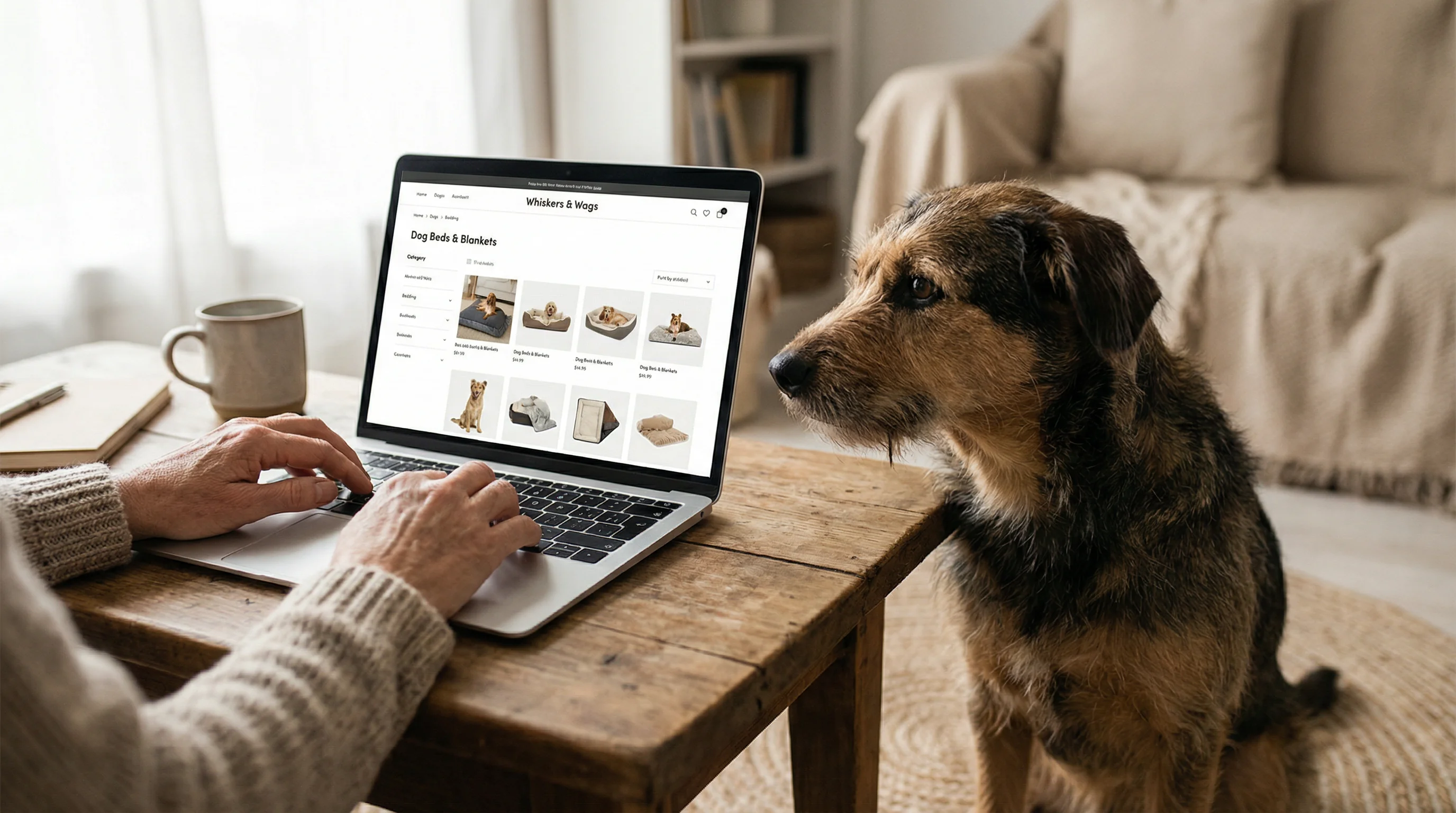
Start with a live catalog audit. Group SKUs by categories and attributes, and list services with tiers and add-ons. Identify bundles that solve a problem end-to-end, then prioritize stocked, margin-positive items ready for promotion.
Build matrices aligning modifiers—breed size, life stage, coat type, sensitivities—to queries and offers. This narrows comparison scope and clarifies which category or service tier should appear in each section of a post.
For each topic, assign the primary category, two to three products, and one service (if applicable). Predefine anchor text variants, target URL patterns, and schema you will apply in each content block for consistency and scale.
Let demand shape coverage. Use keyword research to inform product-led topics that match audience queries to your assortment depth. Focus on intent clarity, seasonality, and profitable SKU clusters for sustainable growth.
For teams streamlining this mapping, consider using Start Now for SEO‑optimized, research‑backed, product‑linked drafts that accelerate production.
Next steps: Map your next article to joint support supplements where you maintain strong stock and reviews.
Use side-by-side comparison tables to reduce cognitive load. Feature 3–4 options max, with differentiators like durability, ingredients, or session length. Add a link to the category above the table for discovery, such as large-breed chew toys.
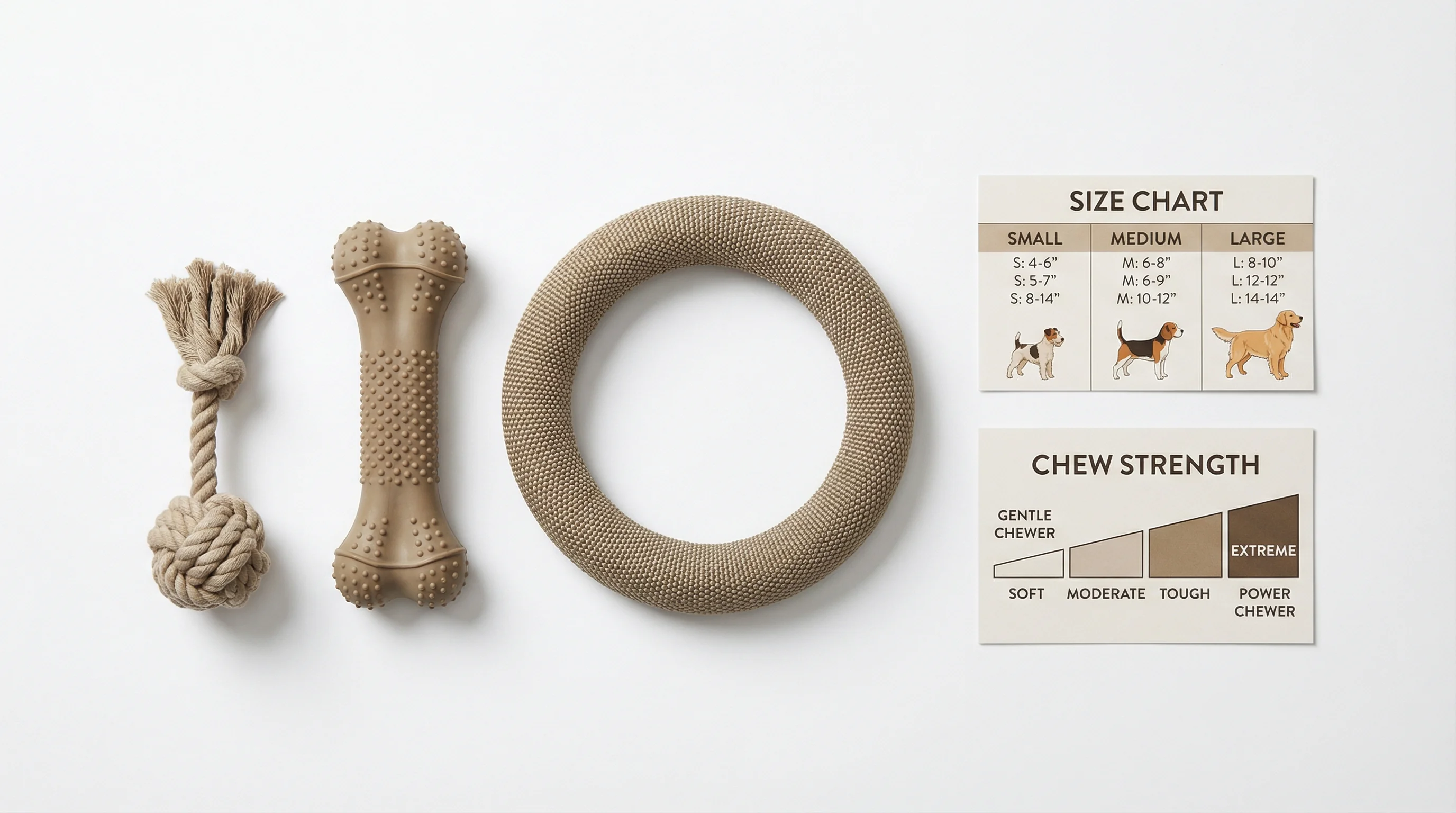
Clarify fit with size charts, chew-strength guides, or coat-type compatibility. Visual indicators and short bullets help readers self-select. Link to the relevant size filter or subcategory once readers identify their profile to support conversion.
Structure paragraphs as problem, implications, and practical steps. Insert compact product tiles after the first solution paragraph to connect care advice to a next action. Add an inline link to a proven SKU, e.g., senior dog hip-and-joint chews, to speed consideration.
Combine review count, vet commentary, and compliance badges near decision points. Link to bona fide sources and display transparent disclaimers to reinforce E‑E‑A‑T; our guidance on medical content provides a robust checklist for pet and veterinary content.
Next steps: Add a focused comparison block in your post and point to puzzle feeders aligned with skill level.
Use a primary path from educational content to a thematic category, and then to a curated product. This ladder preserves relevance while increasing assortment exposure—a documented driver of discoverability in SEO programs[4].
When the category is broad, send readers to a deeper buying guide, then to a prefiltered set. This prevents pogo-sticking and enhances engagement, which correlates with improved online visibility through clearer information scent[2].
Mix link types: inline anchors for context, mid-article modules for selection, and sticky nav links for persistent access. Calibrate density to avoid clutter. Test two to three contextual anchors per 800 words for clarity.
Takeaway: Intent-matched anchors are the backbone of internal linking for pet retailers, translating education into action while preserving trust and usability.
Next steps: Add contextual anchors pointing to puppy essentials from your training articles.
Mark up education sections with FAQ and HowTo schema, and embed Product schema where you feature SKUs. Enhanced SERP features often lift CTR, creating more entry points into your assortment[4].
Surface live price, inventory, and ratings via structured data pulled from feeds. Automation prevents stale information, reinforcing trust and supporting conversion-focused pet content strategy at scale[3].
For providers, add LocalBusiness and Service schema with location, hours, and appointment actions. These rich results align “near me” intent with booking paths, strengthening visibility and lowering friction for service conversions.
Next steps: Roll out HowTo schema on care tutorials that reference coat-care products.
Assign micro-metrics to each module: inline link CTR, comparison table clicks, product tile views, and scroll depth. Automation and integrated analytics shorten feedback loops for optimization[1].
Use URL parameters or GA4 event properties to attribute downstream actions to specific internal link clusters. This clarifies which link types and anchors most impact visibility and conversion intent[2].
Track a hierarchy from entry CTR to add-to-cart rate and bookings. Centralize module-level metrics in unified reporting; see content KPIs and dashboards for instrumentation details and repeatable analyses that guide iteration over time[3].
ModulePrimary MetricConversion SignalInline linkLink CTRProduct view rateComparison tableRow clicksAdd-to-cart rateProduct tilesTile impressionsBuy box clicksService CTACTA clicksBooking starts
Next steps: Compare link placements for weight‑management foods using consistent UTMs.
Lead with durability basics, add a chew-strength scale, then a 3‑option comparison per breed size. Include fit notes and a quick FAQ. Cap with a curated category link to simplify choice and boost add to cart conversion.
Explain seasonal coat needs, compare package tiers, and show add-ons like de-shedding. Embed LocalBusiness schema and a booking module. Use anchor variants to help readers match coat type to package tiers efficiently.
Outline key ingredients, dosing by weight, and safety notes. Provide life-stage comparisons with two to three SKUs per stage. Reinforce product selection with verified reviews to strengthen pet product comparison credibility.
Next steps: Build an article targeting indestructible toys and add a cross-link to training rewards.
Create rules that replace out-of-stock links with in‑stock alternates, rotate in seasonal SKUs, and retire discontinued items. Maintain evergreen anchors while swapping URLs to protect rankings and user trust.
Schedule audits to catch broken links, anchor duplication, and over-optimization. Automation frameworks in digital marketing reduce manual overhead and sustain consistency across large catalogs[1].
Use A/B tests to adjust module order, count, and anchor wording. Balance relevance with readability; most pages perform with two to four internal link clusters per 1,000 words for pet ecommerce SEO.
Next steps: Implement rotating links for seasonal pet care before peak demand shifts.
Product-led content guides readers from educational topics to relevant products or services. It aligns search intent with your catalog and uses internal links and modules to support informed decisions.
Start with an inventory audit, then build topic clusters around breed, life stage, and specific problems. Validate demand with intent-focused keywords and map each topic to a category and 2–3 products.
Use a primary path of blog → category → product for discovery and assortment relevance. Add contextual inline links and comparison modules to increase clickthrough and reduce choice overload.
Yes. FAQ, HowTo, Product, and LocalBusiness/Service schema can enhance visibility and trust signals, supporting higher CTR and downstream conversions from informational pages.
Track module CTR, category clickthrough, product view rate, add-to-cart rate, and assisted conversions. Use dashboards to compare link placements and anchor text variants over time.
For broader strategy context, align these practices with your brand’s editorial guardrails, compliance needs, and audience expectations. A cohesive system, not isolated tactics, delivers reliable growth.
Finally, treat internal linking for pet retailers as a living framework. As inventory evolves and seasons shift, refresh offers, refine anchors, and extend winning architectures across your library. Done consistently, product-led pet content becomes a predictable engine for organic revenue.