Pet eCommerce Content: Strategy, Structure, and Scaling for Organic Growth


Table of Contents +
- Start Here: What to Prioritize First
- Find Demand: Pet-Specific Search Patterns That Drive Traffic
- Build to Convert: Product Pages That Match Intent
- Move From Blog to Basket: Internal Linking Blueprints
- Speed Up Consideration: Comparisons and Buyer’s Guides
- Scale Smart: Internationalization, Seasonality, and SERP Enhancements
- Common Mistakes, Highlight Actions, and Method Notes
- Frequently Asked Questions
- References
Learn what pet eCommerce content to create, why it matters, when to prioritize it, and how to scale with product-aware internal linking for organic growth.
Organic growth in pet eCommerce rewards brands that match search intent precisely. Shoppers use breed, size, and life stage language. Your content must reflect that reality.
This matters because intent-matched pages convert faster and reduce wasted effort. In this guide, you will learn what to prioritize, how to structure pages for intent, and when to scale.
Start Here: What to Prioritize First
Understand: Foundation before scale
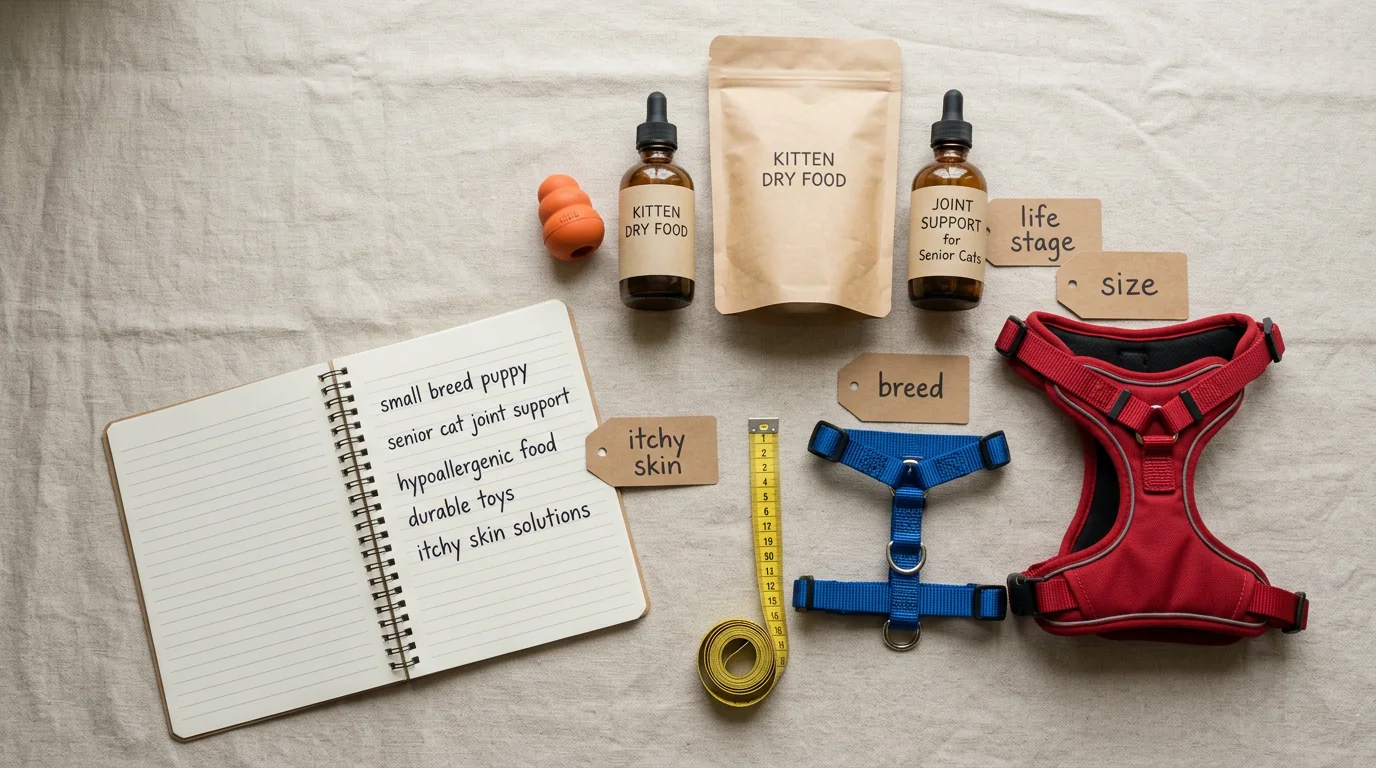
Winning pet eCommerce content starts with demand clarity. Identify how customers describe needs using breed, size, life stage, and problem modifiers. Build your first pages to mirror these modifiers within category and product language.
Prioritize a tight set of high-intent product pages and a minimal advice layer that funnels to them. Avoid scattering effort across dozens of topics before you validate demand and conversion paths. Balance SEO with paid channels, but keep roles distinct to protect organic equity and control costs.[1]
Do not implement yet: Advanced templates and programmatic pages
Hold off on launching large template libraries, faceted taxonomies, or programmatic expansions. Without validated query patterns and canonical structures, you risk duplication, crawl waste, and diluted relevance.
Route: Keyword research for pet catalogs (breeds, life stages, problems)
Shape your initial pet content strategy around a catalog of modifiers used by real shoppers. Create a short, prioritized list that aligns with inventory strength and margin. This becomes your editorial and merchandising spine.
Petbase writes and publishes this kind of content automatically - 10 SEO articles per month for pet businesses - start your free trial.
Find Demand: Pet-Specific Search Patterns That Drive Traffic
Understand: Breed, size, life stage, and problem modifiers
In pet eCommerce SEO, modifiers define intent with precision. Queries cluster around breed, size, life stage, and problem statements. These modifiers should determine your category groups, filters, and on-page copy hierarchy.
SEO is a proven lever in pet industry marketing, where search-led discovery influences upstream purchase behavior and brand choice.[4] To operationalize this, structure your keyword map by modifier families, then align SKUs and content blocks accordingly. For a practical walkthrough, see Pet Keyword Research: Turn Breeds, Life Stages, and Problems into an SEO Map.
Do not implement yet: Long-tail programmatic expansion
Resist generating thousands of long-tail pages until you verify demand density, cannibalization risk, and crawl capacity. Test a small set of representative pages first, then scale intentionally based on measured lift.
Route: Keyword research for pet catalogs (breeds, life stages, problems)
Map 10-20 core modifier combinations that match your strongest assortments. Use those to define page types, filters, and FAQs. Let demand signals drive the first wave of pet eCommerce content.
Build to Convert: Product Pages That Match Intent
Understand: Mapping queries to PDP structure and copy
Your product detail pages should reflect how shoppers search. Structure titles, bullets, and FAQs around modifier intent. For template guidance, visit Product Page SEO for Pet Stores: Breed-, Size-, and Life-Stage-Aware Templates.
Pair intent-matched copy with structured attributes that surface key decisions like material, fit, and suitability. Enhance images with descriptive alt text that reflects modifiers to improve discoverability and accessibility. AI-assisted tools can strengthen image descriptions at scale, improving search relevance and reach.[3]
Do not implement yet: Complex split tests or headless rebuilds
You do not need a headless migration or heavy testing frameworks to validate intent mapping. First, get the fundamentals right: clear titles, relevant bullets, structured attributes, reviews, and product-aware internal linking.
Route: Product page SEO that maps to breed, size, and life stage intent
Use a standard PDP framework that keeps modifier intent above the fold. Add concise FAQs answering modifier-specific concerns. Ensure reviews and Q&A surface the same language shoppers use.
Move From Blog to Basket: Internal Linking Blueprints
Understand: Advice-to-product pathways and anchor strategy
Advice content should guide readers to a specific product choice within the first screen. Use contextual links that mirror the query language and avoid generic CTAs. Anchor text should carry modifier intent.
Design article sections to resolve to a single, best-fit product or a narrow set of options. Calibrate link density to support comprehension without overwhelming the reader. For anchor phrasing, see From Blog to Basket: Internal Linking Blueprints for Pet Retailers on crafting pet-aware anchors.
Do not implement yet: Automated link flooding or sitewide widgets
Avoid automatic link insertion across every paragraph or sitewide carousels. These patterns often create noise, lower engagement, and confuse search engines about primary targets and topical focus.
Route: Internal linking from advice to add-to-cart with pet-aware anchors
Set a policy for link placement, anchor composition, and in-article product modules. Establish measurement for link-driven add-to-cart and assisted revenue. Iterate based on observed behavior, not intuition.
Speed Up Consideration: Comparisons and Buyer’s Guides
Understand: Mid-funnel formats that shorten research
Comparisons and buyer’s guides answer “which one” and “why this” questions efficiently. They shorten research, reduce returns, and improve conversion by clarifying trade-offs tied to modifier intent.
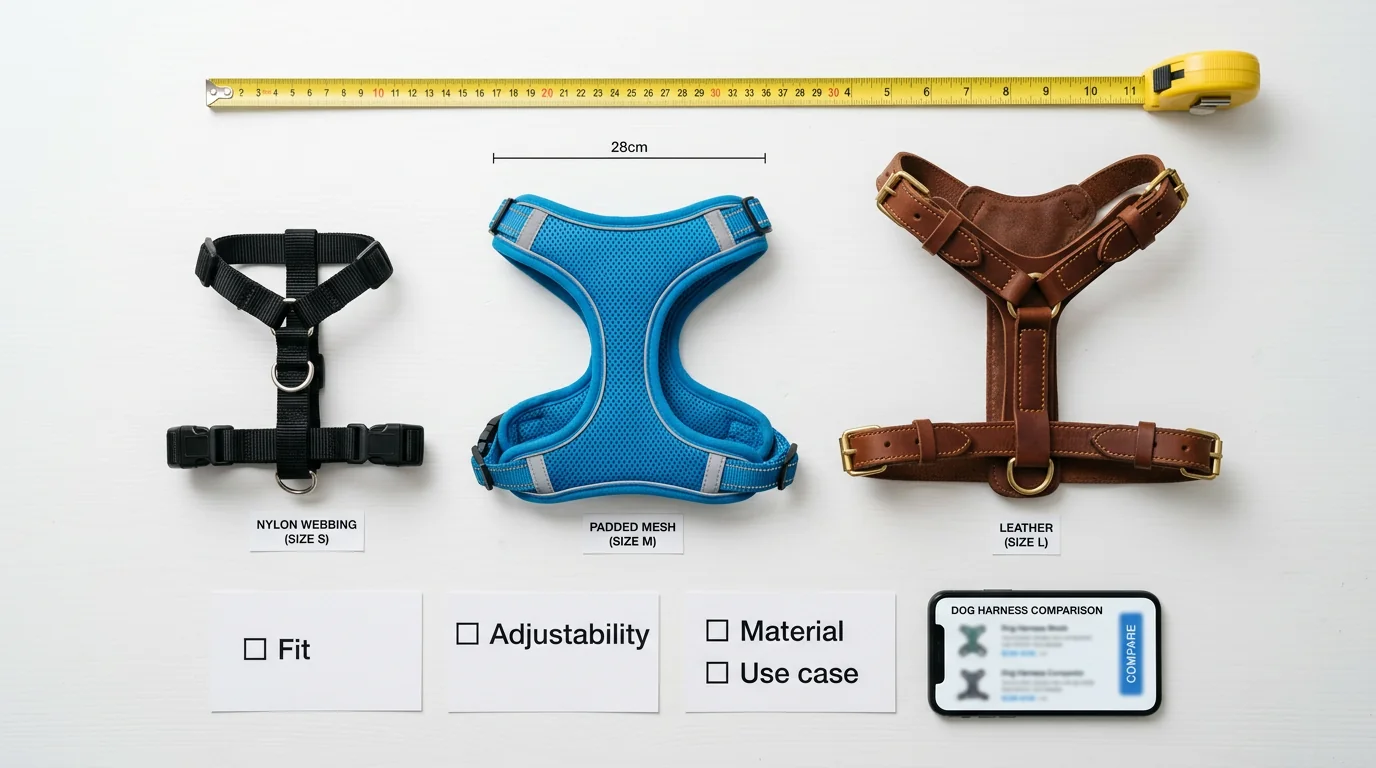
Ground your evaluation criteria in attributes shoppers actually mention in search and reviews. Keep scope focused. For structure patterns, explore Pet Product Comparisons and Buyer’s Guides That Convert on building comparison and buyer’s guides that move readers forward.
Do not implement yet: Massive matrix comparisons without demand proof
Do not build exhaustive matrices until you validate demand for the comparison set. Oversized tables that mix unrelated attributes create friction and reduce decision confidence.
Route: Creating comparison and buyer’s guide content for pet products
Define a small set of decision criteria that align with modifier intent. Use consistent scoring or qualification logic. Close every comparison section with a clear recommendation and a single next step.
Scale Smart: Internationalization, Seasonality, and SERP Enhancements
Understand: When to localize, when to time content, when to add schema
Internationalization should follow clear demand and operational readiness. Localize terminology, measurements, compliance content, and pricing. For localization frameworks, review Multilingual Pet SEO: US, UK, and DACH Content Localization Without Losing Voice.
Seasonality in pet retail is predictable but varies by region. Build an editorial and promotion calendar that aligns with supply and shopper need cycles. See Seasonal and Trend Calendars for Pet eCommerce: From Flea Season to Holiday Gifting for planning models.
Structured data helps products and services win enhanced results. Prioritize Product, Review, and FAQ schemas, and add service types where relevant. Guidance is in Schema for Pet eCommerce: Product, FAQ, Review, Vet Service, and HowTo. Smart schema strategy complements organic efforts and improves result prominence.[1]
Common Mistakes, Highlight Actions, and Method Notes
Understand: Frequent pitfalls and misconceptions
Common pitfalls include chasing head terms without modifier alignment, publishing advice without product pathways, and over-relying on thin manufacturer copy. Another is ignoring image SEO and neglecting schema that could lift visibility and trust.[3]
Teams also conflate pet store SEO with SEM, expecting paid tactics to compensate for missing organic foundations. Keep roles distinct and complementary to protect margin and long-term discoverability.[1]
Do not implement yet: Over-automation without QA or measurement
Pet SEO automation accelerates workflows, but unsupervised publishing can erode quality. Establish editorial standards, fact checks, and performance review cycles before scaling. AI can help produce and optimize content, but human oversight remains essential.[2]
Highlight box: Top 3 most important actions
- Align demand to intent: Build your map around breed, size, life stage, and problem modifiers.
- Make PDPs decisive: Reflect modifier language in titles, attributes, FAQs, and reviews.
- Engineer pathways: Use product-aware internal linking to connect advice to add-to-cart.
Method: How these recommendations were developed
These decision rules synthesize search behavior patterns, merchandising logic, and mid-funnel testing across pet eCommerce SEO scenarios. They reflect observed gains from intent-mapped pages, structured attributes, and disciplined internal linking.
Automation can operationalize this playbook. Teams often streamline research, briefs, and on-page generation using AI workflows aligned to modifier taxonomies.[2] For best results, consider using Petbase AI which is designed for this purpose.
Route: Content operations and automation with Petbase
Document roles, QA checkpoints, and reporting for each stage of your pet content strategy. For an operations framework, see Content Operations and Automation for Pet Stores Using Petbase.
Frequently Asked Questions
What content should a pet eCommerce site publish first?
Start with high-intent product pages aligned to breed, size, and life stage terms, supported by a small set of advice posts that link directly to those products. Keep scope tight and focused on conversion.
How do I connect blog content to product revenue in pet retail?
Use contextual anchors that mirror shopper language and place prominent, relevant product links within the first screenful of advice content. Measure add-to-cart clicks and assisted revenue to validate pathways.
When should I create comparisons or buyer’s guides?
Add them once core product pages are optimized and linked from advice posts. Use real modifiers like durability, allergy-friendly, and vet-recommended. Keep scope targeted to avoid decision fatigue and confusion.
Do I need multilingual content for pet eCommerce?
Localize when you see regional demand and inventory readiness. Prioritize markets where product availability, pricing, and shipping are consistent. Adjust terminology, measurements, and compliance content to match local expectations.
Which schema matters most for pet eCommerce?
Start with Product, Review, and FAQ for discoverability. Add LocalBusiness or VeterinaryBusiness for hybrid service-and-store models as relevant. Validate results through impressions, clicks, and rich result appearance in search.
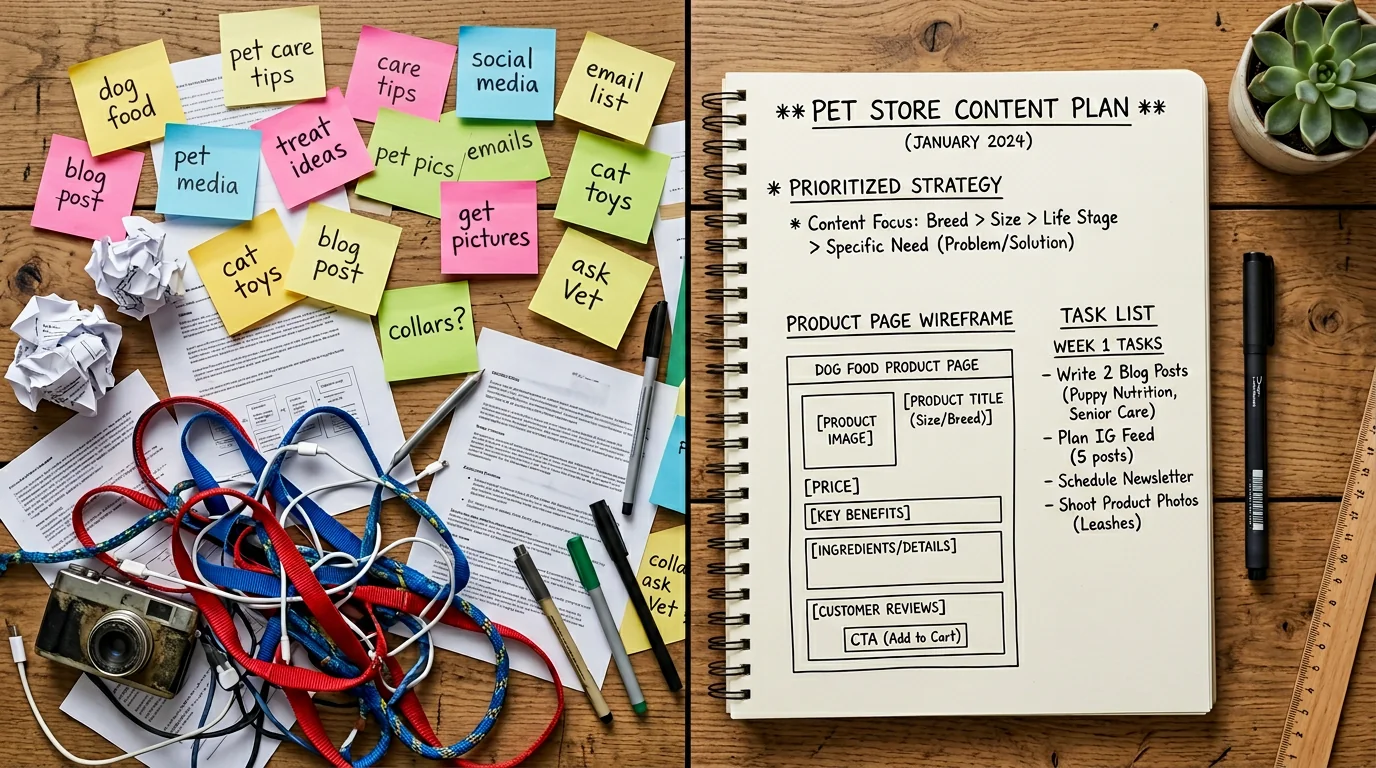
Final note: Treat every decision through the lens of intent. Validate demand with modifiers, build decisive PDPs, and engineer advice-to-product pathways. This sequence compounds results and scales responsibly for pet eCommerce SEO.
References
- H Ibrahim et al. (2024). A Dual-Focused Approach to E-Commerce Product Ranking: Leveraging Search Engine Optimization and Search Engine Marketing.. Library of Progress ….
- G Chodak (2024). Artificial intelligence in E-commerce. The Future of E-commerce: Innovations and …. View article
- Z Ayaz (2024). AI-driven automation in SEO: Enhancing image descriptions with BLIP-processor models. International Journal on Technical and Physical …. View article
- S Xu (2024). Research on marketing strategies in the pet food industry: A case study based on existing brands. SHS Web of Conferences. View article