From Blog to Basket: Internal Linking Blueprints for Pet Retailers

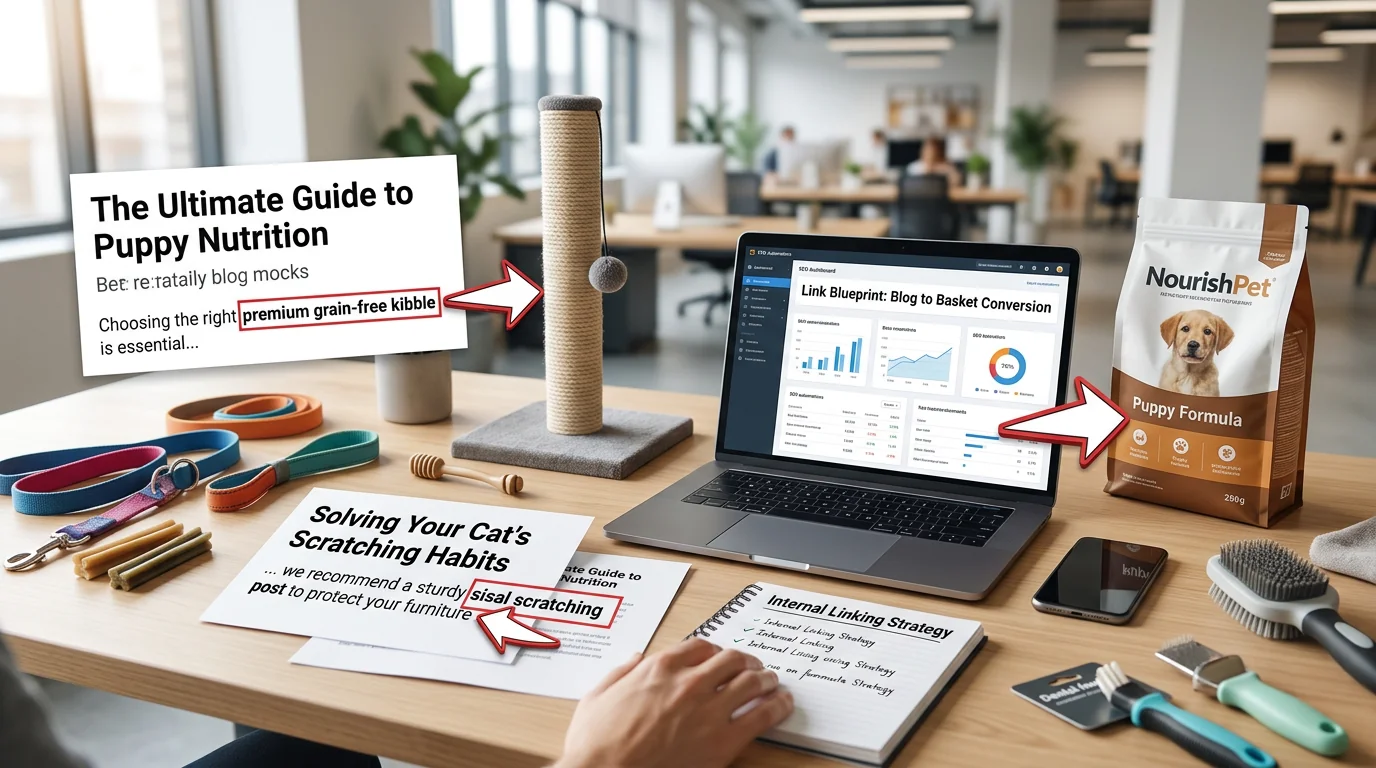
Table of Contents +
- Scenario focus: Moving readers from care guides to the right chew toy pages
- Quick decision guide
- Exact placements and anchor strategies
- Blueprint examples (copy-ready)
- Monitoring guidance
- Practical safety boundaries
- Evidence status
- Measurement setup checklist
- Internal link architecture to related content
- Frequently Asked Questions
- Conclusion
- References
Exact anchor and placement tactics that guide pet parents from advice posts to product pages and collections without friction. Examples and safety guardrails.
Pet parents arrive with questions, not product names. They seek reassurance, fit, and safety before they ever consider a brand. Your internal links should guide, not push.
This matters because the right anchor at the right moment reduces friction and bounce. It helps readers complete tasks confidently. You will learn precise placements and anchor patterns that move care-guide readers to the correct chew-toy collections and products.
Scenario focus: Moving readers from care guides to the right chew toy pages
Start with intent, then match a destination. Place an early, need-led collection link that orients the reader. For example, route first-time puppy owners to gentle rubber chew toys for puppies within the opening context of the article’s body.
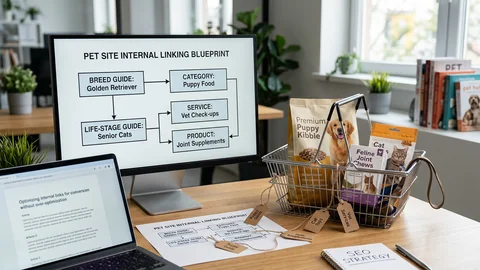
The purpose of internal linking is to simplify decisions, shorten paths, and maintain relevance for pet retail SEO. For architecture and templates, see our core strategy hub.
User journey map: question → material → size → basket
Most readers ask a care question, compare materials, check size guidance, then decide. Map anchors to each step. Lead with need, then material, then size, and finally purchase.
Anchor taxonomy: query-, need-, and attribute-led anchors
Use query-led anchors that mirror search language, need-led anchors that promise outcomes, and attribute-led anchors naming material or size. This anchor text strategy pets shoppers understand.
Placement blueprint: above fold, mid-article, and endcap
Place one above-the-fold collection link, two to three mid-body contextual anchors, and a closing endcap block. This creates a predictable route from advice to product pages.
Petbase automates SEO content for pet stores - publishing 10 optimized articles monthly so you can focus on running your shop - start your free trial.
Quick decision guide
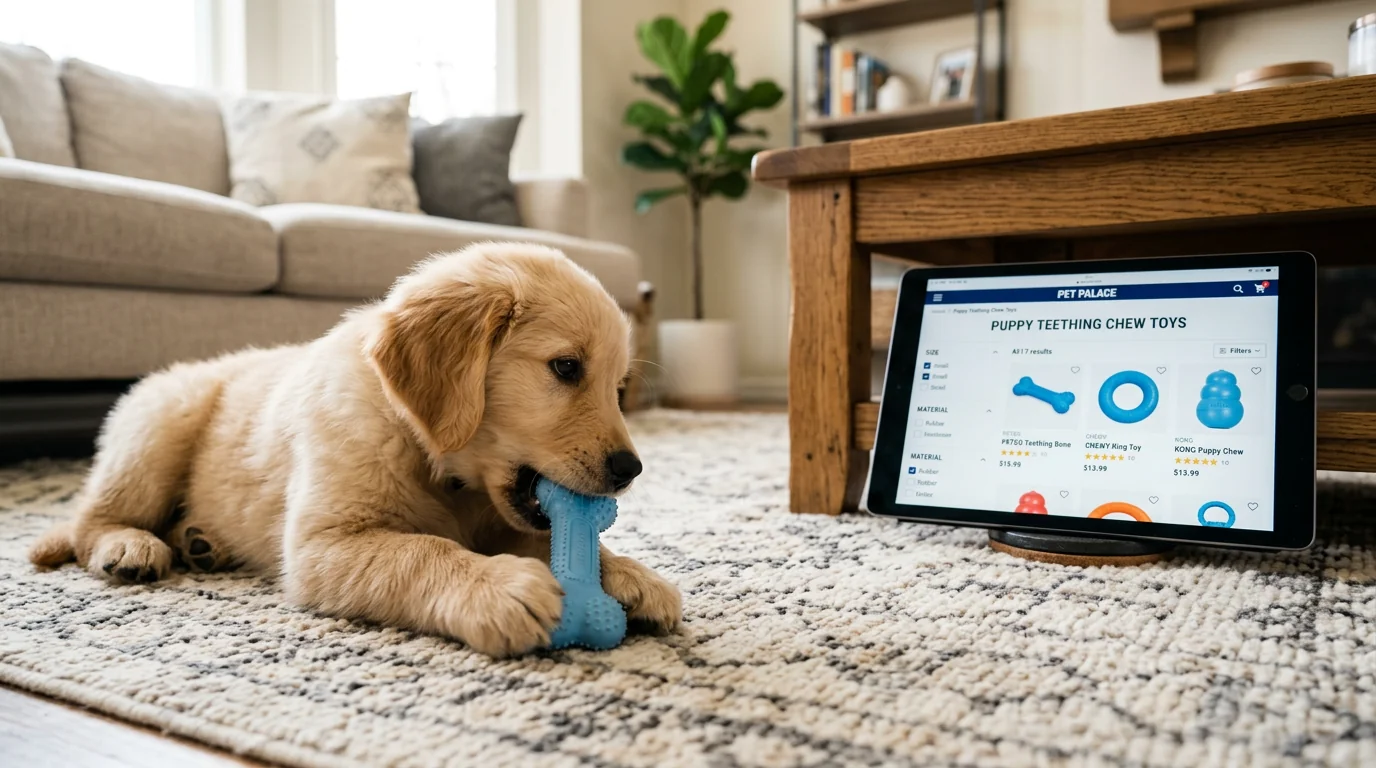
If the query is care-focused (e.g., "puppy teething"), use need-led anchors near the first paragraph and link to a curated collection
Prioritize empathetic language and gentle materials. Anchor to a filtered collection that matches life stage and chew strength. Keep the promise specific and outcome-oriented.
If the reader indicates size/breed, surface size-filtered PLPs with attribute anchors
When weight, breed, or jaw strength appears, link to size-filtered PLPs. Use anchors like “small-breed chew toys under 10 lbs” to reduce sizing friction immediately.
If the article compares materials, deep-link to PDPs with material-specific anchors
After material pros and cons, offer precise PDPs. Use anchors naming compound and durability, such as “durable nylon chew, XL,” to capture decisive clicks after evaluation.
If seasonal intent appears (holiday gifts), link to seasonal collection and gift guide
Detect intent from terms like “stocking stuffer” or “holiday.” Route to a holiday gifting collection and a curated guide. For planning, consult seasonal content calendars.
If the user reaches FAQs, add short anchors to PDPs and sizing guides
FAQ readers often skim. Insert brief, descriptive anchors to top PDPs and a chew-toy sizing guide. Keep language clear and concise for skimmers.
If bounce risk is high above 60%, insert an in-text product module after H2
Use an inline module with two to three bestsellers and size badges. Keep it native-styled. Monitor impact on time on page and internal click-through.
If the PDPs lack variants, route to collection with active filters
When variants are limited, link to filtered PLPs showing in-stock alternatives. This preserves continuity and prevents dead-ends from missing sizes or colors.
Exact placements and anchor strategies
Intro link (first 150-200 words): a single need-led collection link
Use one early collection link that sets the path. Example: “For teething relief, explore gentle rubber chew toys for puppies.” Keep it singular to avoid cognitive overload.
Contextual mid-body links: 2-3 anchors tied to materials and sizes
Right after material pros/cons, add two PDP deep links with attribute-rich anchors: soft rubber teething chew for small puppies and indestructible nylon chews, XL. In a sizing paragraph, include PLPs with persistent filters: small-breed chew toys under 10 lbs, medium chews 20-45 lbs, and XL chews 60+ lbs.
Comparison table row links: attribute-rich anchors to PDPs
| Material | Best for | Anchor example |
|---|---|---|
| Rubber | Gentle teething | gentle rubber chew, small, blue |
| Nylon | Power chewers | durable nylon chew, large, chicken flavor |
For writing strong comparison content that converts, review product comparison best practices.
Endcap block: one primary collection + one top PDP + one sizing guide
Close with a compact block: shop chew toy collections, top-rated nylon power chew, and a chew-toy sizing guide. Vary anchors to prevent duplication.
Sticky sidenotes: breed/age quick-jump anchors
Add right-rail sidenotes linking to in-page jumps or filtered PLPs. Use concise anchors like “Puppy teething” or “Large breed chews.” Keep focus states accessible and labels unique.
Blueprint examples (copy-ready)
Anchors for puppy teething: "gentle rubber chew toys for puppies", "freezeable puppy chews"
Use these for early links and soothing outcomes. They highlight material and relief mechanics without pushing a brand prematurely.
Anchors for power chewers: "durable chew toys for Pitbulls", "indestructible nylon chews"
Deploy after signaling strength or breed cues. Attribute-rich wording reassures durability and targets breed-related bite force considerations.
Anchors for dental needs: "vet-reviewed dental chews", "grain-free dental sticks"
Use inside oral-care sections or FAQ answers. Keep compliance notes nearby if needed, and ensure availability before linking.
Anchors for sizing: "small-breed chew toys under 10 lbs", "XL chews 60+ lbs"
Place after size guidance or measurement tips. These affirm fit and reduce returns by aligning shoppers with correct product dimensions.
Monitoring guidance
After 7-14 days: track CTAs-free internal click-through rate, scroll depth to first link, and assisted sessions to PLP/PDP
Short windows reveal engagement direction. Evidence suggests structured internal linking may improve task completion and crawl discovery when contextually relevant[2]. Compare posts with and without early collection links.
After 4-8 weeks: measure PDP add-to-cart rate from blog referrals, PLP filter engagement, and revenue attribution models
Observe assisted conversions and filter interactions by anchor type. Anchor clarity and placement are recognized as core on-page SEO elements influencing customer journeys[3].
Diagnostic thresholds: low CTR (<2%), high pogo-sticking, and anchor mismatch clues
Investigate low CTR with scroll depth and heatmaps. Mismatch often stems from vague anchors or irrelevant destinations. NLP-driven audits may surface semantic gaps in anchor-destination pairs[1].

Practical safety boundaries
Limit to 1 intro link, 2-3 contextual links per 800 words, and 1 endcap block
Evidence suggests moderation supports readability and decision confidence. Overlinking can fragment attention and depress conversion signals.
Use descriptive anchors without over-optimization; vary phrasing naturally
Favor semantically rich language. Rotate variants to reduce repetition while preserving clarity. This balances relevance with a natural reading experience.
Never link to out-of-stock PDPs; prefer dynamic collections with active filters
Route to in-stock variants or filtered collections. Offer back-in-stock notifications if availability is uncertain to maintain momentum.
Maintain accessibility: unique anchor text labels and clear focus states
Ensure link labels are distinct and descriptive. Provide visible focus states and adequate contrast for keyboard and assistive technology users.
Avoid conflicting anchors to different destinations within the same paragraph
Do not send similar anchors to separate URLs nearby. Resolve conflicts with clearer intent labels or consolidate to a single, best-fit destination.
Evidence status
What evidence suggests: internal links may support crawl paths and user task completion
Research notes that structured on-page elements and internal link clarity can improve discoverability and guide user tasks along conversion pathways[2][3].
What is emerging: attribute-led anchors may align with product-led search behavior
NLP approaches can classify and recommend anchors aligned to material, size, and use cases, potentially improving contextual relevance at scale[1].
Where evidence is mixed: exact-match anchor density vs. semantic variety
Best practice favors descriptive anchors, but overuse of exact matches may not consistently yield gains. Balanced semantic variation appears prudent in pet ecommerce internal links[3].
Measurement setup checklist
Create link groups for intro/context/endcap in analytics
Group links by placement to isolate impact. Track CTR, time to first click, and downstream add-to-cart from each group for clear attribution.
Tag anchors by intent (need, attribute, size) for reporting
Use UTM parameters or custom attributes to flag intent types and destination patterns. For tagging consistency and automation, many teams find Petbase AI helpful when scaling blog to product linking.
Build PLP URLs with persistent filters and check canonicalization
Ensure filters persist after navigation and are index-friendly. Verify canonical tags to prevent duplication. AI workflows can aid template governance and URL integrity at scale[4].
Internal link architecture to related content
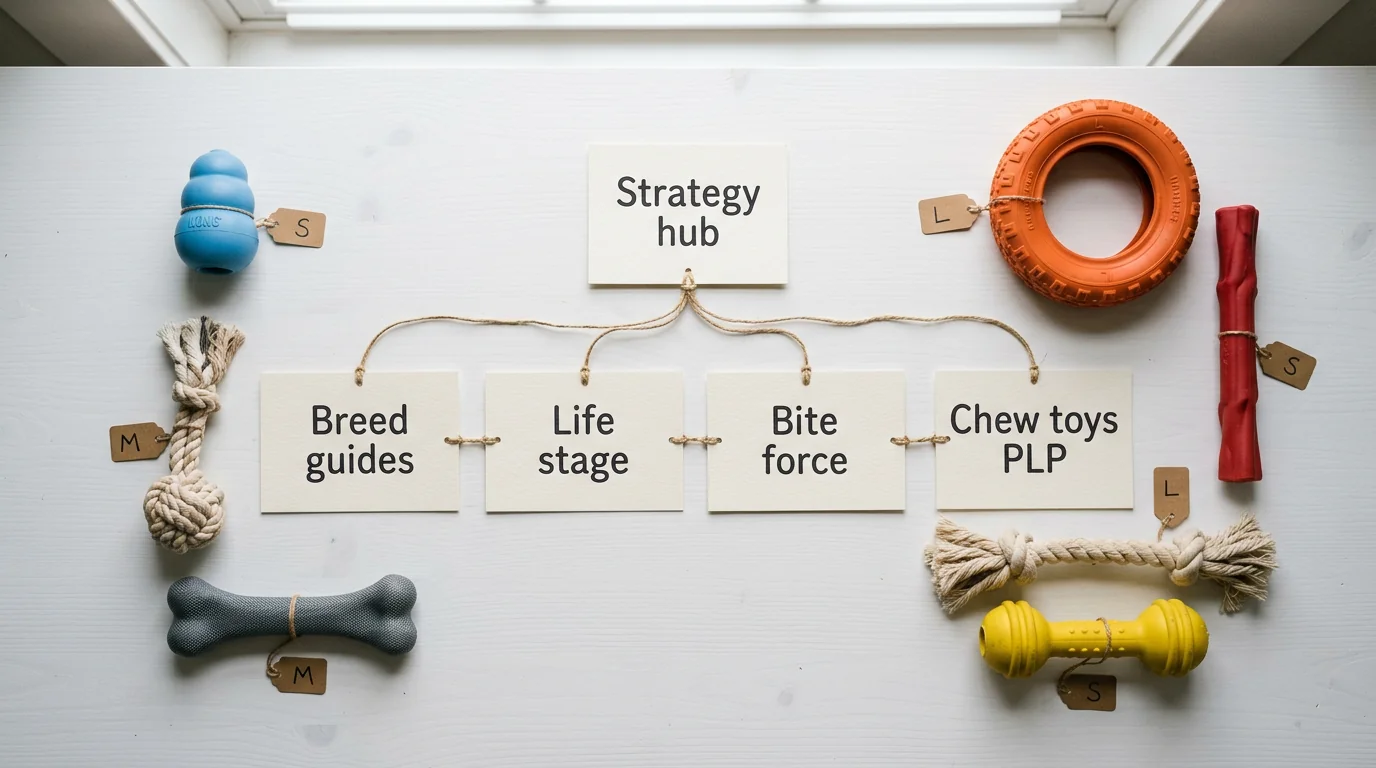
Link back to the core strategy hub after the purpose paragraph using the anchor "core strategy hub"
Reinforce your cluster by pointing readers to the architectural overview through the core strategy hub. This stabilizes navigation and supports crawl paths.
Cross-link to sizing and breed guides from contextual paragraphs
When discussing fit or bite force, add links to breed-, size-, and life-stage templates. This keeps attribute questions close to decision points.
Connect dental health articles to dental chew collections and care PDPs
Map oral-care guidance to dental chew PLPs and vetted PDPs. For editorial patterning, see content operations automation for pet retail SEO efficiency.
Frequently Asked Questions
How many internal links should a pet care article include?
Evidence suggests 3-6 well-placed links may balance utility and readability. Prioritize 1 intro collection link, 2-3 contextual anchors, and 1 endcap block.
Should I link to product pages or collections from blogs?
Collections may serve broad intent, while PDPs fit specific attributes like material or size. Start with a collection above the fold and add PDPs where attributes are clear.
What anchor text works best for pet retail products?
Use descriptive, intent-led anchors such as "durable chew toys for Pitbulls" or "small-breed puppy chews." Vary phrasing to avoid over-optimization.
How do I track if internal links are helping conversions?
Monitor blog-to-PLP/PDP click-through rates, add-to-cart from blog referrals, and assisted revenue over 4-8 weeks. Segment by link placement and anchor type.
Is it risky to add many product links in educational posts?
Overlinking may reduce readability and dilute intent. Setting limits per section and using clear, relevant anchors can help maintain a helpful experience.
Conclusion
The fastest route from question to basket is intentional, not accidental. Use need-led links early, attribute-rich anchors mid-article, and a concise endcap for closure. Monitor CTR, filter engagement, and assisted conversions. Adjust anchors when signals suggest mismatch. This blueprint keeps collection page linking pets shoppers understand and transforms advice into action. Consistent internal link architecture, measured carefully, may compound gains across your catalog and content.
References
- T Suresh (2025). Natural language processing for internal link optimisation: Automating content relationships for better search engine optimisation. Journal of Digital & Social Media Marketing.
- D Mladenović et al. (2023). Search engine optimization (SEO) for digital marketers: exploring determinants of online search visibility for blood bank service. Online information …. View article
- S Das (2021). Search engine optimization and marketing: A recipe for success in digital marketing. 2021 - api.taylorfrancis.com. View article
- C Malaikani et al. (2026). AI AND DIGITAL MARKETING FROM AUTOMATION TO PERSONALIZATION. researchgate.net. View article