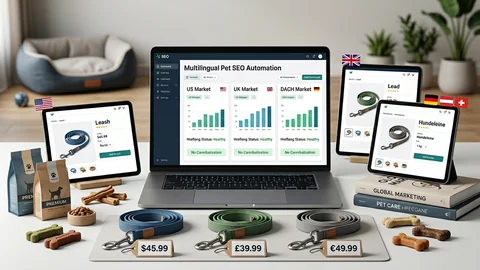
Multilingual Pet SEO: US, UK, and DACH Localization Without Losing Voice

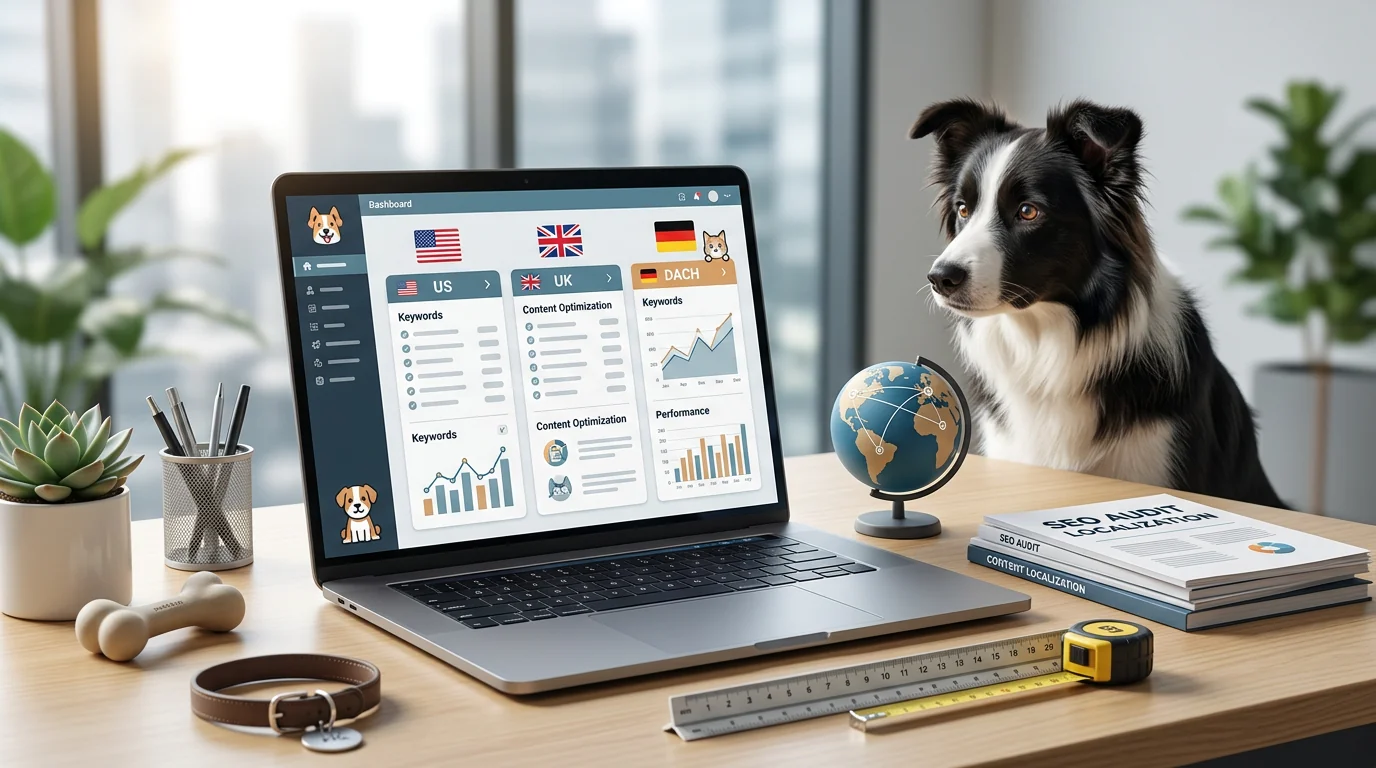
Table of Contents +
- The scenario: One brand voice, three markets (US, UK, DACH)
- Quick decision guide: If this, then localize that
- Localization workflow: From master draft to US, UK, and DACH
- Practical safety boundaries
- Evidence status: What the data suggests
- Monitoring: What to check after 7-14 days and 4-8 weeks
- Localization checklist (US, UK, DACH)
- How this post fits your global content system
- Frequently Asked Questions
- References
Localize pet terms, units, and claims for US, UK, and DACH while keeping brand voice. Practical workflows, safety boundaries, and monitoring tips.
Your brand speaks clearly in one language. Success across US, UK, and DACH demands precision, not dilution. Small localization misses can quietly drain traffic, conversion, and trust.
This guide shows how to prioritize languages, localize pet terms, and adapt claims and measurements. You will learn how to protect brand tone while aligning with regional norms. Use this to operationalize multilingual pet SEO without rework.
The scenario: One brand voice, three markets (US, UK, DACH)
What changes per region (terms, units, claims, links)
US queries favor veterinarian, leash, and grain-free. UK searchers lean vet, lead, and complete food. DACH expects Tierarzt, Leine, and metric-first labeling. UK vs US pet terms shift intent, not just spelling. Prices, returns, and delivery language also require localization.
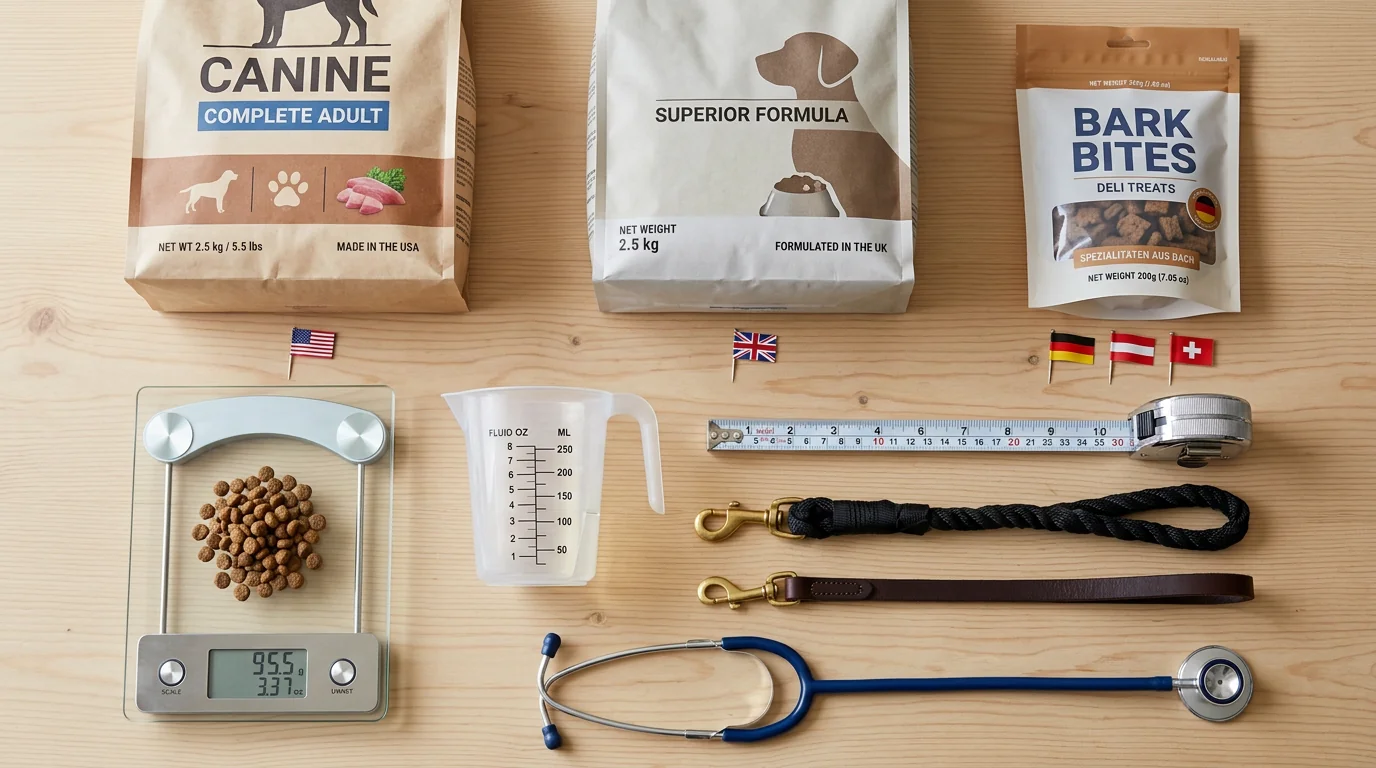
Units must flip: US uses pounds, inches, and fluid ounces. UK and DACH expect grams, kilograms, centimeters, and milliliters. Health and product claims require market-specific phrasing and references. Internal links must point to locale URLs, not global pages.
What must stay consistent (voice, promise, structure)
Brand voice localization keeps tone markers intact: confidence, care, and clarity. Preserve headline rhythm, benefit hierarchy, and UX structure. Keep the product promise identical, while adapting proof points to local norms and evidence standards.
Schema patterns, navigation labels, and core CTAs remain consistent. Only the surface language, measurements, and regulatory phrases change. This balance reduces fragmentation and supports scalable pet eCommerce SEO.
Petbase handles this entire content workflow automatically - 10 SEO articles published to your blog every month - start your free trial.
Quick decision guide: If this, then localize that
5-7 fast rules teams can apply
- If the market is US, then set imperial units first and use veterinarian, leash, and shipping. If UK or DACH, set metric first and switch to vet, lead, and delivery.
- If category features weight-based sizing, then map dual units with local-first order. Add conversion notes near the selector to reduce returns and confusion.
- If the page mentions health benefits, then rewrite claims to reflect local guidance and soften causality. Add source citations where appropriate for DACH and UK compliance.
- If keywords show brand-name dominance, then mirror local brand variants and generic alternates. Validate SERP intent before choosing terminology.
- If FAQs address care routines, then adjust timetables and seasonality by region. Align to local healthcare access, holidays, and retail calendars.
- If internal links route to global categories, then replace with locale-matched URLs and localized anchors. Add hreflang to steer crawlers.
- If review snippets mention measurements, then standardize reviewer unit labels and add tooltips for clarity.
Localization workflow: From master draft to US, UK, and DACH
Step 1: Lock voice and brand dictionary
Document voice attributes and disallowed phrases. Create a brand dictionary that maps canonical product names to US, UK, and DACH variants. Include tone guidelines for empathy, authority signals, and brevity levels.
Localization research suggests treating translation as an adaptation process, not a literal transfer. Establish equivalence at the message and function level to protect intent and usability[2].
Step 2: Regionalize keywords and SERP features
Build country-specific keyword sets from seed terms. Compare UK vs US pet terms and intent clusters. For DACH SEO localization, translate candidates and verify in local SERPs for intent, not just volume.
Use cross-lingual embeddings or aligned taxonomies to map near-equivalents where vocabulary diverges. This may improve recall of semantically similar queries without over-relying on direct translation[4]. Consider seeding a global pet eCommerce content framework to enforce consistent topic coverage per locale.
For workflow speed and pet content localization governance, teams sometimes use Petbase AI to generate regional keyword maps and draft variants tailored to US, UK, and DACH norms.
Step 3: Adapt measurements, prices, and categories
Set a conversion matrix across weight, length, and volume. Use local-first units, with dual displays for technical products. Round sensibly to avoid mismatch between labels and packaging disclosures.
Prices should include local tax expectations and delivery language. Category names must reflect local browsing behavior, not your master taxonomy. Validate breadcrumbs and filters in live SERPs and on-site search.
Step 4: Align product and health claims by market
Segment claims into benefit tiers: comfort, durability, hygiene, and health. Elevate low-risk claims consistently. For health-adjacent language, use careful hedging and references where expected.
Research emphasizes that localization must consider sociocultural and regulatory contexts, not only language. Adjust the communicative function of claims to match expectations and norms[2].
Step 5: Internal links, schema, and hreflang
Localize internal link anchors and destinations. Implement hreflang for language-country pairs. Ensure canonicalization prevents cross-locale duplication. Update XML sitemaps by locale and verify Search Console coverage.
Apply structured data consistently and tailor by locale where product availability or currency differs. For implementation patterns, review schema for pet eCommerce. To scale cross-locale linking, see internal linking blueprints for pet retailers and audit automation options for multi-language content creation for pet brands.
Centralized platforms may streamline multilingual rollout and governance, reducing fragmentation across locales through shared templates and workflows[1].
Practical safety boundaries
Claims, medical content, and regulator-sensitive wording
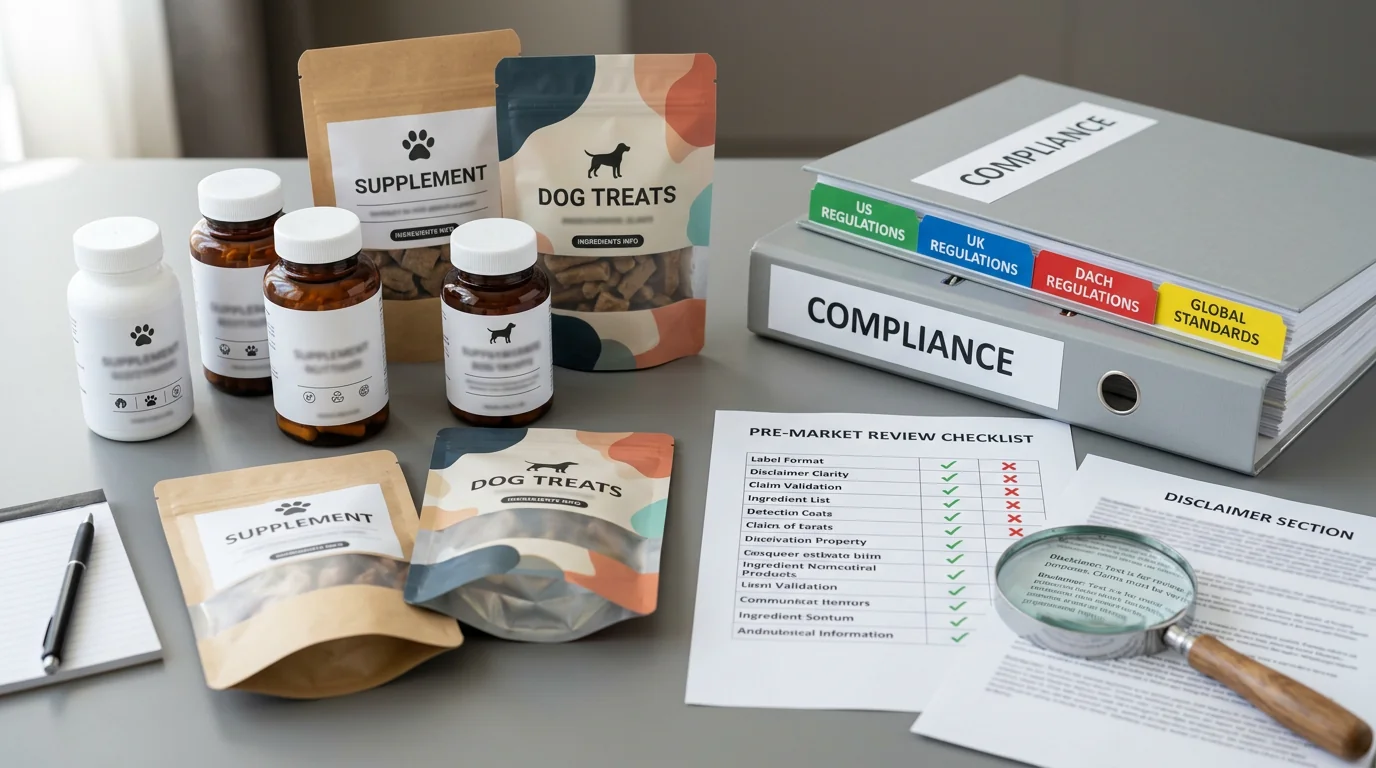
Avoid disease treatment or cure language for supplements in the US. Use functional structure/benefit wording and disclaimers. In the UK, align with ASA/CAP guidance and avoid absolute claims without substantiation.
In DACH, steer clear of unverifiable Heilversprechen. Phrase benefits as support, not outcomes. Reference credible sources when claims might influence care decisions. Maintain audit trails for claim changes and evidence updates.
Breed, species, and ingredient nuances
Breed and species terms may vary by locale. Some DACH searchers prefer anglicized breeds, while others use translated forms. Validate both in local SERPs to decide on primary and secondary usage.
Ingredient names and allergens often localize directly, but packaging regulations may dictate label-first naming in UK and DACH. Provide glossary tooltips for uncommon terms. Evidence suggests clarity may reduce returns and service tickets.
Evidence status: What the data suggests
Impact ranges you might observe
When teams localize keywords, measurements, and claims while preserving voice, observed results may include 8-20% higher CTR and 5-15% longer sessions within 4-8 weeks, depending on competition and baseline.
Unified systems for multilingual production and governance may shorten cycle time and reduce inconsistencies across locales, supporting more stable rankings at scale[1]. The value stems from consistent structures with locale-tuned content[3].
Where evidence is thin and needs testing
Data for dual-unit displays on conversion is mixed. Test dual units for technical products, single local-first units otherwise. Health-claim sensitivity thresholds vary by niche; experiment with hedging intensity and evidence placement.
Cross-lingual keyword mapping methods continue to evolve. Embedding-based approaches can help, but local SERP verification remains essential for intent fidelity[4]. Treat conclusions as directional, not deterministic[2].
Monitoring: What to check after 7-14 days and 4-8 weeks
Early signals (7-14 days): indexing and SERP alignment
Confirm new locale URLs are indexed and mapped via hreflang. Check title and meta alignment with localized keywords. Inspect SERP features triggered by locale content, including FAQs, snippets, and product carousels.
Watch for cannibalization between locales. If the wrong market URL ranks in another market, strengthen signals: internal links, hreflang pairs, and localized anchors. Validate that measurement units appear correctly in meta and snippets.
Later signals (4-8 weeks): engagement and revenue quality
Evaluate bounce rate, session depth, and add-to-cart, segmented by locale. Review returns and support tickets for measurement misunderstandings or claim confusion. Attribute revenue lift to localized categories and keywords, not platform-wide trends.
Track brand search growth in each locale. Monitor review content for unit or term clarity concerns. Align roadmap with categories showing the highest localization ROI and promising long-tail clusters.
Localization checklist (US, UK, DACH)
Copy, UX, schema, and compliance pass
- Copy: Localize UK vs US pet terms; validate DACH translations; preserve voice and promise; tune headlines for local intent.
- Units: Local-first units; dual display where precision matters; consistent rounding; align with packaging disclosures.
- Claims: Market-appropriate hedging; compliant phrasing; add citations for sensitive benefits; maintain evidence logs.
- UX: Locale-specific pricing, delivery, and returns; category labels mapped to local browsing patterns; accessible tooltips for terms.
- Schema: Product, Review, FAQ, and HowTo localized; currency and availability fields correct; see schema implementation guidance.
- Links: Locale-matched internal links; localized anchors; correct hreflang and canonical; sitemap per locale.
- QA: Read-aloud voice check; brand dictionary compliance; on-page unit scan; SERP spot checks for top terms.
How this post fits your global content system
Where to link and how to reinforce topical authority
Use this playbook to extend your category structure into each locale. Start with core commercial categories and evergreen how-tos. Strengthen internal link flows by mapping anchors to localized intent clusters.
For governance, activate your editorial calendar and automation stack. Align with your global content strategy and scaling model. For templating and operations, review automation for pet store content operations and adapt workflows per market.

Frequently Asked Questions
Should I translate pet content or transcreate it for US, UK, and DACH?
Transcreation may work better. Keep voice and core promise, but localize keywords, pet terms, measurements, and claims to match each market’s search behavior and norms.
How do I handle health claims for supplements or medicated products?
Use cautious wording and align with local guidance. In the US avoid drug-like claims for supplements; in the UK reference ASA/CAP guidance; in DACH avoid Heilversprechen and cite sources where appropriate.
What’s the best way to manage measurements across regions?
Use imperial for US and metric for UK/DACH. When precision matters, show dual units with local-first order to reduce friction and potential returns.
How do I keep internal links relevant across locales?
Point to locale-matched product and category URLs, use localized anchor text, and implement hreflang to guide search engines to the correct version.
What keywords change most between US and UK?
Common shifts include vet vs veterinarian, lead vs leash, cat litter vs cat litter tray, and flea treatment brand names. In DACH, breed and ingredient terms are often translated and sometimes anglicized-validate in local SERPs.
Localizing pet eCommerce SEO for US, UK, and DACH is about precision and restraint. Protect your brand tone. Adapt only what the market requires. Calibrate keywords, units, and claims thoughtfully. Monitor early, test methodically, and scale what works with disciplined governance. Research suggests structured localization systems may sustain quality at speed while honoring local expectations. Build once, adapt smartly, and let consistency drive compounding gains.
References
- I Okonkwo et al. (2023). Localization and global marketing: Adapting digital strategies for diverse audiences. Journal of Digital …. View article
- MA Jiménez-Crespo (2024). Localization in translation. 2024 - taylorfrancis.com. View article
- Y Jin (2025). Localization in translation. Miguel A. Jiménez-Crespo. 2025 - academic.oup.com. View article
- H Licht et al. (2023). Going cross-lingual: A guide to multilingual text analysis. Computational Communication Research. View article