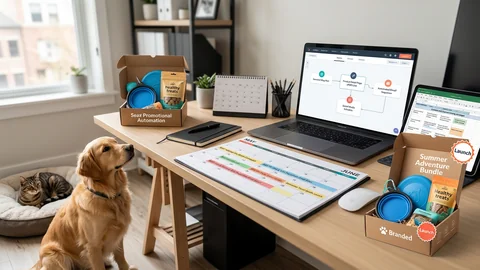
Seasonal and Trend Calendars for Pet eCommerce: From Flea Season to Holiday Gifting

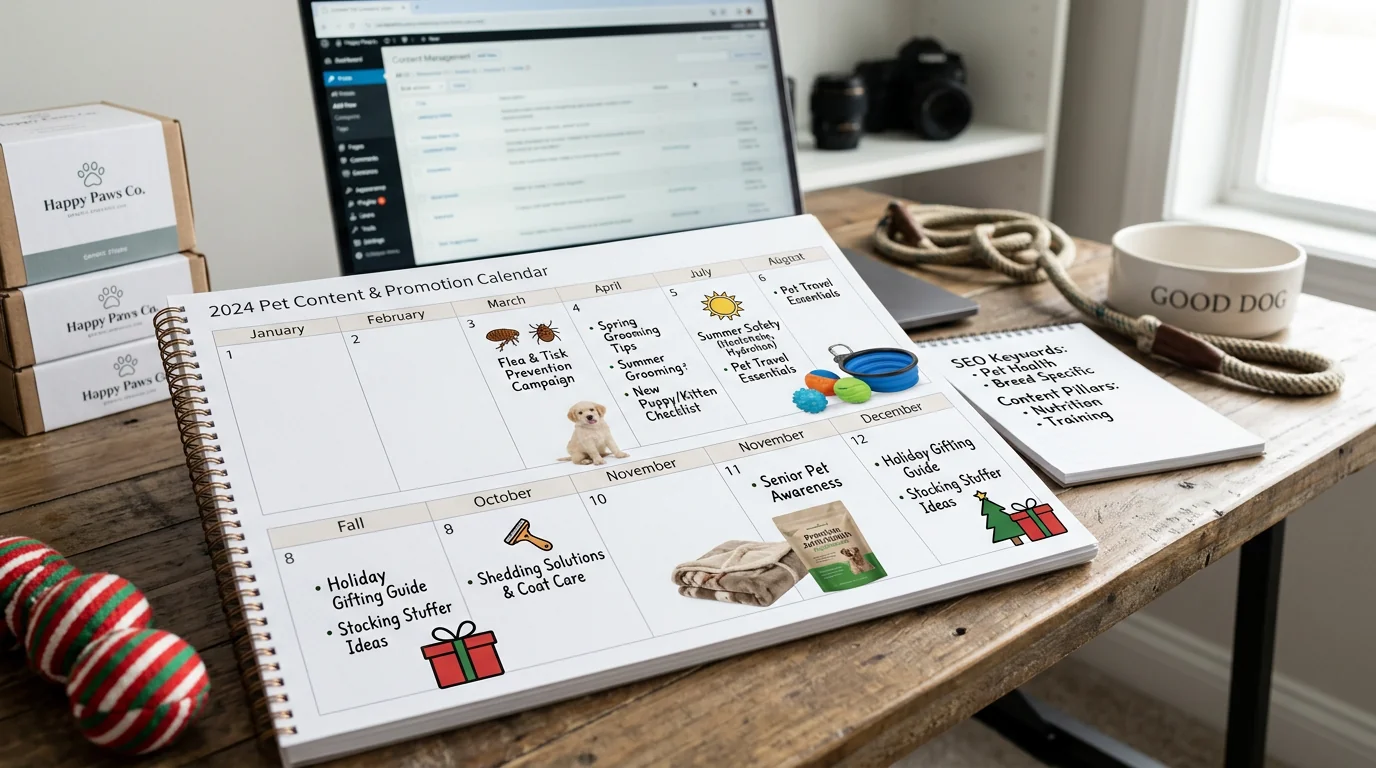
Table of Contents +
- Seasonal and Trend Calendars for Pet eCommerce: From Flea Season to Holiday Gifting
- Quick decision guide: If X situation, then Y action
- 12-month build: Health cycles, breed needs, and gifting peaks
- Content-to-inventory mapping: From keyword to SKU and buffer stock
- Monitoring guidance: What to watch at 7-14 days and 4-8 weeks
- Practical safety boundaries for seasonal promotions
- Evidence status: What data supports these timings
- Template: 12-month calendar fields you can duplicate
- Internal linking and schema to connect content with products
- Frequently Asked Questions
- Conclusion
- References
Build a 12-month pet eCommerce calendar that aligns flea/tick peaks, breed needs, and gifting surges with inventory, content, and promos.
Seasonality drives discoverability, demand, and margins in pet retail. Miss a window, and you leave revenue on the table. Hit it, and you compound growth.
This guide shows how to build a 12-month, data-timed pet promotion calendar. You will align parasite prevention cycles, breed-specific needs, and holiday pet gifting. You will also connect content timing with inventory and compliance boundaries.
Seasonal and Trend Calendars for Pet eCommerce: From Flea Season to Holiday Gifting
Scenario focus: Align flea/tick season and holiday gifting in one 12-month calendar
We will time flea season marketing alongside gifting peaks to stabilize cash flow. This approach spreads risk across health, lifestyle, and occasions. It also lets you reuse templates while adapting angles by region and breed.
Assumptions and regions: US/UK with climate variance
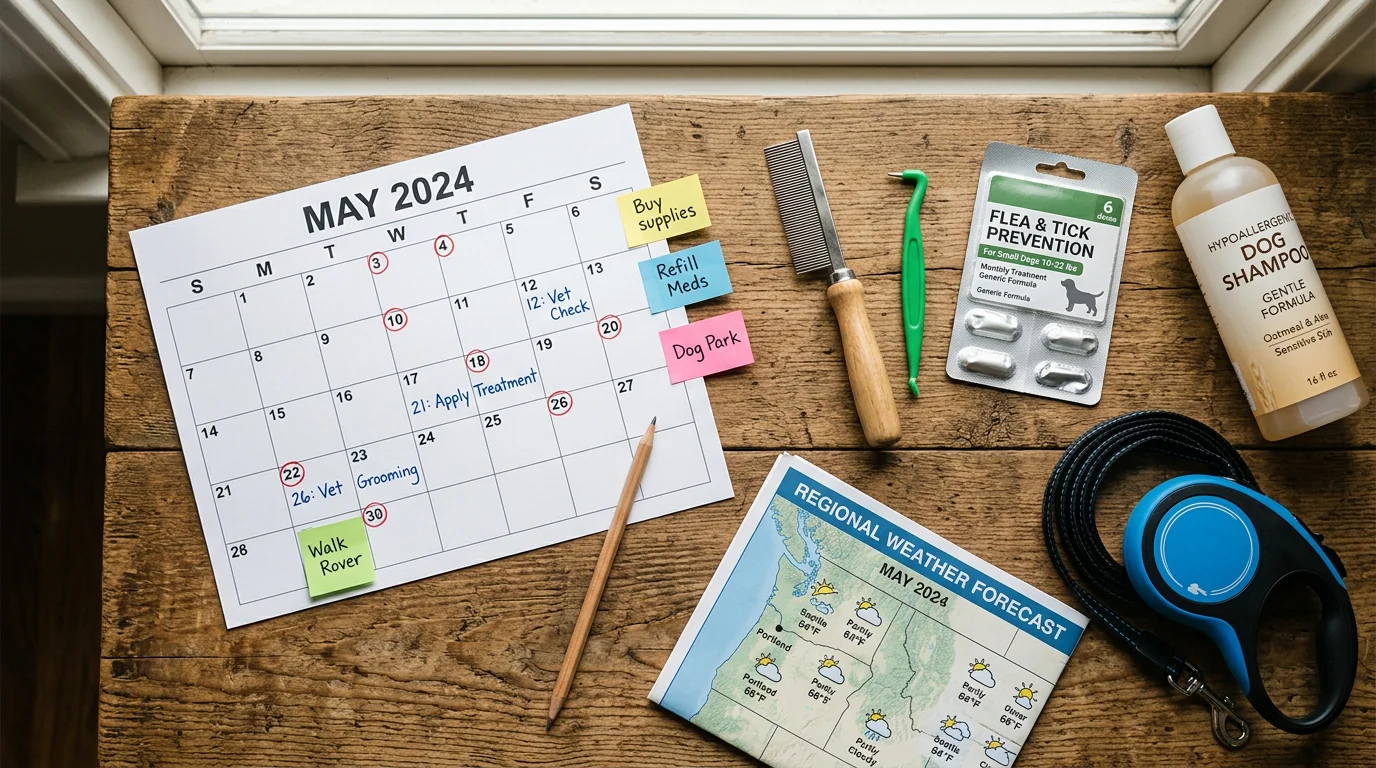
Plan around temperate climates with earlier parasite activity in warmer states and milder UK regions. Northern zones experience later flea/tick peaks and sharper winter needs. Segment calendars at least by three climate bands.
Inputs you need: product mix, margins, lead times, and search data
Collect SKU costs, target margins, and MOQs. Map supplier lead times, freight variability, and buffer stock. Track search volume baselines by month. Evidence suggests sustained pet ecommerce trends now shape seasonality itself[2].
Petbase writes and publishes this kind of content automatically - 10 SEO articles per month for pet businesses - start your free trial.
Quick decision guide: If X situation, then Y action
Situations and actions (5-7 concise rules)
- If regional temperatures rise early, then launch parasite content and ads two weeks sooner than planned.
- If search interest is up 20% week over week, then raise buffer stock by 10-15% for top SKUs.
- If PDP conversion drops below baseline during peak, then switch hero to a trusted brand or add a comparison chart.
- If margins compress due to promo stacking, then pivot to bundles that anchor premium add-ons; bundles often increase perceived value[3].
- If cold weather arrives early, then accelerate winter care content and delay non-seasonal launches one sprint.
- If gift searches surge pre-peak, then gatekeep stock for bundles and bestsellers to protect availability.
- If repeat customers decline, then increase personalization in content blocks and emails; personalization may strengthen loyalty in pet verticals[1].
12-month build: Health cycles, breed needs, and gifting peaks
Q1 (Jan-Mar): New-year health, shedding prep, flea pre-awareness
Leverage resolutions with preventive health content and grooming readiness. Publish flea education 6-8 weeks before local peaks to capture pre-purchase queries. Use breed size modifiers in titles for relevance. For keyword selection, see problem- and breed-driven keyword research methods.
Q2 (Apr-Jun): Spring parasites, allergy spikes, puppy season
Focus on parasite preventives, seasonal allergies, and training essentials. Create size- and life-stage variants for dosing clarity. Support merchandising with breed-, size-, and life-stage-aware product page templates that reduce confusion during peak traffic.
Q3 (Jul-Sep): Heat safety, travel, late-summer fleas/ticks
Publish heat exposure safety, hydration aids, and travel packing guides. In late summer, refresh parasite reminders and discounts to clear inventory responsibly. Improve guide-to-PDP flow using internal linking blueprints that move shoppers from blog to basket.
Q4 (Oct-Dec): Holiday gifting, winter care, clearance and bundles
Start holiday pet gifting pages 8-10 weeks pre-Black Friday. Add winter paw care, coats, and indoor enrichment pages. Use end-of-year bundles to manage overstock while highlighting premium upgrades. Segment gift guides by budget ranges and recipient profiles.
Content-to-inventory mapping: From keyword to SKU and buffer stock
Lead time math: search interest vs. PO dates
Backdate content by 6-10 weeks from expected peaks for crawling and ranking. Align POs 8-12 weeks pre-peak, adjusted for supplier reliability. For faster execution, many teams use Petbase AI to generate topics, drafts, and launch sequences tied to SKU priorities.
Bundle logic: breed/size and life-stage variations
Offer small, medium, and large variants, plus life-stage options. Include complementary items, such as shampoos with brushes, or preventives with applicators. Life-stage bundles may improve perceived value and reduce choice overload during seasonal spikes[3].
Monitoring guidance: What to watch at 7-14 days and 4-8 weeks
Early signals (7-14 days): rankings, CTR, PDP clicks, stock velocity
Check rank movement for head and modifier terms. Track guide CTR to PDPs and on-page engagement. Compare unit velocity to buffer assumptions. Segment traffic by audience cohorts; behavior varies across owner groups and influences early conversion[4].
Cycle signals (4-8 weeks): margin mix, return rate, regional lift
Evaluate margin contribution by SKU and bundle. Monitor returns for sizing or expectation issues. Compare regional lift against climate band forecasts. Sustained gains may indicate successful alignment between pet retail seasonality and search intent.
Practical safety boundaries for seasonal promotions
Inventory risk caps and backorder thresholds
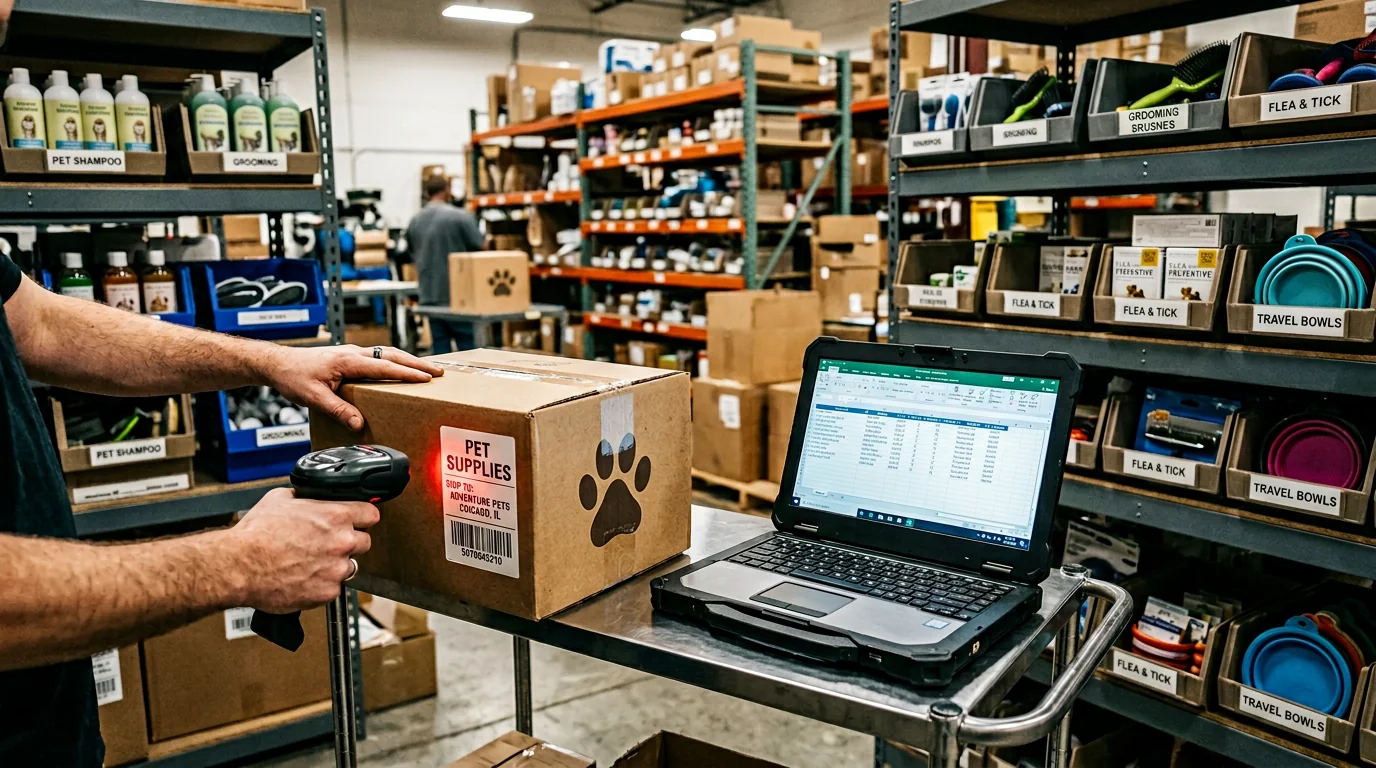
Cap seasonal buys to a defined percentage of forecasted peak demand. For volatile items, hold 15-25% as safety stock. Set backorder thresholds to avoid overselling. Communicate ETAs and provide substitutes when thresholds trigger.
Medical claims and compliance for parasite products
Avoid diagnostic or curative claims unless approved. Use cautious phrasing that emphasizes prevention and general care. Verify labels and region-specific regulations before campaigns. Evidence suggests clear education supports trust and repeat purchase in pet eCommerce[1].
Evidence status: What data supports these timings
Search trend baselines and regional variability
Search data shows pre-peak information seeking precedes purchases by weeks. Pandemic-era shifts also extended digital discovery windows for pet supplies, moderating traditional seasonality in some markets[2].
Veterinary and retail seasonality patterns
Industry research highlights growth and the importance of personalization and automation for loyalty, reinforcing timed content and merchandising decisions across the calendar[1]. Bundling by life stage and needs further aligns with consumer expectations during peaks[3].
Template: 12-month calendar fields you can duplicate
Columns: month, search peak window, hero SKU, content angle, promo, stock buffer
Use this compact structure to operationalize your pet promotion calendar. It keeps “one source of truth” while leaving room for regional forks and breed-specific branches. For a broader strategic context, see our master pet eCommerce content plan.
| Month | Search Peak Window | Hero SKU | Content Angle | Promo | Stock Buffer |
|---|---|---|---|---|---|
| Jan | Late Feb-Mar (pre-flea) | Preventive A | New-year checklists | Educate + soft bundle | +10% |
| Apr | Apr-May | Allergy Relief | Seasonal triggers | BOGO variant | +20% |
| Nov | Black Friday | Gift Bundle | Holiday pet gifting | Tiered spend | +25% |
Internal linking and schema to connect content with products
Pillar-supporting links and product-rich snippets
Anchor seasonal guides to a strategy hub, then point to PDPs and comparisons. Use clear anchor intent and limit links per section to maintain focus. Add Product, FAQ, Review, and HowTo schema to strengthen relevance signals; see schema for pet eCommerce for implementation patterns.
Frequently Asked Questions
When should pet stores start publishing flea and tick content?
Evidence suggests starting 6-8 weeks before regional flea/tick peaks to capture pre-purchase searches. In many US regions, that means late February to March; adjust earlier for warmer climates.
How far ahead should I plan holiday pet gifting pages?
Plan and publish gift guides 8-10 weeks before Black Friday to build indexing and backlinks. Refresh pricing and stock weekly in November to reduce out-of-stock clicks.
Do breed-specific pages really help seasonal conversion?
Search data indicates breed and size modifiers can lift CTR and relevance. Matching content to breed needs (e.g., heavy shedders in spring) may support higher add-to-cart rates.
How do I handle regional seasonality differences?
Segment calendars by climate zone and use geo rules on your store or content to surface the correct promos. Monitor regional search interest and adjust inventory buffers accordingly.
What metrics show my seasonal calendar is working?
Look for improved rankings on seasonal terms, rising PDP click-through from guides, stable stock coverage during peaks, and margin mix improvements from bundles.

Conclusion
A disciplined seasonal calendar synchronizes search demand with stock and messaging. Start early, localize by climate, and diversify offers across health cycles and holiday pet gifting. Use cautious claims, clear schema, and measured buffers. Over time, your cadence may stabilize growth through changing pet ecommerce trends and evolving shopper behavior. This approach builds resilience while keeping your brand present during every critical peak in the year.
References
- YH Lee et al. (2025). Primary Determinants and Strategic Implications for Customer Loyalty in Pet-Related Vertical E-Commerce: A Machine Learning Approach. Systems. View article
- Z Balogh et al. (2025). Pet supplies, toddlers and electronics: Long-term changes in three e-commerce product segments during and after the COVID-19 pandemic. Society and Economy. View article
- L Ting (2024). Marketing Plan for a Pet Shop in Shanghai. 2024 - search.proquest.com. View article
- J Xie (2025). Comparative study of consumer behavior patterns among different pet owner groups. SHS Web of Conferences. View article