Pet Content Automation: The Complete Orientation Guide for Pet Brands, Retailers, and Clinics


Table of Contents +
- What Pet Content Automation Is-and Why It Matters Now
- What to Prioritize First: Foundations Before Scale
- Use Cases by Channel: Blogs, Product Pages, and Local Services
- Information Architecture and Scalability Considerations
- Common Mistakes and Misconceptions
- Governance, Measurement, and Seasonality-Without the Complexity
- International Considerations and How This Guide Was Built
- Frequently Asked Questions
- References
Learn what pet content automation is, why it matters, when to use it, and how to prioritize use cases across blogs, products, and local services.
Organic growth in the pet sector now rewards brands that publish consistently, cover intent thoroughly, and connect content to products and services. Manual execution rarely keeps pace.
This guide explains pet content automation for blogs, product pages, and local services. You will learn how to prioritize, avoid risks, design scalable architecture, and set light governance that protects brand voice while improving discoverability.
What Pet Content Automation Is-and Why It Matters Now
Definition, scope, and benefits across blogs, PDPs, and local pages
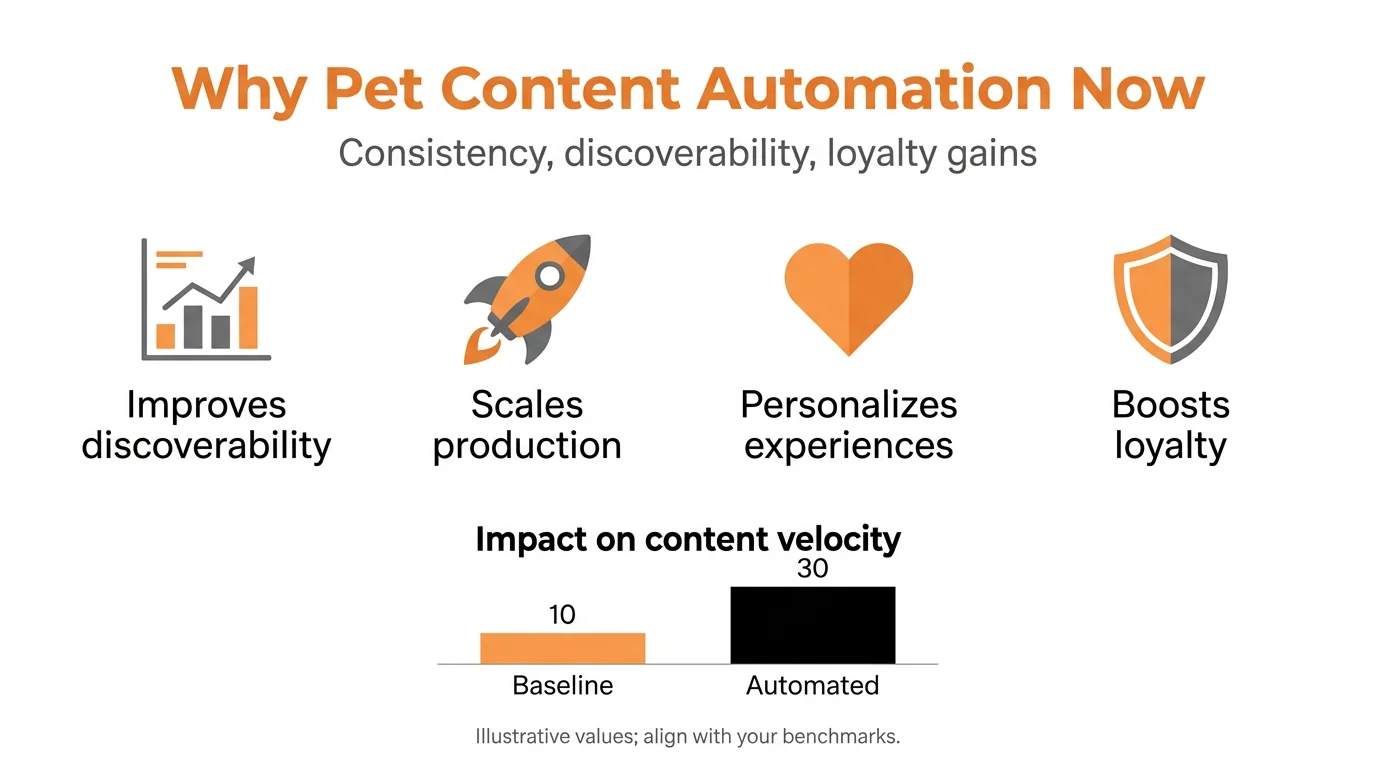
Pet content automation is the structured use of AI-assisted workflows to research topics, draft assets, and maintain on-site SEO across blogs, PDPs, and local pages. It supports pet SEO automation, pet brand SEO, pet retailer SEO, and veterinary SEO goals.
In a fast-growing pet market, consistent, intent-matched coverage improves discoverability and loyalty. Research links personalization and automation to customer value creation, with the industry expanding at notable rates[3]. SEO remains a core technical lever for pet brands to capture demand efficiently[2].
How automation supports topical authority without losing brand voice
Automation organizes coverage by themes-breeds, sizes, life stages, and conditions-while enforcing tone, compliance statements, and naming conventions. The result is breadth, depth, and consistency without drifting from brand voice.
Programmatic pet SEO accelerates repetitive structures, while editors apply light QA to uphold E-E-A-T. Authority builds through comprehensive hubs and responsible interlinking across educational and commercial content.
Routing: See Keyword gap analysis specialized for pet categories and breeds (supporting post #2)
Identify high-impact opportunities with a pet-specific diagnostic. Explore Keyword gap analysis specialized for pet categories and breeds to find missed queries your catalog and services can satisfy.
Petbase automates SEO content for veterinary clinics - so you can focus on patients, not blog posts - start your free trial.
What to Prioritize First: Foundations Before Scale
Start with management pages, forage topics, and basic nutrition-style essentials: blogs, top PDPs, and core service pages
Prioritize what drives the most trust and revenue. Stabilize evergreen blog coverage around owner questions. Elevate your highest-margin PDPs with clear attributes and care relevance. Strengthen core local service pages with precise offerings and FAQs.
Use intent tiers to decide coverage depth. Informational queries anchor education. Commercial queries map to bundles, variants, and size guidance. Local intent pairs services with neighborhoods and hours. Address these foundations before scaling templates.
Cadence and editorial planning at a high level (no tooling details)
Set a sustainable publishing rhythm that blends evergreen, seasonal, and product-aware topics. Balance coverage across categories, life stages, and sizes. Track gaps and prune underperforming themes to reinforce topical authority.
Many teams maintain rhythm with a lightweight planning workflow. For a structured kickoff, see Automate a 30-day pet blog calendar that matches real owner searches. For scalable upkeep, some teams adopt Petbase AI to align research, drafting, and publishing across templates.
Routing: Automate a 30-day pet blog calendar that matches real owner searches (supporting post #0) and Keyword gap analysis specialized for pet categories and breeds (supporting post #2)
Build momentum with Automate a 30-day pet blog calendar that matches real owner searches, then refine priorities using Keyword gap analysis specialized for pet categories and breeds.
- Stabilize foundations: evergreen blogs, top-revenue PDPs, and primary local service pages aligned to search intent.
- Implement guardrails: tone, disclaimers, expert review, and internal links that connect education to SKUs or services.
- Design scalable IA: hub-and-spoke topics and safe templates for breeds, sizes, and life stages.
Use Cases by Channel: Blogs, Product Pages, and Local Services
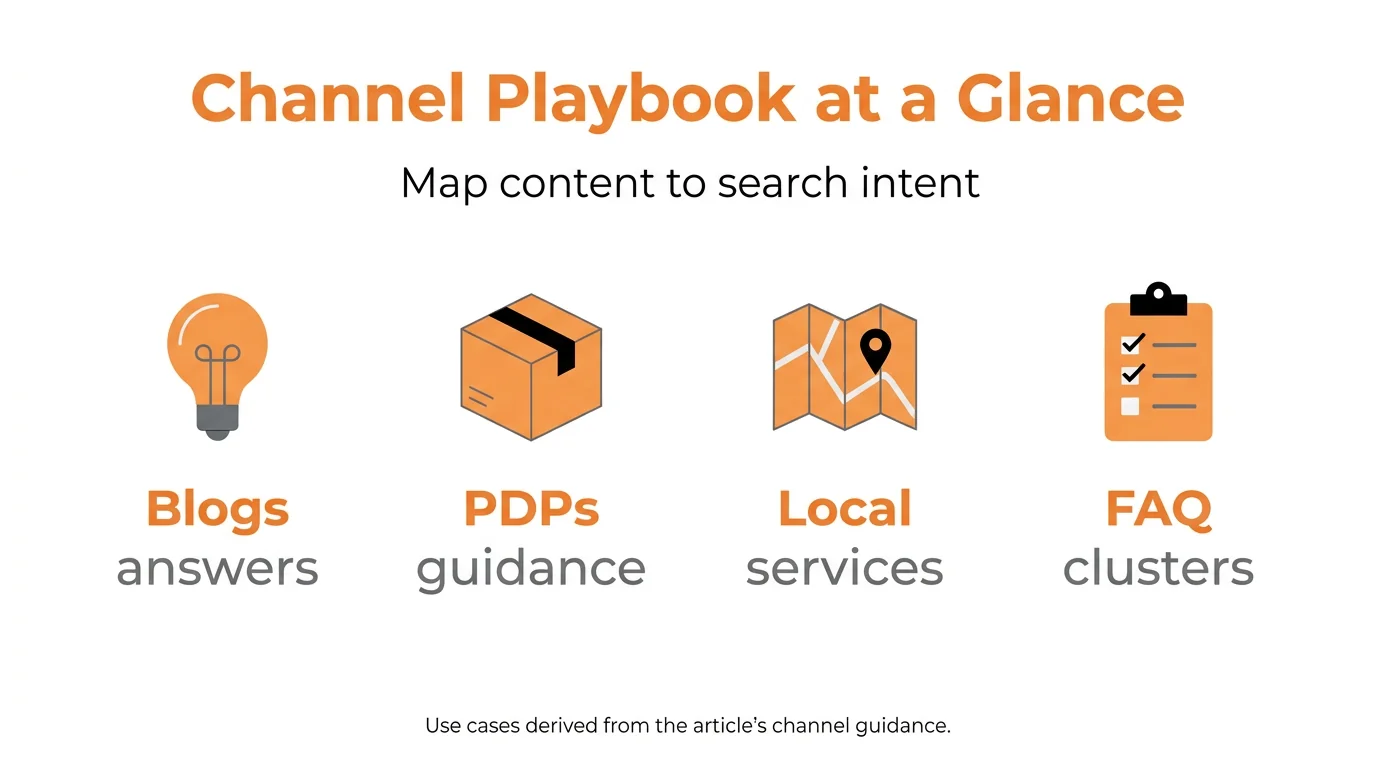
Blogs: evergreen guides, FAQs, and seasonal themes without deep how-to steps
Use blogs to answer recurring owner questions, demystify options, and introduce category frameworks. Build FAQ clusters for common concerns. Use seasonal content to surface timely care considerations and relevant bundles.
Keep posts intent-clean and product-aware. Conclude with navigational choices that lead to categories, size variants, or services-never forced sales copy. This balance strengthens pet brand SEO while serving the reader first.
PDPs: attributes, breed/size relevance, and internal links conceptually
Automate structured attributes, benefits, and compatibility across sizes and life stages. Reinforce relevance with comparable alternatives and related accessories. Maintain descriptive titles and schema without sacrificing clarity.
For a deeper look at safe automation patterns, see Automate product page SEO without breaking brand voice. Robust PDP content can support product ranking alongside broader acquisition efforts[1].
Local services: service pages, FAQs, and profiles conceptually
Automate consistent service descriptions, coverage areas, pricing logic ranges, and common FAQs. Add provider profiles with credentials and approach summaries. Connect posts that discuss conditions or routines to the most relevant services.
For execution details, visit Local SEO automation for vets, groomers, and trainers. Ethical, accurate local content advances veterinary SEO and trust while aiding conversions.
Routing: Automate product page SEO without breaking brand voice (supporting post #4) and Local SEO automation for vets, groomers, and trainers (supporting post #5)
Explore templates and safeguards in Automate product page SEO without breaking brand voice, then extend to local with Local SEO automation for vets, groomers, and trainers.
Information Architecture and Scalability Considerations
Template thinking for breeds, sizes, and life stages-at a conceptual level
Design flexible templates that encapsulate common variables: size, breed family, life stage, and activity level. Each template enforces unique value through attribute combinations, FAQs, and relevant cross-links-avoiding duplication.
Programmatic pet SEO should emphasize intent differentiation. Educational templates answer care questions. Commercial templates resolve comparison and fit. Local templates emphasize location cues and credentials.
How hub-and-spoke structures guide crawlers and readers
Use hubs to summarize a category or condition. Link spokes to deeper answers, compatible products, and nearby services. This architecture aids crawl efficiency and clarifies the path from research to purchase.
Routing: Safely scale programmatic pages for breeds, sizes, and life stages (supporting post #3)
Review guardrails and IA patterns in Safely scale programmatic pages for breeds, sizes, and life stages before expanding templates at volume.
Common Mistakes and Misconceptions
Over-automating without guardrails; skipping topic intent and E-E-A-T
Unconstrained generation risks thin pages, medical ambiguity, and tonal drift. Always define intent boundaries, disclaimers, and expert review. In pet commerce, robust SEO fundamentals remain critical to visibility and trust[2].
Balance automation with oversight. Personalization and structured experiences drive loyalty, but only when aligned to genuine needs and accurate guidance[3].
Confusing volume with authority; neglecting internal link paths to SKUs
More pages do not guarantee authority. Authority comes from comprehensive coverage, clear navigation, and relevance. Tie educational pages to commercial paths using Product-aware internal linking that moves readers to SKUs.
SEO and complementary channels can reinforce discovery, but structure and relevance remain ranking foundations-spend volume where it compounds equity[1].
Routing: Monitoring and guardrails to reduce AI content risk (supporting post #7) and Product-aware internal linking that moves readers to SKUs (supporting post #1)
Set protections with Monitoring and guardrails to reduce AI content risk, and connect interest to action through Product-aware internal linking that moves readers to SKUs.
Governance, Measurement, and Seasonality-Without the Complexity
Define light QA, topical guardrails, and success signals conceptually
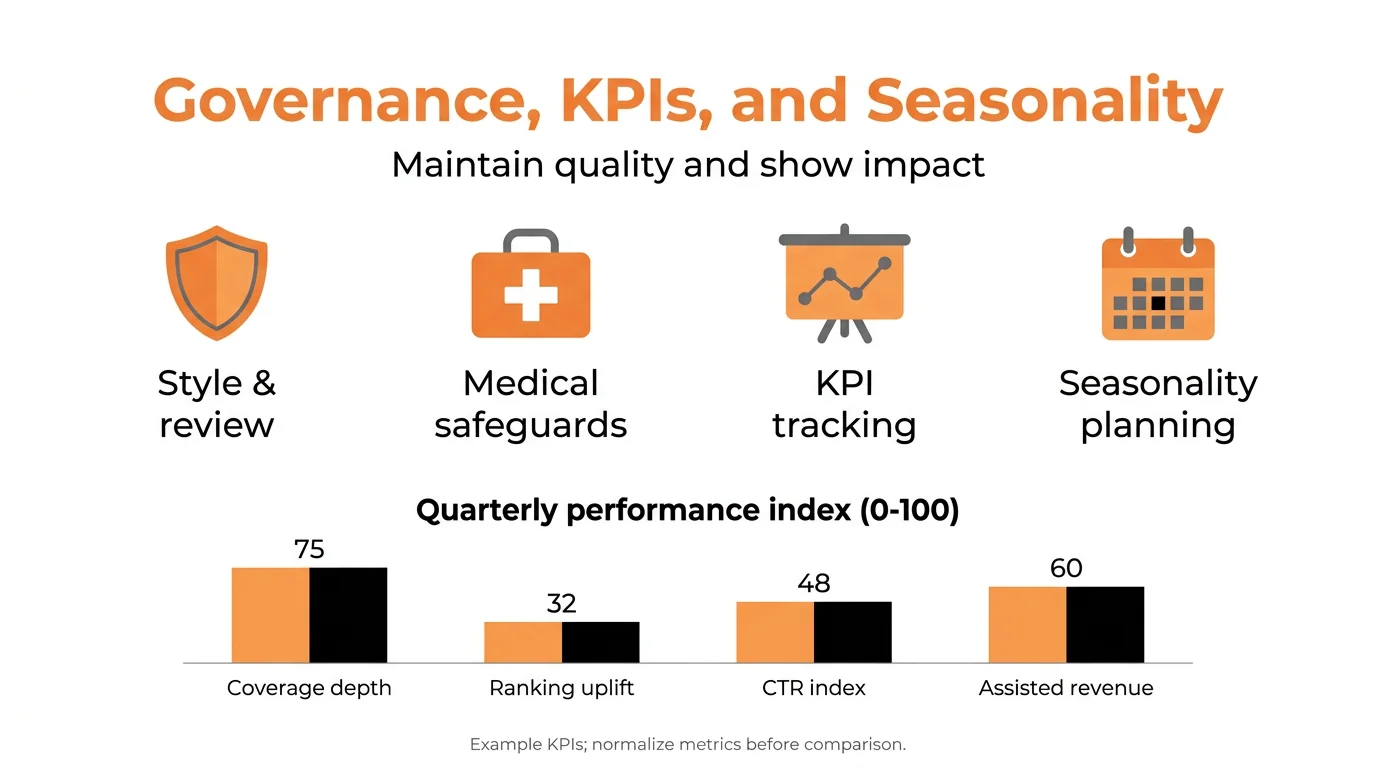
Adopt a concise style guide, medical disclaimers, and factual review steps. Track success through coverage depth, ranking uplift, click-through, assisted revenue, and local engagement. Keep the process lean to preserve velocity.
Codify exceptions for sensitive topics and clinical language. Establish an escalation path when queries imply medical urgency. Build reviewer accountability and change logs with Monitoring and guardrails to reduce AI content risk.
Plan around seasonal peaks and promotions at a high level
Seasonality shapes pet demand across care, travel, and gifting. Reserve capacity for promotional bundles and educational refreshes. Coordinate blogs, PDP banners, and local pages to reflect timely needs and availability.
Inbound content and social coordination correlates with higher sales for pet SMEs when aligned to demand cycles[4]. For planning frameworks, see Automate seasonal and promotional pet content without chaos.
International Considerations and How This Guide Was Built
When to localize content for US/UK/DACH without deep implementation
Localize when product regulations, clinical terms, sizing conventions, or seasonality differ materially. Use country-specific examples, measurements, and pricing logic. Keep brand voice consistent while adapting vocabulary and meta patterns.
Start with high-impact templates and expand to education hubs once governance is stable. Learn more through Multilingual pet content automation for US/UK/DACH.
How recommendations were developed (practice, literature, observation)
These principles synthesize operating experience across pet eCommerce and clinics, supported by pet-industry SEO research and market evidence on automation and personalization effects[2][3]. Observations emphasize intent clarity, structured IA, and light but consistent QA.
Routing: Multilingual pet content automation for US/UK/DACH (supporting post #6)
For localization patterns and guardrails, visit Multilingual pet content automation for US/UK/DACH.
Frequently Asked Questions
What is pet content automation?
It’s the use of AI-assisted systems to research, create, and maintain SEO content for pet brands, retailers, and clinics. It focuses on consistent publishing, topical coverage, and product-aware linking.
Where should a pet business start with automation?
Begin with foundational pages: core blog topics that match owner searches, top-revenue product pages, and primary local service pages. Expand only after quality and structure are stable.
How does automation affect brand voice?
With governance and style constraints, automated outputs can stay on-brand. A light review process and clear tone guidelines help maintain consistency across pages.
Is programmatic SEO safe for breed or size templates?
Yes, when constrained by quality rules, unique value, and clear intent matching. Use templates conceptually first, then scale with safeguards to avoid thin or duplicate content.
How do internal links support conversions?
Product-aware internal links connect educational topics to relevant SKUs or services, guiding readers from research to solutions while strengthening site architecture.
References
- H Ibrahim et al. (2024). A Dual-Focused Approach to E-Commerce Product Ranking: Leveraging Search Engine Optimization and Search Engine Marketing.. Library of Progress ….
- S Xu (2024). Research on marketing strategies in the pet food industry: A case study based on existing brands. SHS Web of Conferences. View article
- YH Lee et al. (2025). Primary Determinants and Strategic Implications for Customer Loyalty in Pet-Related Vertical E-Commerce: A Machine Learning Approach. Systems. View article
- BJ Vasquez-Reyes et al. (2024). Inbound social media marketing and increased sales in SMEs: a correlational study in the pet food industry. Innovative Marketing. View article