Build a 30-Day Automated Pet Blog Calendar That Mirrors Real Owner Searches


Table of Contents +
- Scenario: You need a 30-day calendar that follows real pet owner questions without manual topic picking
- Data model: Turn owner intent into a topic matrix you can automate
- Automation workflow: From keyword harvesting to a 30-day scheduled plan
- Quick decision guide
- Templates that mirror search language without sounding robotic
- Monitoring guidance
- Practical safety boundaries for pet content
- Evidence status: what is reasonably supported vs. emerging
- How this integrates with Petbase’s pet content automation stack
- Frequently Asked Questions
- Conclusion
- References
Learn to auto-generate a 30-day pet blog plan that maps to real owner searches by species, breed, age, and condition-then schedule posts without manual picks.
Your next month of content should reflect what real owners ask every day. Stop guessing and let data shape a precise, automated pet blog calendar.
This matters because consistent, high-intent topics compound organic reach and conversions. You will learn how to define scope, model owner intent into a matrix, automate clustering and scheduling, and apply monitoring and safety guardrails.
Scenario: You need a 30-day calendar that follows real pet owner questions without manual topic picking
When manual topic picking stalls growth, shift to a system that mines owner language and deploys posts programmatically. The goal is reliable coverage of queries by species, breed, age, and condition with minimal hand selection.
Define scope: species, breeds, ages, conditions, and seasonal constraints
Decide on one to three species to prioritize. Layer breed-specific keywords, life stages, and notable conditions. Apply seasonal constraints like heat, holidays, travel, or allergens. Keep the scope realistic for 30 posts and measurable against pet SEO objectives.
Select sources of truth: search data, auto-complete, PAA, forums, and your product/services map
Collect queries from auto-complete, People Also Ask, Search Console, and owner forums. Cross-reference with products and services to ensure revenue relevance. Fill gaps where owners ask often and your site lacks answers or structured hubs.
Petbase handles this entire content workflow automatically - 10 SEO articles published to your blog every month - start your free trial.
Data model: Turn owner intent into a topic matrix you can automate
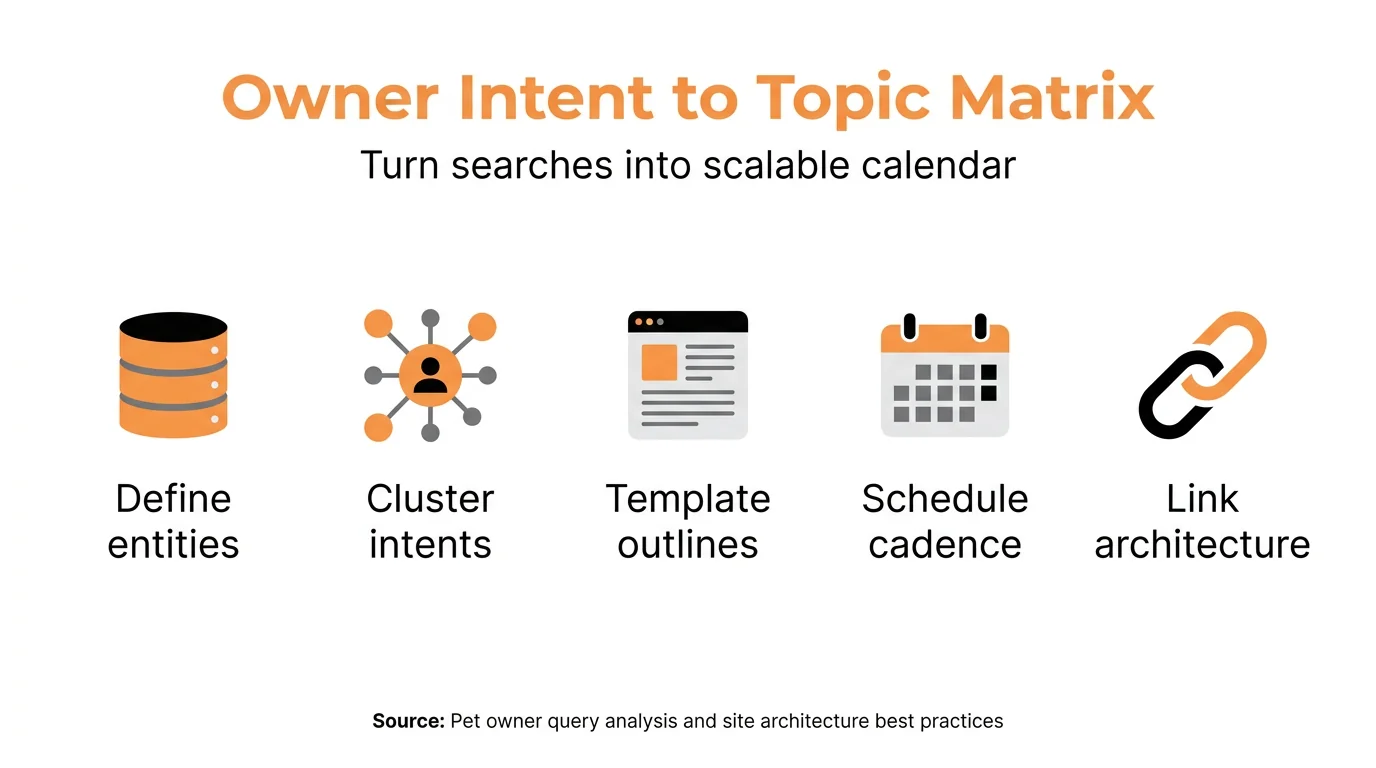
Translate pet owner search intent into a structured topic matrix. This enables scalable clustering, templating, and scheduling from a single data source. For big-picture context, see our pet content automation orientation guide.
Intent modeling aligns content supply with discoverable demand and supports crawlable site architecture, which research notes as foundational to effective SEO planning and execution[3].
Intent dimensions: species × breed × age × condition × task
Build rows from species and breeds, then add age and condition modifiers. Attach tasks such as diagnosis, prevention, training, diet, grooming, and recovery. This matrix yields repeatable, relevant pet blog ideas aligned to owner journeys.
Query patterns to capture (how long, what to do, can my, vs, cost, near me, safe for)
Map standard question shapes. Include “how long,” “what to do,” “can my,” “vs,” “cost,” “near me,” and “safe for.” Track synonyms and negative intents. Capture long-tail combinations for breadth without diluting topical authority.
Automation workflow: From keyword harvesting to a 30-day scheduled plan
Use a tight pipeline: harvest, cluster, template, and schedule. The workflow aims to standardize pet content automation while preserving owner-language fidelity and optimizing for pet SEO outcomes across the 30-day window.
Harvest: collect and normalize queries by intent strength
Aggregate keywords from auto-complete, PAA, Search Console, and competitor SERPs. Normalize entities and dedupe variations. Score by intent strength using modifiers like “near me,” “best,” “vs,” and SKU/service proximity. AI tools may accelerate this triage[2].
Cluster: group by entity and task using semantic/lexical signals
Group terms by species, breed, age, and condition. Split tasks: how-to, vs, symptoms, cost, or local. Use semantic similarity and shared SERP results to avoid fragmentation. Keep clusters tight enough to support focused answers.
Template: outline titles, briefs, and metadata per cluster
For each cluster, auto-generate a title mirroring query phrasing, a brief with subquestions, and metadata. Plan internal links to relevant category pages and SKUs. For product alignment guidance, see automated product page SEO for pet eCommerce.
Schedule: map 30 posts across days, owners’ peak times, and freshness rules
Assign one post per day for 30 days. Stagger high-intent clusters on peak engagement days. Front-load seasonal content and schedule republishing for freshness. Coordinate launches with seasonal and promotional automation to capture timely demand.
Quick decision guide
Use these rules to resolve planning trade-offs quickly. They align topic selection with your commercial model while respecting discoverability and owner-language signals.
If you sell products, prioritize how-to and comparison posts that can internally link to SKUs
Lead with “how to choose,” “vs,” and “best for” content. Map each post to specific product categories and cross-links. Emphasize breed/age fit to improve relevance and assisted conversions.
If you offer services, prioritize local-intent questions and procedure explainer pages
Focus on “near me,” “cost,” “what to expect,” and recovery timelines. Structure city and neighborhood modifiers in service hubs. For execution tactics, review local SEO automation for vets, groomers, and trainers.
If your catalog is narrow, deepen by breed/age modifiers over adding new species
Concentrate on breed-specific keywords, life stages, and conditions tied to your inventory. Depth strengthens topical authority and supports internal link density without creating thin satellite topics.
If queries are thin, expand to adjacent tasks (diet, training, grooming) for the same breed/age
Extend task coverage around the same entity set. Add FAQs addressing owner anxieties or time-sensitive scenarios. This maintains relevance while broadening reach and click pathways.
If seasonality spikes, front-load time-sensitive posts and republish past winners
Move urgent, seasonal topics to the first 10 days. Refresh proven posts with updated metadata and examples. Carry over internal links to current products or services for continuity.
If multiple breeds compete, choose the highest search volume × lowest KD cluster
Model expected clicks using volume, keyword difficulty, and SERP features. Prioritize clusters with transactional cues and feasible ranking windows to accelerate measurable impact.
Templates that mirror search language without sounding robotic
Owner language drives clicks, yet your voice must remain credible and clear. These templates preserve natural phrasing while maintaining editorial polish and on-brand authority.
Title formulas that reflect query phrasing
Use patterns such as “Is X safe for [breed/age]?”, “X vs Y: Which Is Better for [breed]?”, “How to [task] for [breed] [age]”, and “Cost of [service] Near Me: What Owners Should Know.”
Brief components: entities, questions to answer, product tie-ins, safety notes, sources
Specify species, breed, age, and condition. List PAA-style questions, owner anxieties, and success criteria. Identify internal links to product or service pages. Add safety disclaimers and credible sources to guide fact-checking and tone.
Monitoring guidance
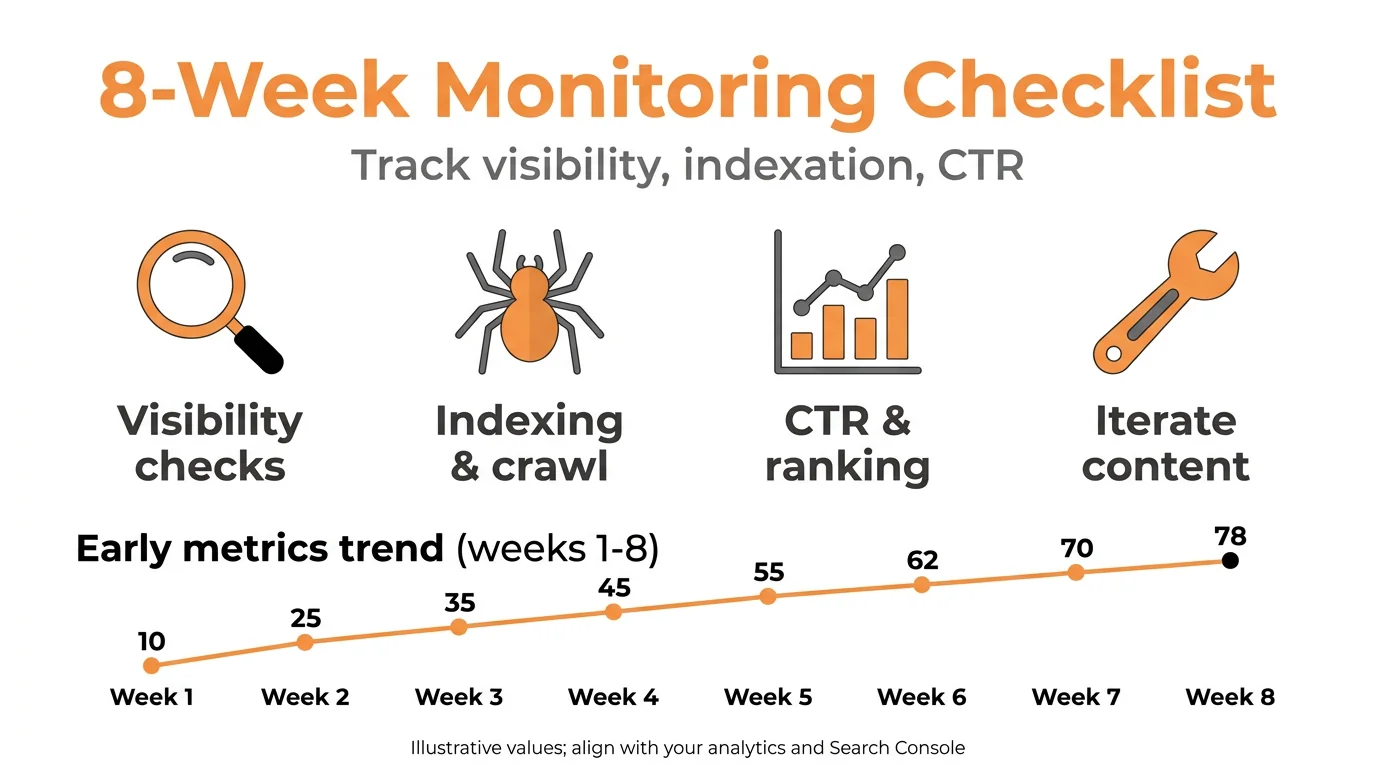
Treat the first two weeks as a visibility check, followed by performance diagnosis at weeks four to eight. Use Search Console, analytics, and logs to validate that queries match your clusters and templates.
After 7-14 days: indexation, crawl rate, early impressions by cluster
Confirm new URLs are indexed, fetch frequency is stable, and impressions appear for your exact modifiers. Early visibility on aligned queries indicates that your structure supports discoverability[4].
After 4-8 weeks: click-through rate, ranking by modifiers (breed/age), internal link assists
Evaluate CTR against SERP position, compare rankings across modifiers, and track assisted conversions from internal links. Adjust titles to mirror owner language more closely if CTR lags competitors[3].
Practical safety boundaries for pet content
Safety boundaries protect owners and your brand. Apply these safeguards across all automated outputs and briefs to maintain trust and regulatory prudence.
Medical disclaimers and when to advise vet consultation
Include clear disclaimers on medical or dosage topics. Advise professional consultation for emergencies, medication decisions, and unresolved symptoms. Provide non-alarmist guidance with action steps and triage tips.
Avoid unverified ingredient or dosage claims; cite reputable sources
Do not publish exact dosages, off-label uses, or unverified ingredient benefits. Cite veterinary associations, peer-reviewed sources, or manufacturer documentation when discussing safety, efficacy, or contraindications.
Use cautious language for breed/age sensitivities and conditions
Use conditional phrasing, acknowledge variability, and avoid absolutes. Clarify that sensitivities may differ by breed, age, and health status. Encourage gradual trials and observation where relevant.
Evidence status: what is reasonably supported vs. emerging
Apply evidence-aware thinking. The following statements reflect current research directions and should be tested in your environment before broad adoption.
Evidence suggests structured internal linking may support engagement and conversions
Automated internal link models using NLP can strengthen content relationships and user navigation, which may contribute to engagement and conversion improvements when implemented thoughtfully[1].
Seasonal publishing cadences may correlate with faster discovery for time-bound topics
Coordinating publishing with seasonal demand and promotions can align with known SEO planning principles, supporting earlier impressions and relevance for time-sensitive searches[3].
Owner-language mirroring may improve CTR; causation is not guaranteed
Mirroring query phrasing in titles and metadata is consistent with AI-assisted content optimization practices and may support higher CTR, though results vary by competition and SERP features[2].
How this integrates with Petbase’s pet content automation stack
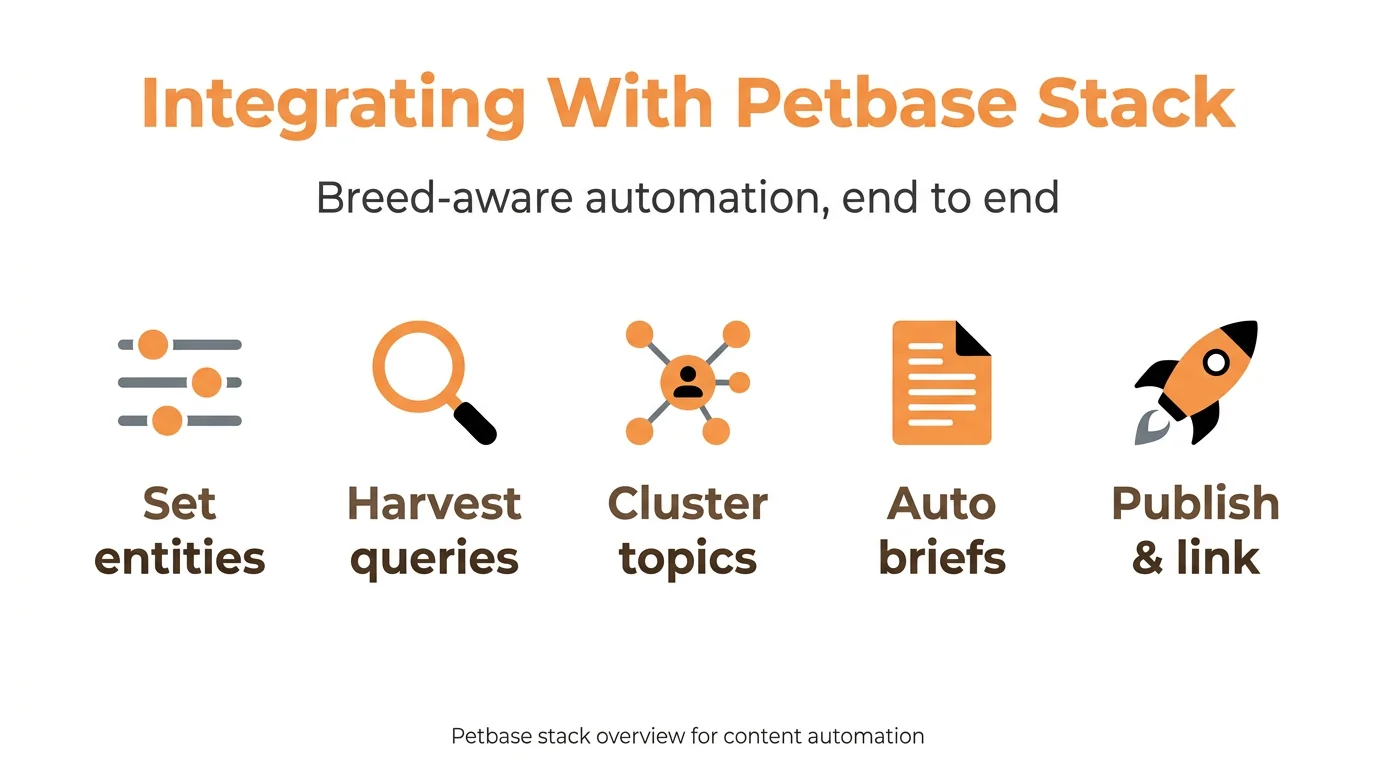
Automation works best when the pipeline is species- and breed-aware from the start. Use structured inputs to guide clustering, then auto-generate briefs that reflect owner questions and your commercial priorities.
Auto research and clustering aligned to species/breed/age/condition
Set species, breeds, ages, and conditions as fixed entities. The system harvests and clusters high-intent queries around them, ensuring coverage breadth without drifting from your product or service relevance.
Automatic briefs, writing, internal linking, and publishing in your brand voice
Generate briefs and drafts with entity lists, subquestions, and safety notes. Auto-insert contextual internal links and schedule publishing. For an end-to-end path, many teams use Petbase AI to streamline this workflow.
Frequently Asked Questions
How do I choose which species and breeds to include in a 30-day pet blog calendar?
Start with your products or services and current traffic gaps. Evidence suggests targeting breeds and life stages tied to your offerings may increase internal link value and relevance. Prioritize clusters with feasible difficulty.
Should I post daily or batch on specific weekdays?
Daily may support faster discovery, but batching on high-engagement days can help resource planning. Monitor impressions and CTR after 2-4 weeks to adjust cadence. Republish or reorder underperforming clusters to improve momentum.
How do I avoid duplicate content when using templates?
Vary entities, owner questions, examples, and source citations. Use unique breed/age modifiers and update internal links to contextually relevant products or services. Refresh metadata and FAQs to distinguish overlapping topics clearly.
What metrics indicate the calendar mirrors real searches?
Look for rising impressions in search queries that match your titles and H2s, increasing CTR on breed/age modifiers, and growth in assisted conversions from internal links. Monitor indexation speed and query alignment early.
How often should I refresh topics in the 30-day plan?
Review clusters monthly. Refresh posts when seasonality changes, products update, or when queries shift; republish with revised metadata and internal links as needed. Preserve URLs where possible to retain equity.
Conclusion
A reliable, automated pet blog calendar starts with intent modeling and ends with disciplined monitoring. Define entities and tasks, mirror owner phrasing, and schedule with seasonal awareness. Use safety guardrails and measured iterations. Over 30 days, this approach may compound discoverability, improve CTR, and strengthen internal link pathways. Keep testing templates, rebalancing clusters, and prioritizing breed- and age-specific relevance. With methodical automation, your content can align with real owner questions while supporting revenue goals sustainably.
References
- T Suresh (2025). Natural language processing for internal link optimisation: Automating content relationships for better search engine optimisation. Journal of Digital & Social Media Marketing.
- C Malaikani et al. (2026). AI AND DIGITAL MARKETING FROM AUTOMATION TO PERSONALIZATION. researchgate.net. View article
- S Das (2021). Search engine optimization and marketing: A recipe for success in digital marketing. 2021 - api.taylorfrancis.com. View article
- D Mladenović et al. (2023). Search engine optimization (SEO) for digital marketers: exploring determinants of online search visibility for blood bank service. Online information …. View article