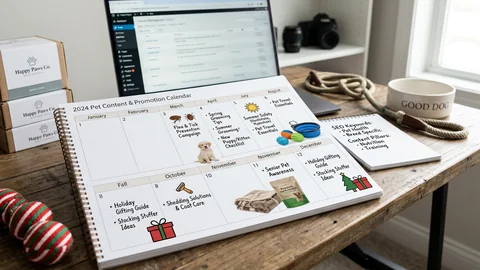
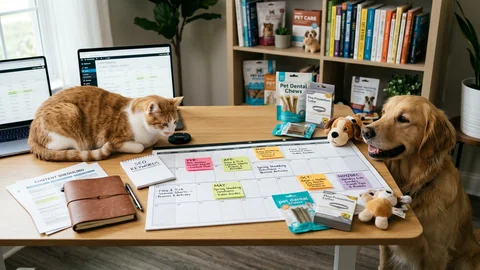
Seasonal and Promotional Automation for Pet Campaigns: Calendars, Bundles, and Launches

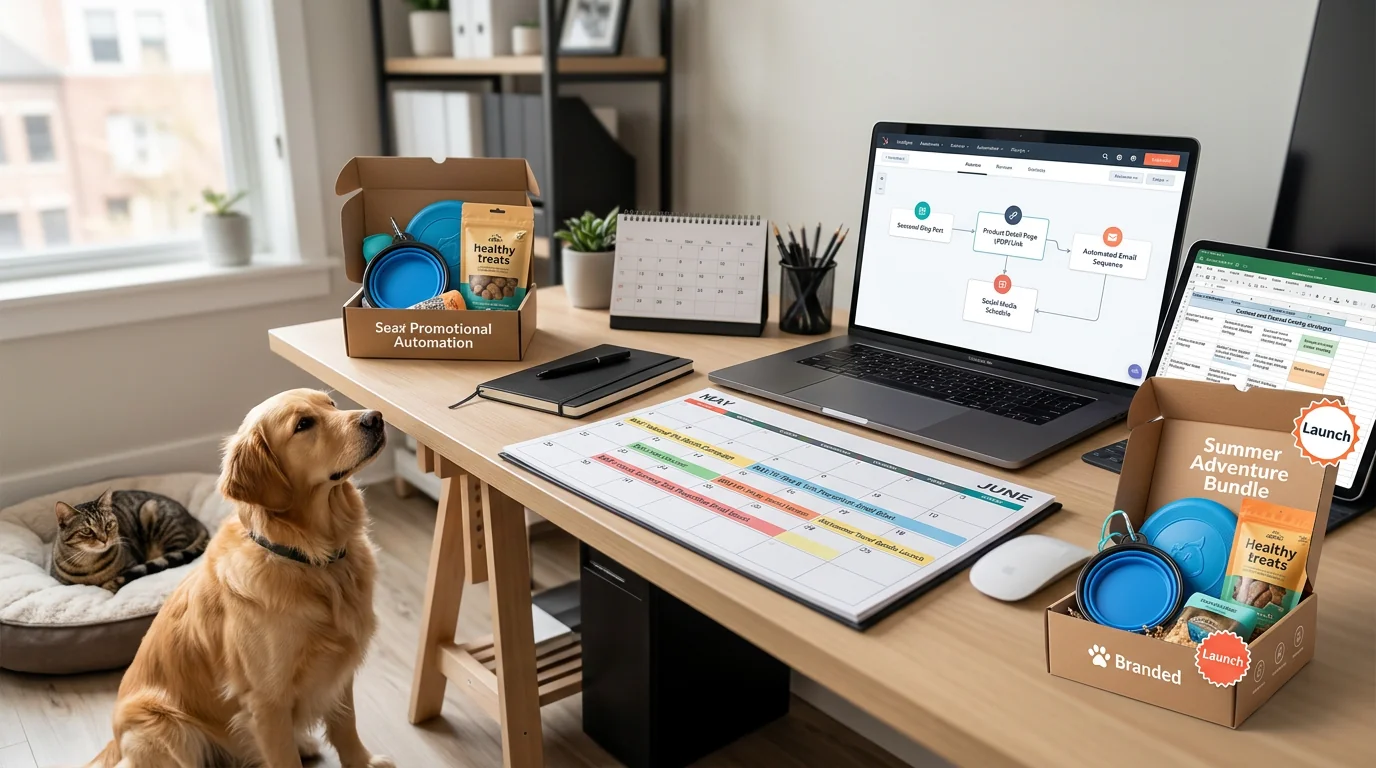
Table of Contents +
- Scenario: Automating Q2 flea & tick season with synchronized bundles and launches
- Quick decision guide
- Workflow: calendar, bundles, and coordinated publishing
- Monitoring guidance (7-14 days and 4-8 weeks)
- Practical safety boundaries
- Evidence status: what data suggests and where uncertainty remains
- Templates and assets to standardize
- Frequently Asked Questions
- Wrap-up: connect seasonal automation to your master plan
- References
Automate seasonal pet campaigns with synced calendars, bundles, and coordinated launches across blogs, PDPs, and email/social using internal links.
Seasonal demand moves fast in the pet category. Flea and tick concerns surge, holidays crowd the calendar, and breed days spark intent. Teams need synchronized content and promotions that publish on time.
Automation helps brands capture demand without chaos. This guide shows how to automate seasonal content for Q2 flea and tick season. You will learn calendar setup, bundle design, publishing cadence, and synchronized internal links that route traffic to revenue pages.
Scenario: Automating Q2 flea & tick season with synchronized bundles and launches
Map the season: timing, triggers, and inventory thresholds
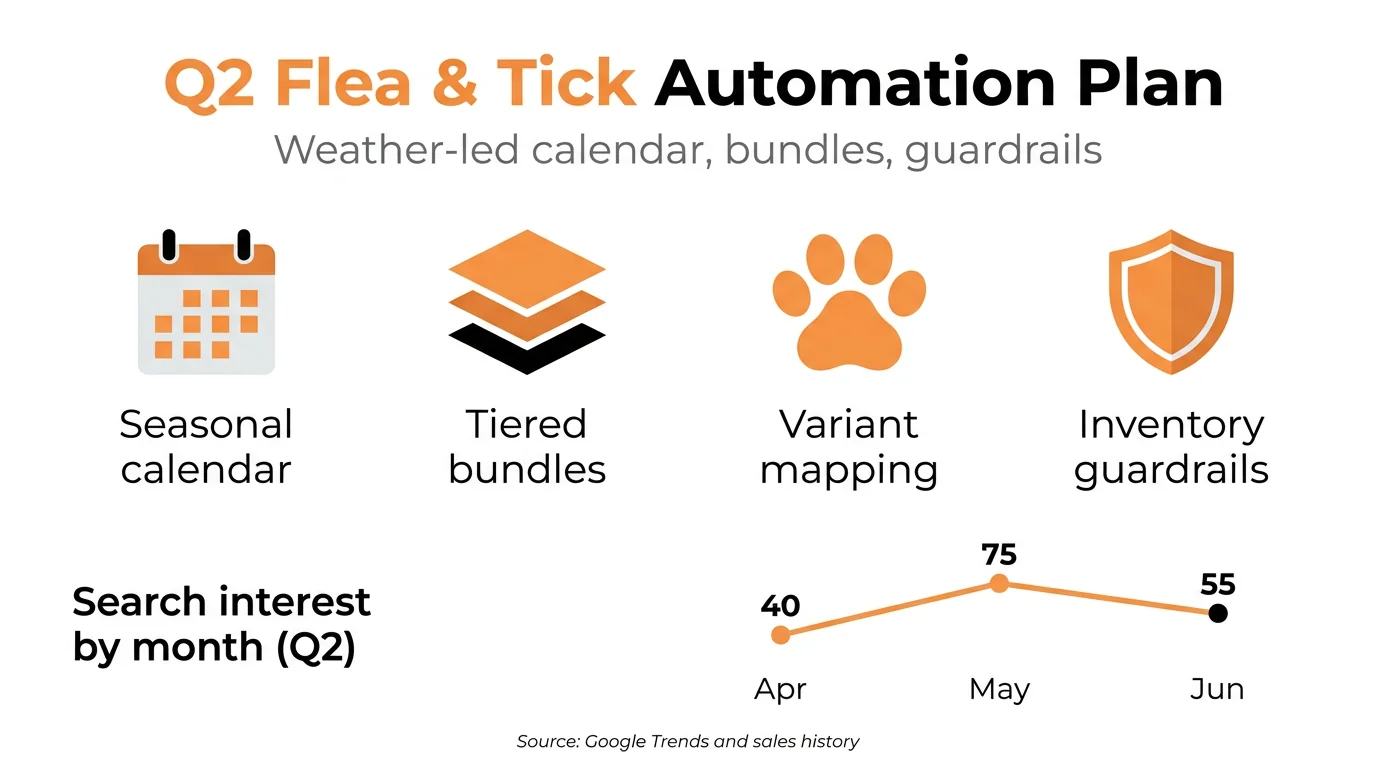
Start with a pet SEO calendar keyed to weather trends, search volume, and past sales. Define inventory guardrails and reorder thresholds. Regional weather variability may shift start dates by two to four weeks, so plan flexible buffers.[4]
Design the bundle architecture (good/better/best) tied to breeds and life stages
Create promotional bundles for pet products using clear tiers. Map size and life-stage needs into variants. Comparison blocks should explain differences plainly. Behavioral cues from reviews may inform which items attach most reliably.[2]
Build the content skeleton: blogs → PDPs → category hubs
Outline one comparison blog, one how-to, and a seasonal checklist. Each should link to the main bundle PDP and category hub. Align with your master strategy for pet content automation so assets compound rather than compete.
Schedule the launch: blog, PDP updates, email, and social in one calendar
Use a single calendar for automated product launches. Sequence pre-launch education, launch-day offers, and post-launch FAQs. Stagger channels across 24-72 hours to build momentum without flooding any one touchpoint.[3]
Automate internal links and schema so traffic flows to revenue pages
Implement an internal linking strategy that routes authority from blogs to bundle PDPs and category hubs. Add FAQ and Product schema where applicable. Strong, descriptive anchors may support higher CTR and intent fulfillment.[1]
Petbase handles this entire content workflow automatically - 10 SEO articles published to your blog every month - start your free trial.
Quick decision guide
If inventory is constrained, prioritize top-margin SKUs and delay long-tail blogs
Keep the category hub and primary bundle live. Temporarily pause long-tail blogs that could drive unavailable variants. Emphasize in-stock alternatives with clear messaging and expected replenishment windows.
If weather varies by region, segment calendars by geo signals before launch
Clone your pet SEO calendar by climate bands and search trends. Stagger launch dates one to three weeks. Localize examples in emails and social to match timing and expected parasite activity.[4]
If PDPs underperform, add FAQs and comparison blocks before writing new blogs
Conversion gaps often stem from missing clarity. Add dosage, usage, and safety FAQs. Insert a comparison table that clarifies good/better/best distinctions, supported by review excerpts where appropriate.[2]
If CAC rises in paid, shift budget to SEO pages with +3% CTR in Search Console
Reallocate spend to organic winners showing healthy CTR and impression growth. Strengthen internal links to those pages. Add price anchors and social proof to stabilize conversion during the shift.
If customer support tickets spike, convert answers into on-page FAQs and snippets
Mine tickets for repeat questions. Publish annotated FAQs on PDPs and blogs. Mark up with FAQ schema to capture search snippets and reduce repetitive inquiries across the season.
If bundles stall, test price anchors and swap low-attach items
Evaluate attach rate by line item. Swap underperformers for higher-utility accessories. Introduce price anchoring with the “best value” tier and state transparent savings ranges where permitted.
If breed queries surge, spin up breed-specific landers linked from the core bundle
Create breed or size landers with tailored fit guidance. Link them from the core bundle PDP. Use consistent modules and reuse FAQs to avoid thin content and confusion.
Workflow: calendar, bundles, and coordinated publishing
Calendar blueprint: milestones at T-45, T-21, T-7, launch, and T+14
T-45: finalize bundles, PDP modules, and schema. T-21: publish the checklist. T-7: publish how-to and comparison posts. Launch: refresh PDPs and send emails. T+14: analyze performance and refine. See build a 30-day automated pet blog calendar for cadence ideas.
Bundle setup: attach cross-sell rules, size/breed variants, and review pull-ins
Enable cross-sell rules from bundle to refills and accessories. Add size or life-stage options with clear labels. Surface recent reviews and usage tips to reduce hesitation and cart drop-off.[2]
Publishing cadence: pillar-supporting blog, how-to, and comparison post
Organize posts to educate, compare, and convert. From the comparison blog, link to the primary bundle PDP using anchors like “best flea & tick bundle for large dogs” and “vet-reviewed flea & tick kit.”
Cross-channel sync: email drips, social snippets, UTM tags, and timing windows
Coordinate educational emails, social teasers, and retargeting with consistent naming and UTMs. Teams may streamline planning and publishing with Petbase AI to keep content and PDP updates synchronized across the season.
Monitoring guidance (7-14 days and 4-8 weeks)
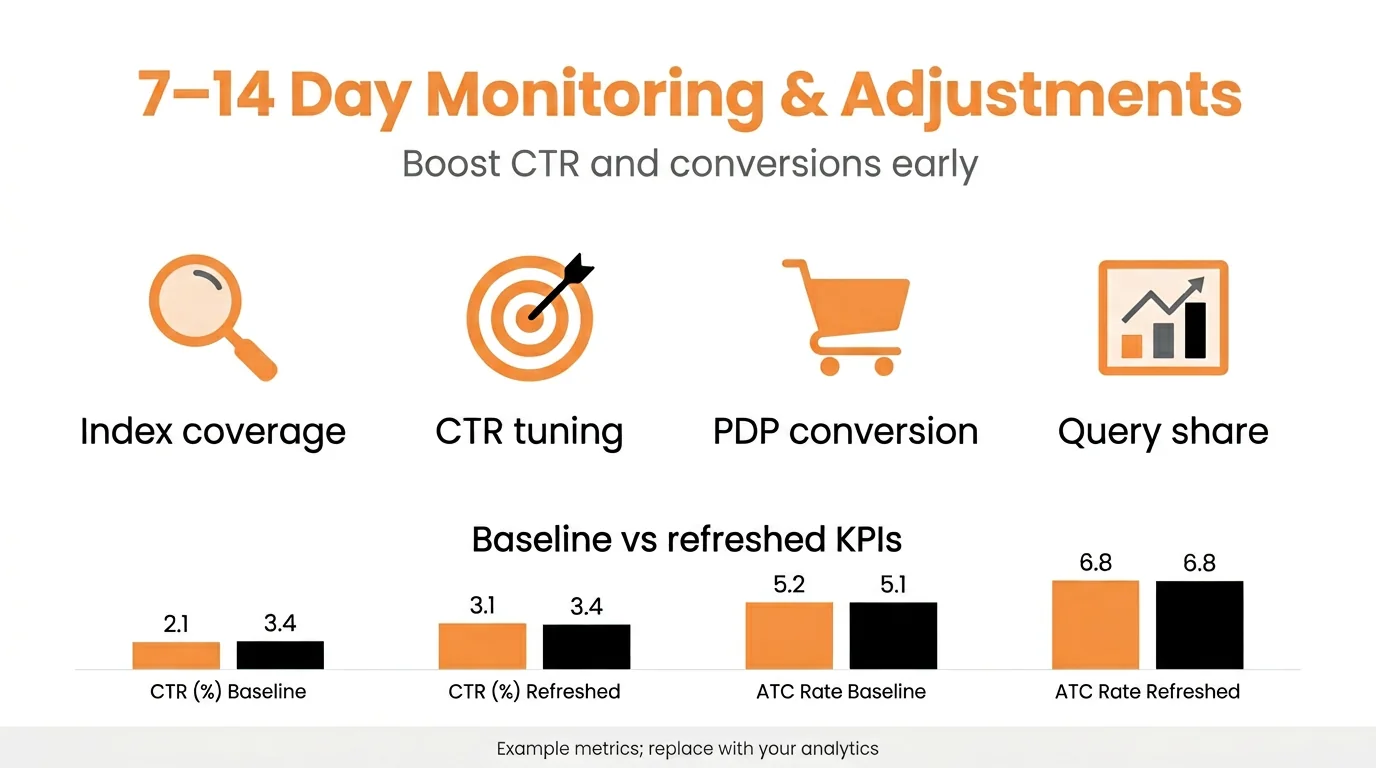
7-14 days: crawl health, indexation, CTR, and early add-to-cart rate
Confirm pages are crawled and indexed. Review CTR and query coverage. Compare add-to-cart rates on refreshed PDPs versus baseline. If CTR lags, adjust titles, meta descriptions, and intro paragraphs.[4]
4-8 weeks: assisted conversions, bundle attach rate, and seasonal query share
Assess assisted conversions in analytics. Track attach rate by bundle tier and SKU. Review query share for seasonal terms and ensure internal links pass authority to PDPs and the category hub.
Continuous: internal link paths, product impression depth, and refund signals
Audit internal link paths using crawler reports. Check impression depth per product to avoid orphaned SKUs. Watch refund or return reasons for copy gaps and update FAQs responsively.[1]
Practical safety boundaries
Regulatory cautions on health claims; prefer neutral benefit phrasing
Avoid definitive treatment or cure claims. Prefer neutral statements like “may help reduce exposure.” Where possible, reference manufacturer guidance and include disclaimers. Consider legal or regulatory review before launch.
Inventory and substitution limits to avoid customer disappointment
Set substitution rules and caps on backorders. If an item runs short, offer transparent alternatives with clear differences. Communicate expected delays proactively across PDPs and order confirmations.
Breed/life-stage targeting without stereotyping or overpromising
Use evidence-based distinctions like weight, coat length, or outdoor exposure. Avoid sweeping breed generalizations. Provide ranges and context, and invite veterinary consultation where appropriate.
Automation guardrails: approval queues and rollback plans
Require approvals for health-related copy. Keep versioned backups of PDPs and blogs. Maintain a rollback plan for schema and internal-link deployments to restore a prior stable state if issues arise.
Evidence status: what data suggests and where uncertainty remains
Internal linking may support higher PDP sessions and time on page
Routing from blogs to PDPs with descriptive anchors may increase qualified visits and engagement. Results vary by content quality, search intent, and on-page clarity of the offer.[1]
Bundles may increase AOV; impact varies by category and price elasticity
Retail analyses indicate bundles can lift attach rate when framed with transparent savings and helpful comparisons. Sensitivity varies by product category and customer price tolerance.[2]
Seasonal timing aligned to search trends may improve CTR and rankings
Aligning publication with rising query interest may help discovery and CTR. Weather patterns, competitive moves, and promotional intensity can moderate outcomes across markets and weeks.[4]
Limitations: confounders (promo mix, weather shifts, competitor pricing)
Attribution is imperfect. Results may be influenced by promotions, sudden weather changes, and competitor price moves. Consider holdouts or staggered rollouts to estimate incremental impact more reliably.[3]
Templates and assets to standardize
Bundle PDP module blocks (benefits, comparison, FAQs, reviews)
Standardize a repeatable module stack: hero benefits, tiered comparison, usage FAQs, review pull-ins, and cross-sell tiles. Schema should reflect Product and FAQ where applicable for better SERP coverage.
Blog templates: seasonal checklist, breed-specific guide, comparison
Use consistent layouts and CTA placement. From the comparison template, include two in-body links to the primary bundle PDP with anchors like “best flea & tick bundle for large dogs” and “vet-reviewed flea & tick kit.”
Email/social snippets with UTM structures and headline variants
Prebuild snippets with UTM parameters for source, medium, campaign, and content. Draft three headline variants and two body variants per message. Rotate creatives to manage fatigue and compare CTRs.
Internal link macros: blog → bundle PDP → category → related care guide
Create macros that place links in intros, mid-body, and conclusions. Add breadcrumbs from PDPs to the category hub, and surface related guides via a “Seasonal resources” module on PDPs and hubs.
Frequently Asked Questions
How far in advance should I schedule seasonal pet campaigns?
Evidence suggests starting 6-8 weeks ahead to account for crawling, indexing, and asset approval. High-competition seasons may benefit from a 10-12 week runway.
Do bundles actually improve conversion for pet products?
Data from retail case studies indicates bundles may lift AOV and attach rate when priced with clear savings and paired with comparison blocks. Impact varies by category.
What content types work best for flea and tick season?
Comparison posts, vet-reviewed FAQs, and breed/life-stage guides often earn clicks. Pair them with internally linked PDPs and category hubs for conversion paths.
How do I avoid medical overclaims in pet health promotions?
Use cautious wording, cite manufacturer guidance, and avoid definitive treatment claims. Consider legal review for health-related copy and disclosures.
Which metrics indicate my seasonal automation is working?
Watch indexed pages, CTR, PDP sessions, bundle attach rate, assisted conversions, and refund/return signals. Improvements over your baseline may show progress.
Wrap-up: connect seasonal automation to your master plan
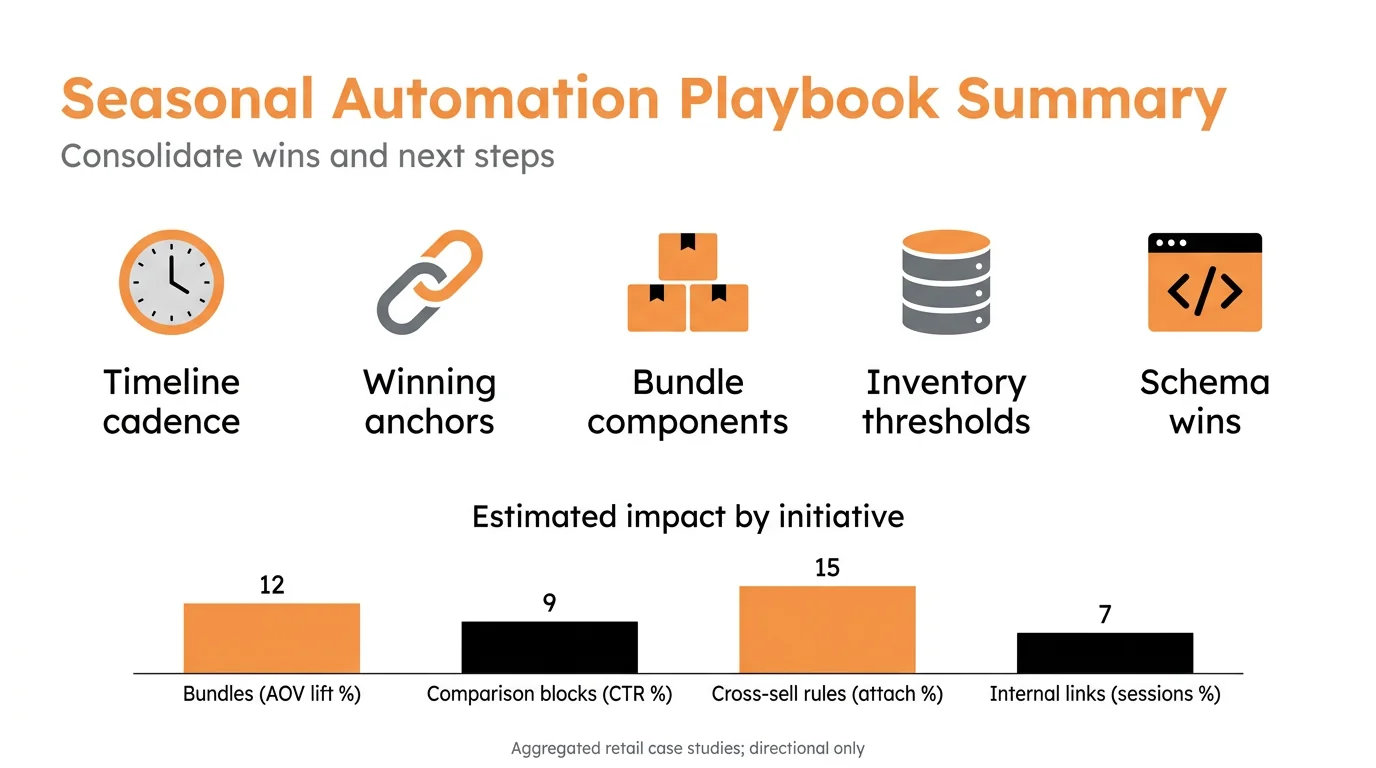
Document learnings into a reusable seasonal playbook
Capture timelines, winning anchors, and bundle components into a living playbook. Note inventory thresholds, schema wins, and messaging that improved CTR or attach rate. Reuse for holidays, breed days, and upcoming parasite peaks.
Reference the master strategy for pet content automation for alignment
Anchor this seasonal system to broader initiatives, including Automated Product Page SEO for Pet eCommerce and automated, product-aware internal linking. Keep teams aligned to reduce rework and compound gains over time.
References
- L Lavertu (2024). Examination of pet imagery in digital marketing communications: understanding if and when pets can be effective endorsers. 2024 - era.ed.ac.uk.
- A Suwanmosi et al. (2026). Consumer Insights Discovery for Pet Products from Online Customer Reviews Analysis in E-commerce Market.. datascience.cmu.ac.th. View article
- D Buhalis et al. (2023). Traveling with pets: designing hospitality services for pet owners/parents and hotel guests. International Journal of Contemporary Hospitality …. View article
- J Kong et al. (2025). Data-Driven Insights into the Pet Industry: Market Dynamics, Trade Policies, and Sustainable Growth Strategies. Accounting, Marketing and Organization. View article