Content Velocity for Pet SEO: How Many Posts per Week to Win Topical Authority

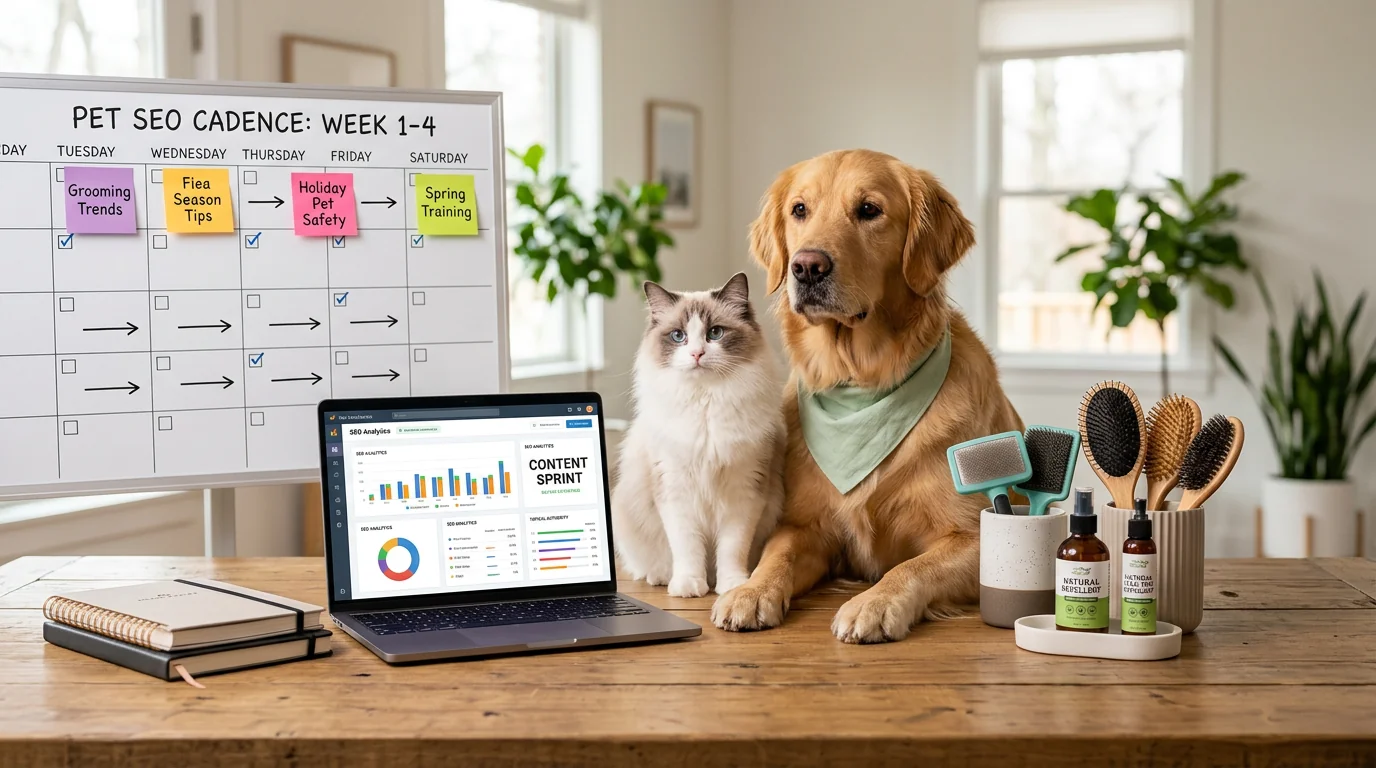
Table of Contents +
- The decision at hand: setting a weekly publishing cadence for pet SEO
- A quick decision guide: if this is your situation, choose this cadence
- Seasonality matters: map cadences to pet demand spikes
- Sprint planning: 6-10 week blocks that build topic depth
- Monitoring guidance: what to observe and when
- Practical safety boundaries for content velocity
- Evidence status: what the data suggests about velocity and authority
- Example weekly plans by scenario (pet-specific)
- How cadence supports the pet industry topical authority overview
- Frequently Asked Questions
- References
Learn how many pet SEO posts per week to publish. See cadences by season, team size, and goals to build topical authority without burning resources.
Publishing cadence is a growth lever you can control. Choosing the right pace may accelerate ranking and strengthen topical signals across your pet categories.
This matters because pet demand shifts quickly with seasons and trends. You will learn how to set a weekly cadence, plan focused sprints, and monitor signals that validate your pace-without sacrificing quality or budget discipline.
The decision at hand: setting a weekly publishing cadence for pet SEO
First, frame cadence as a resource allocation decision. You are trading volume for quality, focus, or speed to outcome. Make the trade-off explicit before sprinting.
Define one clear goal: rank faster for a bounded pet topic
Pick one cluster and measure outcomes only there. Limit scope so every post reinforces shared entities and intent, strengthening topical authority pet industry signals within a defined boundary.
Choose your constraint: quality, budget, or time-to-rank
Select one hard constraint. If quality is fixed, lower volume. If time-to-rank dominates, compress cycles. If budget is strict, publish fewer posts and reuse research across formats.
Petbase builds this SEO foundation automatically for pet businesses - 10 optimized articles published every month - start your free trial.
A quick decision guide: if this is your situation, choose this cadence
Early-stage blog with <50 posts: 3-5/week for 8-10 weeks
Concentrate on one cluster and related FAQs. Build publishing frequency for pet blogs around a consistent weekly schedule to encourage crawling and reduce topical gaps early.
Established site with 200+ posts: 2-3/week with refreshes
Blend new content with two refreshes per week. Update internal links, schema, and media. Refreshes may lift clusters faster than net-new on mature domains with authority.
Local pet services (groomers, vets, trainers): 2/week + 1 local page refresh
Maintain two educational posts plus one service or city page refresh weekly. Strengthen proximity and topical signals; see local topical authority guidance for services.
Pet eCommerce with 300+ SKUs: 4-7/week aligned to category clusters
Prioritize clusters tied to inventory depth and margin. Map collection pages to hubs and align leaf articles with top SKUs to capture intent and reinforce commercial entities.
Affiliate/publisher model: 5-8/week in sprints, then 2-3/week maintain
Run high-velocity sprints within one category for 6-8 weeks. Switch to maintenance cadence while optimizing internal links and updating prices, availability, and pros/cons.
Tiny team or budget-limited: 1-2/week, strict topical focus
Pick one narrow cluster and finish it methodically. Avoid spreading effort across topics. Deep coverage may outperform scattered volume when resources are constrained.
Seasonal surge (fleas, holidays, shedding): 5-9/week for 4-6 weeks pre-peak
Seasonal pet SEO favors pre-publishing. Compress volume ahead of demand spikes. After peak, revert to baseline cadence while updating the best performers with outcomes.

Seasonality matters: map cadences to pet demand spikes
Health pests and parasites: fleas, ticks, heartworm
Publish preventive guides and treatment comparisons 4-6 weeks before regional onset. Localize terminology and add lifecycle visuals. Reinforce internal links from category hubs.
Grooming cycles: shedding seasons and coat care
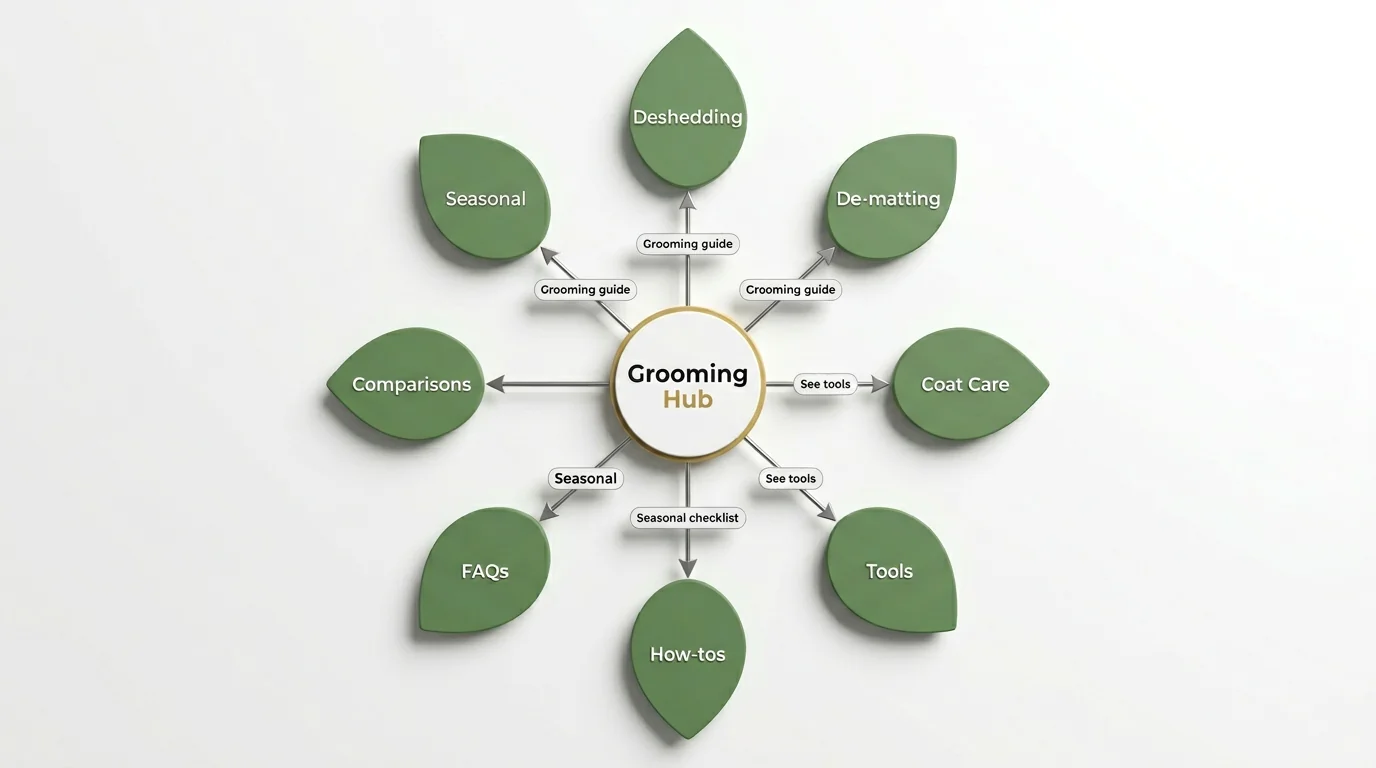
Ramp grooming content before shedding surges. Prioritize how-tos, tool comparisons, and seasonal checklists. Tie leaf articles to booking pages and reminder CTAs.
Retail peaks: Q4 gifting, summer travel, back-to-school routines
Stage gifting, travel, and routine-shift content early. Align with inventory and bundles. Use buying guides, safety checklists, and care routines to capture varied intents.
Adoption cycles and breed-specific interest
Time new-adopter education and breed explainers to local shelter events and national campaigns. Link fundamental care guides from breed pages to concentrate authority.
Sprint planning: 6-10 week blocks that build topic depth
Sprints convert strategy into repeatable execution. Define a 6-10 week block, lock the cluster, and schedule posts to stack intent coverage. For workflow scale, some teams use Petbase AI to automate research, drafting, and timed publishing.
Pick one cluster: example “flea prevention for dogs and cats”
Inventory subtopics: lifecycle, regional timing, prevention options, treatment errors, and pet-safe cleaning. Assign each leaf to a distinct query to avoid cannibalization overlap.
Cadence template: 70/20/10 mix (informational/how-to/commercial intent)
A 70/20/10 mix may cover breadth and convert interest. Prioritize informational depth, add stepwise how-tos, then support commerce with comparison and category-support content.
Internal linking rhythm: pillar → hub → leaf
Establish a three-tier structure with descriptive anchors. Hubs and authorities in networks strengthen topical signals when connections are coherent and consistent[3]. See internal linking patterns for pet commerce and services.
Evidence-informed length and media mix
Right-size articles to user intent and SERP norms. Add comparative tables, short videos, and checklists where helpful. Structured media and clarity may improve scanability and task completion.
- Cluster navigation: Lifecycle basics, Prevention options, Treatment step-by-step, Home cleaning checklist, Vet visit decision points, Cost comparison, Regional timing map.
- Mark published leaves with dates and link back to the hub. Keep hub summaries current to guide crawlers and readers.
Monitoring guidance: what to observe and when
After 7-14 days: crawl, indexation, and early impressions
Track logs for crawl frequency, coverage in sitemaps, and first impressions by query. Early diffusion patterns often reflect consistent publishing and coherent topic signals[2].
After 4-8 weeks: ranking distribution, cluster lift, and page-level signals
Assess top-3 and top-10 share, hub traffic lift, and time-on-page. Look for query expansion within the cluster. Review anchor diversity and hub-to-leaf link completeness.
Iterate: when to raise, hold, or lower content velocity
Raise if indexing is fast and rankings climb broadly. Hold if signals are steady but fragile. Lower if crawl lags or overlap grows. Use measurement dashboards for topical authority.

Practical safety boundaries for content velocity
Quality floor: factual accuracy, veterinary review where needed
Set mandatory checks for health-sensitive content. Use citations, update dates, and expert review. E-E-A-T considerations are essential for trust in YMYL categories.
Duplication and overlap: avoid cannibalization with tight scoping
Map each URL to a unique primary query. Consolidate near-duplicates. Use canonical tags and redirects where consolidation resolves fragmented intent coverage.
Technical limits: crawl budget, sitemap hygiene, and publishing cadence
Do not outpace your crawl budget. Keep sitemaps fresh, segmented, and under size limits. Batch publishing predictably to stabilize crawl and indexing patterns.
Brand voice and compliance: claims, affiliate disclosures, and YMYL sensitivity
Maintain consistent tone and disclosures. Avoid unsubstantiated medical or efficacy claims. Ensure affiliate content clearly labels relationships and prioritizes user safety.
Evidence status: what the data suggests about velocity and authority
Correlations between sustained cadence and faster rankings
Research on influence and diffusion implies consistent signals may improve visibility when networks can infer authority from repeated, topic-aligned activity[2].
Cluster completion and internal linking may support topical signals
Models that detect topical hubs and authorities show structured connections strengthen authority within a domain of discourse, supporting coherent clusters[3].
Seasonal pre-publishing windows and demand capture
Topical authority often emerges where signals are timely and concentrated. Consistent, pre-peak publishing may align with higher perceived expertise within timely topics[1].
Limits of generalization: site age, link profile, and category competition
Authority estimation approaches, including PageRank-like variants, vary by context and connectivity. Outcomes depend on domain history and competitive structure[4].
Example weekly plans by scenario (pet-specific)
Groomer in one city: two service explainers + one local guide
Publish “deshedding vs. de-matting” and “coat-length maintenance,” plus a neighborhood grooming guide. Internally link each post to your grooming service page and city hub, reinforcing local intent and conversions.
DTC pet brand: three how-tos + one product-support article
Publish “flea-comb technique,” “bath scheduling,” and “sensitive-skin routine,” plus a comparison that maps to your top collection page. Link each article to relevant products and the category hub for conversion paths.
Veterinary clinic: one procedure page + one condition explainer
Publish a detailed procedure page and a condition explainer with red-flag guidance. Link both to appointment CTAs and the clinic service hub, aligning medical intent with clear next steps.
Pet retailer: five category-support articles aligned to top SKUs
Publish buyer’s guides and maintenance checklists mapped to best-selling SKUs. Cross-link to category pages and comparison tables, emphasizing availability, sizing, and safety notes for informed decisions.
How cadence supports the pet industry topical authority overview
Depth before breadth: finish clusters, then expand adjacent topics
Complete one cluster, then expand to adjacent entities and intents. Use a hub-and-leaf blueprint to stabilize signals and guide crawling across related themes.
Use anchors from hubs to guide crawlers and users
Standardize anchor text, order of links, and hub placement. For context, see the pet industry topical authority overview and align your cadence so hubs consolidate meaning and intent.
Frequently Asked Questions
How many pet SEO posts per week should a new site publish?
Evidence suggests new sites may benefit from 3-5 posts per week for 8-10 weeks within a single topic cluster. Keep scope tight to avoid quality drops and overlap.
When should I increase or decrease content velocity?
Increase if indexing is healthy and early rankings rise across a cluster. Decrease if quality flags appear, cannibalization grows, or crawl/index lag exceeds two weeks.
Does seasonality change ideal posting frequency for pet brands?
Yes. A 4-6 week surge ahead of peaks like flea season or holidays may support visibility. Aim to publish 5-9 posts per week tied to the seasonal cluster, then normalize.
What is more important: quantity or topical depth?
Topical depth typically matters more. A steady 2-3 posts per week that complete a cluster may outperform scattered higher volumes in fragmented topics.
How long until increased velocity shows results?
You may see crawl and impression changes within 1-2 weeks. More stable ranking movement often appears in 4-8 weeks, influenced by site age and competition.
Conclusion: Choose a cadence that matches constraints, then execute focused sprints. Use seasonal windows to surge volume responsibly. Monitor crawl, rankings, and overlap. Iterate deliberately. With disciplined pet SEO cadence and cross-linking, clusters strengthen and compound results over time.
References
- ZZ Alp et al. (2018). Identifying topical influencers on twitter based on user behavior and network topology. Knowledge-Based Systems. View article
- ZZ Alp et al. (2019). Influence Factorization for identifying authorities in Twitter. Knowledge-Based Systems. View article
- RKW Lee et al. (2019). Discovering hidden topical hubs and authorities across multiple online social networks. IEEE Transactions on …. View article
- J Jin et al. (2020). An integer linear programming model of reviewer assignment with research interest considerations. Annals of Operations Research. View article