Pet Keyword Mapping: Cluster by Breed, Life Stage, and Intent

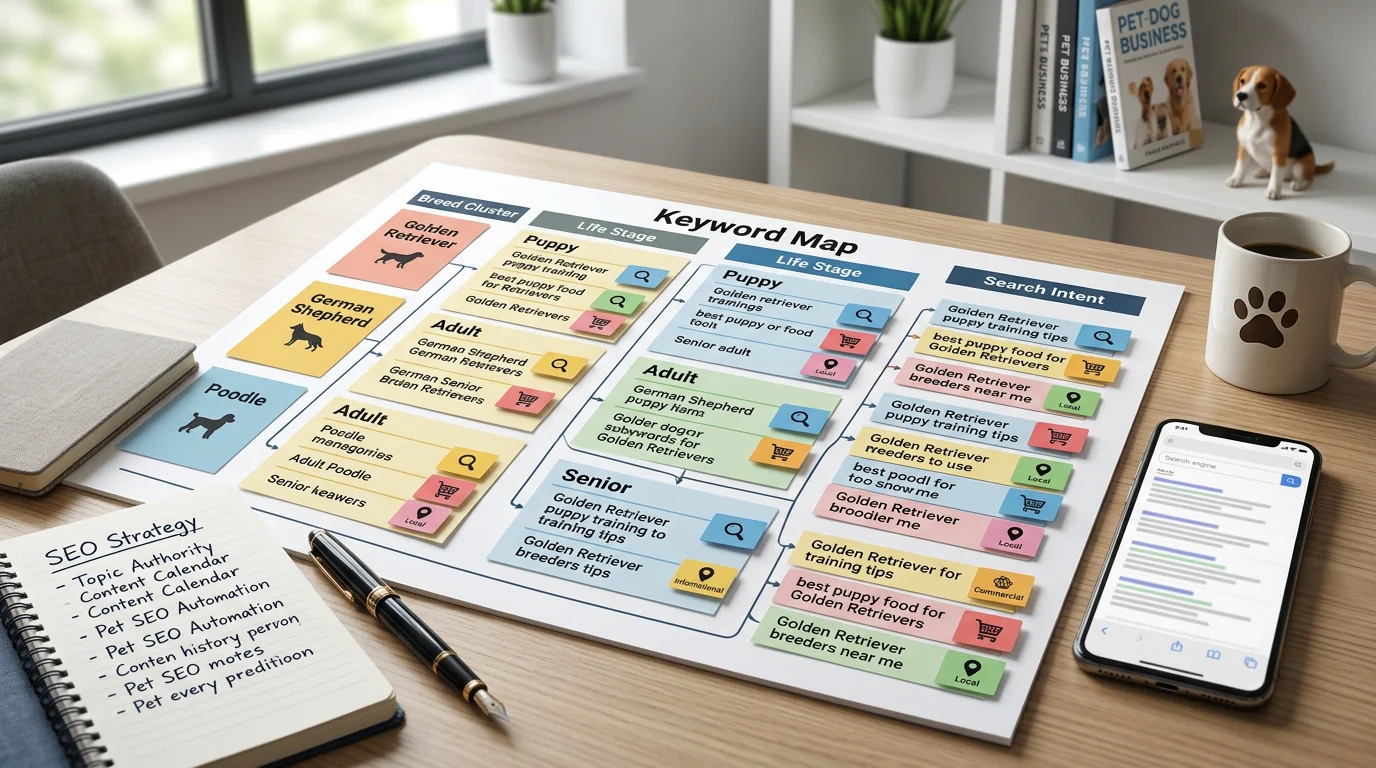
Table of Contents +
- The specific scenario: turning scattered pet queries into a working map
- Step-by-step: cluster by breed → life stage → intent
- Quick decision guide
- Templates and examples for one breed
- Monitoring guidance
- Practical safety boundaries
- Evidence status and assumptions
- How this map supports the pet topical authority framework
- Frequently Asked Questions
- Conclusion
- References
Learn a pragmatic framework to cluster pet keywords by breed, life stage, and intent to build topical authority and guide content planning.
Pet SEO scales when scattered queries become a clear, navigable map. Fragmented keywords waste crawl budget and confuse readers. They also dilute topical signals across overlapping pages.
This matters because pet audiences think in breeds, ages, and needs. Aligning content with these dimensions improves discoverability and relevance. In this guide, you will learn a pragmatic mapping method that organizes queries by breed, life stage, and intent.
The specific scenario: turning scattered pet queries into a working map
Scope and constraints: one breed, three life stages, three intents
Work within one breed at a time to simplify decisions. Use three life stages-puppy, adult, senior-to capture developmental needs and search behavior shifts. Classify intent as informational, commercial, or local. Keep the first build constrained to avoid over-fragmentation. This scope mirrors how users search and how SERPs organize results. It provides a stable foundation for breed keyword clusters and life stage keywords that can scale with minimal refactoring.
Data inputs you need (and what to ignore)
Gather Search Console queries, third-party volumes, SERP features, and modifiers. Capture synonyms, misspellings, and breed nicknames. Ignore vanity phrases with zero intent. Deprioritize seasonally volatile terms until you observe patterns. Favor queries showing stable impressions and clear search intent for pets. Annotate SERP clues: product cards, map packs, and editorial dominance. These signals drive your final intent labels.
Petbase builds this SEO foundation automatically for pet businesses - 10 optimized articles published every month - start your free trial.
Step-by-step: cluster by breed → life stage → intent
Collect and normalize queries
Export all queries for the target breed from Search Console and your keyword tools. Normalize casing, plurals, and punctuation. Standardize life-stage modifiers and commercial cues. Evidence suggests hierarchical clustering supported by adaptive term embeddings improves topical group precision, which mirrors our manual approach for SEO mapping[2]. For repeatable workflows, consider using Petbase AI to speed pet SEO keyword research and grouping.
Segment by breed variants and synonyms
Group synonyms, abbreviations, and common misspellings under a single breed entity. Include coat color or size variants only if SERPs differ. Seed-guided taxonomy methods show value in starting from core concepts such as breeds[1]. Keep edge cases as tags rather than separate clusters until data proves user differentiation.
Slice by life stage (puppy, adult, senior)
Assign each query to a life stage using explicit modifiers first. When absent, infer from SERP context and co-occurring terms. Maintain a small “unknown” bucket for ambiguous cases. Avoid forcing assignments when evidence is weak. This preserves accuracy while supporting future disambiguation.
Label intent (informational, commercial, local)
Use modifiers like best, vs., price, and near me. Check ad density and product carousels. Map packs and clinician listings indicate local. Align labels with dominant SERP features to reflect user goals. Maintain a secondary intent tag for blended SERPs.
Form clusters and assign one primary URL
Create clusters at the intersection of breed, stage, and intent. Assign a single primary URL per cluster to prevent cannibalization. Hierarchical taxonomies reduce ambiguity and support clearer navigation paths, which may improve precision[3]. Plan internal links to parent hubs and sibling commercial pages for discoverability. Reference internal linking blueprints to align anchors and hierarchy from blog to basket.
De-duplicate and set canonical targets
Identify overlapping clusters by checking shared head terms and SERP similarity. Consolidate into the stronger URL and mark weaker ones with canonical tags or 301 redirects. Validate with Search Console impressions. Repeat quarterly to maintain topical authority for pet brands.

Quick decision guide
If queries mix breeds, then split at the breed level
Separate any query set where breeds co-occur. Mixed-breed clusters confuse intent and dilute relevance. Build one URL per breed hub. Consolidate edge synonyms into their strongest canonical entity.
If queries span life stages, then branch into separate pages
When puppy and adult needs diverge, create dedicated pages. If SERP results differ substantially, branching reduces cannibalization risk. If overlap remains high, manage with scannable sections and strong anchors.
If intent is mixed, then prioritize commercial on product-led URLs
When informational and commercial signals conflict, lead with commercial if the SERP shows products or heavy ads. Provide concise buying guidance, then link to detailed how-tos from a supporting informational hub.
If volume is low but intent is high, then keep as a section, not a page
Retain low-volume, high-intent terms within a broader breed-stage page. Add a jump link and structured subheading. Promote to a standalone page only after traffic or conversions materialize.
If local modifiers appear, then map to location pages
When “near me” or city terms appear, route to the relevant location URL. If a specific city lacks a page, roll up to the nearest service-area hub while tracking city-level impressions.
If SERP shows product cards, then treat as commercial
Product carousels, ratings, and price snippets indicate commercial intent. Map to a transactional or affiliate-led page. Include comparison tables and clear CTAs while linking back to educational resources.
If SERP shows clinics/maps, then treat as local
Map packs, clinic snippets, and address-rich results indicate local intent. Build or route to a location page with NAP, services, and FAQs. Keep E-E-A-T elements prominent for trust and clarity.
Templates and examples for one breed
Golden Retriever - Puppy, Adult, Senior (informational hubs)
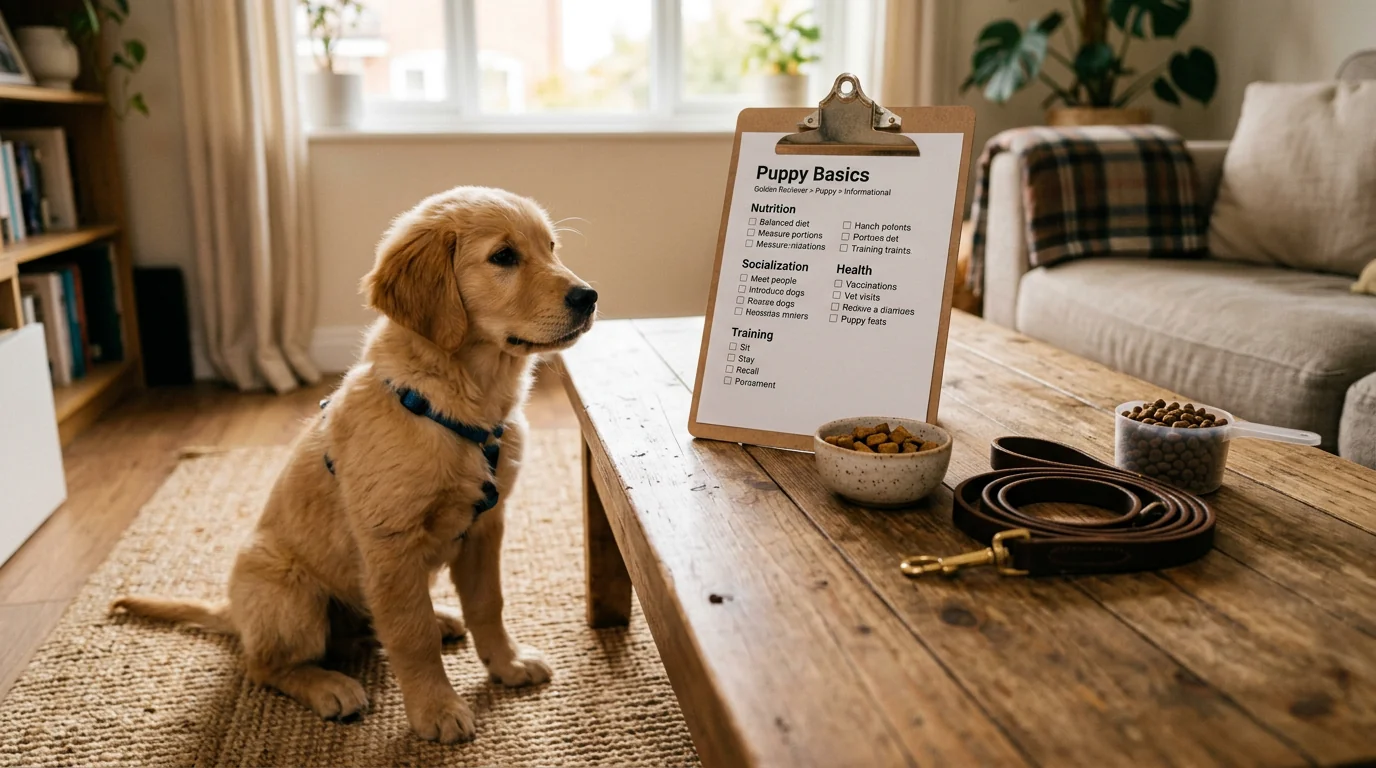
Breadcrumb: Golden Retriever > Puppy > Informational
Structure hubs by life stage with clear sections: nutrition, socialization, training, and health basics. Add expandable checklists and FAQs. Link to a cornerstone hub on topical authority to reinforce context pet topical authority framework. Use supportive anchors for related buying guides, like “best chew toys for Golden Retriever puppies,” and guide-level links such as “Golden Retriever puppy care guide.”
Golden Retriever - Commercial modifiers (best, top, vs.)
Breadcrumb: Golden Retriever > Adult > Commercial
Build product-led pages for “best food,” “top harness,” or “vs.” comparisons. Include spec tables, decision criteria, and care notes. Ensure consistent templates across life stages; see safe programmatic patterns programmatic pet SEO templates. Cross-link to informational hubs addressing fit, sizing, and training outcomes.
Golden Retriever - Local intents (near me, city terms)
Breadcrumb: Golden Retriever > Senior > Local
Route “near me,” “[city] trainers,” or “[city] groomers” to location hubs. Include service scope, reviews, and booking paths. Add links from commercial pages when services complement products. Maintain consistent NAP and structured data for reliability.
Related breeds: care considerations for Labradors; grooming notes for Poodles; joint-health considerations for German Shepherds.
Monitoring guidance
What to check after 7-14 days
Verify indexing and coverage. Check impressions for new URLs and confirm the right queries attach. Monitor early cannibalization. Review SERP alignment for intent accuracy. Adjust on-page headings or schema if signals diverge.
What to check after 4-8 weeks
Evaluate click-through rates, ranking distribution, and dwell time by cluster. Inspect internal link paths and anchor diversity. Cluster stability concepts suggest measuring cohesion and separation over time for reliability[4]. Promote performing sections to standalone pages when justified.
Signals that suggest re-clustering
Watch for rising modifiers, intent shifts, or SERPs introducing product cards or local packs. Identify overlapping URLs with shared head terms. If queries drift across life stages, consider branching or consolidating to restore clarity.
Practical safety boundaries
Avoid over-fragmentation
Do not create a page for every micro-variant. Aggregate thin topics under robust breed-stage hubs. As a threshold, require clear SERP differentiation and measurable intent before adding new URLs.
Respect YMYL for veterinary topics
Clinical guidance falls under YMYL. Use vet-reviewed content, clear disclaimers, and citations. Implement QA workflows and expert review before publishing sensitive topics; see governance practices in content QA for pet accuracy.
Duplicate and cannibalization checks
Quarterly, audit for duplicate headings, overlapping FAQs, and similar title tags. Consolidate weaker pages. Use canonicals or redirects. Maintain a single source for each breed-stage-intent to protect relevance.
Schema and internal linking consistency
Apply consistent schema by intent type: Article for informational, Product or ItemList for commercial, LocalBusiness or Service for local. Follow predictable internal linking patterns to reinforce hierarchy; see internal linking blueprints.
Evidence status and assumptions
What industry data suggests
Taxonomy construction using hierarchical clustering and embeddings tends to improve topic cohesion and discoverability, supporting structured content maps for SEO[3]. Seed-guided approaches also help bootstrap accurate hierarchies from known entities like breeds[1].
Where evidence is mixed
Optimal granularity varies by niche competition and SERP volatility. Deep clustering methods are powerful but sensitive to data quality and feature choices, requiring human oversight for production SEO decisions[4].
How to validate in your context
Run A/B content tests for branching versus consolidation. Track query attachment, CTR, and conversions. Use embeddings or heuristic rules to score cohesion, then manually review boundary cases before publishing changes[2].
How this map supports the pet topical authority framework
Connecting clusters to hubs
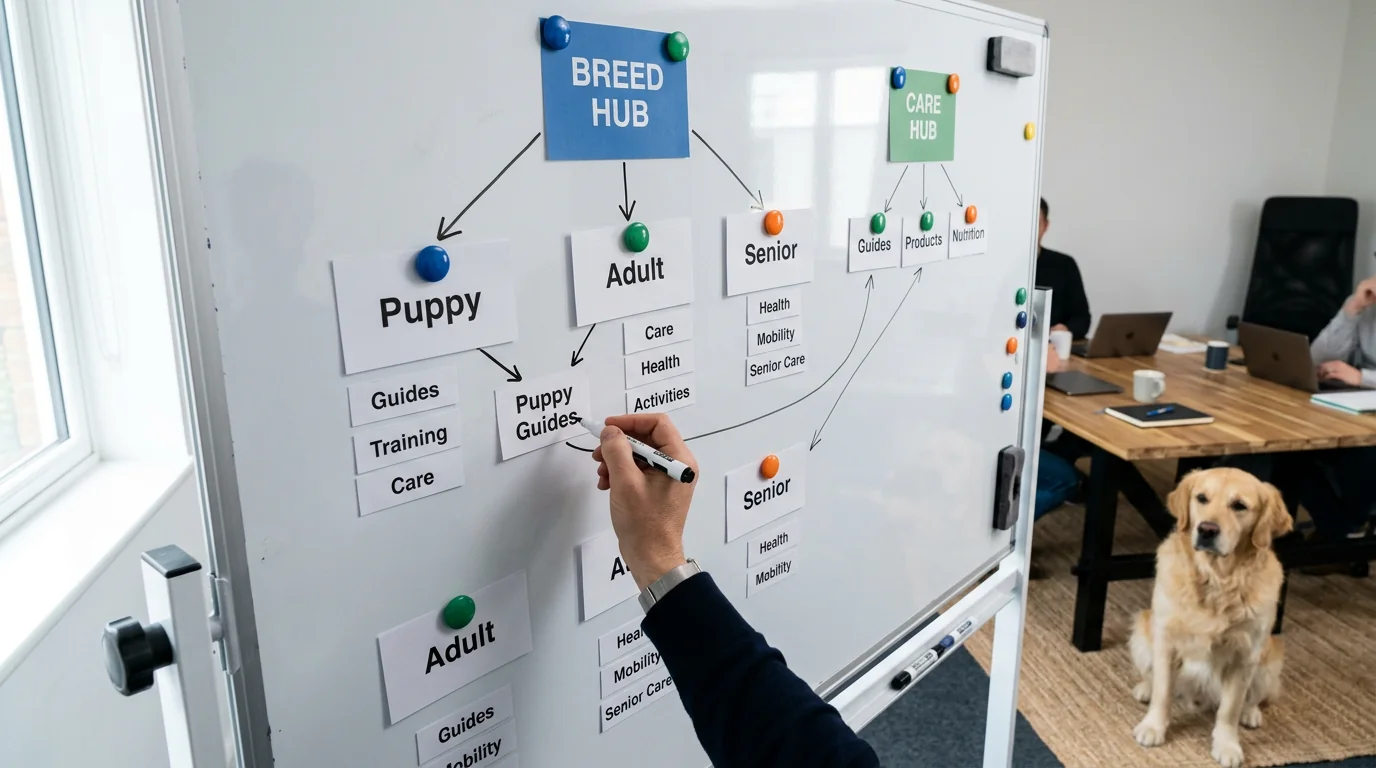
Link each breed-stage-intent cluster to a breed hub and a brand-wide care hub. Maintain clear parent-child relationships to signal coverage depth; align with the pet topical authority framework to structure navigation and reinforce expertise.
Anchor text patterns that may support relevance
Use descriptive anchors reflecting life stage and intent, such as “adult Golden Retriever nutrition guide” or “top harnesses for Golden Retrievers.” Vary anchors semantically to avoid repetition while preserving intent clarity across internal paths.
When to expand to adjacent breeds or species
Expand when your breed-level hubs achieve sustained impressions, stable rankings, and content completeness. Prioritize breeds with shared care patterns for template reuse. Localize clusters carefully to prevent cannibalization; reference multilingual and regional scaling when applicable.
Frequently Asked Questions
Should I build separate pages for puppy, adult, and senior for each breed?
Evidence suggests separate pages can help when queries and SERPs differ meaningfully by life stage. If content overlaps heavily, consider sections on one page and test performance.
How do I decide between informational and commercial intent?
Review modifiers (best, top, price), ad density, product carousels, and review snippets. If SERPs lean to products and lists, commercial intent is likely; otherwise lean informational.
What if search volume is low for a specific breed-stage cluster?
Keep it grouped within a broader breed page as a section. If long-tail conversions or engagement improve, you may graduate it to a standalone page.
How often should I re-cluster pet keywords?
A quarterly review may be sufficient for stability. Re-cluster sooner if you see cannibalization, new modifiers in Search Console, or intent shifts in the SERP.
Do I need local pages for every city plus breed?
Start with core service areas and roll out based on impressions and lead quality. Excessive city-breed combinations may cause thin content; monitor engagement before scaling.
Conclusion
A pragmatic pet keyword map hinges on three pillars: breed, life stage, and intent. Constrain scope to one breed, apply consistent labels, and assign one URL per cluster. Monitor signals, consolidate duplicates, and expand only when data supports it. Templates and internal linking patterns provide repeatability while protecting relevance. With careful governance and measured iterations, your map may strengthen topical authority and guide dependable organic growth for pet brands and businesses.
References
- J Huang et al. (2020). Corel: Seed-guided topical taxonomy construction by concept learning and relation transferring. Proceedings of the 26th acm …. View article
- C Zhang et al. (2018). Taxogen: Unsupervised topic taxonomy construction by adaptive term embedding and clustering. Proceedings of the 24th …. View article
- C Zhang et al. (2018). Taxogen: Constructing topical concept taxonomy by adaptive term embedding and clustering. Proc. KDDI.
- S Zhou et al. (2024). A comprehensive survey on deep clustering: Taxonomy, challenges, and future directions. ACM Computing …. View article