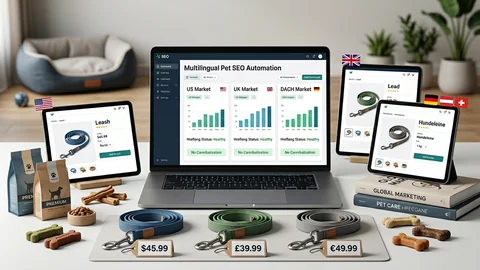
Multilingual Pet SEO: Localize Clusters for US, UK, and DACH Without Cannibalization


Table of Contents +
- Introduction
- Context: One decision that prevents cross-market cannibalization
- Quick decision guide: If this, then do that
- Cluster design: US, UK, and DACH term mapping and page roles
- Hreflang and canonical architecture
- Safety boundaries: What not to merge, rewrite, or auto-redirect
- Monitoring: What to check after 7-14 days and 4-8 weeks
- Evidence status: What is well-supported vs emerging practice
- Implementation checklist tailored to pet industry patterns
- Frequently Asked Questions
- Conclusion
- References
Learn how to localize pet SEO clusters for US, UK, and DACH, map intent, set hreflang, and avoid keyword cannibalization with region-specific terminology.
Introduction
Expanding internationally can double organic reach, yet duplication across markets can drain it. One decision prevents most conflicts. Define what each market should rank for before you write.
This matters because UK vs US pet terminology, DACH pet SEO patterns, and local SERP features vary. You will learn how to select expansion topics, adapt language, apply hreflang for pets, and avoid keyword cannibalization. For the broader strategy, see our core topical authority hub.
Petbase handles this entire content workflow automatically - 10 SEO articles published to your blog every month - start your free trial.
Context: One decision that prevents cross-market cannibalization
Define market-owned intents per cluster
Start by assigning a single “market owner” for every intent within each cluster. If “best dog leash” is US-owned, its UK counterpart must own “best dog lead,” not the US phrasing. Align ownership at the cluster index to prevent overlap in drafting and linking. Research indicates that localized planning and governance may improve engagement and reduce waste across multilingual portfolios[1].
Align terminology and SERP features to each locale
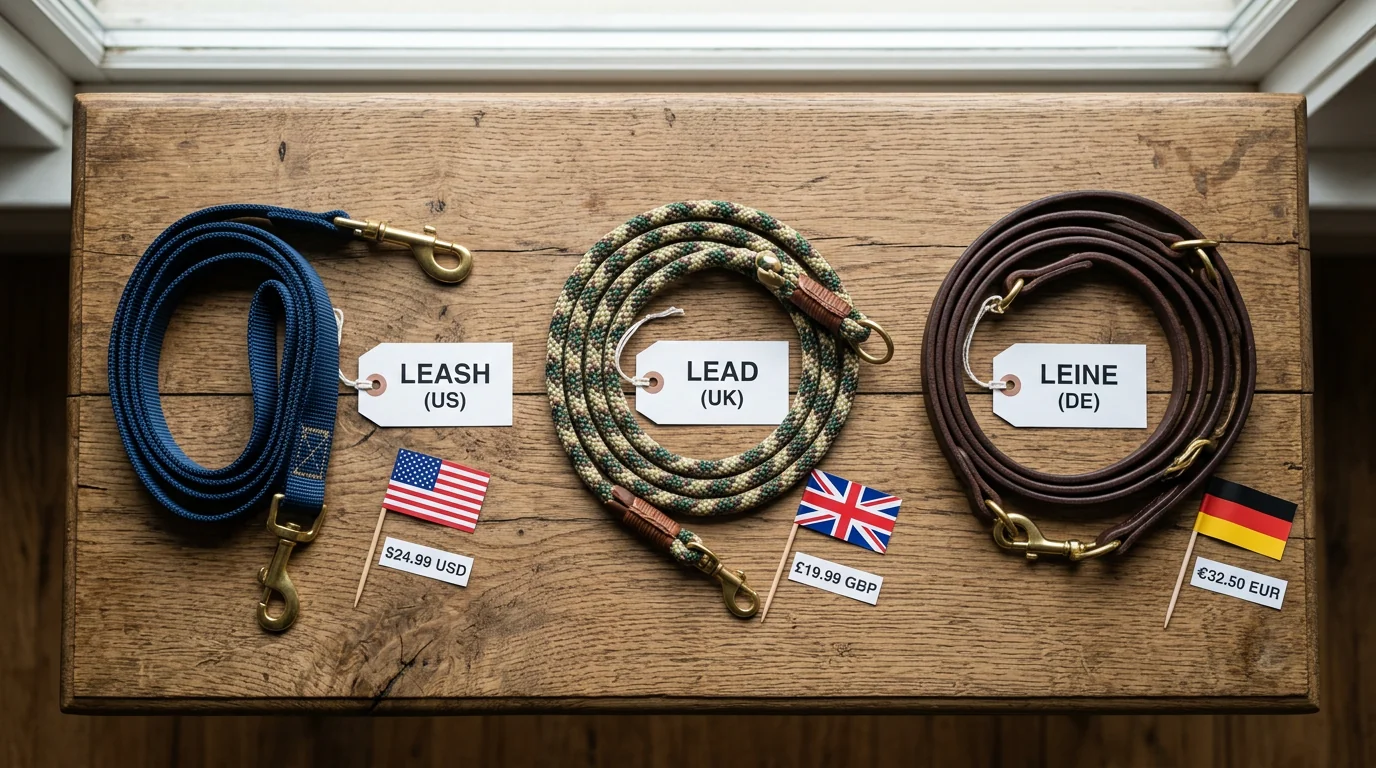
List differences that materially change search behavior. US users search “veterinarian,” “leash,” and “heartworm.” UK users search “vet,” “lead,” and “worming.” DACH audiences use “Tierarzt,” “Leine,” and “Wurmkur.” Map intent to SERP features by country: retailer carousels, NHS-style resources, or local price snippets. Localization scholarship underscores that terminology and genre conventions must adapt beyond direct translation to meet user expectations[3].
Quick decision guide: If this, then do that
Situations and recommended actions (5-7)
- If keyword uses US phrasing but UK volume exists, then create a UK page with UK terminology and UK retailers, and add hreflang to pair.
- If two locales rank for the same query in one country, then reframe one page to a distinct intent and tighten hreflang annotations.
- If SERP shows price snippets and local merchants, then localize product schema, currency, and sellers; keep pages separate.
- If medical content is sensitive or regulated, then commission native editorial review and cite local authorities rather than translate literally.
- If DACH traffic mixes DE and AT queries, then consider a neutral de-DE page first, then split when price or merchant differences emerge.
- If intent is evergreen in all locales, then differentiate by examples, references, and CTAs; avoid boilerplate reuse.
- If programmatic pages share templates, then enforce locale-safe variables and country-specific canonical rules to prevent duplication.
Cluster design: US, UK, and DACH term mapping and page roles
US: veterinarian, leash, heartworm-commercial vs informational split
Use “veterinarian,” “leash,” and “heartworm” for US targeting. Split content by intent: informational guides for conditions, and commercial pages for products or services. Link US cluster index to child pages such as “best dog leash,” with return links back up the index. Reinforce authority with internal links from how-to posts to US product categories and medical glossaries of veterinarian terms. For robust mapping practices, see Pet Keyword Mapping: Cluster by Breed, Life Stage, and Intent.
UK: vet, lead, worming-NHS-style references and local retailers
Adopt “vet,” “lead,” and “worming” across UK content. Cite NHS-style resources where appropriate and surface UK merchants in product-led pages. Use a UK cluster index that links down to “best dog lead,” with return links upward. Direct medical topics to a UK “vet terms” glossary to reduce mixed intent and improve trust. Product pages should reference UK availability and local return policies.
DACH: Tierarzt, Leine, Wurmkur-Produkt vs Ratgeber and DE/AT/CH splits
For DACH pet SEO, plan “Tierarzt” for professionals, “Leine” for accessories, and “Wurmkur” for treatments. Shape page roles as “Ratgeber” (guides) vs “Produkt” (commerce). Begin with de-DE pages. Split further to de-AT and de-CH when pricing, retailers, or terminology diverge. Link a DACH cluster index to “beste Hunde-Leine” and other localized children, ensuring return links to the index for authority consolidation.
Hreflang and canonical architecture
Country codes, language variants, and self-referencing rules
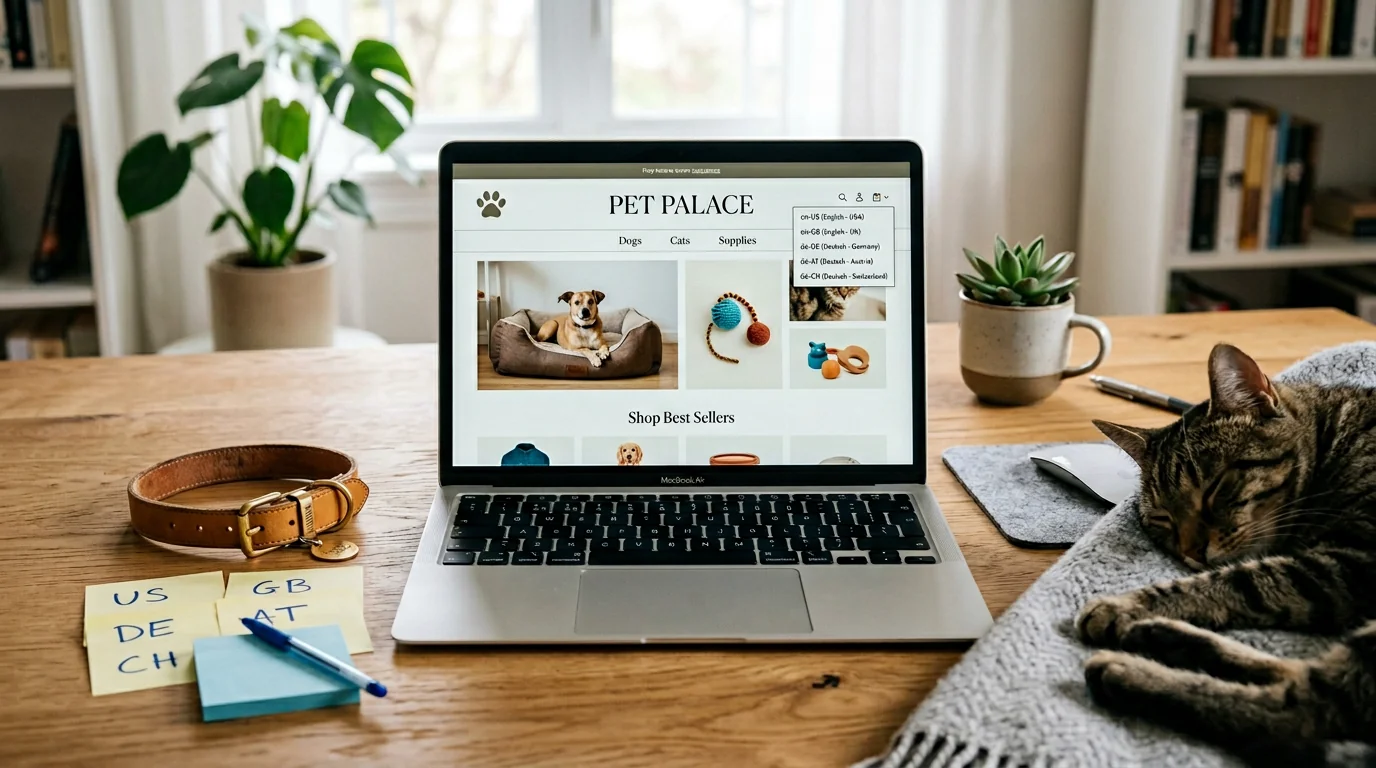
Implement hreflang for pets with ISO language-country pairs: en-US, en-GB, de-DE, de-AT, de-CH. Each localized page should include self-referencing hreflang and a canonical to itself. Pair all alternates bi-directionally. Studies in multilingual SEO migrations show that disciplined alternate mapping and crawl optimization may reduce duplication and improve discoverability across language instances[2].
When to consolidate vs separate country pages
Consolidate when terminology, pricing, and retailers are uniform across countries, and SERPs show similar features. Separate when currency, regulatory mentions, or merchant availability differ materially. Governance platforms for multilingual content indicate that central oversight with market-level variants may support consistent quality and lower operational risk[1].
Safety boundaries: What not to merge, rewrite, or auto-redirect
Medical nuance, regulatory mentions, and pricing cues
Do not merge pages that reference medical protocols, prescription rules, dosage language, or country-specific authorities. Avoid auto-redirecting users to a different locale when pricing, shipping, or service eligibility changes. Localization literature emphasizes that direct translation can miss critical domain-specific meaning, especially in regulated contexts[3].
Brand and merchant availability differences
Do not consolidate commercial pages when brand lineups or merchant partners vary by market. Keep “available at” blocks and retailer schemas localized. Cross-locale linking should be limited to language switchers, never embedded within product CTAs. This approach may reduce unintended cannibalization and mismatched user expectations.
Monitoring: What to check after 7-14 days and 4-8 weeks
Short-term diagnostics (indexing, hreflang coverage, cannibalization flags)
Within 7-14 days, review Search Console coverage for each locale. Confirm indexing status and hreflang pairing counts match expected alternates. Check queries per page by country. If a UK page gathers US impressions, adjust terminology, internal links, and hreflang. Validate canonicals, ensure self-referencing tags, and crawl for duplicate titles or meta conflicts.
Mid-term signals (impressions by locale, query mix, internal link flow)
At 4-8 weeks, evaluate impressions by locale and the share of branded vs generic queries. Inspect internal link graphs to confirm hub-to-child flow per market. Sentiment alignment to local phrasing may correlate with stronger engagement signals, making SERP presence more resilient across languages[4]. If overlap persists, reassign intent ownership or introduce clearer page roles.
Evidence status: What is well-supported vs emerging practice
Supported: hreflang behavior, intent divergence by market
Technical migrations and multilingual frameworks consistently show that correct hreflang implementation, self-canonicals, and market-specific content may improve crawl efficiency and reduce duplication[2]. Localization research also supports the need to adapt terminology and references for diverse audiences to meet expectations[1].
Emerging: AI Overviews volatility and translation memory effects
AI Overviews may introduce volatility in multilingual results, rewarding precise, locale-aligned phrasing and authoritative signals. Translation memory workflows can speed production, yet they risk propagating subtle intent mismatches if not audited regularly[3]. Monitor shifts in entity coverage and featured summaries over time.
Implementation checklist tailored to pet industry patterns
Terminology QA, product linking, schema, and internal hub alignment
- Terminology: Decide “vet vs. veterinarian; lead vs. leash; Wurmkur vs. worming” per market. Maintain a living glossary to minimize intent drift.
- Topic selection: Expand where unique market signals exist. Avoid duplicating similar evergreen guides without role differentiation.
- Internal linking: From each locale cluster index, link to child pages using “best dog leash” (US), “best dog lead” (UK), and “beste Hunde-Leine” (DE). Add return links to the cluster index.
- Medical anchors: Link medical topics to locale glossaries (US: veterinarian terms; UK: vet terms; DE: Tierarzt-Glossar) to reinforce clarity.
- Product linking: Point product-led articles only to localized category or PDP pages. Do not cross-link to other locales except through explicit language switchers.
- Schema: Localize Product and Organization data. Set currency, availability, seller, and area served attributes for each market.
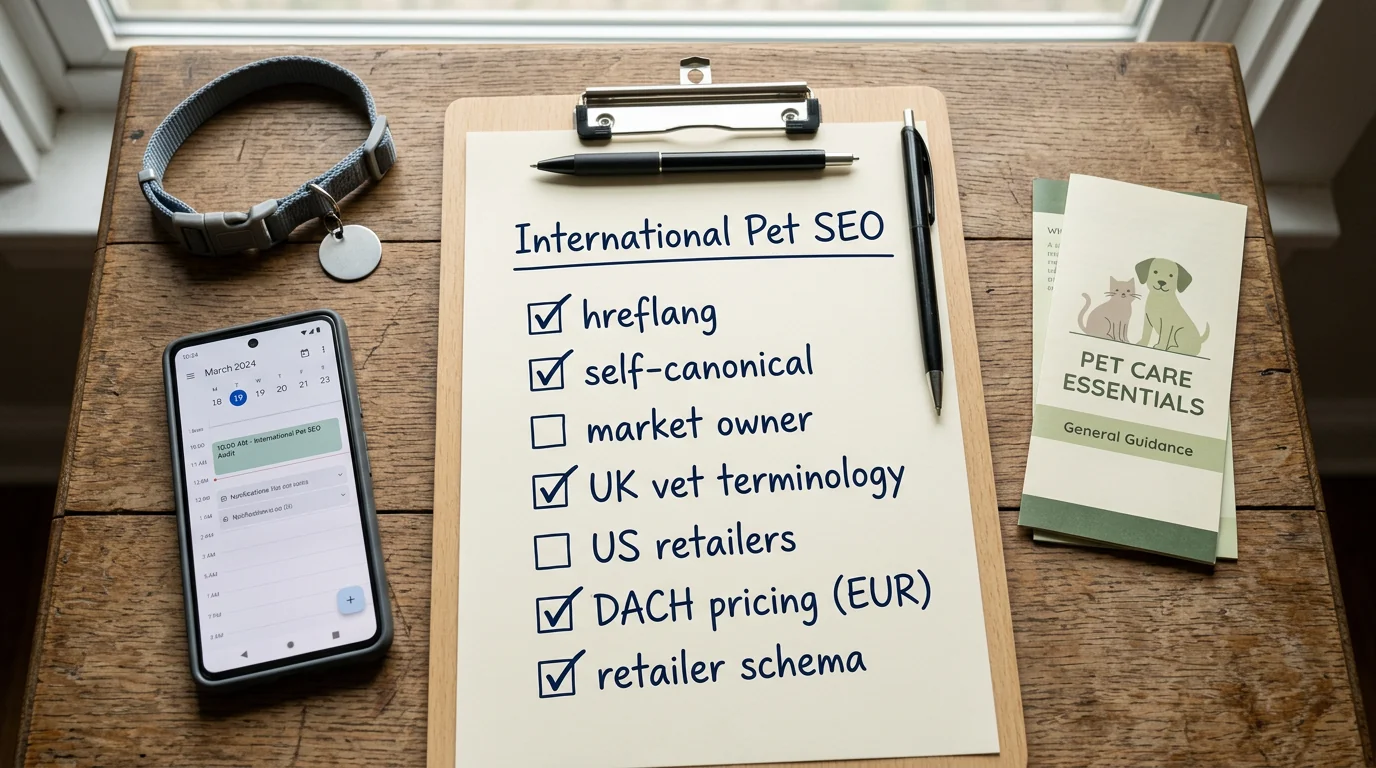
- Hreflang for pets: Include self-referencing tags and complete alternate sets. Validate via Search Console and server logs.
- Content QA: Use editorial policies and qualified reviewers for medical or regulatory content. See Content QA for Pet Accuracy: Policies, Disclaimers, and Expert Review.
- Authority alignment: Map clusters to your main hub and programmatic categories. Reference From Blog to Basket: Internal Linking Blueprints for Pet Sites for structural patterns.
- Planning cadence: Schedule localized rollouts market by market. For operational rhythm, review Execute a 30-Day Pet Content Cadence with Petbase Automations.
- Tooling: For scale with guardrails, consider Petbase AI to generate pet-specific drafts, enforce locale terminology, and streamline publication.
Frequently Asked Questions
Should I create separate pages for US and UK when the topic is similar?
Often yes if user language, retailers, or medical guidance differ. Evidence suggests intent and SERP features vary, so localized pages with hreflang may reduce cannibalization.
Is machine translation enough for pet medical content?
Typically no. Medical and regulatory terms may require native editorial review. This may reduce risk of misinformation and improve trust signals.
How do I know if pages are cannibalizing across markets?
Monitor Search Console by page and country. If a locale page gains impressions in the wrong country or queries overlap across regions, adjust hreflang, copy, and internal links.
Do I need separate DACH pages for Germany, Austria, and Switzerland?
If pricing, merchants, or terminology diverge (e.g., CH German variants), separate pages may help. Otherwise, a de-DE page with market-neutral language can suffice.
What product schema should I localize?
Localize currency, availability, and seller references. Evidence suggests correct structured data may support better relevance and richer results per market.
Language switcher
- United States (English)
- United Kingdom (English)
- Deutschland (Deutsch)
Note: Implement matching head link tags for hreflang alternates, including self-referencing entries.
Conclusion
International SEO for pet brands rewards precision. Assign market-owned intents, adapt terminology, structure hreflang correctly, and protect sensitive differences. Monitor early diagnostics, then refine by query mix and internal link flow. Use structured data, localized retailers, and glossary links to clarify purpose. This focused process may prevent cannibalization while scaling localized clusters that perform. To deepen your cluster architecture and governance, review Pet Topical Authority: The Complete Framework for Pet Brands, Retailers, and Clinics as your strategic foundation.
References
- I Okonkwo et al. (2023). Localization and global marketing: Adapting digital strategies for diverse audiences. Journal of Digital …. View article
- N Mojahed et al. (2022). Technical SEO Migration Methodology in the Life Sciences Sector: A Multilingual Framework for YMYL Digital Initiatives. 2022 - seotransformer.com. View article
- MA Jiménez-Crespo (2024). Localization in translation. 2024 - taylorfrancis.com. View article
- P Biswas et al. (2024). The Importance of Multi-Lingual Sentiment Analysis in Digital Marketing. 2024 11th International …. View article