Win AI Overviews and Visual Search for Pet Queries in 2026

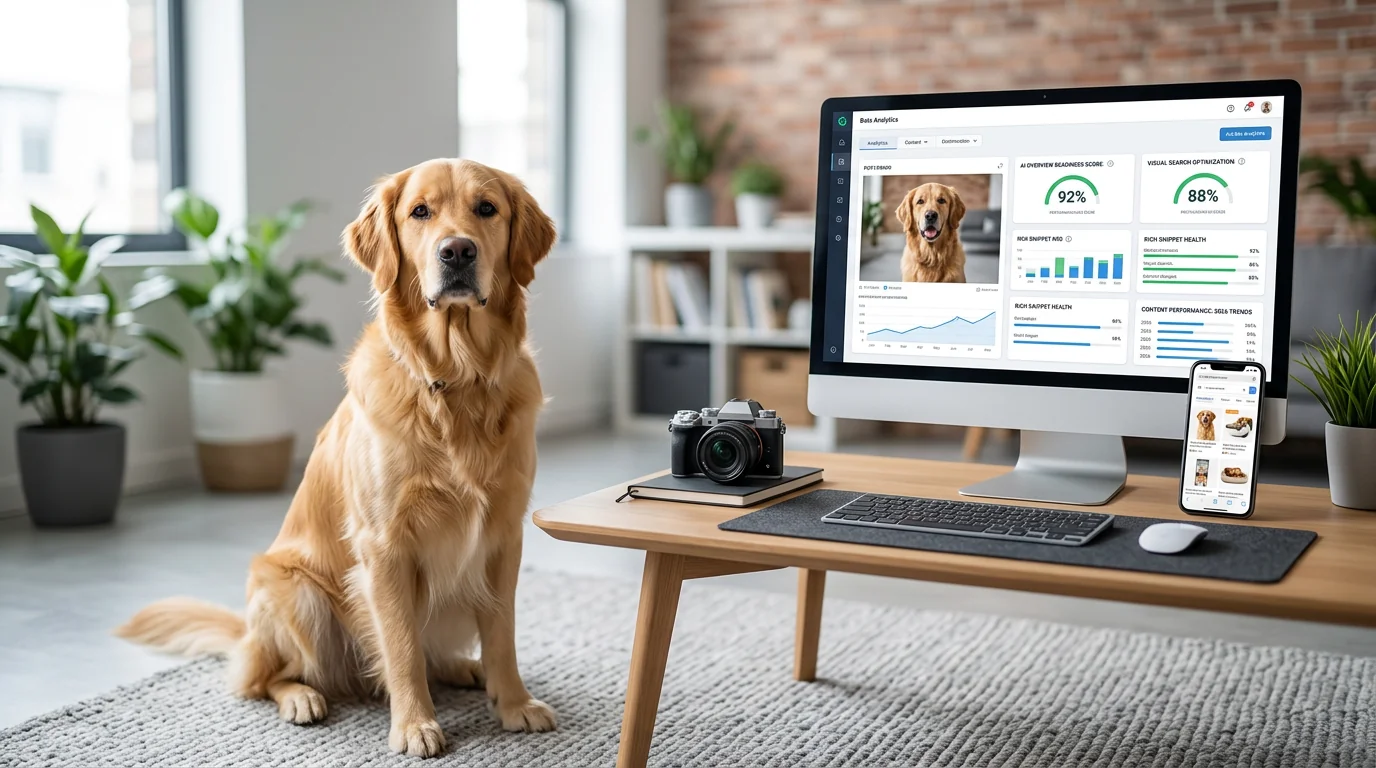
Table of Contents +
- Scenario: Your pet pages don’t appear in AI Overviews or visual results
- Quick decision guide: if X, then Y
- Content and data model: make answers extractable and image-led
- Image SEO for pet discovery and visual matches
- Schema, on-page patterns, and sources that AIO may cite
- Monitoring and iteration cadence
- Practical safety boundaries
- Evidence status: what is well-supported vs. emerging
- Appendix: reproducible checklist for one priority page
- Frequently Asked Questions
- References
Practical steps to optimize pet content and images for AI Overviews, rich results, and visual discovery across Google and social platforms in 2026.
AI Overviews are reshaping how pet owners find answers, products, and care guidance. Visual surfaces now resolve queries with image-led summaries and extractable facts. Ranking once meant links and copy. Today, it demands precision.
This matters because owners expect instant clarity and trustworthy visuals. Your content must satisfy models and humans. In this guide, you will learn practical steps to structure answers, optimize images, and secure rich snippets for pet brands.
Scenario: Your pet pages don’t appear in AI Overviews or visual results
What AI Overviews and visual search are pulling from today
Current AI Overviews pull concise, well-structured answers with explicit sources and images demonstrating fit or usage. Visual search for pets leans on high-quality photos with clear subjects, contextual scenes, and consistent metadata. Evidence suggests promptable formats and standardized blocks increase extractability and reliability for large models, improving selection odds for summaries and carousels.[1]
Priority signals for pet topics (breeds, life stages, conditions, products)
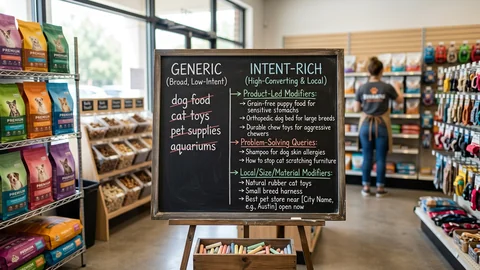
Prioritize owner-intent clarity, image evidence, and structured metadata. Define breed, size, life stage, and condition with distinct answer blocks. Pair them with image sets that show scale and context. Reinforce topical coverage using a foundational topical authority guide and consistent data patterns across SKUs and care topics. This forms a dependable footprint for Google AI Overview optimization and rich snippets for pet brands.

Petbase builds this SEO foundation automatically for pet businesses - 10 optimized articles published every month - start your free trial.
Quick decision guide: if X, then Y
5-7 fast rules to choose your next optimization step
- If impressions rise but clicks lag, tighten titles and captions to mirror owner phrasing and add scale/fit images.
- If AIO shows competitors’ images, add in-context shots and alt text naming breed/size and intended use.
- If rich results disappear, validate schema, remove conflicting properties, and reduce duplicative FAQs.
- If visual matches misclassify, update filenames, IPTC keywords, and background consistency to clarify subjects.
- If medical queries underperform, add cautious language, source citations, and symptom-to-action answer blocks.
- If product pages lose visibility, add comparison tables, sizing charts, and angle-complete image sets.
- If coverage is thin, cluster topics by breed and life stage before expanding categories.
Content and data model: make answers extractable and image-led
Answer blocks for owner intents (symptoms, sizing, feeding, compatibility)
Use atomic blocks: Definition, When to act, How to measure, and What to buy. Keep 40-75 words each with a bold lead sentence. For sizing, include chest/girth ranges and weight brackets. For feeding, specify daily grams and split meals. Such promptable structure helps models extract consistent facts and reduce ambiguity.[1]
Image sets that match visual intents (angles, context, breed fit)
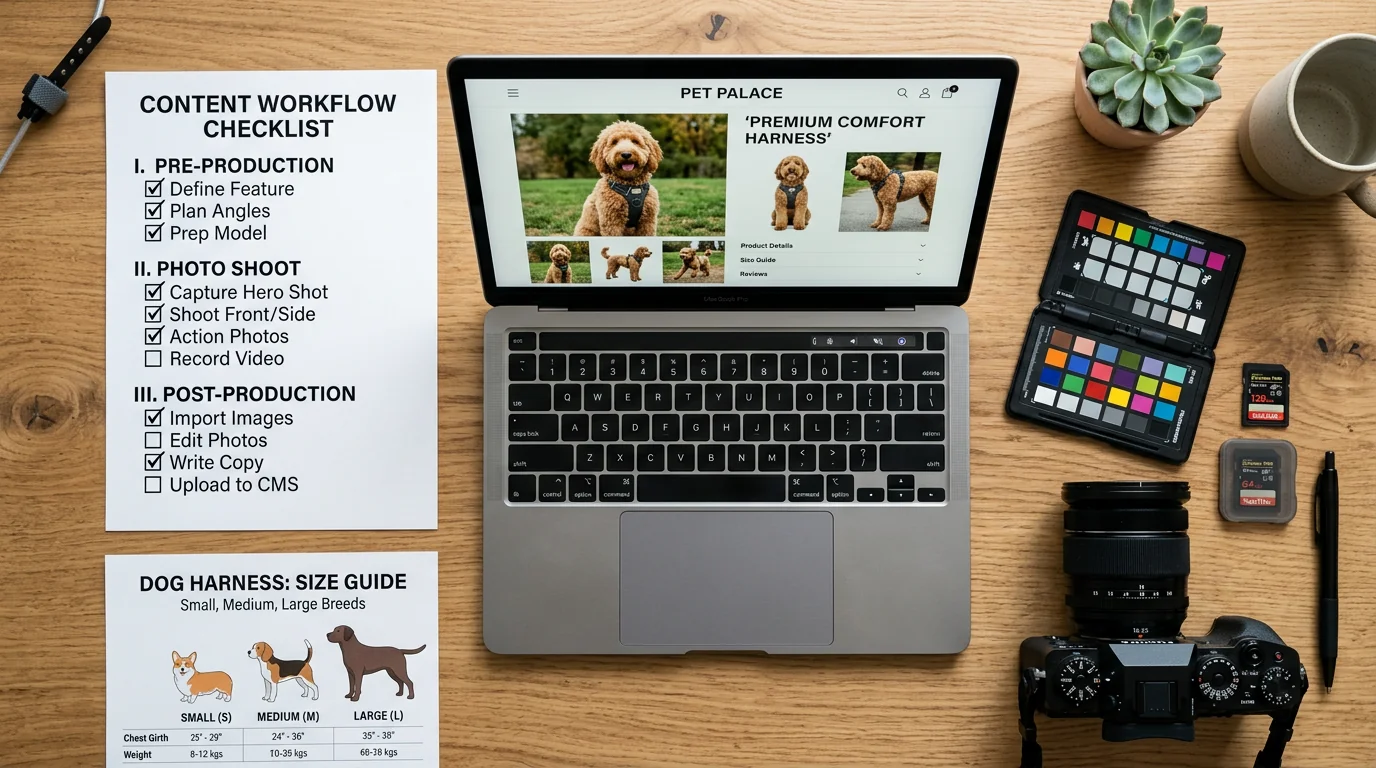
Build image sets that map to questions. Include front, side, close-up texture, and in-use shots. Add comparison images showing breed or size fit. Use neutral backgrounds for clarity and lifestyle scenes for context. Ensure a hero image aligns with the primary intent expressed in the H1 and opening paragraph.
Structured data and file hygiene that support rich results
Implement Product, FAQ, and HowTo where appropriate. Validate price, availability, and size properties. Use descriptive filenames, hyphenation, and IPTC fields for subjects, locations, and rights. Maintain canonical images per page. Evidence suggests consistent, template-driven transformations reduce errors and support machine parsing at scale.[4] For teams scaling these patterns, consider Petbase AI to standardize blocks and publish reliably.
Image SEO for pet discovery and visual matches
Shot list and metadata pattern for products and care guides
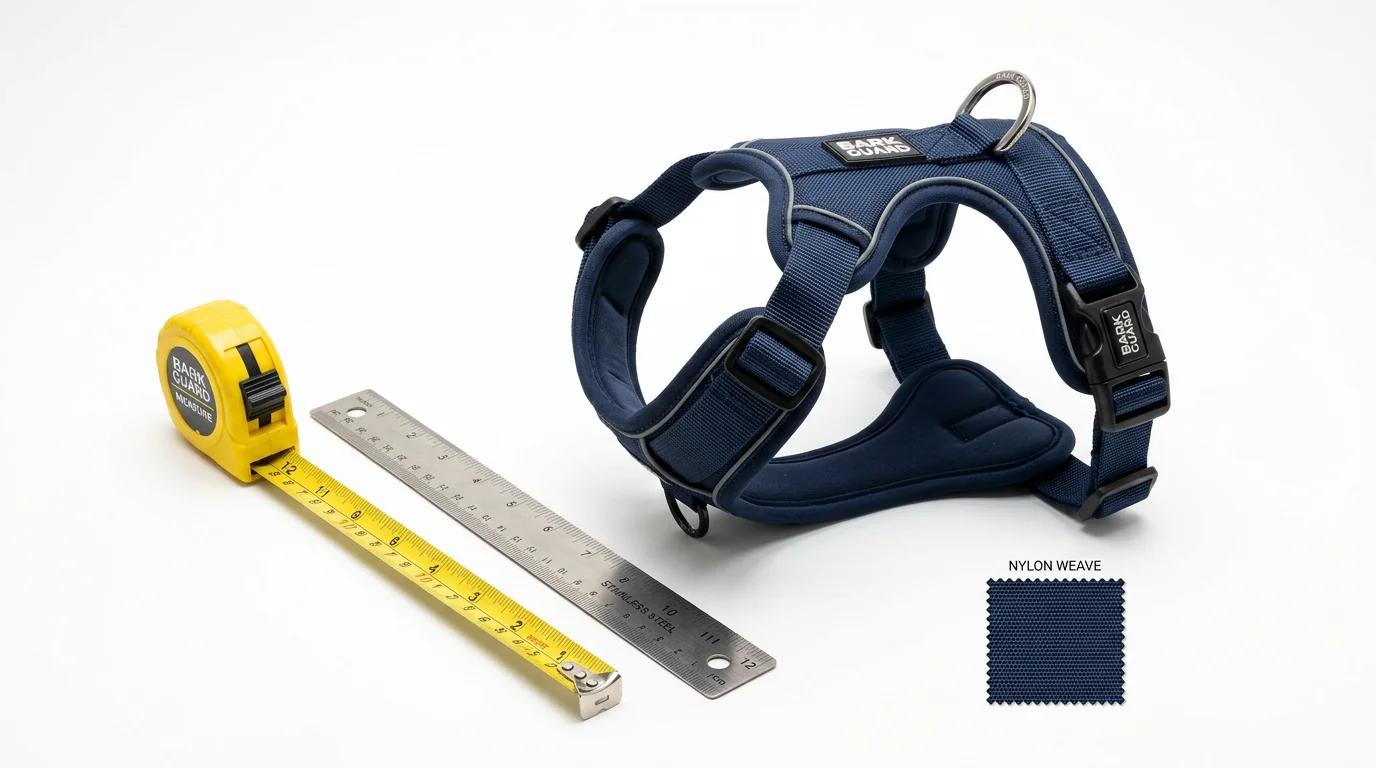
For products: hero on white, 45° angle, scale reference, material close-up, and in-context use by size class. For care guides: step-by-step process shots, before/after clarity, and environment cues. Apply alt text, captions, and IPTC Subject/Keywords. Add multi-language image metadata patterns where applicable to localize queries and reduce mismatches.
Compression, formats, and accessibility considerations
Serve AVIF or WebP at 1200-1600px for hero images and 800-1200px for secondary shots. Target 60-120 KB per image where possible. Maintain consistent exposure and color profiles. Higher perceptual quality may assist visual features and fusion tasks used in retrieval pipelines.[2]
Schema, on-page patterns, and sources that AIO may cite
Product, HowTo, FAQ, MedicalEntity-adjacent patterns
Favor Product for SKUs with price, size, and brand. Use HowTo for care procedures with clear steps and images. Add FAQ for short, verifiable answers. For health-adjacent content, keep cautious wording and reference expert sources. Standardized patterns across pages benefit automation and error control at scale.[4] For scalable templates, review programmatic templates for breeds and sizes.
Evidence-linked statements and transparent sourcing
Use in-text citations to reputable veterinary organizations and label review dates. Place a short “Evidence and sources” block under the primary answer. AIO may favor clearly attributed facts. Prompt design research indicates structured, example-led content improves model selection and reliability for extraction.[1]
Monitoring and iteration cadence
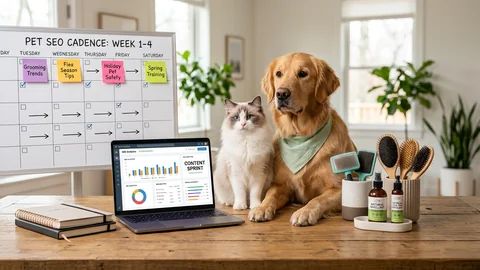
What to review after 7-14 days
Check impression changes for image and rich result features. Compare click-through from AI Overviews versus standard snippets. Audit queries that triggered your images and confirm metadata alignment. Test variants of short answers and captions. Iteratively refine promptable answer blocks based on observed surfacing and coverage shifts.[1]
What to review after 4-8 weeks
Evaluate sustained eligibility for rich snippets and image carousels. Track product detail accuracy across feeds. Examine breed or size queries for visual match correctness. Review cluster-level performance by intent. If growth plateaus, expand coverage systematically using cluster pet keywords by breed, life stage, and intent to strengthen topical breadth.
Practical safety boundaries
Animal welfare, medical nuance, and UGC moderation
Use cautious language for health topics. Avoid prescriptive diagnoses or treatment promises. Gate user-generated content with moderation and require image rights confirmation. Blur identifying background details where needed. Provide clear emergency guidance and escalate recommendations for professional care when symptoms suggest urgency.
Avoiding over-claims and ensuring brand-safe imagery
Do not claim universal fit or outcomes. Replace absolutes with ranges and conditions. Ensure images show safe, supervised use. Exclude depictions that encourage harmful behavior. Use consistent disclaimers and context notes to meet brand safety standards and reduce misinterpretation risks.
Evidence status: what is well-supported vs. emerging
Signals with stronger support in public documentation
Structured data alignment for Product, FAQ, and HowTo is well-documented for rich results. Clean alt text, captions, and filenames remain useful for disambiguation. Consistency in titles, headings, and on-page context supports extraction. Image quality, lighting, and subject clarity continue to influence matching reliability across surfaces.
Areas where practitioner evidence is evolving
Exact weighting of IPTC fields in AI Overviews is evolving. The role of lifestyle versus studio images differs by intent and platform. The effect size of example-led answer blocks varies by query. Emerging techniques for prompt formatting and content modularization show promise but require ongoing testing.[1]
Appendix: reproducible checklist for one priority page
One-page implementation list you can run in a day
- Define the primary intent and two secondary intents. Write 3-5 answer blocks with 40-75 words each.
- Add a sizing or measurement table with numeric ranges and units. Include a brief usage note.
- Produce five images: hero on white, side angle, material close-up, in-context usage, and scale reference by size class.
- Write descriptive alt text and captions naming breed/size context, materials, and use case. Add IPTC Subject/Keywords and creator/rights.
- Implement Product, FAQ, or HowTo schema as applicable. Validate with a structured data testing tool.
- Rename files with hyphenated descriptors and version numbers. Set canonical image and ensure unique filenames.
- Compress to WebP/AVIF with target sizes. Maintain consistent lighting and color profile.
- Add an “Evidence and sources” block with review date. Include cautious language for health-adjacent statements.
- Publish and log a baseline. In two weeks, review impressions, image clicks, and snippet eligibility.
- Iterate titles, captions, and the shortest answer block based on early surfacing data and query phrasing.
Frequently Asked Questions
How do I get my pet product into Google’s AI Overview?
Evidence suggests AIO prefers concise, source-cited answers and product details with clean schema. Add extractable answer blocks, Product and FAQ markup, and images that match the query intent. Monitor surfacing via Search Console and test with varied prompts.
What images help with visual search for pet queries?
Use multi-angle, in-context shots that show breed/size fit, materials, and usage. Include descriptive alt text, IPTC fields, unique filenames, and consistent lighting. This may improve matches across Google Images, Pinterest, and social visual feeds.
Which schema is most useful for pet care guides?
FAQ, HowTo, and Article with cited sources may support rich results. For product-adjacent guides, add Product and Review where applicable. Use cautious language for health topics and reference reputable veterinary sources.
How long until changes affect AI Overviews?
Some pages may reflect updates within 1-3 weeks, while broader inclusion can take longer. Track impressions, image clicks, and rich result eligibility over 4-8 weeks to judge impact.
Do alt text and filenames still matter in 2026?
Yes, they may still help disambiguate subjects and intents. Pair them with IPTC metadata, captions, and on-page context so models can infer relevance for pet-specific scenarios.
When executed well, these measures align with pet SEO 2026 realities: AI Overviews rely on extractable answers, and visual surfaces reward image clarity. Combine structured content, pet image SEO, and disciplined iteration. To scale across categories, align clusters, strengthen coverage, and maintain predictable on-page patterns with supportive internal links to deepen authority.
Round out your approach by reinforcing sitewide navigation and data consistency. Expand clusters using cluster pet keywords by breed, life stage, and intent, align templates with programmatic templates for breeds and sizes, and reinforce multilingual reach via multi-language image metadata patterns. Keep a steady cadence to secure durable gains in rich snippets for pet brands and visual search for pets.
References
- Y Zhang et al. (2024). Neural prompt search. IEEE Transactions on Pattern Analysis …. View article
- J Jose et al. (2021). An image quality enhancement scheme employing adolescent identity search algorithm in the NSST domain for multimodal medical image fusion. … Signal Processing and …. View article
- S Vandenberghe et al. (2020). State of the art in total body PET. EJNMMI physics. View article
- H Wang et al. (2021). {PET}: Optimizing tensor programs with partially equivalent transformations and automated corrections. … USENIX Symposium on …. View article