Pet Product Page SEO: Match Breed, Size, and Life-Stage Intent to Convert


Table of Contents +
- Why intent granularity matters on product pages
- Attribute architecture: how to structure pages to match queries
- On-page copy and media that signal fit
- Quick Decision Guide
- Monitoring guidance: what to check after 7-14 days and 4-8 weeks
- Practical safety boundaries
- Evidence status: what the data suggests so far
- Frequently Asked Questions
- Implementation checklist for one SKU
- References
Optimize pet product pages to capture breed, size, and life-stage purchase intent with attributes, unique copy, media, and FAQs that can lift conversions.
Shoppers type exactly what they need. Your product pages must echo those words to win clicks and conversions. Generic copy will not rank for specific, purchase-ready intent.
This matters because pet buyers search with modifiers like breed, size, life-stage, durability, and diet. You will learn how to structure attributes, write unique on-page copy, and deploy media and FAQs that capture these high-intent queries.
Why intent granularity matters on product pages
Purchase-ready searches often include modifiers that signal requirements. Breed-specific SEO, life-stage targeting, and size-based keywords clarify fit and reduce returns. Precise alignment increases relevance for pet ecommerce SEO while supporting stronger click-through and conversion rates.
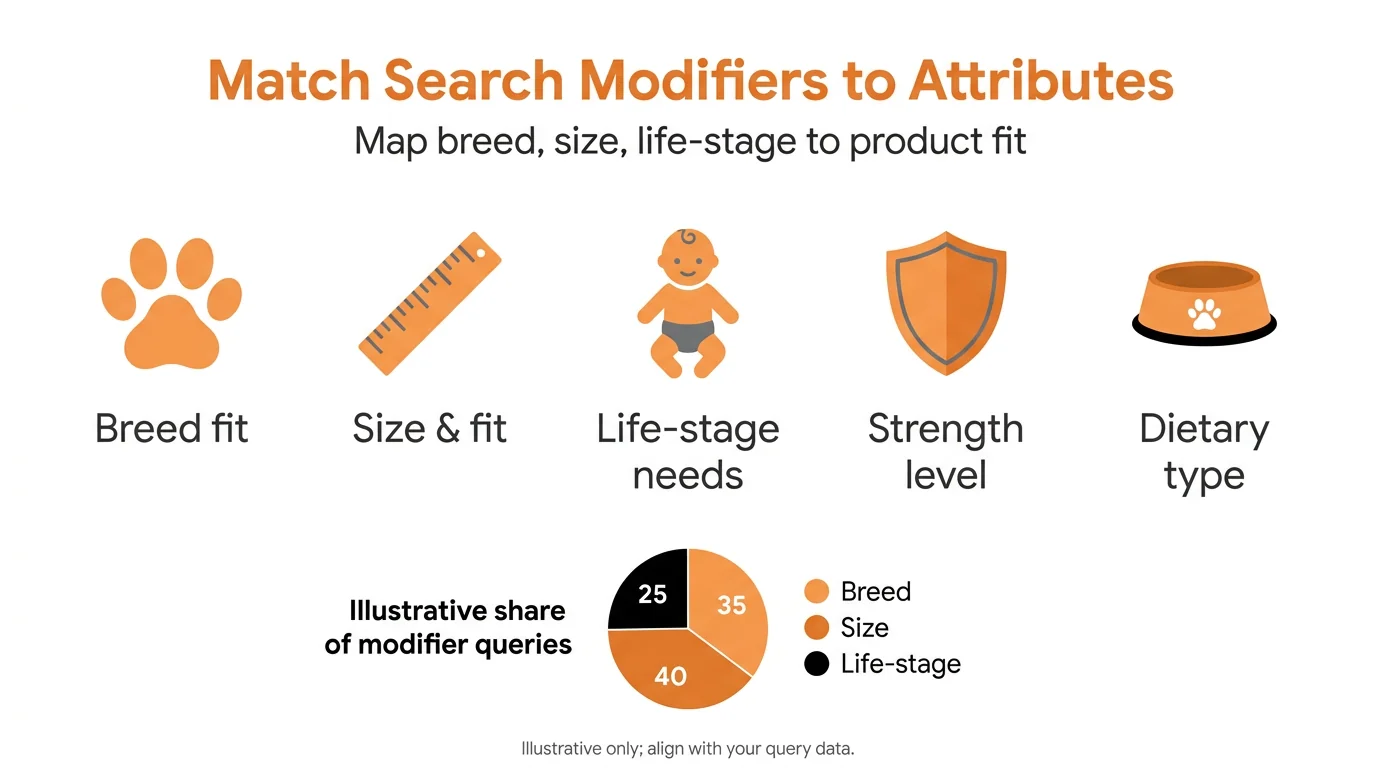
Map attributes to modifiers: breed, size, life-stage, durability, diet
Map query modifiers to product attribute SEO. Use breed suitability, size, age range, material strength, and dietary composition. Research shows e-commerce queries follow taxonomies that improve relevance matching and ranking signals when mirrored on pages[3].
One scenario focus: chew toys targeting power chewers (e.g., pitbulls)
For “indestructible chew toy for pitbulls,” prioritize: breed fit, power-chewer durability, material specs, size guidance, and warranty. Title, H1, bullets, and media should consistently reinforce this specific use case and minimize ambiguity.
Petbase automates SEO content for pet stores - publishing 10 optimized articles monthly so you can focus on running your shop - start your free trial.
Attribute architecture: how to structure pages to match queries
Architect attributes to express primary intent in core elements and secondary intents in supporting areas. Keep canonical integrity while surfacing facets that align with user language.
Primary vs. secondary modifiers in titles, H1s, and bullets
Put the strongest commercial modifier in the title and H1. Use supporting bullets for secondary modifiers. Example: “Tough Chew Toy for Power Chewers - Large | Rubber, Dishwasher-Safe.” Include breed or life stage only when matching clear demand signals[2].
Facets, canonicalization, and avoiding thin duplicates
Use variants for size or flavor. Keep one canonical URL. Expose filtered facets (breed, life-stage) only when they provide substantial unique content. Add 150-250 words of unique text per variant or facet to prevent thin duplication.
Structured data: Product + additionalProperty for pet attributes
Implement Product schema with offers, reviews, and GTIN/SKU. Use additionalProperty for breed suitability, size, life-stage, chewing strength, and dietary notes. For guidance, see schema for pet pages. Well-structured taxonomies also aid query interpretation and type-ahead relevance[4].
On-page copy and media that signal fit
Demonstrate fit through specific wording, careful claims, and evidence-backed details. Align media and alt text with target modifiers to reinforce relevance and assist accessibility.
Unique description blocks per modifier set
Create short blocks for breed, size, and life-stage. Example headings: “Built for Power Chewers,” “Sized for Large Jaws,” “Puppy-Safe Materials.” Keep 60-120 words each. This supports life-stage targeting while preserving one canonical product.
Tested claims with cautious language
Use testable statements and ranges. Example: “Survived 800 cycles in our puncture test.” Prefer “designed for” or “built for” rather than “indestructible.” Explain test methods and warranty terms to set expectations accurately.
Media naming, alt text, and UGC tailored to breed/size cases
Name files with attributes: tough-rubber-chew-toy-large.jpg. Use alt text like “large durable chew toy used by power chewer.” Add UGC demonstrating breed/size fit to reduce uncertainty and returns.
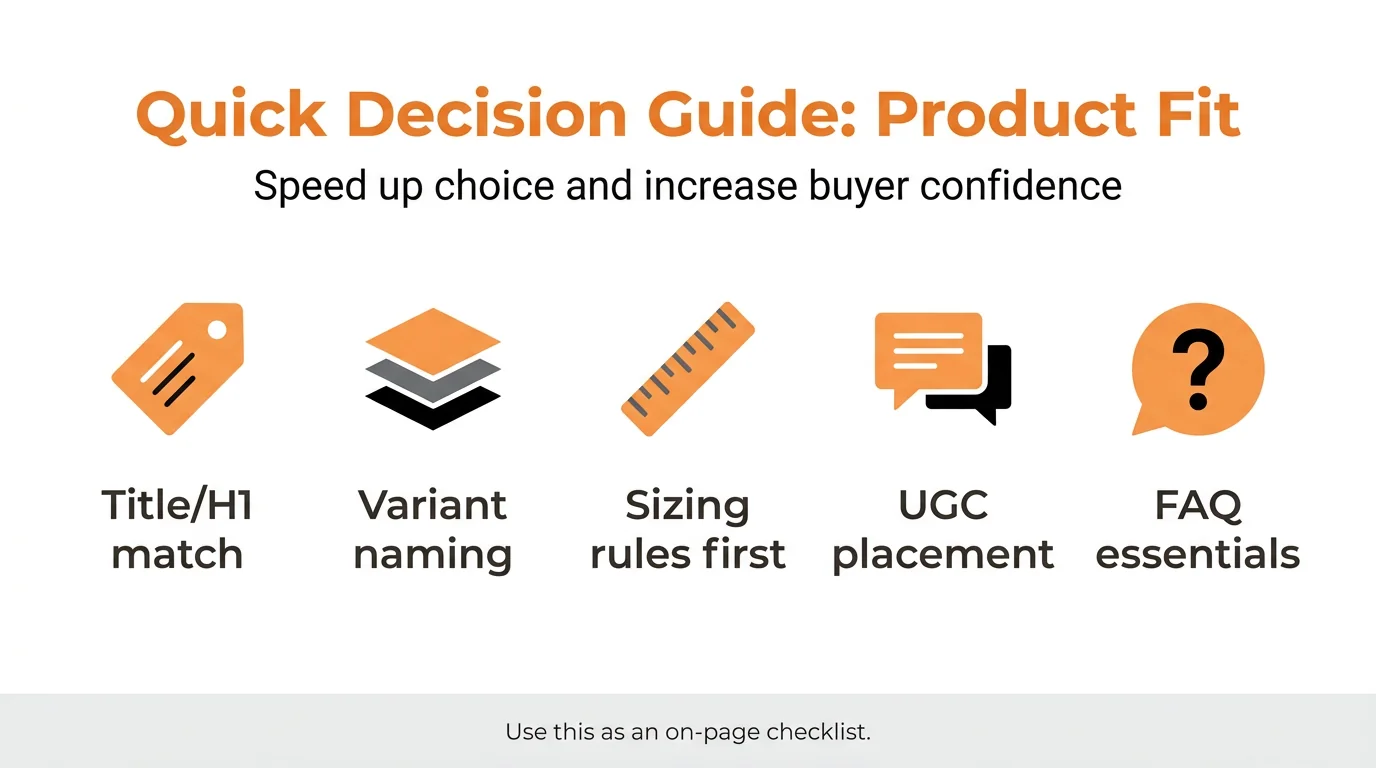
Quick Decision Guide
If queries include a specific breed (e.g., pitbull), then add breed in title, H1, bullets, and an FAQ addressing that breed’s needs.
Match the breed modifier in critical elements. Include a short “Why it fits [Breed]” block. Add an FAQ on chewing style or nutrition concerns. Use UGC from that breed to validate the fit.
If queries mention size (small/medium/large), then surface size in variant names, bullets, and schema size attributes.
Rename variants to include size clearly. Place size rules in the first bullet. Add a sizing chart with jaw width or weight ranges. Include size data in schema and meta descriptions where relevant.
If queries include life-stage (puppy/senior), then include life-stage in meta, H1, nutrition/safety notes, and an age-appropriate sizing chart.
Include “puppy” or “senior” in H1 when dominant. Add age-based usage notes and material softness. Provide puppy/senior sizing tables. Emphasize gentle surfaces or digestibility guidance where appropriate.
If durability intent appears (indestructible/tough), then add material specs, verified test results, and warranty language with cautious phrasing.
Describe materials, thickness, and lab tests. Use claims like “built for power chewers.” Explain test setups. Offer a limited warranty and clear usage guidance, avoiding absolute durability statements.
If dietary intent appears (grain-free/limited ingredient), then structure ingredients list, feeding guide, and intolerance notes prominently.
Place ingredients and feeding guidance above the fold. Highlight “grain-free” or “limited ingredient” near the title. Include intolerance notes and cross-contamination warnings where applicable for clarity.
If local modifiers appear, then add shipping/availability modules and compliant local schema where relevant.
Show localized delivery times and store availability. Add localized price, currency, and area coverage notes. Use appropriate local business and product availability markup when site architecture supports it.
If mixed intents exist, then prioritize the strongest commercial modifier in title/H1 and cover others in bullets and FAQs.
Lead with the highest intent modifier. Then incorporate secondary modifiers in bullets, media captions, and FAQs. Avoid cluttered titles. Use filters and onsite navigation to serve secondary paths.
Monitoring guidance: what to check after 7-14 days and 4-8 weeks
7-14 days: indexation, query matching, and click-through signals
Check index coverage, impressions for modifier variants, and title/H1 rewrite rates. Review actual queries: breed, size, life-stage, durability, diet. Adjust titles or bullets to better mirror dominant phrases and improve CTR.
4-8 weeks: conversion metrics, variant engagement, and refinement loop
Evaluate add-to-cart rates, variant clicks, time on page, and returns. Expand strong modifiers into richer sections or UGC. Teams may streamline updates using Petbase AI, which automates attribute research and page copy iteration.
Practical safety boundaries
Avoid over-promising durability or health outcomes
Use cautious language. Replace absolute durability or health guarantees with measured statements and test details. Provide care instructions and supervision notes to set realistic expectations and minimize liability.
Material, sizing, and age guidance disclaimers
Include materials, hardness levels, size rules, and age suitability notes. Offer jaw-size or weight ranges with tolerance bands. Encourage discontinuing use if damaged. Clarify that guidance may vary by individual.
Consistent care/warning labels across variants
Standardize warnings and care labels for every variant. Keep placement consistent in bullets and a dedicated safety section. Align schema and on-page copy to minimize confusion and ensure compliance.
Evidence status: what the data suggests so far
Evidence from search behavior and ecommerce benchmarks
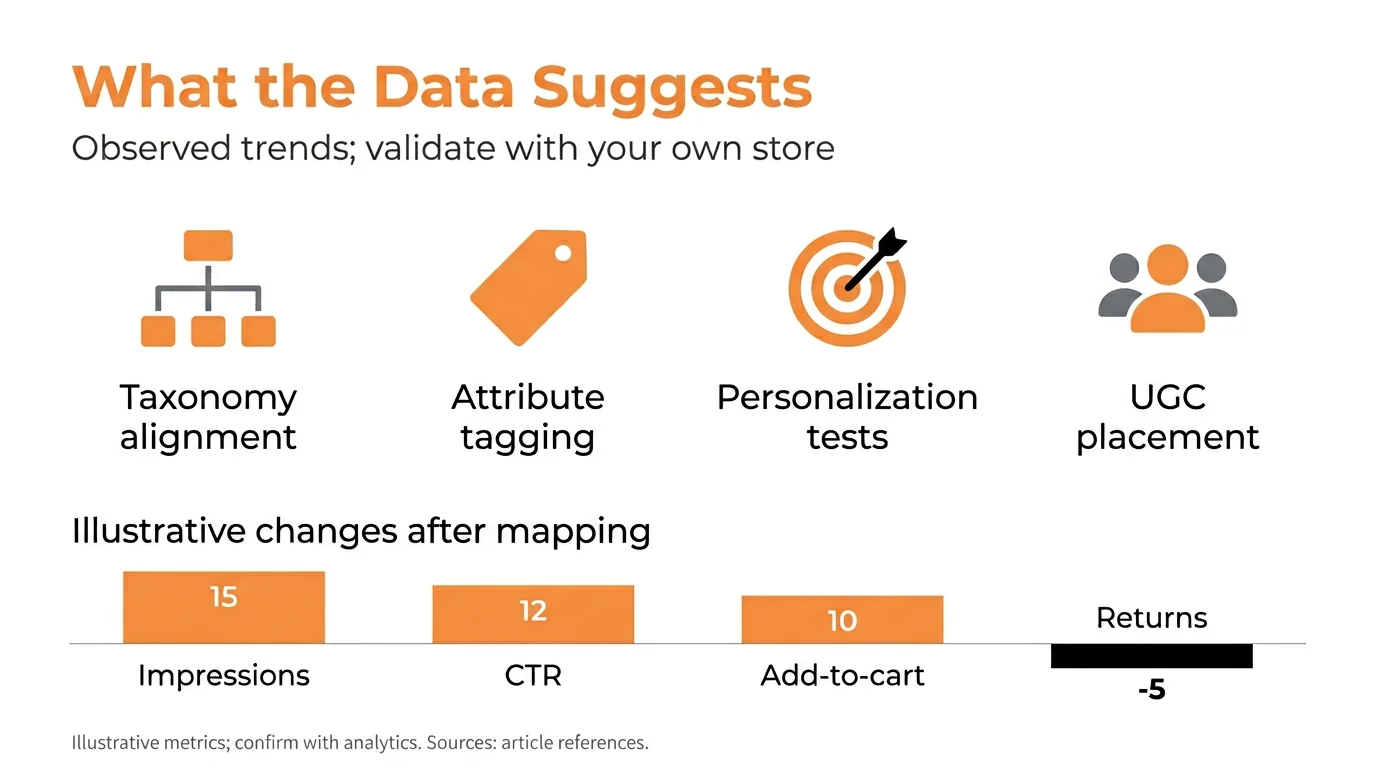
Research indicates e-commerce queries follow structured taxonomies, and mapping them improves understanding and relevance in search pipelines[2][3]. Category suggestion systems also benefit from clear attribute hierarchies, aiding discovery[4].
Where evidence is limited and warrants testing
Personalization and attribute-level tagging may support conversion, but effects vary by catalog and audience[1]. Test breed-specific blocks, UGC placements, and warranty framing. Monitor returns alongside revenue to validate net performance.
Frequently Asked Questions
Should I create separate product pages for each breed or use variants?
Evidence suggests variants or dynamic copy blocks are safer to avoid duplicates. Use one canonical product with breed/size attributes and unique sections addressing top intents.
How do I target 'indestructible' without risky claims?
Use cautious language like 'built for power chewers' and describe materials, test methods, and warranty terms. Avoid absolutes and provide usage guidance to set expectations.
What schema helps with breed, size, and life-stage intent?
Use Product with offers, review, and additionalProperty for attributes like breed suitability, size, life-stage, and material. Include GTIN/SKU and variant-level data where available.
How can media support conversion for specific breeds or sizes?
Include images and short clips showing the product used by the target breed/size, with descriptive alt text. UGC and sizing comparison photos may reduce returns.
How long until I see ranking movement on these modifiers?
Pages may start matching queries in 1-3 weeks, with steadier trends by 4-8 weeks. Timelines vary by site authority, internal links, and competition.
Implementation checklist for one SKU
Title/H1, bullets, schema, media, FAQs, and internal links
- Title/H1: Include the strongest commercial modifier (breed, size, life-stage, durability, or diet).
- Bullets: Confirm material specs, size rules, life-stage notes, and warranty. Keep first bullet intent-specific.
- Schema: Product with additionalProperty for breed suitability, size, life-stage, chewing strength, and dietary attributes.
- Media: Add breed/size-specific images and short clips; descriptive filenames and alt text.
- FAQs: Answer top modifier concerns, returns, and safety.
- Internal links: Connect from related guides using anchors like “durable chew toys for pitbulls” and “grain-free puppy food for small breeds.” See From Blog to Basket: Internal Linking Paths That Drive Product Discovery.
- Strategic reading: Revisit the Pet Page SEO Optimization guide, the On-Page SEO Checklist for Pet Brands, and Schema for Pet Pages.
Pre-publish and post-publish QA steps
- Pre-publish: Validate canonical URL, indexable status, schema, and unique copy blocks per modifier. Confirm variant naming and size charts.
- Post-publish (week 1-2): Audit query matching and CTR. Tweak title/meta to mirror dominant phrasing.
- Post-publish (week 4-8): Review add-to-cart, variant engagement, and returns. Iterate copy and media. Use internal links to reinforce modifier relevance.
Attribute-driven product pages win because they speak the shopper’s language. By aligning titles, schema, copy, media, and FAQs with breed, size, and life-stage intent, you create clarity that may drive better clicks and conversions. Keep claims cautious, test iteratively, and scale what works across your catalog.
References
- K Xu et al. (2024). Intelligent classification and personalized recommendation of e-commerce products based on machine learning. arXiv preprint arXiv:2403.19345. View article
- M Skinner et al. (2019). E-commerce Query Classification Using Product Taxonomy Mapping: A Transfer Learning Approach.. eCOM@ SIGIR. View article
- P Sondhi et al. (2018). A taxonomy of queries for e-commerce search. The 41st International ACM …. View article
- J Tagliabue et al. (2020). How to grow a (product) tree: Personalized category suggestions for eCommerce type-ahead. … 3rd Workshop on e-Commerce …. View article