Category & Collection Page SEO for Pet Catalogs: Filters, Facets, and Copy That Scales


Table of Contents +
- The scenario we’re solving: safe faceted navigation for pet categories
- Quick decision guide: if X, then Y
- Canonical and indexation patterns that scale
- Scalable collection copy without duplication
- Internal linking architecture for pet categories
- Monitoring: what to check at 7-14 days and 4-8 weeks
- Practical safety boundaries
- Evidence status and cautions
- Implementation examples for pet categories
- Tie-in with your broader Pet Page SEO strategy
- Frequently Asked Questions
- Conclusion
- References
Blueprint for pet category SEO. Safely use filters/facets, scalable collection text, and canonicals to grow traffic for pages like Dog Toys and Cat Litter.
Category pages can be your highest intent landing pages. They also break easily when filters multiply. Faceted navigation SEO requires guardrails that protect crawl budgets and preserve canonical signals.
This matters because pet catalogs use sizes, breeds, flavors, and multi-packs. Those filters explode URLs and fragment relevance. You will learn safe filter indexing rules, scalable collection copy, internal links, and a canonical tags strategy from our main Pet Page SEO orientation hub playbook.
The scenario we’re solving: safe faceted navigation for pet categories
Why pet filters explode URLs (sizes, breeds, flavors, pack counts)
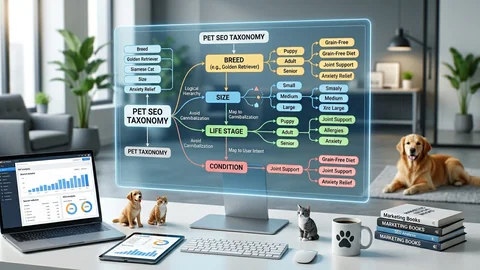
Pet catalogs often combine breed size, life stage, material, flavor, and pack count. Multiplying selections expands parameterized URLs exponentially. Without guardrails, this creates near-infinite crawl paths and inconsistent relevance signaling.
Risk areas: crawl traps, thin pages, and duplicate content
Evidence suggests parameter sprawl may drain crawl resources and delay discovery of important templates. Duplicate or near-duplicate pages then dilute signals, depressing rankings for base categories and key modifiers.[1]
Decision boundaries for what may be indexable vs. canonicalized
Set objective boundaries rooted in demand, inventory depth, and user intent. Index high-demand, single-dimension filters with unique value. Canonicalize duplicates and low-value combinations to a clean, default category.
Petbase automates SEO content for pet stores - publishing 10 optimized articles monthly so you can focus on running your shop - start your free trial.
Quick decision guide: if X, then Y
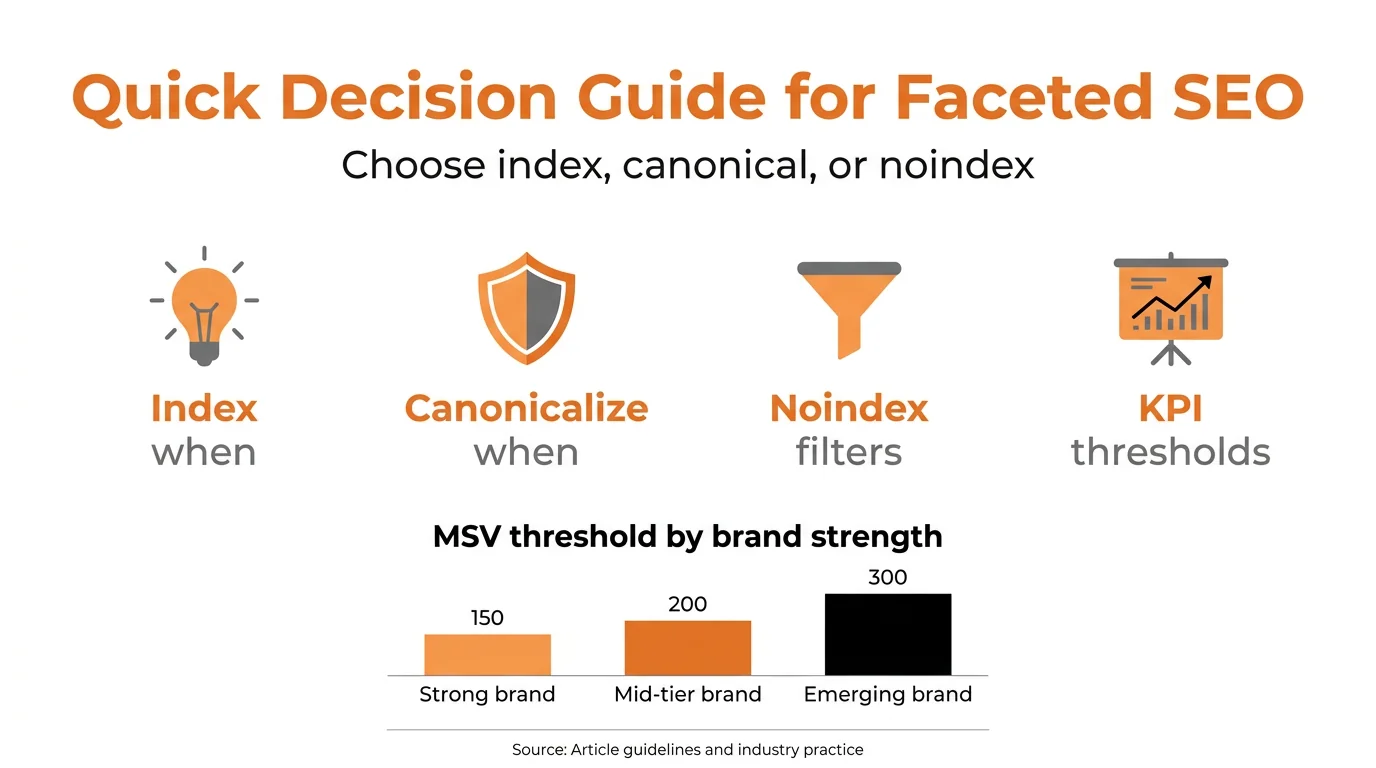
Demand threshold: if query volume ≥ X and unique intent, then index
Define X using market size and brand strength. Many teams start at 150-300 monthly searches. Require a distinct SERP intent and conversion potential before promoting a filter to indexable status.
Commodity filters: if sort/order/pagination, then noindex + canonical
Sort orders, view toggles, and pagination often fragment equity. Apply rel="canonical" to the default view. Add meta robots noindex while preserving follow to maintain link flow across product grids.
Inventory depth: if < 8 SKUs after filter, then consolidate
Shallow filtered results suggest low utility. Direct users to the parent category and expose alternative curated filters. Maintain canonical to parent until inventory and demand thresholds are consistently met.
Overlap check: if filter duplicates an existing category, then canonical
When a filter mirrors a curated collection, avoid parallel indexation. Point canonical to the editorially owned collection. Keep the filter crawlable with follow to pass internal link equity.
Locality/language: if regional labeling only, then block indexing
If a filter only changes labeling (e.g., “flavour” vs. “flavor”), avoid indexing clones. Centralize canonical to the regional canonical path with appropriate hreflang handled elsewhere for language targeting.
Breed/size intent: if strong modifiers (e.g., Pitbull, Toy breed), then consider index
Breed and size modifiers often indicate unique needs. Test indexation where SERPs show tailored results and your catalog supports meaningful differentiation in copy, imagery, and fit or safety attributes.
Seasonality: if seasonal spike ≥ baseline x2, then temporary index
Filters with predictable spikes may justify temporary indexation. Pre-stage templates before demand surges, then revert to canonicalized state as metrics taper to conserve crawl and ranking focus.
Canonical and indexation patterns that scale
Default state canonicals and parameter handling
Keep base category URLs canonical to themselves. Append non-indexable parameters via rel="canonical" pointing to the default view. Use clear parameter rules in Search Console and server logs to confirm coverage.[1]
Indexable filter templates (one dimension, clean URLs)
For selected filters, generate clean, readable paths using one dimension only. Example: /dog-toys/indestructible/. Align titles, H1, and collection text to the modifier. Avoid chained parameters unless testing shows incremental, unique intent.
When to use noindex, follow vs. disallow
Use noindex, follow to keep equity flowing while removing low-value URLs from the index. Reserve disallow for infinite combinations or privacy concerns where crawl waste outweighs link discovery benefits.[4]
Scalable collection copy without duplication
Template variables (breed, size, material, life stage)
Build content templates with variables for breed, size, material, life stage, and use case. Balance automation with editorial checks. Keep language specific, outcome-oriented, and compliant with category claims.
Content blocks: intro, buying factors, internal links, FAQs
Adopt modular blocks: a 120-200 word intro, evidence-informed buying factors, curated internal links, and targeted FAQs. This structure may support relevance while preserving browsing speed and merchandising flexibility.[2]
Evidence-calibrated claims and compliant language
Avoid medical or performance absolutes. Use cautious phrasing like “may support” and “designed for.” Align with product labels and regulatory guidance. Standardize disclaimers across indexable filters to reduce compliance risk.
Internal linking architecture for pet categories
Parent-child linking between base category and curated filters
From base categories, feature 3-5 curated, indexable filters in a “Featured Curations” block. Use anchors like “Dog Toys for Heavy Chewers.” Link back up prominently from each filter to its parent category.
Cross-links between complementary categories (dog chews ↔ dental care)
Create reciprocal links between complementary categories to uplift ecommerce SEO for pet stores. From chews, link to dental care guides. Learn route design from From Blog to Basket: Internal Linking Paths That Drive Product Discovery.
Breadcrumbs and footer taxonomies that help crawlers
Ensure breadcrumbs reflect the canonical path: Home > Dog > Toys > Indestructible. Keep breadcrumb links crawlable. Add footer taxonomies sparingly to boost coverage without creating duplicative navigation paths.
Monitoring: what to check at 7-14 days and 4-8 weeks
Short-term: crawl stats, parameter coverage, indexation deltas
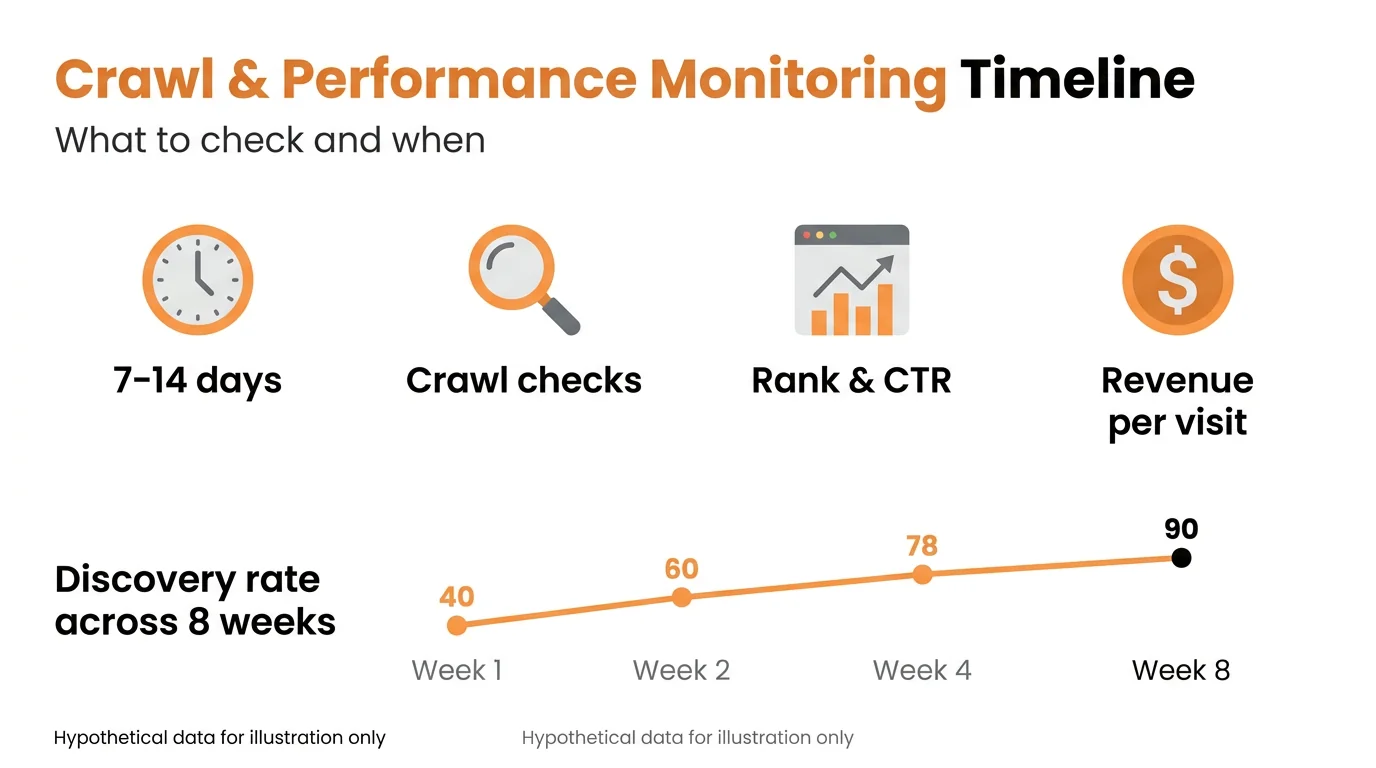
After 7-14 days, review server logs, crawl stats, and parameter handling. Validate canonical consolidation and discoverability of indexable templates. Confirm noindex, follow is respected across commodity filters and sorts.[1]
Mid-term: rankings for breed/size modifiers, CTR, revenue per visit
At 4-8 weeks, examine rankings for targeted modifiers, CTR movements, and revenue per visit versus base category. Technical and semantic alignment together often correlate with sustainable gains.[3]
Rollback criteria: when to deindex or merge
Deindex filters with stagnant impressions, thin inventory, or cannibalization. Merge near-duplicates into a single template. Update internal links and canonicals to consolidate equity and restore category clarity.
Practical safety boundaries
Max indexable filters per base category
Set a ceiling per base category, often 3-7 indexable filters. Expand cautiously after measuring performance. This cap keeps crawl budgets targeted and supports a maintainable internal linking structure.
Minimum content and SKU thresholds
Require at least 8-12 SKUs, a 120-200 word intro, and one unique block (e.g., durability tips) before indexation. Maintain image variety and structured data to reinforce distinctiveness and relevance.
Parameter allowlist and URL hygiene rules
Adopt a parameter allowlist for filter indexing rules. Permit one dimension in indexable paths. Normalize trailing slashes, sort defaults, and lowercase slugs. Canonicalize variants consistently across templates and languages.[4]
Evidence status and cautions
What industry studies suggest about faceted SEO
Research indicates infinite faceted navigation can hemorrhage crawl resources, reducing visibility for key pages. Structured canonical and parameter strategies may mitigate waste and stabilize rankings.[1]
Where data is mixed and testing is advised
Outcomes vary by catalog size, link equity, and SERP layout. Controlled tests with limited filters and clear KPIs offer the safest path to scalable, incremental wins.[3]
How pet-specific modifiers may influence intent
Breed and life-stage modifiers often imply care, fit, and durability needs. Tailored templates with precise language and assets may resonate better than generic filters, supporting collection page SEO relevance.
Implementation examples for pet categories
Dog Toys: indestructible, breed size, material
Index “Indestructible Dog Toys” with clean URL, durability guidance, and size selectors. Cross-link to safety tips and dental care. Highlight rubber and nylon materials, and canonicalize non-essential sorts and paginations.
Cat Litter: clumping, unscented, multi-cat
Template examples include “Unscented Cat Litter” and “Clumping Cat Litter.” Provide odor-control and dust metrics. Link to multi-cat hygiene advice. Use structured data and canonical rules to unify SKU variants.
Dog Food: life stage, breed size, protein source
Index life-stage and size templates where demand is proven. For protein filters, ensure sufficient SKUs and nutrition notes. Link to feeding guides and relevant products. Canonicalize unhelpful combinations and price views.
Tie-in with your broader Pet Page SEO strategy
Aligning category decisions with the main Pet Page SEO orientation hub
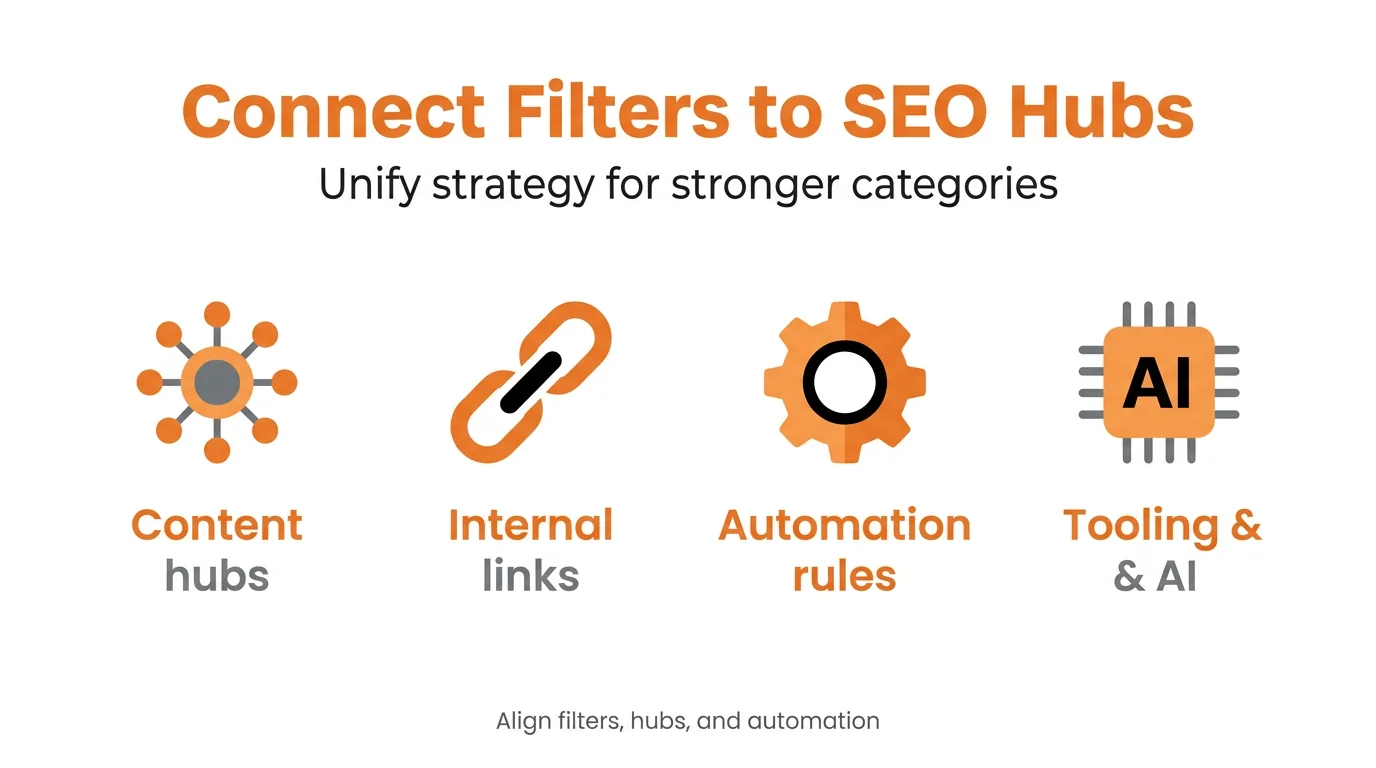
Coordinate filter indexation with your hub strategy. Reinforce categories with internal links from guides like Pet Keyword Research: Head Terms, Long-Tail Modifiers, and Seasonal Demand and the Pet Page SEO Optimization: The Complete Orientation Guide for Pet Brands, Retailers, and Services.
Using automated systems to maintain rules at scale
Automate parameter allowlists, canonical tags strategy, and content blocks across categories. For best results, consider using Petbase AI which is designed for this purpose.
Frequently Asked Questions
Should I index breed-specific filter pages like “Dog Toys for Pitbulls”?
If search demand and unique intent exist and the page can maintain sufficient SKUs and original copy, indexing may help. Otherwise, keep canonical to the base category and test with a limited set.
What filters should never be indexed on pet category pages?
Sort orders, pagination, price range sliders, availability, and cosmetic parameters generally should be noindexed or canonicalized to the base category, as they rarely signal unique intent.
How much copy should a collection page have?
A concise 120-200 word intro plus modular blocks (buying guide, safety notes, FAQs) may support relevance. Place copy where it does not disrupt product discovery and keep language specific to the filter intent.
Do I need unique FAQs for each filter page?
Only when user intent differs. For example, “indestructible dog toys” may warrant durability and safety FAQs, while “squeaky toys” requires noise and material notes. Avoid duplicating identical FAQs across many pages.
What KPIs indicate a filter page deserves to stay indexed?
Early signals may include impressions and CTR for the specific modifier, followed by add-to-cart rate, revenue per session, and stable ranking growth over 4-8 weeks.
Conclusion
Category page SEO for pet catalogs demands methodical rules that balance demand, indexation, and crawl control. Use one-dimension, clean URLs for high-intent filters. Canonicalize noise. Add modular collection text and purposeful internal links to support discovery. Track crawl, indexation, and conversion before expanding. For deeper process alignment, review On-Page SEO Checklist for Pet Brands: Titles, Meta, Media, and E-E-A-T Signals and operationalize cross-linking with From Blog to Basket: Internal Linking Paths That Drive Product Discovery. Sustained gains come from disciplined testing, strong governance, and iterative improvement.
References
- ASA Sharma et al. (2025). From Logs to Rankings: A Quantitative Framework for SEO Performance Diagnosis Using Server Data and Search Console Signals. Techne: Journal of ….
- N Papagiannis (2020). Effective SEO and content marketing: the ultimate guide for maximizing free web traffic. 2020 - books.google.com. View article
- R Tatikonda et al. (2024). Importance of Search Engine Optimization in Digitalization-A Comprehensive Analysis. … on Advances in …. View article
- V Duong (2019). SEO management: methods and techniques to achieve success. 2019 - books.google.com. View article