Pet Store SEO: The Complete Orientation Hub for Retailers, eCommerce, and Local Services

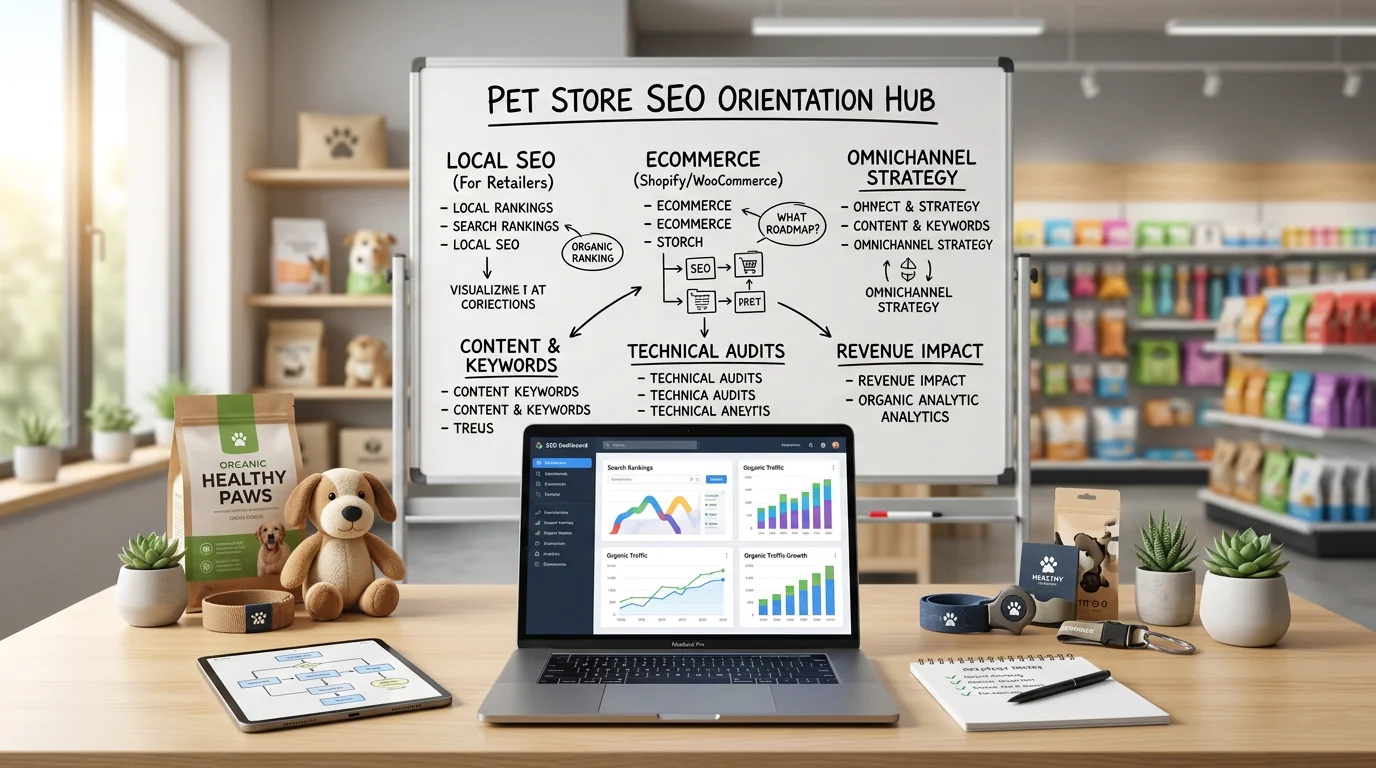
Table of Contents +
- What to prioritize first: foundations that compound
- Keyword strategy across retail, eCommerce, and local
- Site architecture and product/category structure
- Content-to-commerce: from education to product
- Local presence for stores and services
- Technical enhancements, international growth, and measurement
- Common mistakes and misconceptions
- Frequently Asked Questions
- References
A clear roadmap to pet store SEO. Learn what matters, why it drives revenue, and when to prioritize tactics for local, eCommerce, and omnichannel brands.
Pet store SEO decides whether shoppers discover your brand at the exact moment they need you. Visibility drives profitable traffic and repeat purchases.
This guide distills priorities for pet retailers, eCommerce brands, and local service providers. You will learn how to set strategy, structure sites, map keywords, and measure real business impact.
What to prioritize first: foundations that compound
Align intent: local, eCommerce, or omnichannel
Decide your primary intent before tactics. Local storefronts prioritize map visibility and service intent. Pure eCommerce emphasizes product and category discovery. Omnichannel blends both with inventory signals and store pages.
Clarity here shapes keyword targeting, templates, and measurement. It also prevents diluted efforts that underperform across every channel. Intent alignment is the strategy hinge for pet retailer SEO.
Fix basics: site architecture, crawlability, and product data
Search engines must understand your site and products. Keep navigation simple, with crawlable categories and facets. Standardize product attributes like breed, size, and life stage for filterable discovery.
Ensure indexation rules are clean. Consolidate duplicates. Structure product variants logically. These fundamentals magnify every content, link, and local investment that follows.
Publish consistently with topic authority in mind
Build topic authority across core themes tied to your assortment and services. Consistency compounds, signaling depth and reliability to search engines.
Automation can improve throughput, reduce errors, and sustain cadence at scale, especially for pet eCommerce SEO programs[2]. Teams often use Petbase AI to research pet-specific keywords and auto-publish articles and product pages.
- Choose your dominant intent: local, eCommerce, or omnichannel.
- Repair architecture, indexation, and product data consistency.
- Publish intent-mapped content weekly to build topic authority.
Petbase automates SEO content for pet stores - publishing 10 optimized articles monthly so you can focus on running your shop - start your free trial.
Keyword strategy across retail, eCommerce, and local
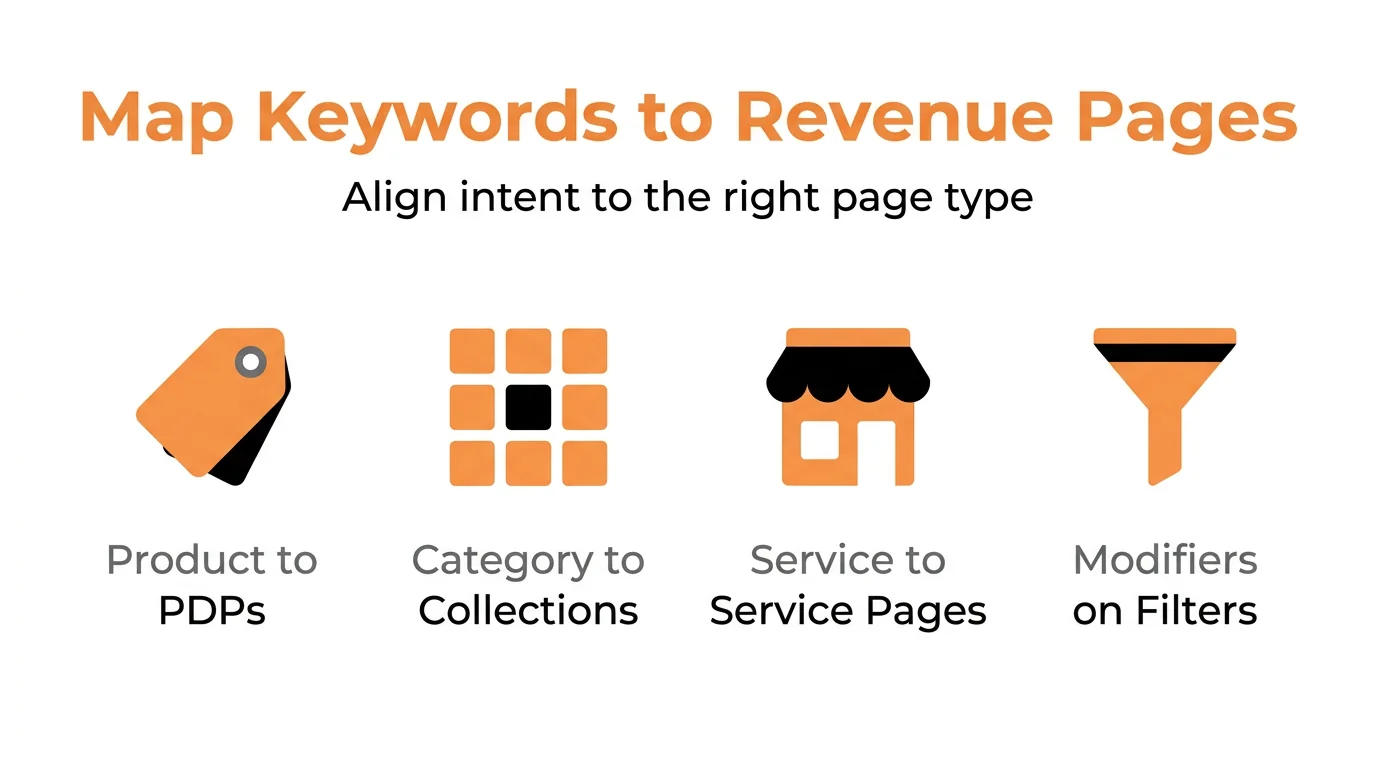
Map queries to revenue: products, categories, and services
Attach keywords to revenue paths. Product terms feed product detail pages. Category terms belong to collections. Service terms require focused service pages and store pages.
Aligning keywords to page types is a core principle of effective digital marketing architecture[3]. It improves relevance, click-through, and conversion.
Balance generic vs. intent-rich, breed/size/life-stage
Broad terms build reach. Intent-rich modifiers convert. In pet brand SEO, modifiers like breed, size, life stage, and condition sharpen product-market fit and on-page relevance.
Use a layered plan for both discovery and purchase-ready demand. For a tactical walkthrough, see Keyword research for pet stores: from generic to intent-rich.
Avoid cannibalization with clear targeting
Give each query range a single best page. Avoid competing posts or collections for the same intent. Use internal links to reinforce that “one page per intent” rule.
Where overlaps exist, consolidate or reposition pages to complementary intents. Preserve equity with redirects and internal link updates.
Site architecture and product/category structure
Design collections for discovery and filters
Collections should reflect how pet shoppers browse. Organize by species, category, and modifiers such as size and life stage. Ensure filter combinations remain index-safe and helpful.
This structure underpins Shopify pet SEO effectiveness by aligning navigation with natural customer journeys.
Use templates that scale without duplication
Create flexible templates for categories, services, and products. Surface attributes, FAQs, reviews, and media without creating near-duplicate pages.
Templates protect crawl budgets and ensure consistency across expanding catalogs and seasonal lines.
Surface internal paths from content to SKU
Every educational page should route to relevant collections and SKUs. Use contextual links, related blocks, and “shop the topic” modules to bridge research and purchase.
Automated internal linking grounded in content relationships can materially improve discoverability and navigation[1]. Structuring your taxonomy helps; explore Category taxonomy for breeds, sizes, and life stages.
Content-to-commerce: from education to product
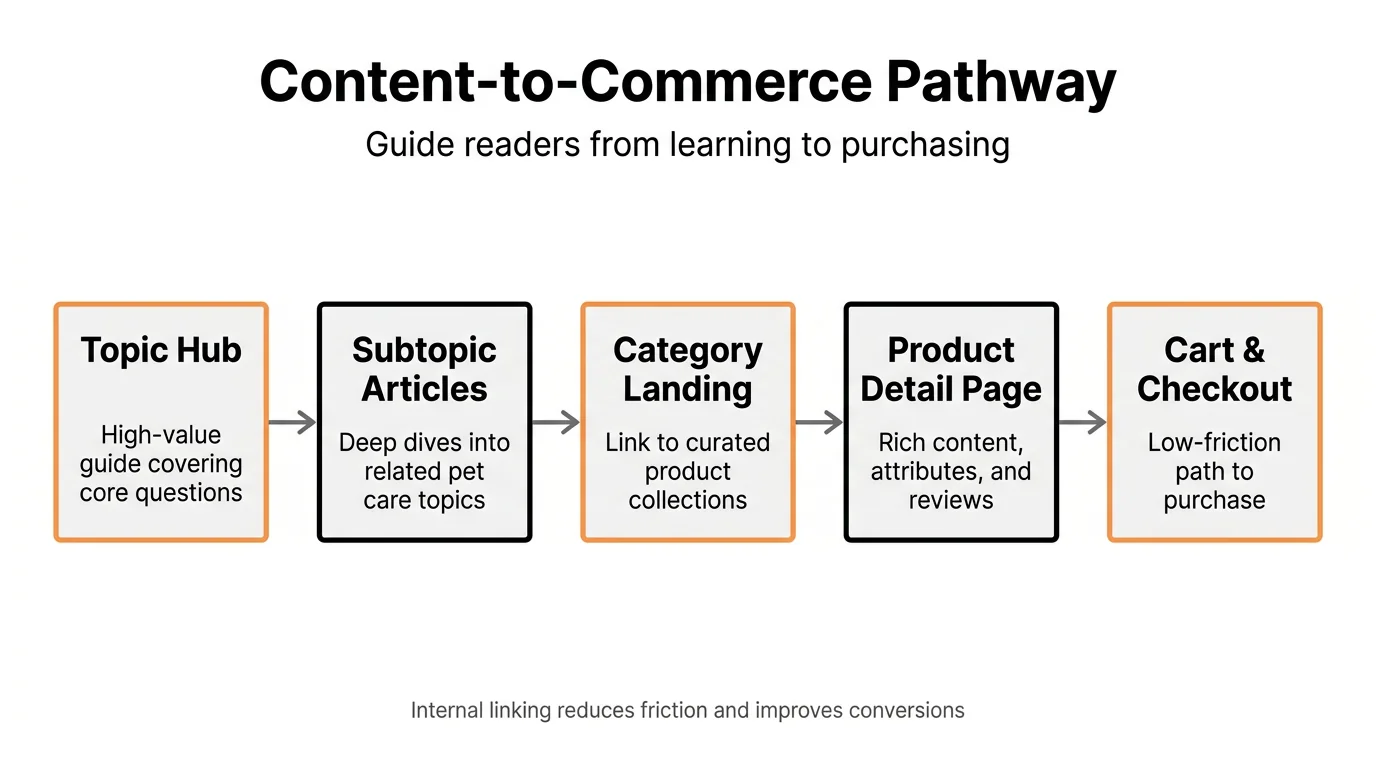
Plan hub → subtopic → product pathways
Build hubs around high-value topics, then link to subtopics and curated product selections. Each step advances intent and reduces friction from learning to buying.
When optimizing PDPs for conversion and SEO, review Shopify product page SEO for pet retailers to align content snippets, attributes, and reviews.
Use evergreen formats for seasonal lifts
Anchor your calendar with evergreen guides, how-tos, and checklists. Layer seasonal and event-driven spikes to capture timely demand without fragmenting authority.
Plan systematically with a retailer-first editorial rhythm; see Seasonal and event-driven SEO calendar for pet retailers for examples you can adapt.
Measure assistance, not just last-click
Informational content rarely claims the final click. Track how it assists category and product entries, improves AOV, and accelerates paths to purchase.
For linking patterns that drive action, use Internal linking that moves readers to product pages to blueprint your modules and anchor strategies. Automated linking models can scale these pathways effectively[1].
Local presence for stores and services
Establish consistent NAP and coverage
Maintain consistent name, address, phone across profiles, directories, and your site. Ensure each store and service area is represented and easily discoverable from the homepage.
Consistency boosts local trust signals and aligns with intent for local SEO for pet services. Start with a Local SEO checklist for brick-and-mortar pet stores to structure your rollout.
Service and location pages that answer intent
Create unique pages per service and location. Show offerings, pricing ranges, FAQs, and booking paths. Include embedded maps, hours, and coverage areas to satisfy user and crawler needs.
These pages become your highest-intent local landing pages. They also earn relevant internal links from content hubs and store finders.
Reviews, photos, and inventory signals
Fresh reviews, authentic photos, and in-stock signals reassure shoppers and search engines. Publish this proof on location pages and product pages where relevant.
Regular updates indicate operational health and reduce bounce from stale or incomplete information.
Technical enhancements, international growth, and measurement
Structured data for products, services, and locations
Use schema to clarify products, local businesses, and services for search engines. Proper markup can enhance eligibility for rich results and increase SERP real estate[3].
For practical patterns, review Schema markup for pet products, services, and locations before deploying at scale.
International targeting without duplication
Localize language, currency, and regulatory content by market. Avoid cross-market cannibalization by resolving duplicates and clarifying regional intent with proper signals.
Use aligned taxonomies and hreflang where appropriate. Start with Multilingual SEO for US, UK, and DACH pet markets to frame decisions.
KPI framework and dashboards for ROI
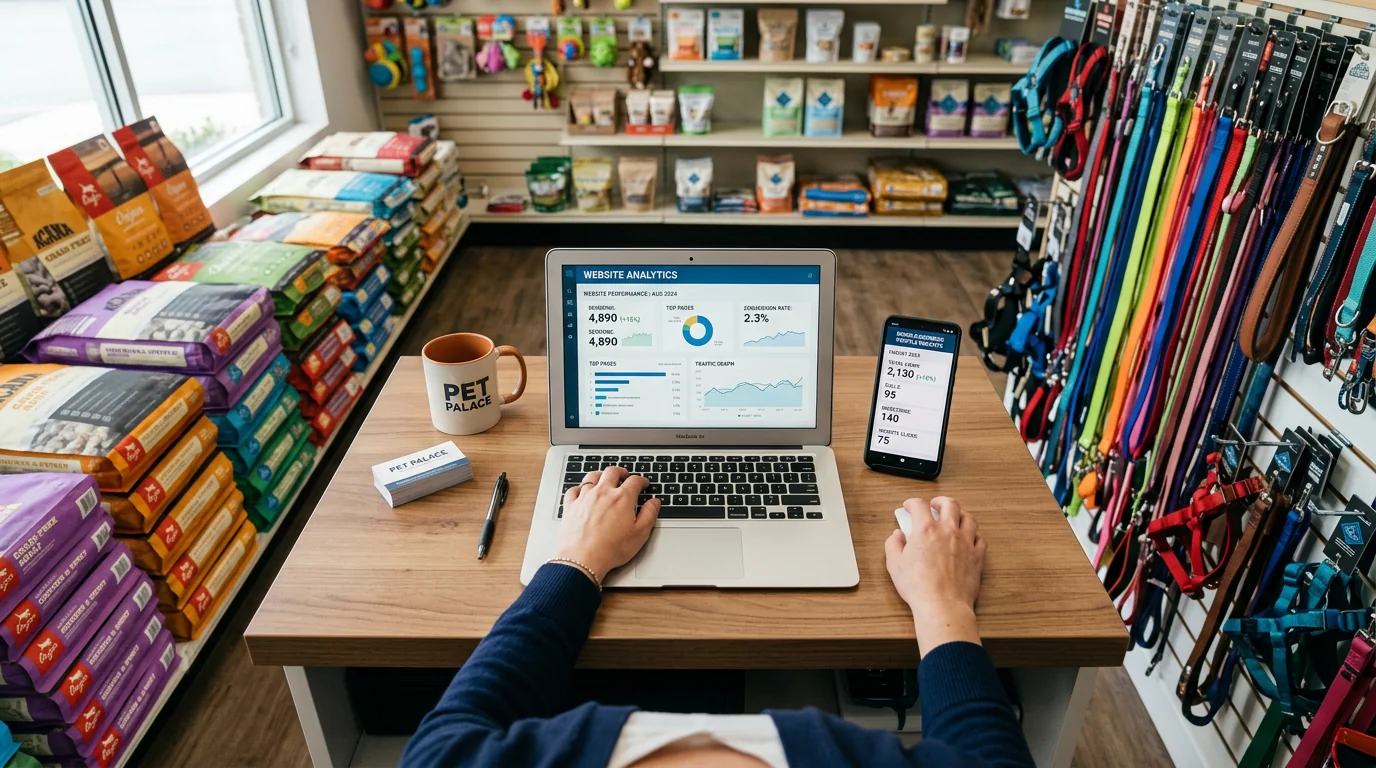
Measure more than rankings. Track assisted revenue, category and product entrances, local actions, and content-to-cart paths. Automation supports consistent, scalable reporting frameworks in digital programs[4].
Operationalize your dashboard and benchmarks with SEO analytics and ROI tracking for pet stores to keep teams focused on business outcomes.
Common mistakes and misconceptions
One-size-fits-all keyword lists. Pet store SEO hinges on breed, size, and life-stage modifiers. Generic targeting alone leaves conversion on the table and invites cannibalization.
Overbuilding filters into indexable pages. Uncontrolled faceting creates duplicates and thins equity. Keep crawl paths curated and meaningful for discovery and performance.
Blogs without commerce bridges. Educational posts that do not link to collections and SKUs fail to monetize attention. Design content modules that advance shoppers through the funnel.
Local pages without proof. Thin store and service pages lacking reviews, media, and clear CTAs underperform. Add fresh, verifiable signals to satisfy intent and improve conversions.
Measuring last click only. Top-funnel content and local discovery drive assistance. Attribute value across sessions and touchpoints to fund what truly moves revenue.
Frequently Asked Questions
What matters most for pet store SEO if I’m starting today?
Clarify your primary intent (local vs. eCommerce), fix core site structure and product data, and publish consistently with intent-mapped topics. These create compounding gains.
How is pet store SEO different from general retail SEO?
Pet search demand skews to breed, size, and life stage modifiers and strong local intent for services. Structuring categories and content around those modifiers is critical.
Should I focus on blogs or product pages first?
Ensure product and category pages are sound and discoverable first. Then publish supportive content that links users into those pages to capture research-stage demand.
Do I need separate pages for each location or service?
Yes, create focused pages for each location and service to match intent and improve local visibility, supported by consistent business data and rich media.
How do I measure ROI from SEO in a pet store context?
Track assisted revenue, category and product page entrances, local actions (calls, directions), and content-to-cart paths alongside organic sessions and rankings.
References
- T Suresh (2025). Natural language processing for internal link optimisation: Automating content relationships for better search engine optimisation. Journal of Digital & Social Media Marketing.
- A Dysin et al. (2018). SEO Automation Tool. 2018 - elib.psu.by. View article
- S Das (2021). Search engine optimization and marketing: A recipe for success in digital marketing. 2021 - api.taylorfrancis.com. View article
- V Desai et al. (2019). Digital marketing: A review. International Journal of Trend …. View article