Shopify Product Page SEO for Pet Retailers: Templates, Variants, and Reviews

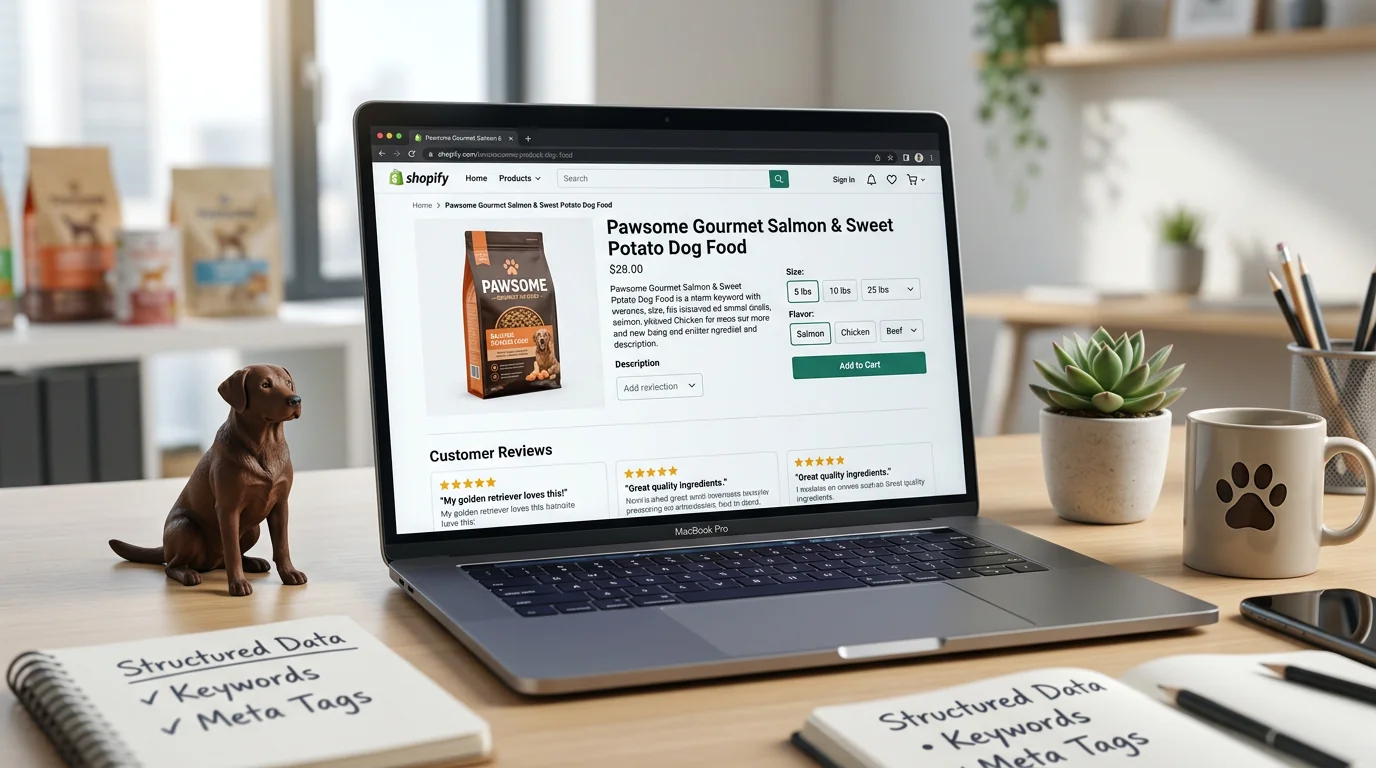
Table of Contents +
- Context and scope: one product, many variants, zero duplicates
- Decision framework for variants: size, flavor, breed, and life stage
- Template blueprint: pet-specific content blocks that scale
- Avoiding duplicate content across variants
- UGC reviews and Q&A: signals that may support rankings and conversion
- Media strategy: breed, texture, and usage demos
- Quick decision guide
- Monitoring and iteration
- Practical safety boundaries for pet products
- Evidence status: what the data and guidelines suggest
- Frequently Asked Questions
- Conclusion
- References
Structure pet product pages for SEO: handle variants, reviews, and media without duplicates. Templates for dogs/cats, flavor/size logic, and review schema tips.
Pet shoppers compare details fast on product pages. They expect clarity on size, flavor, safety, and value. Search engines expect consistent structure and distinct signals.
This matters because variants and user content can flood Shopify with near-duplicates. Smart structure preserves equity and supports rankings. You will learn how to manage variants, UGC, and media, while avoiding duplicate content and conversion friction.
Context and scope: one product, many variants, zero duplicates
When a single URL is best vs. separate SKUs
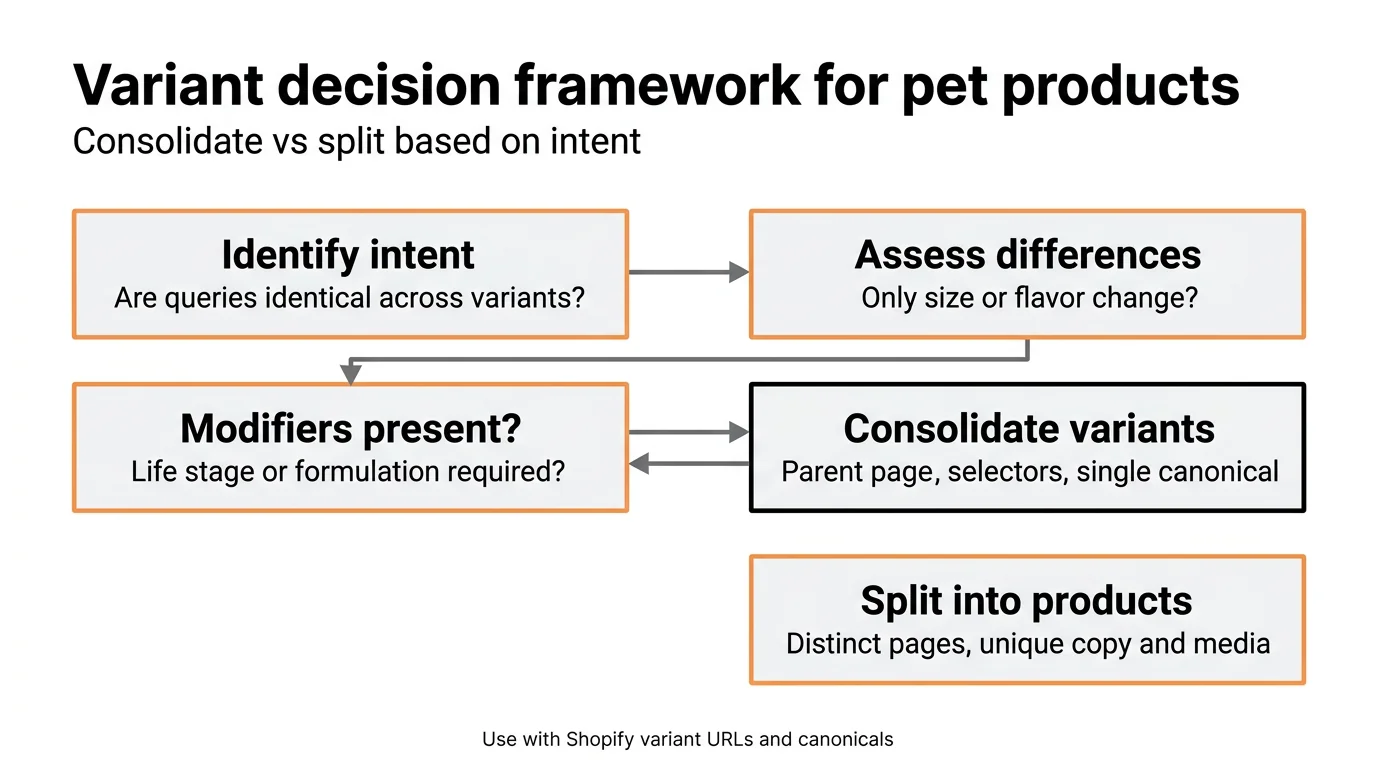
Use one primary product URL when intent is identical and only size or flavor changes. Keep variants as options under a parent with a single canonical. Split SKUs only when content, regulatory notes, or imagery must change materially to match intent.
How this supports the main guide to pet store SEO
This focused logic complements the main guide to pet store SEO by turning strategy into a product-page pattern. It aligns on-page elements with intent, preserves crawl budget, and prevents Shopify duplicate content from eroding visibility.
Petbase automates SEO content for pet stores - publishing 10 optimized articles monthly so you can focus on running your shop - start your free trial.
Decision framework for variants: size, flavor, breed, and life stage
Consolidate variants under one canonical
Consolidate when the product solves the same job and differences are quantitative. Use a parent page with option selectors and a stable canonical. This structure supports Shopify product variants SEO without fragmenting link equity across minor differences.
Split pages when intent or media must differ
Split if searchers use distinct modifiers requiring unique copy or media. Examples include different nutritional formulations, life stage targeting, or ingredient restrictions. Create separate pages when safety notes, feeding directions, or compliance must differ.
Template blueprint: pet-specific content blocks that scale
Above the fold: value, scent/flavor, and reassurance cues
Lead with a concise value proposition, variant selection, price per unit, and trust badges. Add quick notes on scent or flavor profiles, allergy callouts, and delivery options. Evidence suggests above-the-fold clarity may improve item detail page outcomes.[3]
Middle: ingredient/composition tables and pet safety notes
Use structured tables for ingredients, composition, calories per serving, and storage. Include concise safety notes and usage constraints. Keep this block consistent across pet product page templates so variants inherit a predictable, scannable layout.
Bottom: care, dosing, breed fit, and FAQs
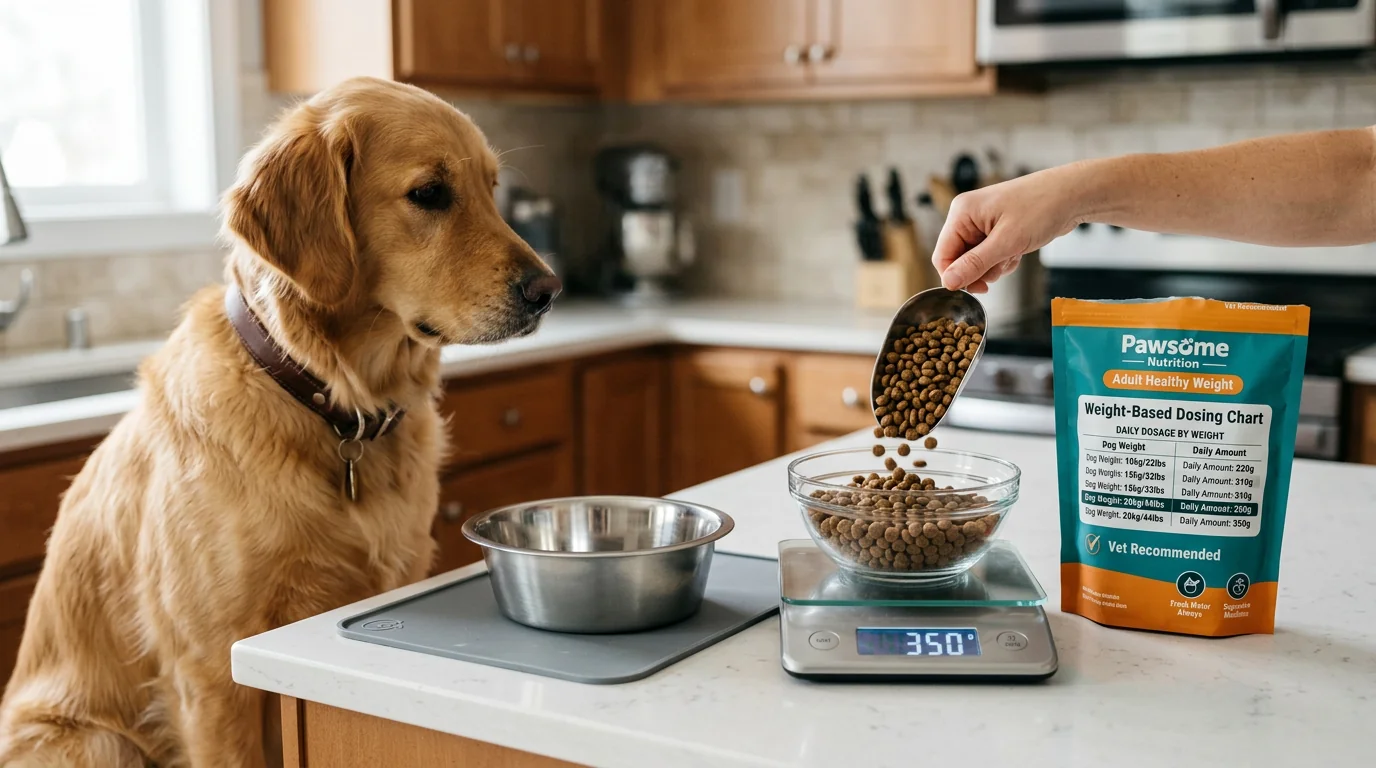
Offer detailed care tips, dosing ranges by weight, and sizing guidance. Add breed-fit guidance and internal links to sizing guides or collections. See internal linking blueprints for routing users from content to collection paths. For scale, some teams use Petbase AI to standardize modular blocks.
Avoiding duplicate content across variants
Canonical and URL patterns for options
Set the parent URL as canonical and keep variant URLs parameterized or anchor-linked. Use consistent slugs and avoid indexable duplicate paths. This approach may reduce Shopify duplicate content risks while preserving indexable clarity for pet eCommerce SEO.
Unique elements: images, swatch names, microcopy
Distinguish each variant with unique imagery, descriptive swatch names, and microcopy like “Best for sensitive diets” or “Chew-resistant XL.” Personalized micro-descriptions may increase relevance and engagement when matched to user context.[1]
UGC reviews and Q&A: signals that may support rankings and conversion
Review schema and moderation boundaries
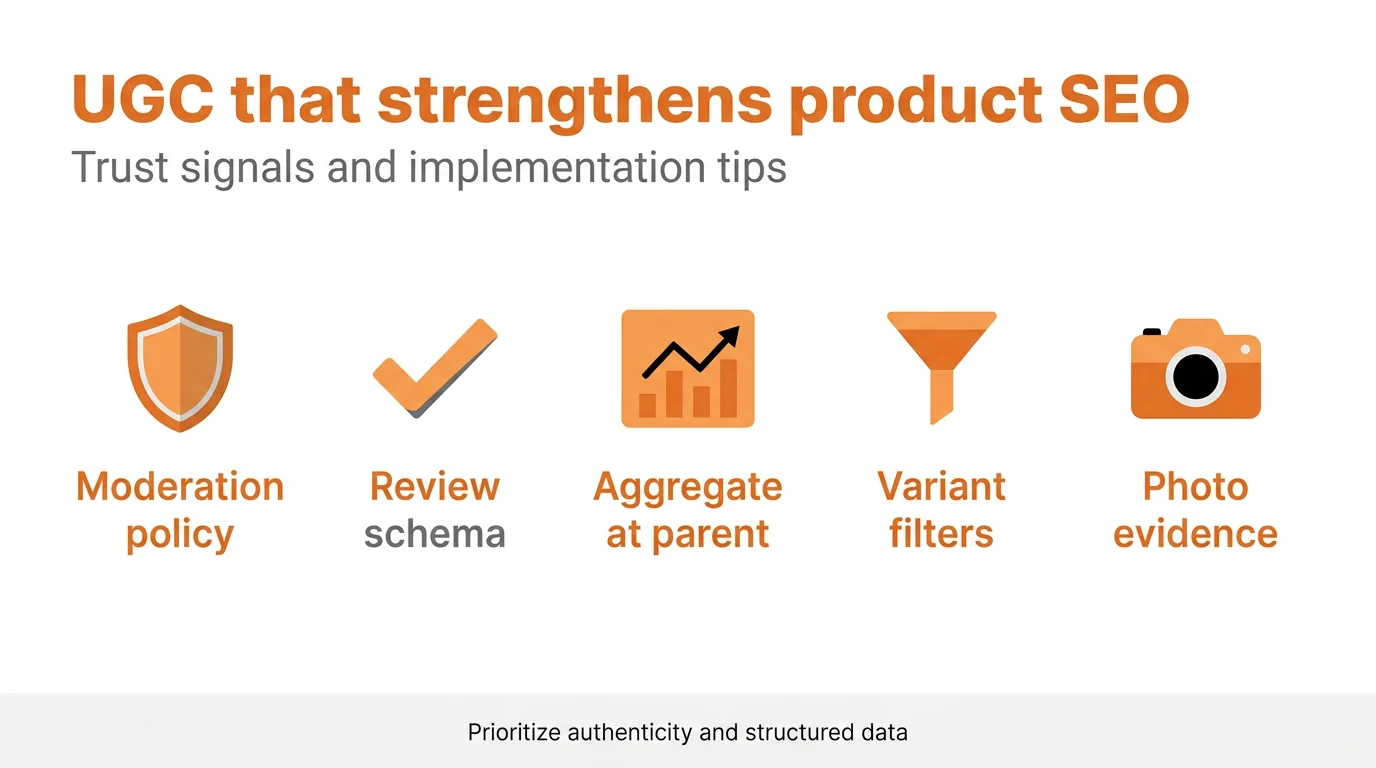
Implement Product and Review schema for pet products and enforce moderation for authenticity. Evidence suggests structured data and credible reviews may aid visibility and conversion within holistic marketing programs.[2] Balance transparency with guidelines on prohibited claims.
Mapping reviews to variants without fragmenting equity
Aggregate all feedback at the parent product for authority. Provide filters by size, flavor, or life stage to maintain relevance. This balance avoids splitting equity while letting customers find context that fits their buying decision.[4]
Media strategy: breed, texture, and usage demos
Alt text and filenames with pet context
Use descriptive alt text, e.g., “soft chew treat, large size, salmon flavor.” Include variant and usage context in filenames. This may support accessibility and image discovery while reinforcing Shopify product variants SEO signals.
Short videos for preparation, sizing, enrichment
Publish brief videos demonstrating sizing, preparation steps, and enrichment use. Evidence indicates that optimizing the whole-page experience may improve user engagement and performance outcomes on item detail pages.[3][4]
Quick decision guide
If X situation, then Y action (5-7 scenarios)
- If variants differ only by quantity or size, then keep one page with options and a single canonical.
- If flavor changes ingredients or regulatory notes, then split pages and tailor copy and schema.
- If search intent shows distinct modifiers, then create separate URLs mapped to each intent.
- If imagery must change materially per option, then consider separate pages with variant-specific media.
- If reviews need variant context, then aggregate at parent and enable filters by option.
- If merchandising bundles options, then keep the bundle separate with its own canonical and schema.
Monitoring and iteration
What to check after 7-14 days
Verify indexation and canonical recognition. Check product structured data validity and the Search Console product snippet report. Review impression trends, crawl stats, and duplicate content flags. Validate CTR on key queries and variant selector engagement.
Signals to assess after 4-8 weeks
Evaluate ranking stability, CTR lift, and add-to-cart rates per variant. Compare revenue per session and time-on-page before and after changes. Use SEO analytics and ROI tracking benchmarks to contextualize shifts against seasonality and promotional effects.
Practical safety boundaries for pet products
Ingredient claims, dosing, and regulatory notes
Avoid disease or treatment claims unless legally substantiated. Present dosing as ranges with weight references and label-sourced instructions. Include storage, allergen notes, and warnings. When in doubt, prioritize compliance content over keyword density or conversion tactics.
Evidence status: what the data and guidelines suggest
Where evidence is stronger vs. emerging
Stronger signals include clear item detail page structure, above-the-fold value communication, and whole-page optimization patterns that may improve engagement.[3][4] Emerging evidence suggests personalized microcopy and variant-level detail may support relevance when aligned with user context.[1] Integrating SEO with broader eCommerce programs may enhance outcomes.[2]
Frequently Asked Questions
Should each pet food flavor have its own Shopify product page?
If search intent is identical and only flavor changes, keep one product with flavor variants and a canonical to the main URL. Split pages only when intent, ingredients, or compliance content must differ.
How do I prevent duplicate content across size variants?
Use a single canonical URL, unique microcopy per option (feeding guides, calories per serving), and distinct media showing scale. Avoid cloning full descriptions across separate pages.
Do UGC reviews help SEO on Shopify product pages?
Reviews may support relevance and trust. Use Product and Review schema, ensure moderation for authenticity, and aggregate variant feedback at the parent product while allowing filters by option.
What product schema should pet retailers implement?
Include Product, Offer, AggregateRating, and Review where applicable. Add GTIN/MPN, brand, nutrition or composition details, and availability to help search engines understand the offer.
How should I write alt text for pet product images?
Describe the item with pet context and variant details, such as breed usage or flavor. Keep it concise and unique per image to improve accessibility and potential image search visibility.
Conclusion
Shopify product page SEO for pet retailers benefits from disciplined variant handling, structured templates, and credible UGC. Consolidate where intent matches, and split where content must differ. Use canonical signals, unique microcopy, and variant-specific media to avoid duplication. Enrich pages with practical safety notes, clear schema, and short videos that demonstrate use. Monitor structured data health, CTR, and conversion signals over time. With this framework, your product pages may win visibility while guiding shoppers to confident, compliant purchases.
References
- Q Chen et al. (2019). Towards knowledge-based personalized product description generation in e-commerce. Proceedings of the 25th …. View article
- L Sanbella et al. (2024). Online marketing strategy optimization to increase sales and e-commerce development: An integrated approach in the digital age. … Business Digital (SABDA …. View article
- C Lo et al. (2021). Page-level optimization of e-commerce item recommendations. Proceedings of the 15th …. View article
- P Lahiri et al. (2026). Design and Evaluation of Whole-Page Experience Optimization for E-commerce Search. Proceedings of the …. View article