Pet Content Strategy Framework: Topics, Cadence, and Topical Authority


Table of Contents +
- Who You’re Planning For: Segment by Audience and Intent
- Lifecycle and Seasonality: A Pet-First Planning Grid
- Topic Selection Using Data: From Keywords to Use Cases
- Hub-and-Spoke Architecture for Pet Categories
- Editorial Cadence: Weekly Rhythm and Monthly Sprints
- Building Topical Authority the Right Way
- Editorial Workflow and Quality Controls
- Sample 90-Day Roadmap for a Pet Brand
- Frequently Asked Questions
- Hub-and-Spoke Examples You Can Model
- Conclusion
- References
Build a pet content strategy by audience, lifecycle, and seasonality. Map hubs and spokes, set editorial cadence, and grow topical authority across pet niches.
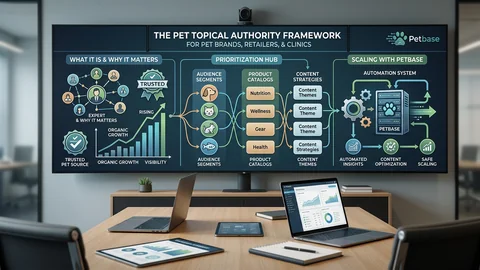
Pet marketers do not lack ideas; they lack a structured way to prioritize, publish, and win. This focused framework shows how to plan by audience, lifecycle, and seasonality, then map topics into hubs, spokes, and a steady editorial cadence.
If you need the broader context and definitions before diving in, start with our complete guide to pet content writing, then return to this post for the tactical build.
Who You’re Planning For: Segment by Audience and Intent
Segmentation sharpens relevance. Separate owners from trade audiences, then align their intents to distinct outcomes and compliance expectations.
Owners vs. Trade: Define personas, search intent, and outcomes
Owners seek practical, empathetic guidance and product fit. Trade audiences (retailers, groomers, trainers, clinics) want efficiency, compliance, and proof. Define goal metrics upfront: for owners, education-to-cart; for trade, education-to-quote or B2B lead capture. Calibrate reading level accordingly.
Map queries to journeys: awareness, consideration, and action
Awareness queries signal problems (“itchy skin causes”), consideration evaluates solutions (“best hypoallergenic diets”), and action reflects readiness (“buy sensitive-skin shampoo”). Build content paths that progressively add depth, social proof, and clear internal links to relevant products.
Align tone and compliance: consumer care vs. professional guidance
Owner content should be reassuring, explain precautions, and avoid diagnostic claims. Trade content can use technical vocabulary, cite standards, and specify protocols. Add disclaimers and approval gates to keep brand, legal, and medical guidance aligned.
Petbase builds this SEO foundation automatically for pet businesses - 10 optimized articles published every month - start your free trial.
Lifecycle and Seasonality: A Pet-First Planning Grid
Plan topics on two axes: lifecycle characteristics and seasonal demand. This grid keeps calendars relevant year-round.
Lifecycle axes: breed, age, size, health status, behavior needs
Lifecycle modifiers change intent and product fit materially. Age and size alter dosage and feeding guidance; health status and behaviors drive specialized queries. Use them as mandatory query enrichers and internal-link filters across your pet SEO taxonomy.
Seasonal cycles: shedding, parasite peaks, holidays, travel, weather
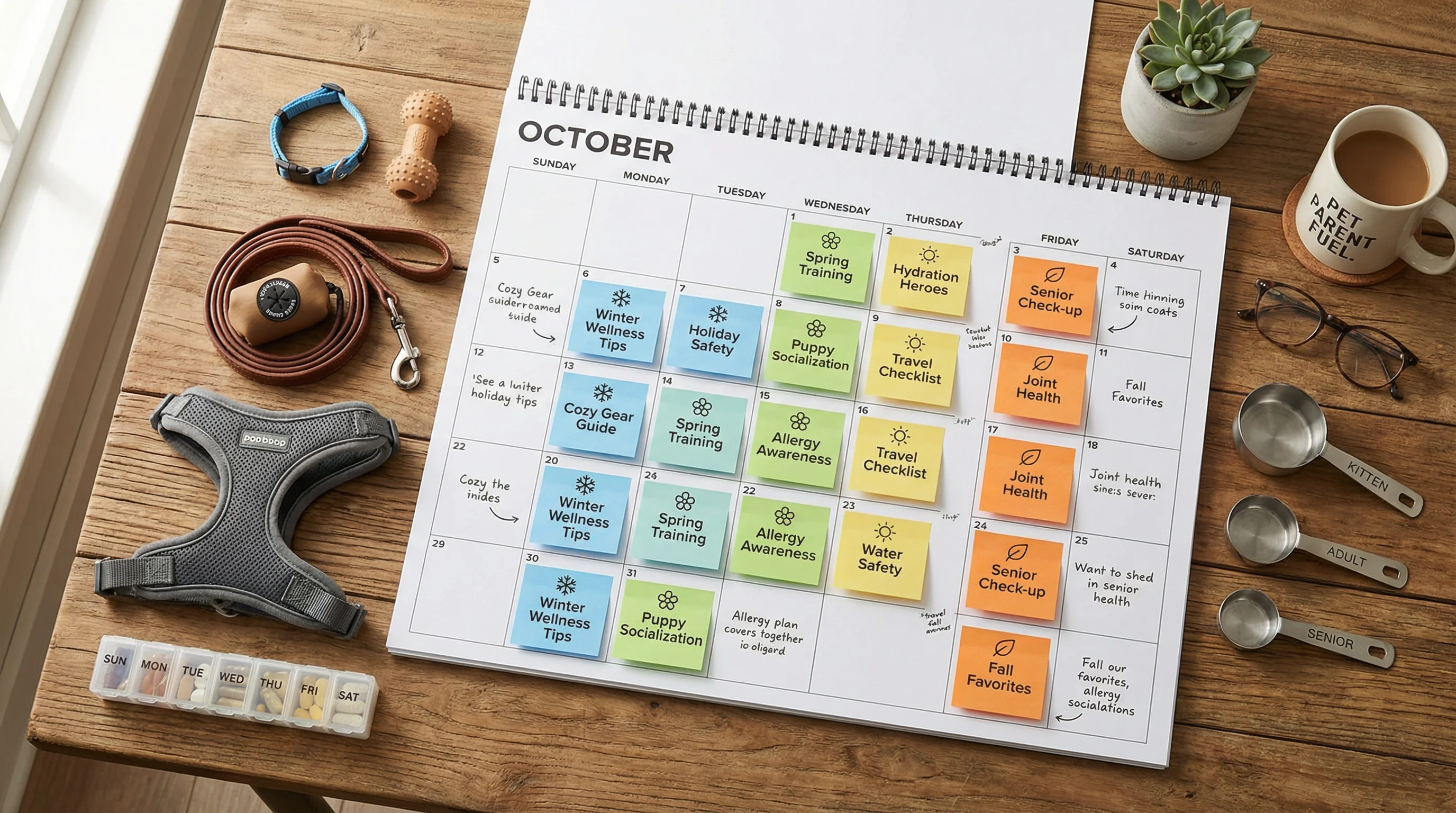
Search interest spikes with predictable events: shedding seasons, parasite cycles, holiday gifting, travel rules, and weather extremes. Build seasonal spokes that publish 4-6 weeks before peak to capture ramping interest and consolidate topical authority.
Evergreen vs. seasonal mix: balancing freshness with compounding traffic
Anchor your pet content strategy with evergreen hubs and how-tos, then layer seasonal refreshes that reference the hub. Republish seasonal pages annually with updated entities, interlinks, and offers to sustain compounding traffic gains.
Topic Selection Using Data: From Keywords to Use Cases
Data converts brainstorms into a defensible plan. Start broad, then cluster by real-world use cases and search modifiers.
Build a topic universe: nutrition, training, grooming, health, retail
Define your category set, then enumerate common intents in each: feeding plans, behavioral basics, coat care, symptom checks, and retail operations for trade. Use clear taxonomy rules to avoid overlap and maintain navigational clarity.[2]
Cluster by problem statements and modifiers (breed, age, condition)
Combine the core topic with modifiers to capture the long tail: “feeding schedule + age,” “nail trimming + anxiety,” “deshedding + climate.” This creates hub and spoke content that answers nuanced queries without diluting focus.
Prioritize with difficulty, intent fit, and internal link value
Score each cluster by SEO difficulty, business fit, and internal-link leverage. Execute high-intent, moderate-competition clusters first. For a hands-on walkthrough, see keyword research for pet content, including modifier lists that uncover intent-rich opportunities.
Hub-and-Spoke Architecture for Pet Categories
Category hubs establish authority; spokes capture breadth. Together, they improve relevance signals and user navigation.
Design hubs for core categories (nutrition, training, grooming)
Create a comprehensive hub per category with purpose, FAQs, safety notes, and indexable tables to route users by modifier (age, breed, condition). Airtight taxonomy and labels reduce ambiguity and duplication across clusters.[1]
Spokes that ladder up: FAQs, comparisons, how-tos, checklists
Spokes should answer a single question thoroughly and “ladder up” to the hub. Examples include: how-to guides, brand comparisons, troubleshooting lists, and safety checklists. Link laterally among spokes sharing the same modifiers.
Internal linking rules: parent/child, lateral, and product bridges
Apply three rules: parent to child (hub to spokes), lateral among siblings (shared modifier), and product bridges from relevant spokes to product pages. Semantic consistency boosts categorization and discoverability in structured systems.[2]
Editorial Cadence: Weekly Rhythm and Monthly Sprints
Cadence compounds results. Publish predictably with a mix that balances new coverage, seasonality, and refreshes.
Cadence by segment: owners vs. trade publication frequency
Owners: one to three articles weekly, with at least one actionable how-to. Trade: one in-depth piece weekly or biweekly, plus a monthly playbook or case-based explainer. Synchronize both calendars around seasonal inflection points.
Content mix per month: 60% hubs/spokes, 20% seasonal, 20% refresh
Use a simple allocation model to maintain growth and freshness.
| Content Type | Share | Example Output per Month |
|---|---|---|
| New hubs/spokes | 60% | 6-8 spokes and 1 hub |
| Seasonal content | 20% | 2-3 timely guides |
| Refreshes | 20% | 2-3 updates with new links |
Governance: briefs, SME review, and living calendars
Standardize briefs, map reviewer SLAs, and run a rolling 90-day calendar. For scalable throughput, many teams rely on tools like Start Now to keep publication disciplined and product-linked while preserving human QA and expertise.
Building Topical Authority the Right Way
Topical authority for pet brands comes from coverage depth, quality signals, and consistent maintenance-validated by user intent and entities.
Coverage depth: completeness scores and gap fills
Assess each hub’s coverage using a checklist of subtopics, FAQs, modifiers, and formats. Fill gaps methodically. Structured categorization of related entities improves recall and supports automated understanding across systems.[3]
Evidence and E-E-A-T: sources, citations, and expert review
Attribute claims to credible sources, add practitioner review where needed, and disclose scope. Build trust with bios, dates, and revisions. Deep guidance on disclosures and med schema is in E-E-A-T for Pet and Veterinary Content.
Structured data: article, product, how-to, FAQ, medical where applicable
Use schema types that match the page’s intent. Mark up steps, FAQs, pros/cons, and products to earn rich results and better match to entity graphs, improving pet SEO performance over time.[3]

Editorial Workflow and Quality Controls
Quality at scale requires standard inputs, controlled generation, and measurable outputs.
Briefing standards: intent, outline, entities, and internal links
Every brief should define user intent, H2/H3 structure, target entities, and interlink targets. Use pet blog briefs and templates to keep work consistent across writers, SMEs, and automation.
On-page SEO: titles, headers, entities, and media optimization
Front-load intent in titles, map entities in headers, compress media, and add descriptive alt text. Reference modifiers in intros and anchor text naturally to reinforce semantic alignment across hub and spoke content.
Measurement loop: topic-level KPIs and refresh triggers
Track rankings, impressions, CTR, and conversions by topic cluster. Refresh when impressions plateau or competitors expand coverage. For safety in AI-assisted steps, adopt prompt governance and QA to prevent policy breaches.[4]
Sample 90-Day Roadmap for a Pet Brand
This roadmap aligns segmentation, lifecycle, and cadence into one operating plan to build momentum and topical authority.
Phase 1 (Weeks 1-4): Hubs, taxonomy, and quick-win spokes
Define taxonomy and publish category hubs (nutrition, training, grooming). Ship 6-8 low-difficulty spokes with strong intent fit, mapped to lifecycle modifiers. Implement internal links, product bridges, and basic schema immediately.
Phase 2 (Weeks 5-8): Seasonal surge and internal link expansion
Publish seasonal guides ahead of peak, then add three to five lateral links per spoke. Expand comparisons and checklists. Update hubs with new anchor sections to preserve routing and reinforce semantic clusters at scale.
Phase 3 (Weeks 9-12): Content refresh, entity enrichment, and gaps
Refresh underperforming pages with new entities, updated data, and FAQs. Fill coverage gaps discovered via search console queries. Add advanced schema and expand buyer’s guides aligned to lifecycle segments and products.
Frequently Asked Questions
What is a hub-and-spoke model for pet content?
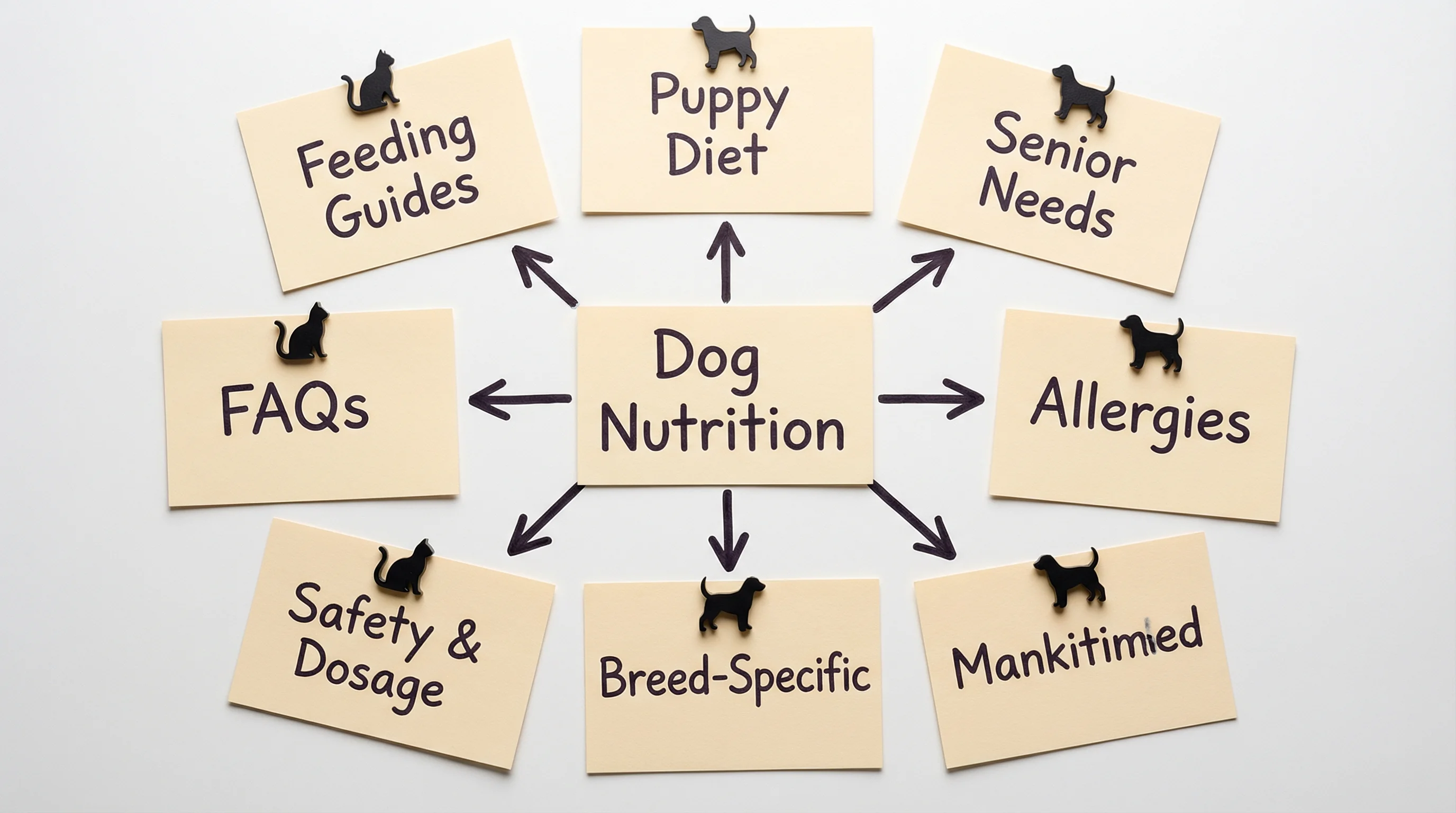
A hub is a comprehensive page on a core topic like dog nutrition, while spokes are focused articles that answer specific subtopics. The structure clarifies relevance for search engines and improves internal linking.
How often should a pet brand publish content?
Consistency matters more than volume. For most teams, one to three posts per week with a monthly hub or deep guide sustains growth while allowing time for updates and internal linking.
How do I build topical authority in pet niches?
Cover a category end-to-end with hubs and complete subtopic coverage, cite trustworthy sources, add expert review where needed, structure data correctly, and maintain regular updates and internal links.
How do seasonality and lifecycle affect pet content?
Seasonality changes demand for topics like flea prevention or holiday travel, while lifecycle (puppy, adult, senior) shapes queries and product fit. Plan calendars that blend evergreen and seasonal content.
What metrics matter for a pet content strategy?
Track topic-level impressions, rankings, and clicks; internal link-assisted conversions; coverage completeness; refresh impact; and seasonal performance against planned timelines.
Hub-and-Spoke Examples You Can Model
Use the following examples to visualize hub structure and spoke breadth. Replace with brand-specific terms and products as needed.
“Design hubs to answer the why and what, then deploy spokes that execute the how, when, and which-mapped by lifecycle and seasonality.”
- Nutrition Hub: spokes such as “puppy feeding schedule by weight,” “elimination diet protocol,” “wet vs. dry comparison,” and “transition checklist”; bridge to related products.
- Training Hub: spokes like “crate training plan,” “leash reactivity basics,” “positive reinforcement methods,” and “socialization checklist”; bridge to training aids.
- Grooming Hub: spokes including “deshedding routine,” “nail trimming safety,” “bath frequency by coat,” and “home grooming checklist”; bridge to grooming tools.
Conclusion
This pet content strategy framework turns ambiguity into action: segment by audience and intent, align with lifecycle and seasonality, then organize topics within a hub-and-spoke architecture and disciplined editorial cadence. Elevate quality through evidence, schema, and QA, and measure performance at the topic level with refresh triggers. Apply these steps consistently and you will compound topical authority for pet brands, build durable pet SEO gains, and translate content into product-led outcomes across nutrition, training, and grooming.
References
- X Liu et al. (2023). Automatic Semantic Typing of Pet E-commerce Products Using Crowdsourced Reviews: An Experimental Study. … Knowledge Graphs and …. View article
- H Lippell (2022). Taxonomies: Practical Approaches to Developing and Managing Vocabularies for Digital Information. 2022 - torrossa.com. View article
- Q Zhang et al. (2024). A comprehensive survey of animal identification: exploring data sources, AI advances, classification obstacles and the role of taxonomy. International Journal of …. View article
- P Pardhi (2025). Content moderation of generative AI prompts. SN Computer Science. View article