Service Pages That Rank: Structure Veterinary Procedure Pages for SEO and Conversions

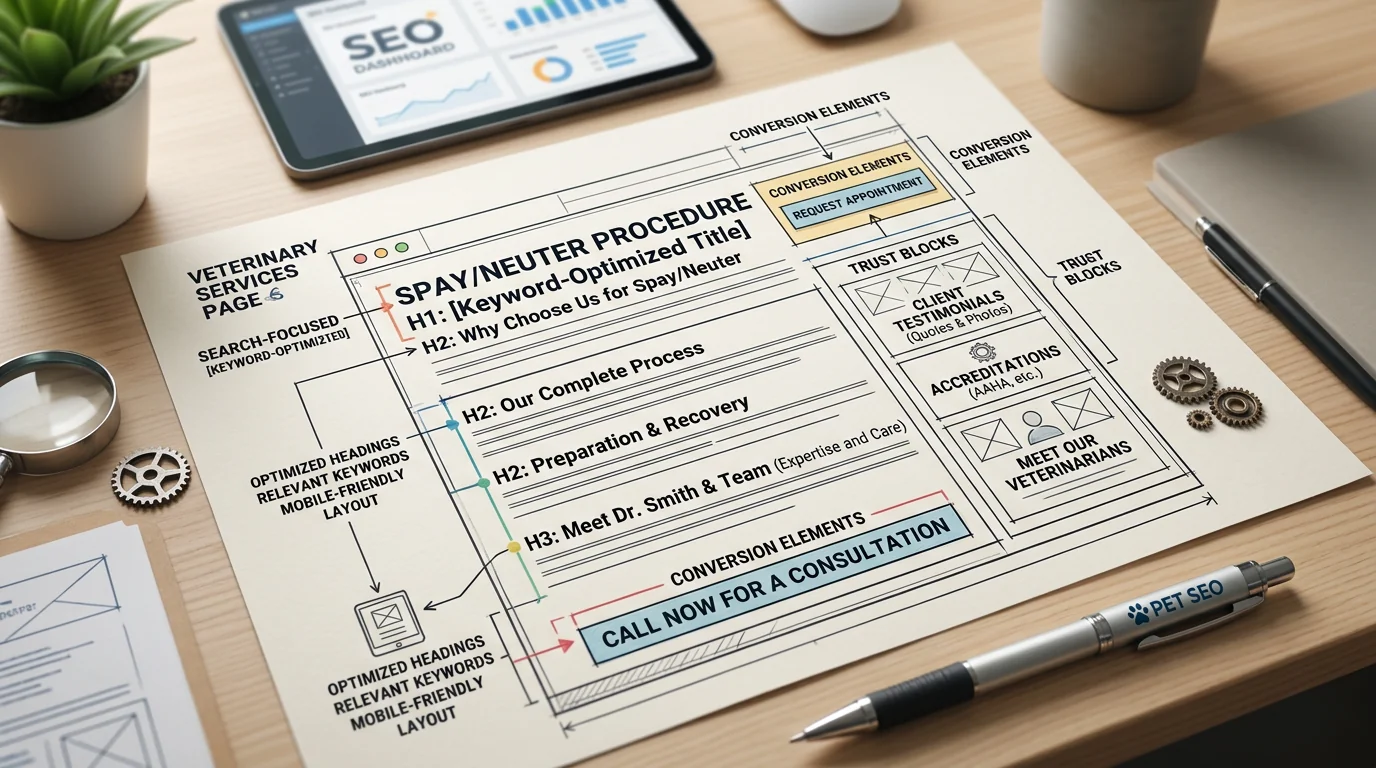
Table of Contents +
- What this guide solves: one procedure page that earns clicks and bookings
- Page blueprint: the anatomy of a high-intent veterinary procedure page
- Quick decision guide
- On-page SEO specifics for veterinary procedures
- Structured data and technical elements
- Conversion architecture that respects medical decisions
- Monitoring guidance: what to observe after publishing
- Practical safety boundaries for veterinary content
- Evidence status: what the literature and guidelines suggest
- Sample outline you can copy
- How this article fits your broader plan
- Frequently Asked Questions
- Conclusion
- References
Learn how to structure veterinary procedure pages for SEO and conversions. Use intent-led headings, trust blocks, and schema to earn rankings and bookings.
Owners search for answers at stressful moments. They also want a clear next step. Your procedure pages must reduce uncertainty and make booking straightforward.
This guide shows how one page per procedure can align with search intent and drive calls. You will learn a repeatable page structure with search-focused headings, trust elements, and conversion patterns.
What this guide solves: one procedure page that earns clicks and bookings
Why one page per procedure (e.g., spay/neuter, dental) matters
Dedicated pages clarify relevance, satisfy intent, and improve first impressions, which strongly influence veterinary client choice online.[3]
The decision moment: owner anxiety meets local intent
At the decision point, owners compare safety, cost, and proximity. Practices with robust digital presence often see stronger performance metrics.[2]
Petbase automates SEO content for veterinary clinics - so you can focus on patients, not blog posts - start your free trial.
Page blueprint: the anatomy of a high-intent veterinary procedure page
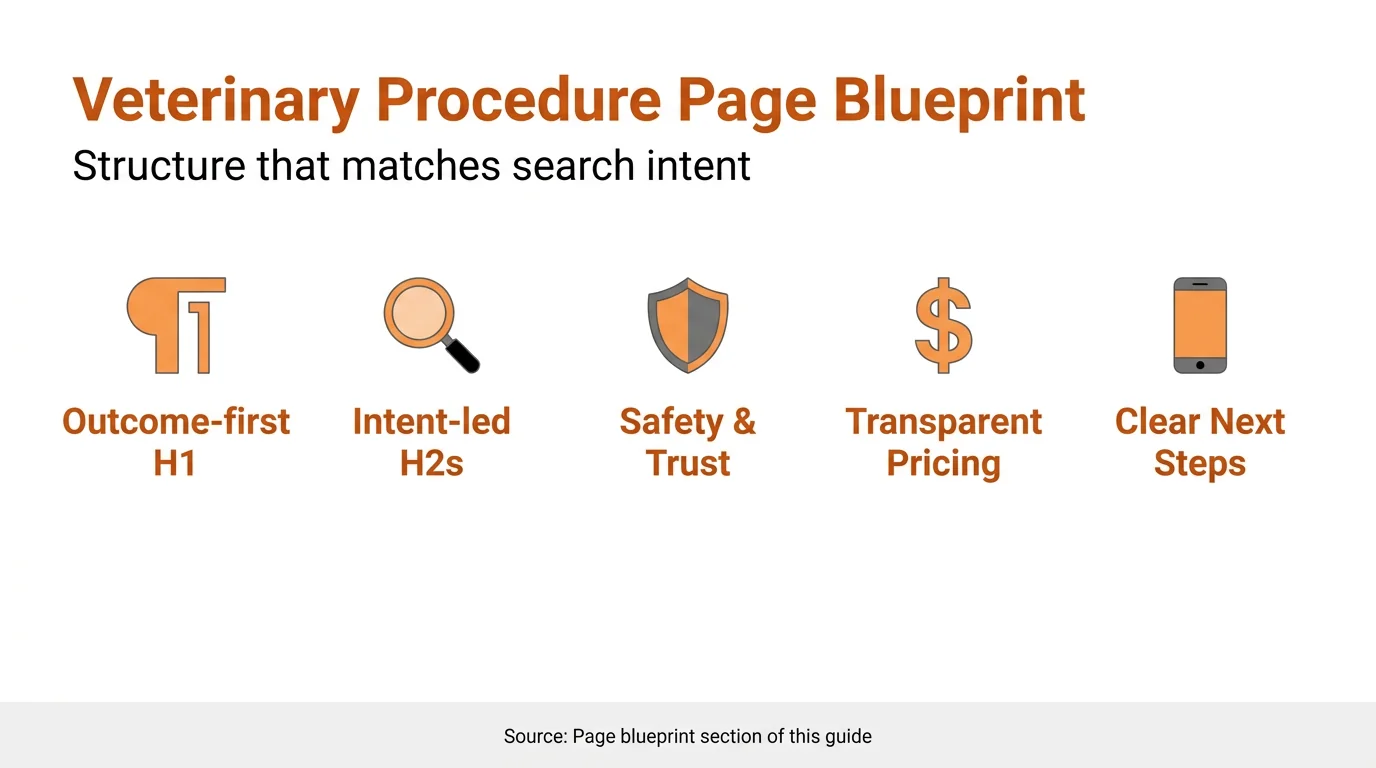
Above the fold: outcome-first headline, succinct explainer, primary actions
Lead with a benefit-driven H1 (“Safe, veterinarian-performed dental cleaning to protect long-term health”). Add a two-sentence explainer and clear actions: Call, Book Online, or Chat. Keep CTAs persistent on mobile.
Search-focused H2s that map to intent and featured snippets
Structure H2s to mirror queries: “Cost,” “Risks and Safety,” “How the Procedure Works,” “Eligibility,” “Recovery Timeline,” and “What to Expect on the Day.” This supports snippet opportunities.
Trust blocks: vet credentials, anesthesia protocols, recovery guidance
Show clinician credentials, monitoring standards, and analgesia approach. Add a brief recovery overview with expected timelines and red flags. Include procedure-specific reviews and outcomes to reinforce E-E-A-T for veterinary pages. See reviews and reputation for vets for display patterns.
Pricing transparency and variability language
Use a price range with drivers: species, weight, pre-op labs, anesthesia time, and complexity. Clarify that estimates may vary after examination. Offer financing or deposit details to reduce friction.
Local signals: service area, maps, parking, after-hours info
Strengthen local SEO for veterinary clinics with embedded map, service radius, public transit and parking notes, and after-hours triage guidance. Add NAP consistency, hours, and holiday exceptions in scannable format.
Accessibility and safety messaging for pet owners
State that medical decisions require in-clinic assessment. Provide ADA-aware content: plain-language summaries, enlarged tap targets, and readable color contrast. Note language options and curbside assistance when relevant.
Quick decision guide
If you serve multiple locations, then create a location-variant URL per procedure
Use folder or subpage variants per clinic to localize NAP, map, and pricing context. Include city names in title and H1 with restraint.
If you target both cats and dogs, then split intent with species H2s or separate pages
When differences in anesthesia, prep, or recovery are meaningful, separate pages. Otherwise, use species-specific H2s with tailored risks, costs, and timelines.
If pricing varies, then use range + what affects cost and add FAQ
Present a range, list major cost drivers, and offer an “Estimate Request” micro-form. Add a cost FAQ to capture snippet-level questions without overpromising.
If you have reviews, then surface procedure-specific testimonials and star ratings
Feature quotes referencing the procedure, comfort, and recovery. Mark up aggregate ratings where appropriate and compliant. Rotate fresh content to avoid banner blindness.
If competitors outrank you, then expand FAQs and add How-It-Works schema-aligned steps
Cover risks, recovery, and candidacy more deeply. Add stepwise content that maps to FAQ and How-To patterns without contradicting medical guidance.
If thin on E-E-A-T, then add vet bios, credentials, and cite guidelines
Introduce clinicians with certifications, years of experience, and special training. Reference protocols and authoritative guidelines for anesthesia and analgesia carefully.
If low mobile conversions, then compress media, sticky action bar, and short forms
Optimize images, enable a persistent CTA, and reduce form fields to essentials. Test call tracking and text-to-chat handoffs for on-the-go users.
On-page SEO specifics for veterinary procedures
Slug, title, and H1 patterns
Slug: /services/spay-neuter-city or /city/dental-cleaning. Title tag: “Dental Cleaning in City | Safe, Vet-Performed Care.” H1: outcome-first, avoiding duplicate phrasing across locations.
Entity coverage and semantically related terms
Cover related entities: anesthesia monitoring, pre-op labs, prophylaxis vs. treatment, post-op analgesia, complications, and recovery windows. This breadth may support stronger entity associations in search.[1]
Internal links: from blog, location pages, and related procedures
Link in from location pages, oral health blogs, and adjacent procedures. Use descriptive anchors. Templates and publishing cadences can be streamlined with Petbase AI for consistent service page SEO for vets.
Image SEO: alt text with species, life stage, and procedure context
Describe images meaningfully: “dog pre-anesthesia exam before dental cleaning” or “cat post-op check after spay.” Compress, set dimensions, and use lazy loading to protect speed.
Structured data and technical elements
LocalBusiness + VeterinaryCare
Provide NAP, hours, area served, and geocoordinates. Medical schema for veterinarians should remain consistent with on-page content to avoid trust issues and manual actions.[1] See Schema for Veterinary Clinics for risk-aware patterns.
MedicalEntity or Service markup with procedure details
Use Service for “Veterinary Dental Cleaning” or “Ovariohysterectomy,” adding description, provider, areaServed, and offers with price range. Avoid clinical claims not supported on the visible page.
FAQPage and BreadcrumbList
Mark up intent-led FAQs and enable breadcrumbs from Services > Procedure > Location. BreadcrumbList supports clarity. Ensure rendered content matches markup to satisfy quality guidelines.
Review and AggregateRating considerations
Only mark up ratings shown on the page and sourced compliantly. Rotate representative, procedure-specific quotes without gating access. Avoid self-serving structured data inflation.
Conversion architecture that respects medical decisions
Action hierarchy: call, book, chat, and pre-visit forms
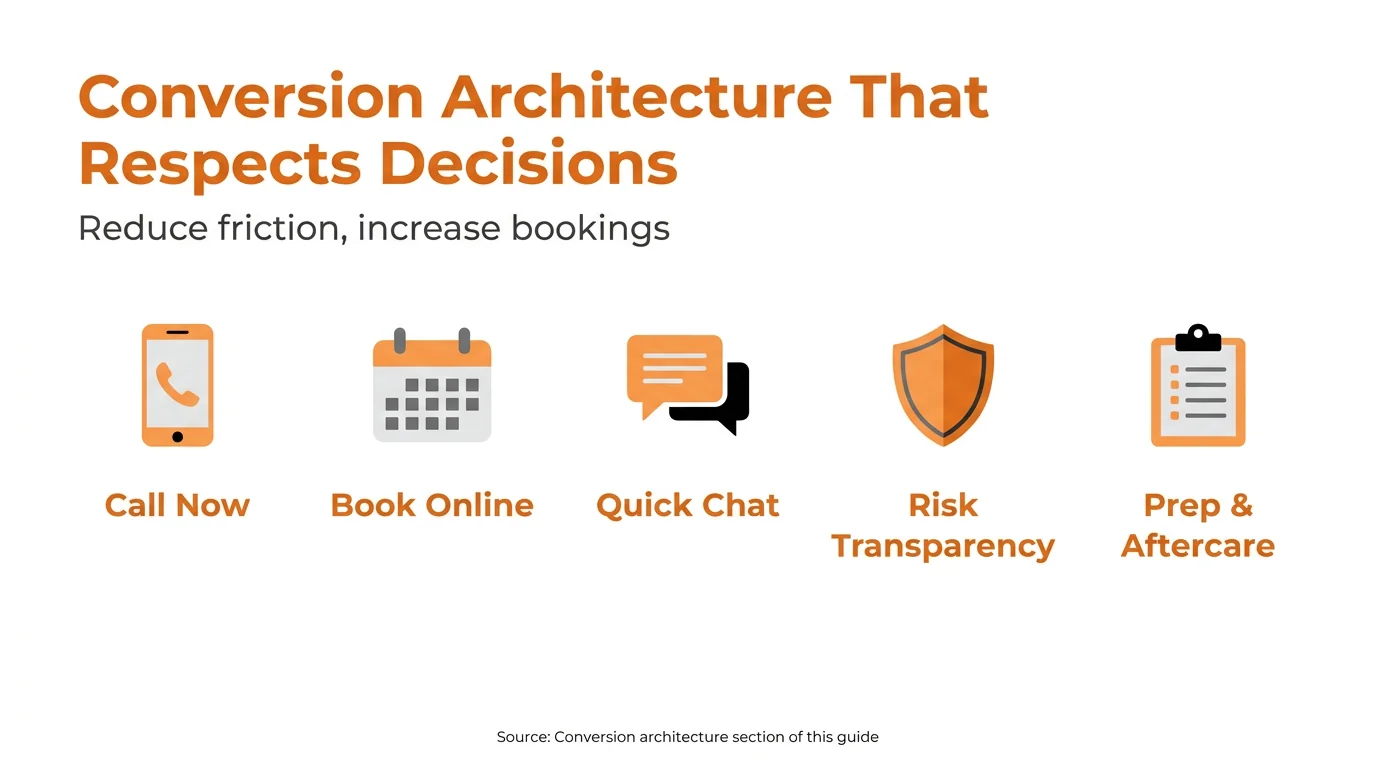
Offer three primary actions: call for urgent questions, book for scheduling, and chat for quick clarifications. Add a concise pre-visit form with essentials only: contact, pet age, species, and concerns.
Risk, prep, and aftercare sections that reduce friction
State common risks with plain-language guidance and mitigations. Provide pre-op fasting and medication instructions, plus aftercare steps with timelines. Add downloadable summaries for caregivers.
Micro-conversions: download pre-op checklist
Offer a one-page checklist. Gate with minimal fields to avoid deterring users. Follow privacy principles and avoid PHI collection beyond booking intent.
Monitoring guidance: what to observe after publishing
7-14 days: indexation, query matching, scroll depth
Confirm indexation, inspect queries triggering impressions, and watch scroll depth to the pricing and risk sections. Learning analytics can guide content refinements for engagement.[4] See measuring veterinary SEO for attribution methods.
4-8 weeks: featured snippet attempts, local pack presence, bookings
Track intent H2s against snippets and watch local pack visibility. Attribute calls, bookings, and form fills to the page. Adjust FAQs and headings where query gaps persist.
Practical safety boundaries for veterinary content
Scope of advice vs. diagnosis disclaimers
Clarify that content is educational and not a diagnosis. Encourage owners to contact the clinic for assessments, emphasizing that timelines and outcomes vary by health status.
When to recommend in-clinic assessment
List red-flag scenarios that should trigger immediate evaluation. Provide clear call pathways for urgent concerns, and highlight after-hours or referral options where available.
Age, breed, and comorbidity cautions
Note that age, breed, and existing conditions may change anesthesia plans, costs, and recovery. Recommend individualized risk assessments before final pricing or scheduling decisions.
Evidence status: what the literature and guidelines suggest
Anesthesia and analgesia references
Briefly summarize that modern monitoring, multimodal analgesia, and standardized checklists may improve safety perceptions and outcomes. Digital materials that explain protocols can support owner trust.[1]
Recovery timelines and complication rates
Timelines depend on species, age, and complexity. Present typical ranges while acknowledging variability. High-quality online information is linked with improved client preparedness and satisfaction.[2]
How to cite and phrase medical claims with caution
Attribute statements to reputable sources, avoid absolute promises, and specify when evidence is consensus-based or emerging. First-impression clarity about risks and benefits influences decision confidence.[3]
Sample outline you can copy
Page sections and word targets
Suggested targets: H1 and intro (60-90 words); Cost (120-180); Risks and Safety (150-200); How It Works (150-200); Eligibility (80-120); Recovery (150-200); Local Info (80-120); FAQs (6-8 questions).
Example headings for spay/neuter and dental cleaning
Spay/Neuter: “Cost and What Affects Price,” “Anesthesia and Safety Protocols,” “Eligibility and Pre-Op Labs,” “Recovery Timeline,” “When to Call.” Dental: “What a Professional Cleaning Includes,” “Anesthesia Safety,” “Before Your Visit,” “Aftercare and Diet,” “Pricing and Factors.”
How this article fits your broader plan
Connect to the veterinary SEO strategy guide
This blueprint fits inside your broader local and content plan. For end-to-end prioritization and tracking, see our veterinary SEO strategy guide and translate its principles into each procedure page.
Next supporting pages to build
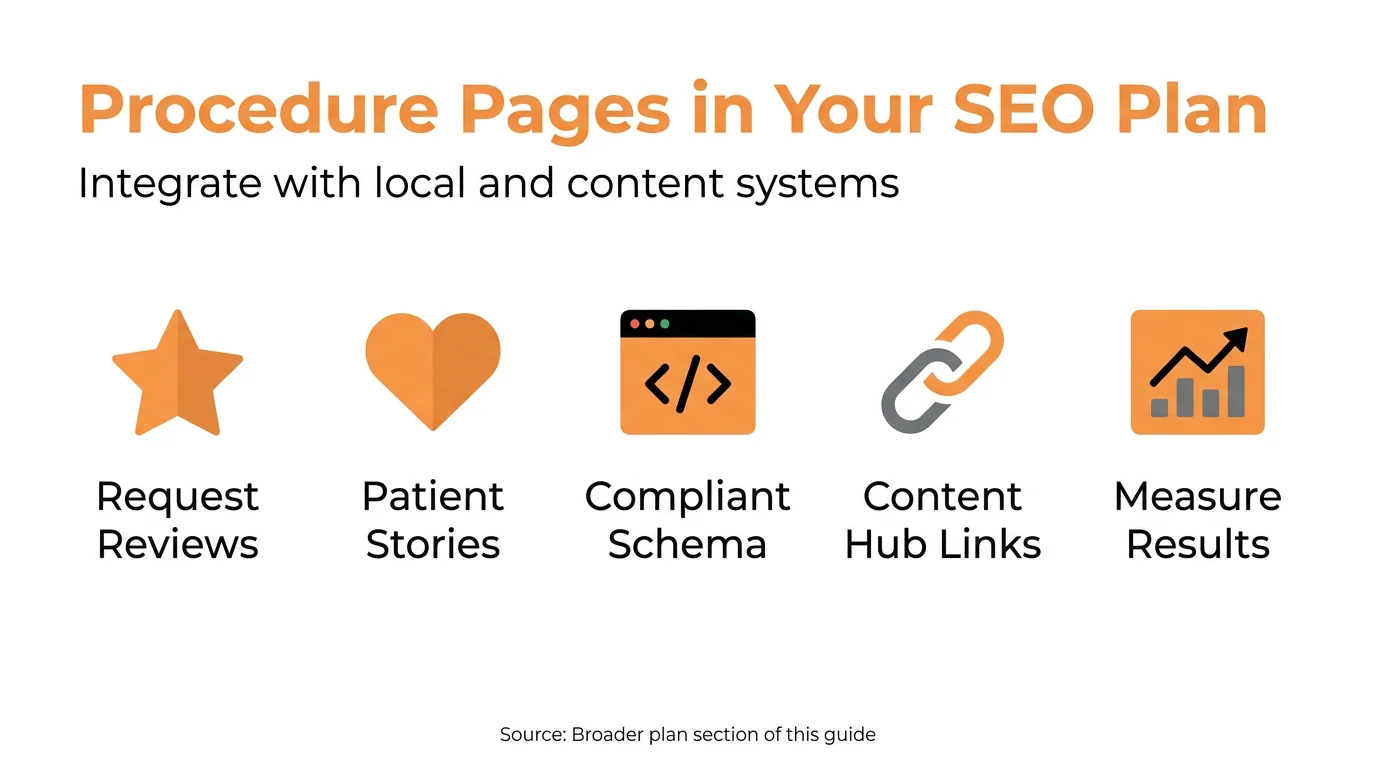
Build complementary assets: request reviews and highlight outcomes (patient stories), implement compliant markup (medical and FAQ schema), and establish measurement rigor (calls and assisted revenue).
Frequently Asked Questions
Should I create one service page per veterinary procedure or group them together?
Evidence suggests one page per procedure may match intent better and support richer FAQs, schema, and reviews. Grouping can dilute relevance and reduce snippet potential.
What headings help veterinary procedure pages rank?
Use intent-led H2s such as cost, risks, recovery, timeline, eligibility, and how the procedure works. These align with common queries and may support snippet capture.
Do I need structured data for veterinary services?
Adding LocalBusiness/VeterinaryCare and Service, plus FAQPage, may help search engines understand the page. Ensure content is visible to users and consistent with markup.
How transparent should pricing be for procedures?
A price range with factors that influence cost can inform decisions without overpromising. This approach may reduce calls purely about price and improve qualified inquiries.
What evidence should back medical claims on service pages?
Reference reputable veterinary bodies and peer-reviewed sources. Phrase benefits cautiously, noting that timelines and outcomes can vary by pet health and breed.
Conclusion
High-intent veterinary procedure pages earn trust by aligning structure with search, showing safety and outcomes, and inviting the next step. Use a single page per procedure, add medical clarity, prioritize local signals, and measure real conversions. With consistent templates, careful schema, and transparent pricing, your clinic may capture more qualified bookings while setting accurate expectations. Treat this as a disciplined, repeatable system-optimize headings to match questions, surface credentials, and respect medical nuance. Done well, service page SEO for vets strengthens reputation, supports informed choices, and turns anxious searches into confident appointments.
References
- C DeWilde (2023). Social Media and Digital Marketing for Veterinary Practices.. The Veterinary Clinics of North America. Small Animal …. View article
- N Fejzić et al. (2023). The impact of digital presence and use of information technology on business performance of veterinary practices: a case study of Bosnia and Herzegovina. Frontiers in Veterinary …. View article
- J Phillips (2022). Branding, websites and the importance of first impressions in the veterinary industry. In Practice.
- I Agrawal et al. (2026). approach, Preventive Veterinary Medicine,(2025). researchgate.net. View article