Local Link Building for Vets: Partnerships, Sponsorships, and Digital PR That Earn Mentions

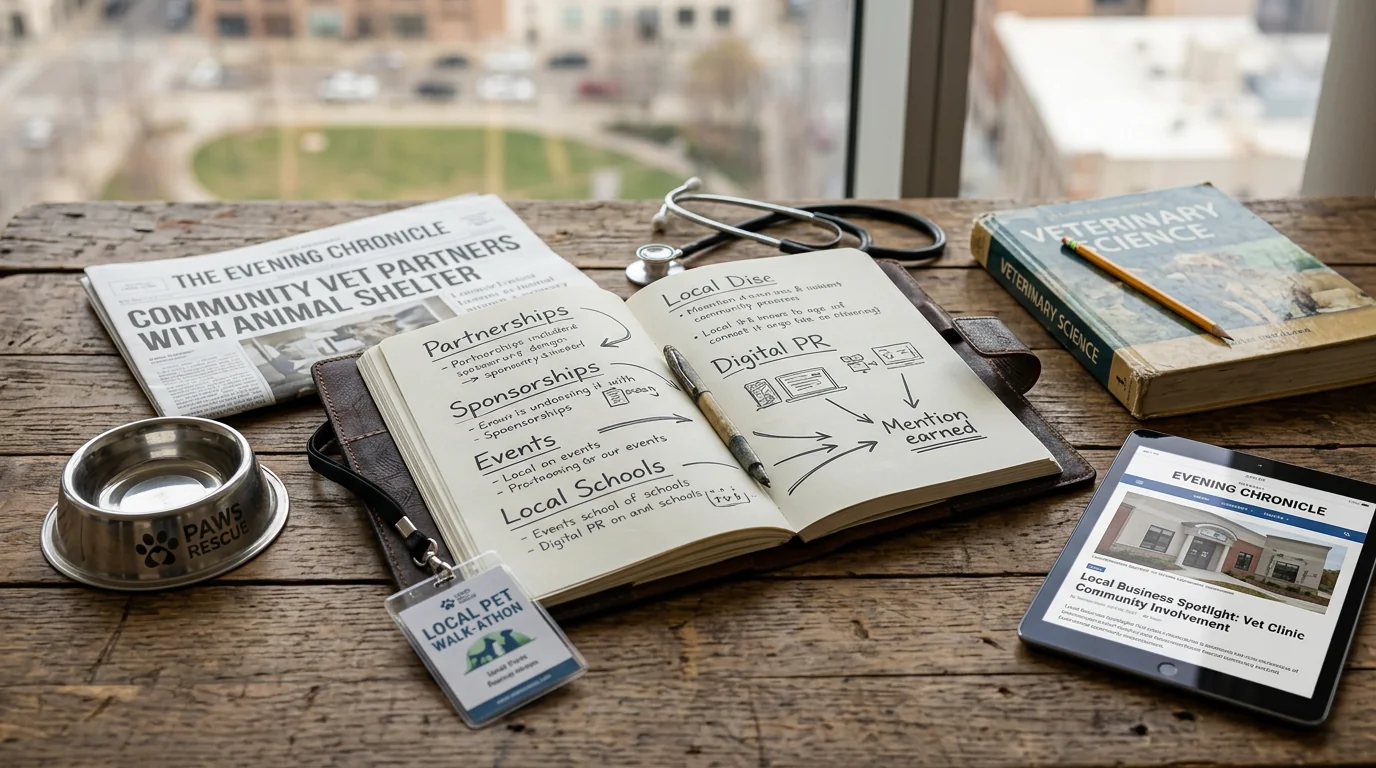
Table of Contents +
- The scenario: You’re a local vet needing safe, repeatable links without mass outreach
- Partnerships that reliably earn mentions
- Sponsorships that add value (and get listed)
- Digital PR that earns local news and niche press
- Quick decision guide: If this is your situation, take this action
- Execution playbooks (templates you can copy)
- Monitoring: What to check after 7-14 days and 4-8 weeks
- Practical safety boundaries for compliant link earning
- Evidence status and what the data suggests
- How this fits your overall veterinary SEO plan
- Frequently Asked Questions
- References
A tactical playbook for vets to earn local links via shelters, rescues, events, schools, and news features-without mass outreach or gimmicks.
Local link building for vets works best when it is grounded in real community value. You do not need mass outreach or gimmicks to earn credible mentions. You need purpose, structure, and repeatable plays.
This guide explains an efficient, low-risk way to win high-quality local links. It focuses on partnerships, sponsorships, and digital PR your team can execute. You will learn where to invest, what to deliver, and how to monitor outcomes.
The scenario: You’re a local vet needing safe, repeatable links without mass outreach
Constraints and goals in a typical 1-3 location clinic
Most clinics have tight bandwidth, modest budgets, and strict compliance needs. Goals include building trusted visibility, attracting qualified local traffic, and supporting location pages. You need tactics that scale quarterly, without heavy cold outreach.
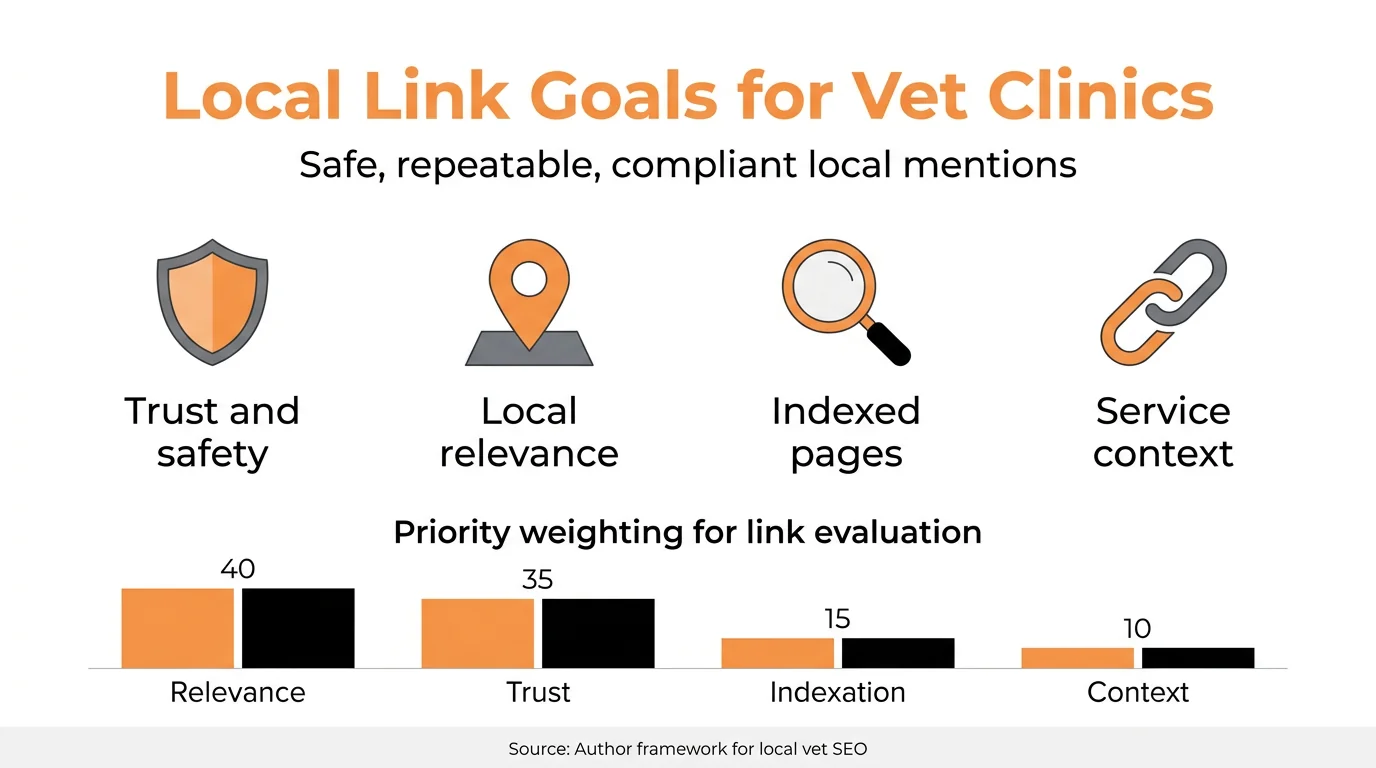
What counts as a high-quality local link for vets
Prefer links from established local organizations, indexed pages, and contextually relevant mentions near your city and services. Search engines assess link context, quality, and trust signals, not only counts, in local strategies.[1]
Petbase automates SEO content for veterinary clinics - so you can focus on patients, not blog posts - start your free trial.
Partnerships that reliably earn mentions
Partnerships create recurring, value-driven mentions. Focus on organizations with resource pages, annual reports, and event recaps. These relationships can renew each year, producing stable citation and referral pathways for local SEO for veterinarians.
Shelters and rescues: co-branded campaigns and medical support pages
Offer discounted spay/neuter days or post-surgery care guides. Co-brand a “Pet Health Resource” page on the shelter’s site, listing your clinic and services. Align with adoption peaks, and provide photos, blurbs, and a prewritten acknowledgment.
Schools and universities: career talks, externships, and scholarship pages
Coordinate guest lectures and externships with program coordinators. Ask to be listed on “Careers,” “Community Partners,” or scholarship pages. Provide headshots, bios, and a short clinic overview to streamline publication and ensure accurate naming consistency.
Municipal and community orgs: pet safety initiatives and resource hubs
Contribute seasonal pet safety content for city resource hubs. Offer a printable safety checklist and host a Q&A session at the library. Municipal pages often maintain stable directories and public recaps, which may include your clinic mention.
Sponsorships that add value (and get listed)
Community sponsorships can produce sponsor directory links, event recap mentions, and local awareness. Choose events that maintain public pages. Prioritize placements with sponsor sections, volunteer listings, or photo galleries that cite contributor names.
Youth sports and community events with sponsor directories
Support a youth team or seasonal festival that lists sponsors online. Request your full clinic name, city, and a brief descriptor. Offer a team safety clinic to increase the odds of a thank-you post and additional acknowledgment.
Pet fairs, adoption days, and microchip clinics with event recaps
Co-host microchip clinics with registries or rescues. Bring a photographer and share a recap draft and captions. Provide a short quote from your medical lead to elevate credibility and increase the likelihood of a contextual link.
Prize donations and in-kind care that trigger thank-you mentions
Donate exam vouchers or recovery kits. Supply event organizers a ready-to-post acknowledgment with your preferred page. In-kind contributions often earn “thank you” listings, which may support discovery and community sponsorships SEO visibility.
Digital PR that earns local news and niche press
Digital PR for vet clinics benefits from simple, timely angles reporters can publish quickly. Keep stories evidence-focused and human-centered. Emphasize local relevance and practical impact to encourage rapid newsroom pickup and concise coverage.
Data-lite angles reporters can cover quickly
Share a seasonal “Top Five Local Pet Risks” alert. Reference city weather or event calendars. Reporters can package concise warnings and quotes fast, which may increase coverage and brand awareness beyond your immediate audience.[3]
How to package a media-ready story (without hard pitching)
Publish a newsroom page with a 150-word summary, quotes, photos, and a fact sheet. Email a brief note linking to it. Avoid attachments. Offer office availability for short interviews to simplify journalist workflows.
Newsroom pages and assets that increase pickup odds
Include leadership bios, logo files, B-roll, and a contact email. Host assets on a stable URL. Media kits reduce friction, which may improve coverage rates and accurate referencing by local and niche reporters.
Quick decision guide: If this is your situation, take this action
Use these practical rules to select the highest-yield move, given your constraints. Decide once per month, then execute consistently. Avoid splitting attention across too many activities at once.
Capacity, timeline, and budget decision rules
- If you have two hours monthly, deliver one school talk and secure a listing.
- If you have a $300 budget, sponsor a youth team with a public sponsor page.
- If you have photos and a quote, publish a microchip clinic recap on partners.
- If you lack staff, co-write a shelter medical FAQ and provide graphics.
- If an event is imminent, offer in-kind care for a guaranteed thank-you mention.
- If you need visibility fast, package a seasonal safety alert for local press.
- If approvals are slow, schedule an externship and get listed on program pages.
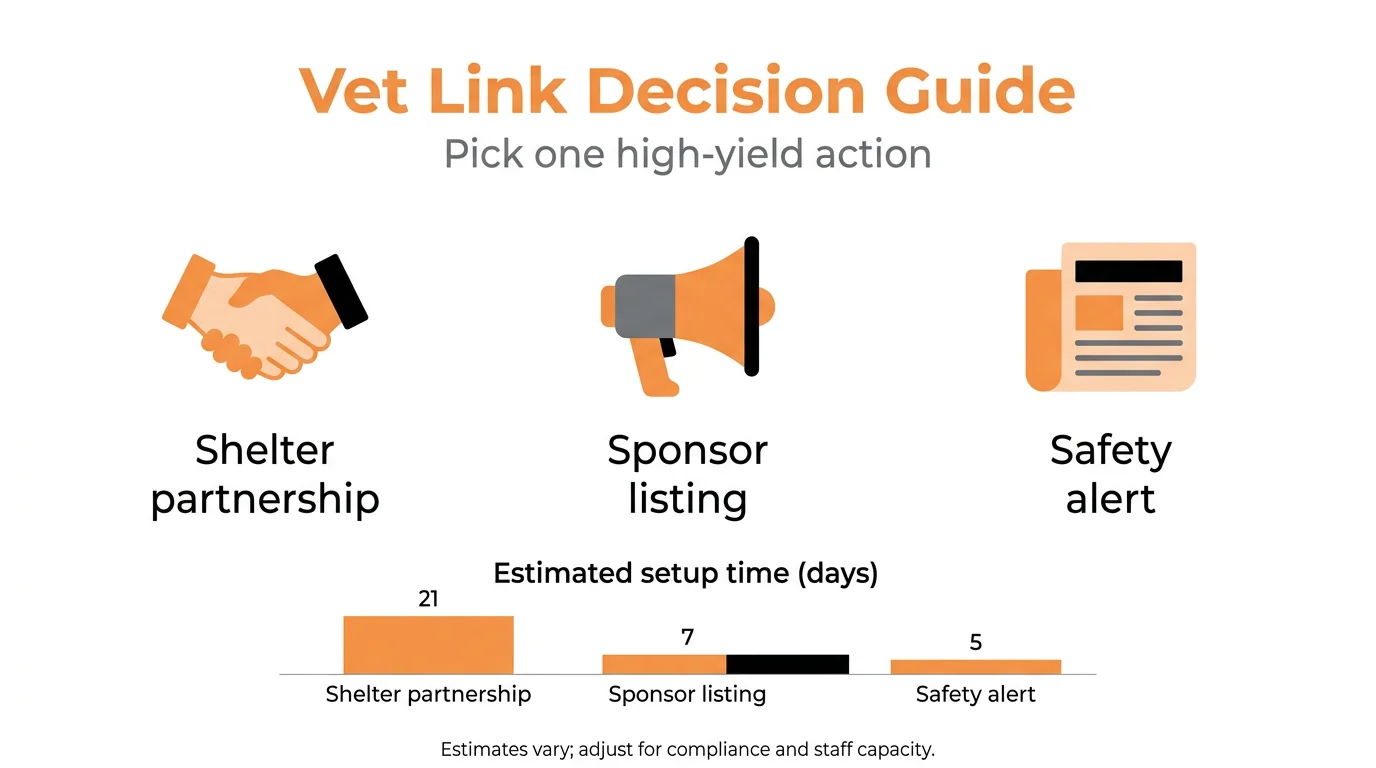
Which tactic to prioritize this month
Pick one route: a shelter co-branded resource page, a sponsor directory listing, or a newsroom-ready safety alert. Select the option with confirmed publishing control and predictable publication timing for near-term impact.
Execution playbooks (templates you can copy)
Use these templates as starting points. Adapt language for brand, compliance, and clinical accuracy. Keep all contact information current and consistent with your profiles across directories and your website.
One-page MOU for shelter partnerships
Include purpose, scope of medical support, content deliverables, logos, and timing. Define acknowledgment language, a resource page URL, and the review cadence. Add a simple termination clause. Share a one-paragraph clinic bio plus team headshots.
Sponsor packet email and tracking sheet
Subject: “Sponsor materials + preferred listing details.” Body: one-sentence thank you, 50-word clinic summary, logo link, preferred page, and correct clinic name. Track event, URL, status, UTM, and notes in a shared sheet for visibility.
Media note and asset checklist
Subject: “Local Pet Safety Alert: Short brief + assets.” Two-sentence summary, one quote, link to newsroom page, three photo options. Checklist: quotes, bios, logos, B-roll, data sources, and media contact. Keep file names descriptive and dated.
UTM and sheet templates for attribution
Create UTMs for sponsor pages, event recaps, and news mentions. Track sessions, calls, and booked appointments. Store URLs, tags, and outcomes in a master sheet linked to CRM fields. For content velocity, consider Petbase AI to maintain publishing consistency.
Monitoring: What to check after 7-14 days and 4-8 weeks
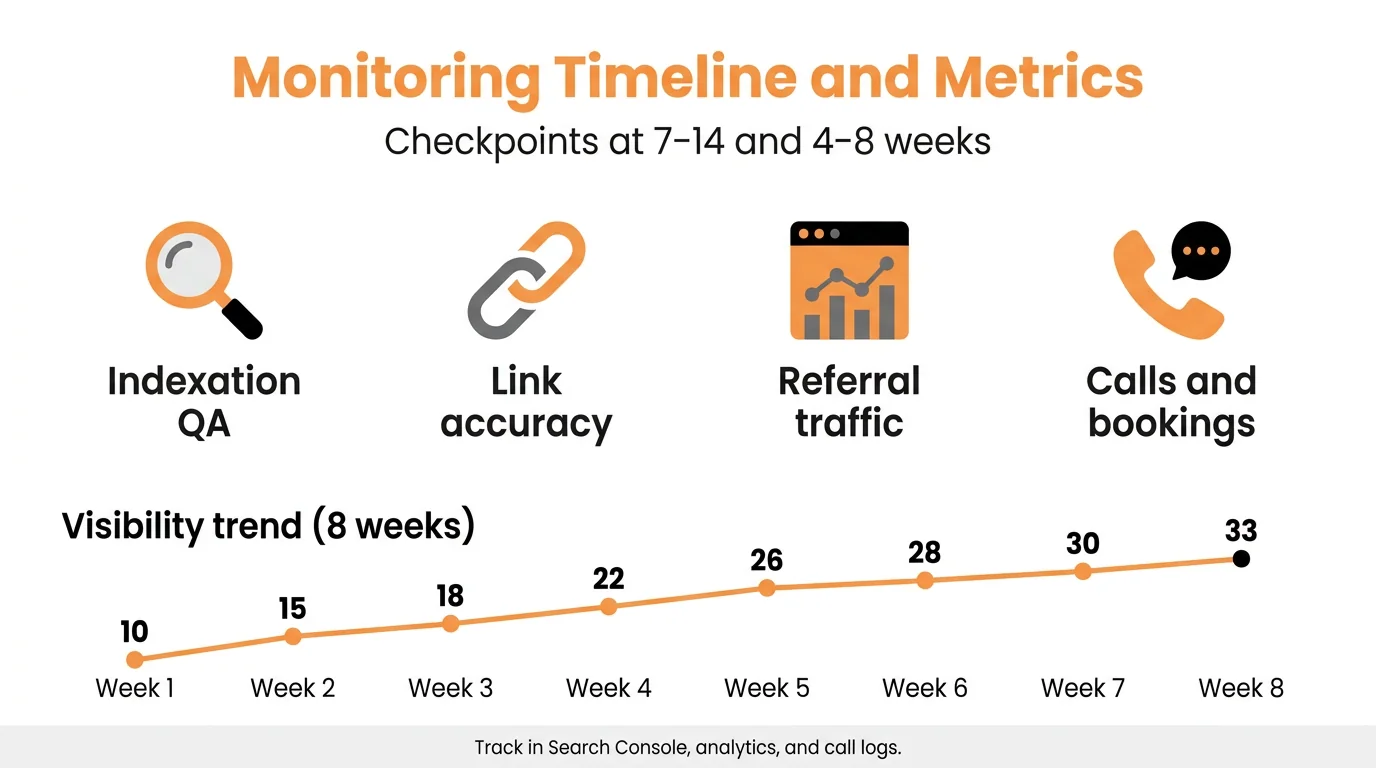
Set two checkpoints: an early QA review and a mid-term impact assessment. Expect uneven indexation and delayed link discovery. Some publications may batch updates or revise content in subsequent sprints.[2]
Indexation, link discovery, and referral quality
Within 7-14 days, confirm pages are live, publicly accessible, and indexed. Verify link accuracy, attributes, and NAP consistency. Review referral traffic quality and behavior. Map engaged sessions to relevant service content like high-converting veterinary service pages.
Local pack movement and assisted conversions
At 4-8 weeks, track branded searches, directions, and calls. Use multi-touch reports to identify assisted conversions from referral channels. Review campaign tags alongside call outcomes in measurement dashboards for veterinary SEO.
Practical safety boundaries for compliant link earning
Adopt conservative practices that prioritize relevance, disclosure, and user value. Avoid any approach that may appear manipulative or transactional in ways search engines discourage for local rankings.
Avoiding risky patterns and paid-link pitfalls
Do not buy links or request link swaps. Avoid identical sponsor blurbs across multiple sites. Rotate content formats and partners. Favor transparent acknowledgments versus keyword-stuffed copy to reduce risk and maintain credibility.
Disclosures, nofollow expectations, and anchor text balance
Expect a mix of nofollow or sponsored attributes on sponsor and PR mentions. These can still drive discovery and brand signals. Keep anchors brand-led and natural. Over-optimization may trigger scrutiny and dilute trust signals.
Anchor text balance
Suggest descriptive labels sparingly. Vary page targets across location, service, and FAQ URLs. Overly repetitive keyword anchors are unnecessary and may be risky. Aim for clarity and helpfulness over exact-match phrasing.
Evidence status and what the data suggests
Evidence indicates that relevant, trustworthy links and mentions contribute to local visibility when combined with sound technical and content practices. Quality, context, and site health remain decisive factors over raw link totals.[1]
Local links that may support rankings and E-E-A-T
Links from recognized local institutions may reinforce expertise and trust when aligned with helpful content. Consistent community presence may also support brand awareness signals and downstream discovery across digital touchpoints.[3]
Limitations and confounders in local SEO measurement
Attribution is imperfect due to cross-device behavior, offline influence, and algorithmic shifts. Monitor directional trends rather than isolated spikes. Interpret results alongside content quality and technical health for veterinary SEO performance.[2]
How this fits your overall veterinary SEO plan
Treat each mention as a bridge to a helpful page. Link to specific services, locations, or FAQs. Maintain consistent NAP details and messaging to reinforce relevance across your local ecosystem.
Mapping links to service pages, location pages, and FAQs
Map shelter pages to spay/neuter, sponsorships to wellness, and PR to safety FAQs. Strengthen internal linking and content depth on service pages that rank and convert to capture resulting demand effectively.
Coordinating with reviews, citations, and content velocity
Time partnerships near review drives to amplify credibility. Align with citation cleanup and proactive content publishing. For social proof and process, see reviews and reputation best practices for vets. Align everything under your Veterinary SEO: The Complete Strategy Guide for Clinics and Mobile Vets.
Frequently Asked Questions
Do sponsorship links still help veterinary local SEO?
They may support local relevance and discovery when the sponsor page is public, indexed, and contextually local. Expect mixed attributes (nofollow/sponsored), which can still drive referral traffic and brand signals.
How many local links does a single-location vet clinic need?
There is no fixed number. Benchmarks suggest earning a steady cadence (e.g., 2-4 quality local mentions per quarter) may support visibility, especially if tied to relevant service and location pages.
Should we ask partners for specific anchor text?
Keep anchors natural and brand-led. You may suggest a page (e.g., your dentistry page) and a descriptive label, but avoid repetitive keyword anchors to reduce risk.
Are news links necessary for local rankings?
Not necessary, but local coverage can amplify brand searches and citations. Even brief mentions may correlate with improved awareness and indirect SEO benefits.
What if a partner refuses to link to us?
You can still gain value via brand mentions, social posts, and co-hosted assets. Offer helpful resources they can host or embed to increase the likelihood of a link later.
Local link building for vets rewards clinics that show up consistently for their communities. Choose one partnership, one sponsorship, or one media note each month. Deliver real value, document outcomes, and iterate. Over time, your credible mentions, stronger content, and better measurement compound into durable visibility and more booked appointments.
References
- K Dragidella et al. (2020). Theme:“SEO Strategy and Implementation for a local Company”. 2020 - repository.seeu.edu.mk. View article
- G Tiwari (2025). The Ultimate Guide to Backlink Building Strategies (2026 Edition). 2025 - gauravtiwari.org. View article
- A Makrides et al. (2020). The gold rush of digital marketing: assessing prospects of building brand awareness overseas. Business Perspectives …. View article
- JD Beazer et al. (2020). High-density lipoprotein's vascular protective functions in metabolic and cardiovascular disease-could extracellular vesicles be at play?. Clinical …. View article