Site Speed and Privacy for Veterinary Clinics: Core Web Vitals and PHI-Safe Lead Flows

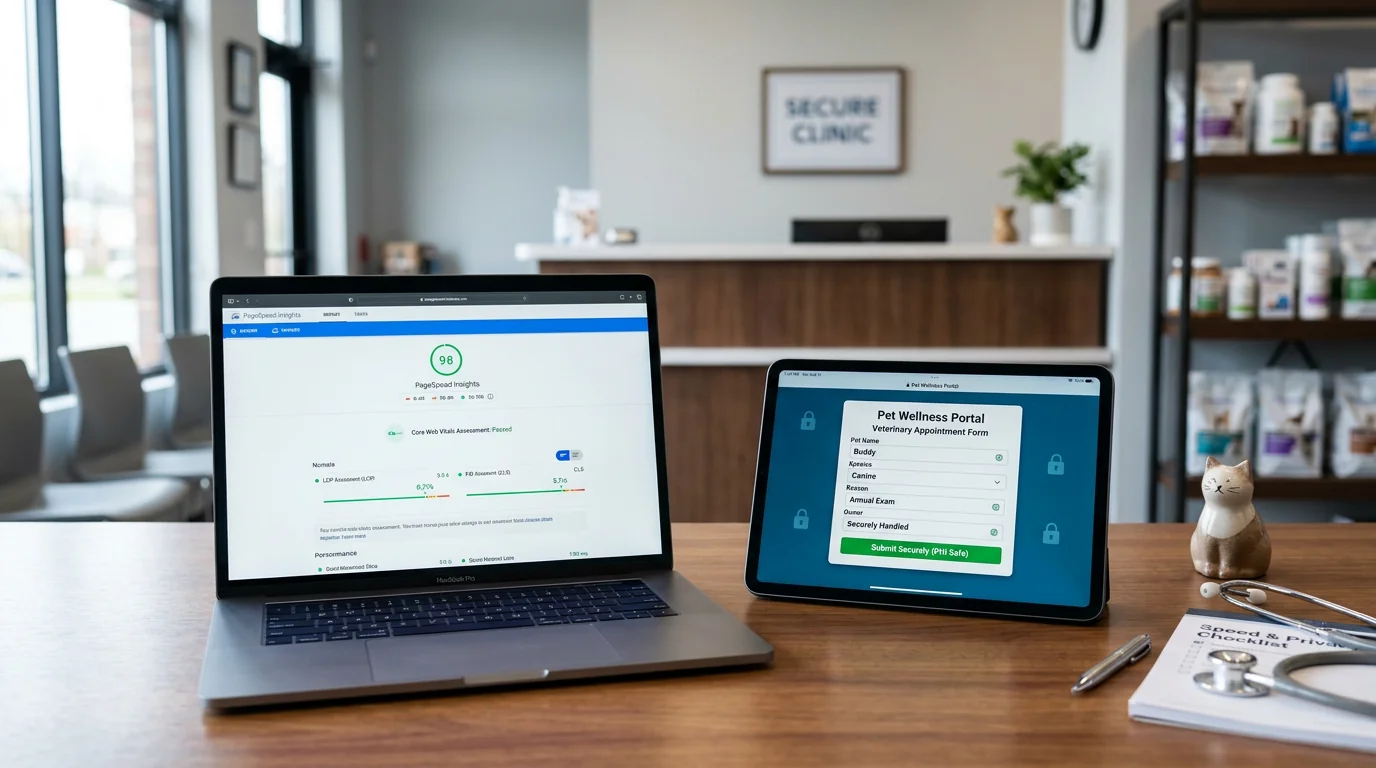
Table of Contents +
- Why this matters now: speed, CWV, and privacy risks for clinics
- Focused scenario: redesigning lead capture to lift CWV without exposing PHI
- Quick decision guide: if X, then Y
- Implementation playbook: step-by-step
- Monitoring after launch: 7-14 days and 4-8 weeks
- Practical safety boundaries for veterinary sites
- Evidence status: what research and guidance suggest
- Frequently Asked Questions
- Optimization checklist
- References
Improve veterinary site speed and Core Web Vitals while designing PHI-safe forms, chat, and analytics. Actionable steps, guardrails, and monitoring plans.
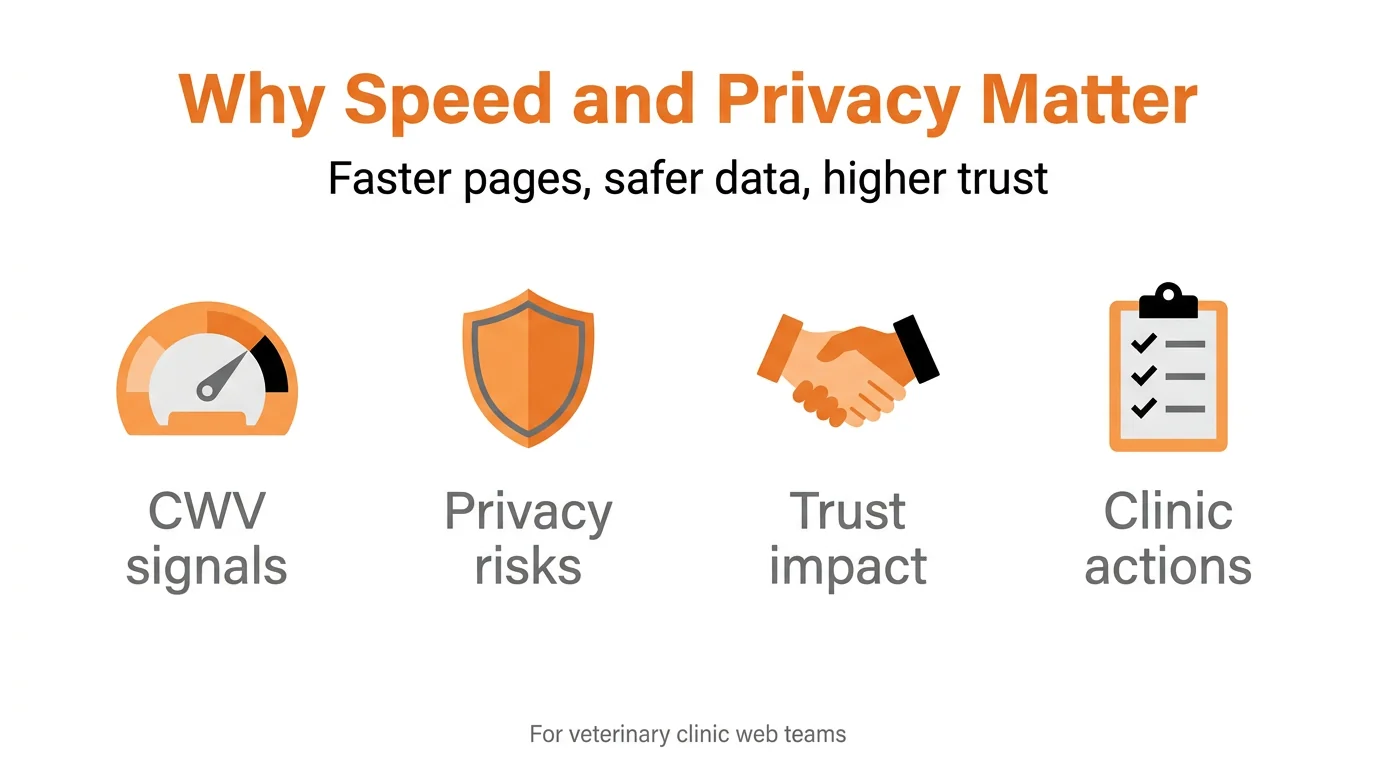
Your website should feel fast, trustworthy, and respectful of privacy. Pet owners expect that experience when considering care decisions.
Slow pages reduce bookings, while invasive scripts risk data exposure. This guide shows how to improve Core Web Vitals for veterinary clinics alongside PHI-safe forms, HIPAA friendly analytics, and consent mode for healthcare sites.
Why this matters now: speed, CWV, and privacy risks for clinics
How slow pages reduce bookings and trust
Visitors usually judge expertise by how quickly and clearly pages load. A slow or jumpy page suggests disorganization and lowers confidence. Studies of veterinary sites show that presentation and content structure influence perceived credibility and engagement, affecting outcomes indirectly.[3]
Where PHI can leak in typical vet website stacks
Forms, chats, and third-party pixels may quietly pass sensitive owner and pet information to vendors. Analytics setups often collect identifiers by default. Learning analytics research indicates that configuration choices shape what data flows offsite and how it is analyzed.[1]
Petbase automates SEO content for veterinary clinics - so you can focus on patients, not blog posts - start your free trial.
Focused scenario: redesigning lead capture to lift CWV without exposing PHI
Target state architecture: fast, minimal, consent-aware
Prioritize a lean theme, critical CSS, and deferred scripts. Load only consented tags with explicit categories. Use PHI safe forms that minimize fields and avoid free-text medical details. Route submissions securely to inboxes or CRMs with role-based access.
Before/after audit: what to remove, defer, or replace
Remove redundant trackers and duplicate pixels. Defer chat widgets and marketing scripts until interaction or consent. Replace heavy iframes with static previews. Swap legacy video embeds for privacy-enhanced modes and lazy loading.
Quick decision guide: if X, then Y
Forms
- If your form collects free-text symptoms, then remove that field and replace with a simple reason dropdown.
- If file upload is required, then allow only PDFs and route to secure storage with expiring links.
- If autofill sends full addresses, then disable geolocation and request city and zip only.
Chat
- If chat loads on every pageview, then switch to click-to-load after consent or user interaction.
- If transcripts email to shared inboxes, then restrict to a secure mailbox with audit logs.
- If the widget captures keystrokes, then disable pre-submit text capture by default.
Analytics & pixels
- If you rely on multiple ad pixels, then consolidate via a tag manager and fire after consent.
- If IPs are stored, then enable anonymization or server-side redaction.
- If goals are unclear, then implement HIPAA friendly analytics with cookieless events where possible.
Video & third-party embeds
- If videos autoplay, then disable autoplay and use poster images with lazy loading.
- If embeds add several megabytes, then host short clips or compress to under 2-3 Mbps streams.
- If maps slow LCP, then replace with a static map preview and click-to-load.
Hosting & CDN
- If time to first byte exceeds 600 ms, then move to a performance-oriented host and enable a global CDN.
- If caching is disabled, then set page and asset caching with sensible TTLs.
- If SSL handshakes lag, then enable HTTP/2 or HTTP/3.
Images & LCP
- If LCP images load late, then preload the hero image and serve properly sized variants.
- If images exceed 200 KB, then convert to AVIF or WebP with responsive srcset.
- If CLS occurs, then specify width and height and reserve space.
Scheduling apps
- If the scheduler injects heavy scripts, then load it only on the booking page or in a modal after click.
- If PII flows to third parties, then disable unnecessary fields and apply consent gating.
- If availability is static, then consider server-rendered slots to avoid client bloat.
Implementation playbook: step-by-step
Strip, measure, then add back with guardrails
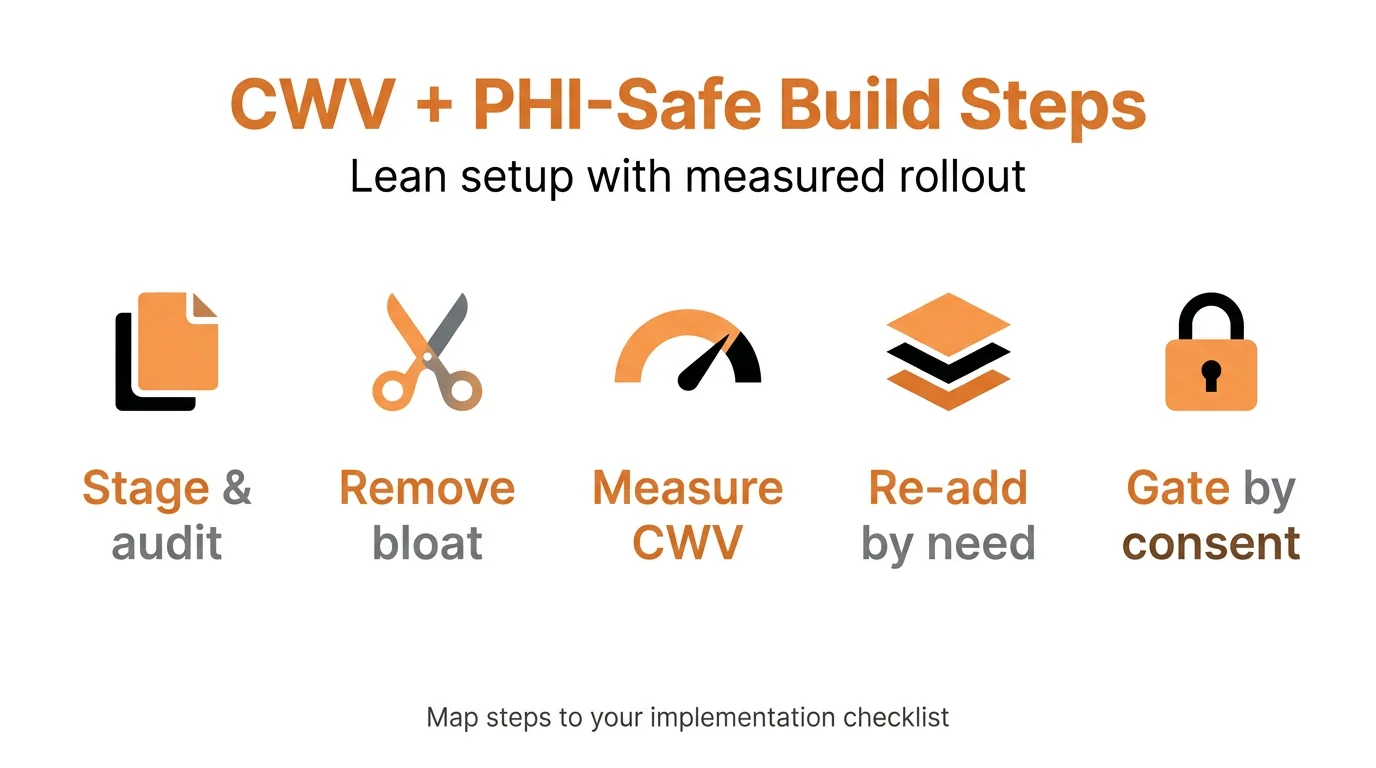
Start with a staging copy. Remove all nonessential scripts, chats, and embeds. Measure baseline LCP, CLS, and INP using lab tools. Add features back sequentially, gated by consent and performance budgets. Document each change and its CWV impact.
Use content systems that keep pages lean while scaling information. When building topic clusters for veterinary services, ensure templates prioritize critical rendering paths and image optimization. Many teams automate content updates with Petbase AI to maintain consistency while controlling page weight.
Build PHI-aware forms and routing
Design forms with data minimization. Use separate “contact” and “medical records request” flows. For general inquiries, collect name, email, phone, and a short reason menu. Reserve detailed health conversations for secure phone or in-clinic follow-ups.
Implement conditional logic that hides extra fields until necessary. Apply inline notices that discourage sharing sensitive health details. Store submissions in encrypted systems, disable attachment previews, and enforce role-based access. Set retention to the minimal operational period, preferably under 12 months.
Harden analytics with consent and SS-tagging
Adopt consent mode for healthcare sites with region-aware defaults. Configure cookieless pings when consent is denied, focusing on page performance and form start/completion. Where feasible, proxy third-party tags through server-side tagging to reduce exposure and control data fields.
Define a minimal schema for events: form_view, form_start, form_submit, call_click, and booking_click. Evidence suggests well-configured learning analytics can guide iterative improvements without overcollection.[1]
Optimize LCP, CLS, and INP in parallel
Target LCP under 2.5 s, CLS under 0.1, and INP under 200 ms. Inline critical CSS under 10 KB. Preload the primary web font with font-display: swap and limit weights. Avoid layout thrash by reserving image and component space.
For veterinary website performance, combine image CDNs with automatic format negotiation. Defer noncritical JavaScript and reduce bundle size below 150 KB compressed where practical. Consider Edge caching of JSON endpoints and HTML for frequently visited pages.
Monitoring after launch: 7-14 days and 4-8 weeks
Short-term checks and thresholds
Within 7-14 days, monitor LCP, CLS, and INP in lab and early field reports. Track form abandonment, call clicks, and scheduler opens. Research shows analytics-driven iterations may surface engagement trends quickly when instrumentation is scoped carefully.[2]
Compare against guardrails: LCP within 10% of lab, abandonment under 50% for simple forms, and no unauthorized data in vendor logs. Validate consent toggles and deletion workflows.
Medium-term trends and risk signals
Across 4-8 weeks, evaluate field distributions and seasonal patterns. Observe whether call clicks and booking conversions trend with speed improvements. Audit vendors monthly for data retention, sub-processors, and script weights. Investigate anomalies or sudden CLS regressions promptly.
Complement technical metrics with business signals. Use the internal measurement playbook for calls and bookings to validate that performance gains align with inquiries and appointments while privacy risks remain low.
Practical safety boundaries for veterinary sites
Data collection limits
Collect only what is necessary to respond and schedule. Avoid detailed health narratives, medication lists, or diagnostic images via web forms. Mask phone numbers and emails in analytics. Use short retention and documented deletion requests.
Vendor and contract requirements
Prefer vendors offering data processing addenda, regional storage, and role-based access. Require disclosure of sub-processors and breach notification timelines. Ensure configurable logging, IP anonymization, and export-delete capabilities for PHI adjacent data.
Operational routines
Adopt quarterly permissions reviews, inbox hygiene, and breach simulation drills. Maintain a change log for scripts and embeds. Train staff to redirect medical details to secure channels. Periodically test consent flows and data redaction.
Evidence status: what research and guidance suggest
What is well supported
Evidence from veterinary and public sector digital projects indicates that structured analytics and iterative design may improve engagement and usability when applied thoughtfully.[1][4] Basic web performance patterns also consistently correlate with better user experience.
Where evidence is emerging
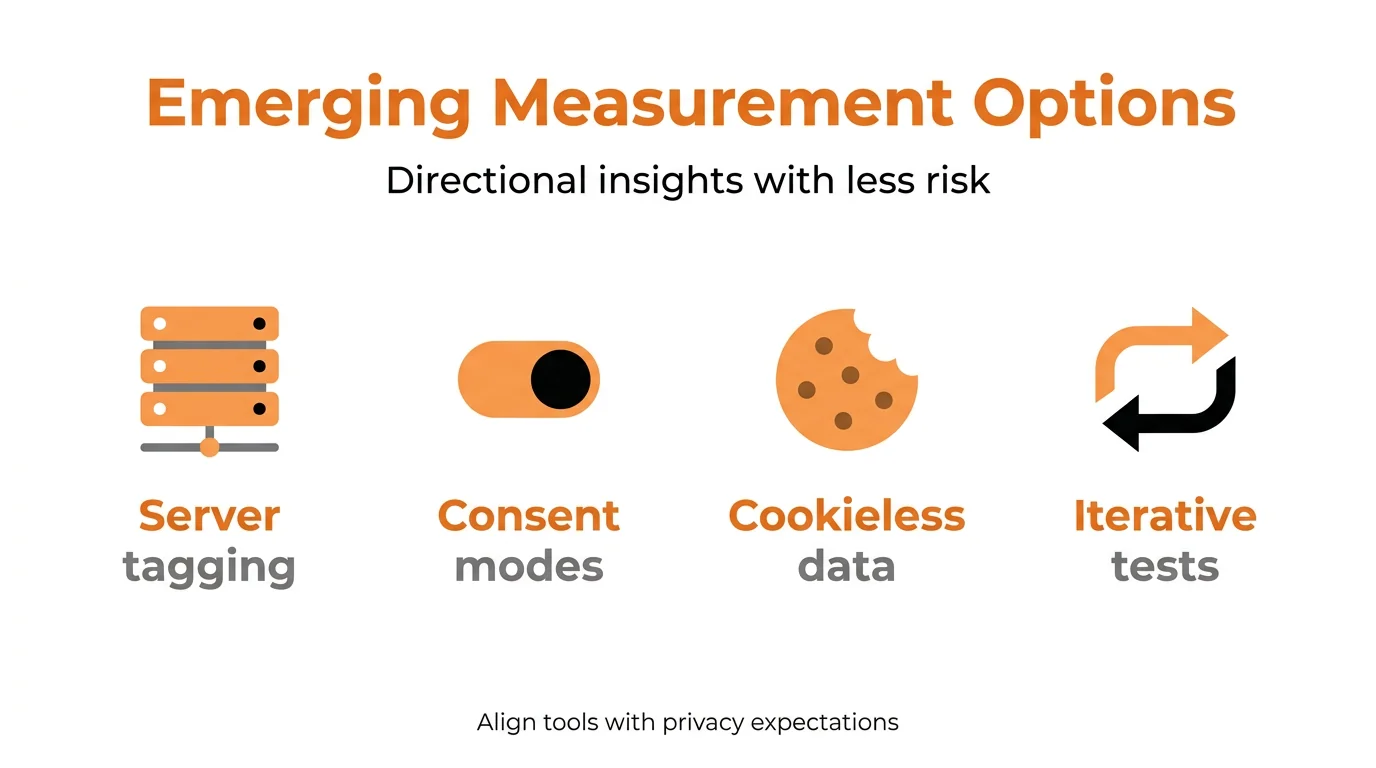
Consent frameworks, server-side tagging, and cookieless measurement are evolving. Early indications suggest they can provide directional insights with reduced identifiers. Application choices should align with your risk tolerance and goals.
Contextual caveats for clinics
Website content and representation may influence trust differently across communities.[3] Technical speed changes should integrate with content strategy and structured data for local services to ensure relevance, not just raw speed.
Frequently Asked Questions
Do veterinary websites need to be HIPAA compliant?
HIPAA generally applies to covered entities handling human health data. However, clinics may still handle sensitive pet and owner information. Adopting HIPAA-inspired safeguards and limiting data collection may reduce risk and build trust.
Which Core Web Vital should a vet clinic fix first?
Evidence suggests LCP improvements often correlate with better user experience and conversion. Start with image optimization, fast hosting, and render-blocking reductions, then address CLS and INP.
Are chat widgets safe for PHI?
Some chats may capture sensitive details and send data to third parties. Choose vendors with adequate protections, disable auto-PII capture, show pre-chat notices, and load chat after consent when feasible.
Can I run analytics without cookies?
Yes. Privacy-friendly, cookieless analytics or consent-mode configurations may provide directional insights while reducing identifiers. Validate data usefulness against your goals.
How quickly should I see CWV improvements?
Lab metrics may improve immediately after changes, while field data in CrUX can take weeks. Expect early signals in 7-14 days and more stable trends in 4-8 weeks.
Optimization checklist
Technical speed actions
- Enforce performance budgets: JS under 150 KB compressed, image hero under 200 KB.
- Preload LCP image and primary font; inline critical CSS.
- Enable HTTP/2 or HTTP/3, TLS 1.3, CDN caching, and brotli compression.
- Lazy-load offscreen images and embeds; replace autoplay videos with poster images.
- Defer nonessential scripts; load chat and schedulers on interaction or consent.
- Audit monthly for script bloat, errors, and CLS regressions.
- Align improvements with the veterinary SEO central guide to connect speed with discoverability.
Privacy and compliance actions
- Implement PHI safe forms: minimize fields, no free-text health narratives, clear notices.
- Adopt consent mode for healthcare sites; fire only necessary tags after opt-in.
- Use HIPAA friendly analytics configurations: IP anonymization, short retention, and cookieless events.
- Prefer server-side tagging for pixels; strip PII fields and redact URLs.
- Restrict vendor access with DPAs, regional storage, and sub-processor transparency.
- Train staff and document SOPs; schedule periodic privacy and performance audits.
- Reinforce trust by showcasing feedback responsibly; see guidance on how to showcase patient stories responsibly.
References
- I Agrawal et al. (2025). Evaluating a swine biosecurity website as an education and outreach tool and identifying best practices for end-user engagement: A learning analytics …. Preventive Veterinary Medicine. View article
- I Agrawal et al. (2026). approach, Preventive Veterinary Medicine,(2025). researchgate.net. View article
- KM Dusome et al. (2025). An Investigation of Veterinary College Websites in the US and Canada: Representations and Content of Equity, Diversity, and Inclusion. Journal of Veterinary …. View article
- K MALICDEM et al. (2025). SMART Vet: A Knowledge Management Platform Application for Enhancing Local Government Unit Veterinary Services. ACTA ILOCANDIA: The …. View article