Reviews and Reputation for Vets: Requesting, Responding, and Showcasing Patient Stories

Table of Contents +
- Focus scenario: A 3-step system to request, respond, and showcase reviews for a small animal clinic
- Quick decision guide: If X, then Y
- Messaging templates and timing windows that may improve acceptance rates
- Monitoring and iteration: What to check after 7-14 days and 4-8 weeks
- Practical safety boundaries for veterinary reviews
- Evidence status: What current research and platform data suggest
- Implementation checklist and simple workflow diagram (text-based)
- Showcasing patient stories without over-claiming
- Troubleshooting: Low review rates, unfair reviews, and staff bandwidth
- Where this fits in the broader veterinary SEO program
- Frequently Asked Questions
- Conclusion
- References
Ethical system for vet reviews: when to request, how to respond, and ways to showcase stories on-site. Improve E-E-A-T and conversions across platforms.
Clients judge clinics in seconds. Reviews often decide who gets the call. You can influence that decision ethically and consistently without adding chaos to your front desk.
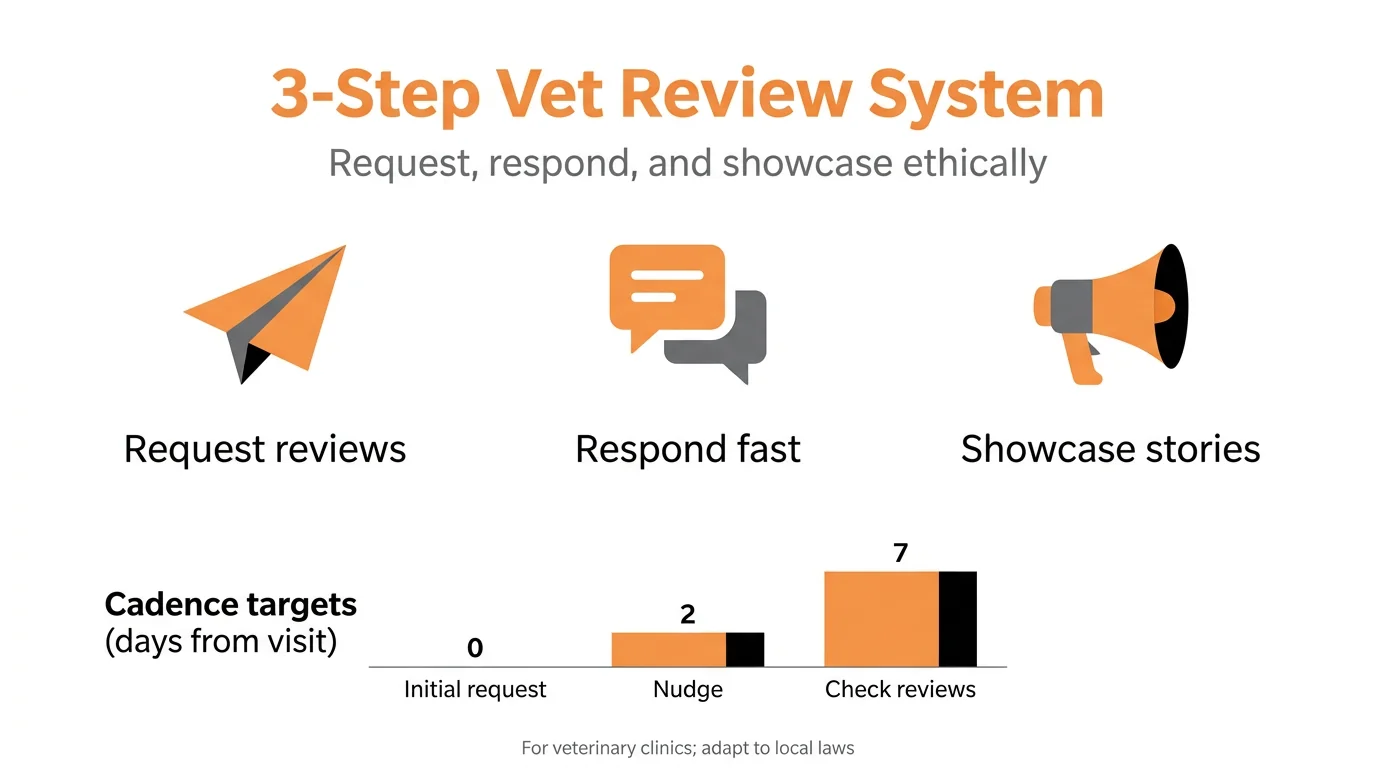
Reputation shapes discovery, trust, and conversions. A repeatable system reduces risk and improves outcomes. This guide shows a three-step approach to request reviews, respond compliantly, and convert feedback into on-site trust that supports E-E-A-T and bookings.
Focus scenario: A 3-step system to request, respond, and showcase reviews for a small animal clinic
Step 1 - Ethical, timely review requests across Google and niche vet platforms
Send simple, opt-in requests after routine visits. Use Google reviews for veterinarians as your primary channel. Add niche platforms clients already use. Keep outreach respectful, brief, and never incentivized. Provide a single, low-friction link.
Step 2 - Response playbooks for 5 review types (with compliance notes)
Prepare templates for five situations: praise, constructive feedback, urgent complaints, misinformation, and privacy-sensitive mentions. Acknowledge quickly, keep replies general, avoid case specifics, and invite offline resolution. Document interactions and escalate carefully.
Step 3 - Turn reviews into on-site trust assets (testimonials, bios, and schema)
With consent, transform reviews into testimonials, staff bios, and service-page snippets. Use vet testimonials E-E-A-T signals responsibly. Add structured data where appropriate to support clarity and visibility for search engines.
Petbase automates SEO content for veterinary clinics - so you can focus on patients, not blog posts - start your free trial.
Quick decision guide: If X, then Y
Use these fast paths to keep vet reputation management consistent and safe across common scenarios. Adjust timing by case complexity and client sentiment while preserving privacy and platform compliance.
If the visit was routine and positive → send request within 24 hours via SMS
Strike while the experience is fresh. Keep the SMS under 40 words. Include one short link to your preferred platform. Thank the client and request honest feedback without pressure.
If complex/urgent care → wait 48-72 hours and personalize the request
Allow time for outcomes to stabilize. Reference support resources, not case specifics. Use a softer tone and provide the option to decline. Respect emotions and uncertainty first.
If client gave verbal praise → hand them a short-link card at checkout
Capitalize on in-person promoters. Provide a wallet card or QR sticker. Keep the ask simple. Smile, thank them, and note that honest reviews help other pet owners choose confidently.
If review is 1-2 stars → acknowledge within 24 hours and move offline
Thank them for sharing. Apologize for the experience. Avoid details. Provide a direct phone line or email. Offer a path to resolution and document internally for follow-up.
If review mentions medical details → keep replies general and privacy-safe
Focus on process and policies, not the case. Avoid confirming they are a client. Invite them to discuss privately. Reinforce your commitment to client care and confidentiality.
If staff member is praised → add quote to their bio with consent
Ask for written permission to quote. Attribute generically unless the reviewer approves their name. Update the staff bio and share the kudos at your next team meeting.
If platform flags a review → document and request moderation calmly
Screenshot the review, timestamps, and policies. Submit a concise moderation request. Avoid public disputes. Continue responding professionally to new reviews during the review process.
Messaging templates and timing windows that may improve acceptance rates
Small wording changes and timing windows may lift acceptance. Keep messages direct, client-centric, and non-incentivized. Limit to two gentle nudges, then stop to avoid fatigue.
Short SMS and email templates for first and second nudges
SMS 1: “Thanks for visiting today. Your honest review helps others. Link: [shortlink]” SMS 2 (48h): “Quick nudge if helpful. Your feedback matters. Link: [shortlink]” Email mirrors this tone.
Front-desk scripts for in-person promoters
“We’re glad your visit went well. If you’re open to it, a short review helps other owners choose confidently. This card has our link. Thank you for trusting us.”
QR codes, short links, and receipt footers that reduce friction
Place QR codes at checkout. Add short links on receipts and appointment reminders. Use UTM-tagged links for measurement. Keep visual clutter minimal to maintain a premium, trustworthy experience.
Monitoring and iteration: What to check after 7-14 days and 4-8 weeks
Measure performance quickly, then refine cadence, channels, and scripts. Prioritize publish rate and response times first, then long-horizon metrics like rating distribution and conversion impacts from testimonials.
7-14 days: request delivery, click-through, publish rate, response SLAs
Audit SMS deliverability, link click-through, and posted review rate. Track average time-to-response for all reviews. Early signals inform template clarity and platform preference shifts among clients.
4-8 weeks: review velocity, rating distribution, topic themes, conversion lifts
Assess review velocity and average rating trends. Code themes from comments. Compare bookings before and after testimonial updates. Align with your measurement framework for calls, bookings, and assisted revenue.
Practical safety boundaries for veterinary reviews
Boundaries protect clients, staff, and your license. Establish clear rules for privacy, incentives, platform compliance, and crisis handling. Train all client-facing staff to keep execution consistent.
Privacy and compliance: avoid PHI/PII, no case specifics without written consent
Never confirm a client relationship publicly. Do not reference diagnoses, medications, or outcomes. Obtain written consent for any quoted details. Protecting privacy also supports trust with prospective clients.
No incentives for reviews; offer equal service regardless of feedback
Avoid discounts, gifts, or contests tied to reviews. Most platforms discourage or prohibit incentives, which may erode credibility and risk penalties. Keep requests neutral and standardized for fairness.
Platform rules: avoid gating and bulk posting; follow Google policies
Do not ask only happy clients. Rotate requests across days to avoid suspicious bursts. Align with Google’s review policies to reduce removal risk and maintain consistent visibility.[1]
Crisis handling: escalation paths and cooldown windows
Escalate threats or legal claims to practice leadership immediately. Pause public replies for 24 hours during crises. Consult counsel if needed. Resume templated, non-defensive responses after alignment.
Evidence status: What current research and platform data suggest
While algorithms evolve, converging sources indicate reviews influence discovery and trust. Use caution when interpreting correlations, and prioritize client experience as your sustainable differentiator.
Review volume and recency may correlate with local pack visibility
Industry observations emphasize Google’s reliance on review signals for first impressions and local discovery, particularly for clinics competing in dense markets.[1][2]
Response quality may influence consumer trust and click-through
Public listening research shows consumers interpret tone and responsiveness as proxies for professionalism, which may shape intent and engagement with clinic profiles.[3][4]
On-site testimonials with schema may support E-E-A-T signals
Clear credentials, genuine patient stories, and structured data can help users evaluate expertise. They may improve perceived quality and encourage contacting the practice for appropriate care.[2]
Implementation checklist and simple workflow diagram (text-based)
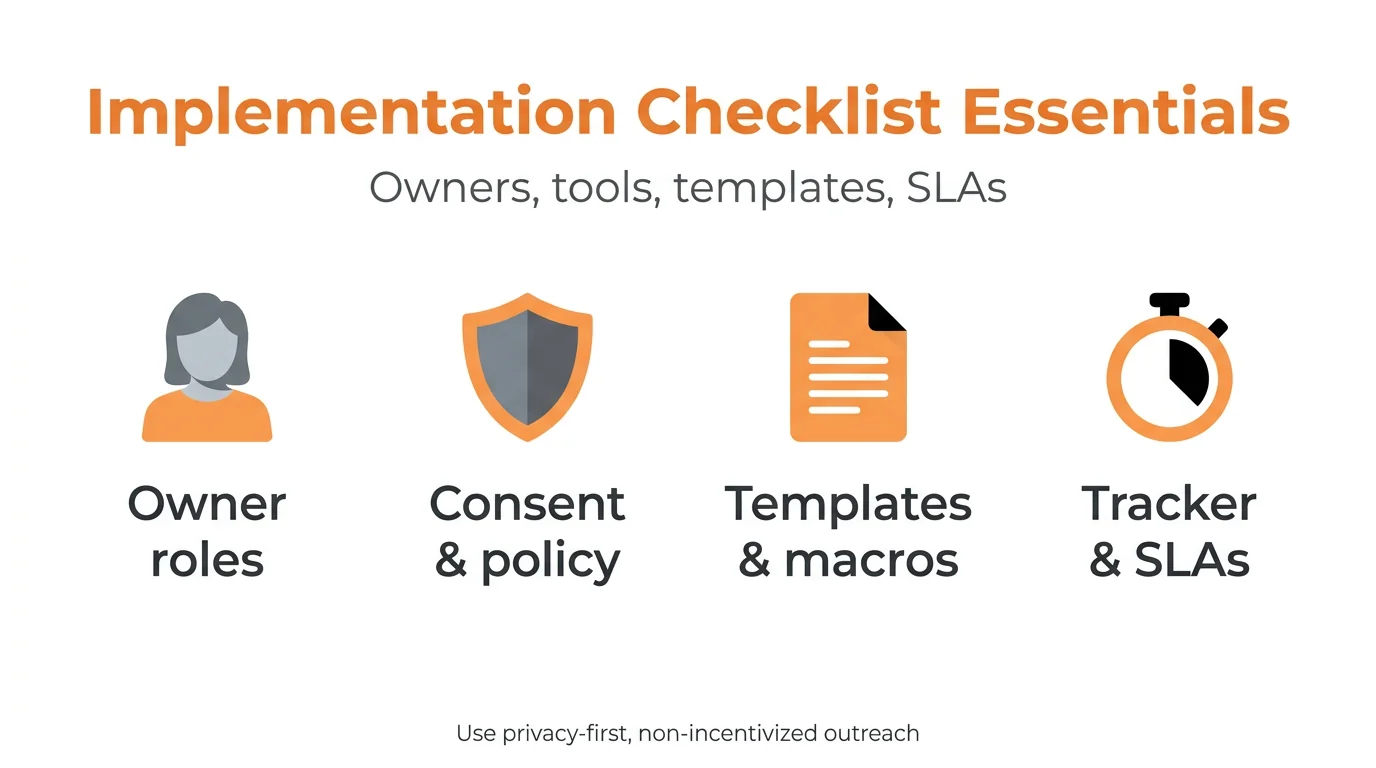
Keep implementation lean. Define owners, templates, and SLAs. Iterate monthly. Prioritize ethical outreach, fast responses, and privacy-first publishing to strengthen your review portfolio.
Owner approval, tool setup, consent capture, templates, tracking sheet
Secure policy sign-off. Configure SMS/email. Build opt-in consent forms. Draft request and reply templates. Create a shared tracker for outreach, responses, and flagged cases with timestamps.
Weekly 20-minute review standup and monthly analysis
Hold a short standup to assign replies and celebrate wins. Monthly, analyze velocity, themes, and conversions. Many teams streamline content refreshes with Petbase AI to keep operations consistent.
Workflow: Visit completes → Consent checked → Timed request sent → Review received → Triage and respond → Obtain quote consent → Publish testimonial/bio → Add schema → Monitor and iterate.
Showcasing patient stories without over-claiming
Feature authentic experiences without medical promises. Emphasize clinician expertise, process quality, and client communication. Always obtain written consent before publishing any identifiable quotes.
Doctor bios: experience, credentials, and selected quotes with consent
List degrees, certifications, and memberships. Add a short philosophy statement. Include one or two client quotes. Keep claims conservative and focused on experience, communication, and care standards.
Condition or service pages: thematic testimonials and review snippets
Place relevant quotes alongside services. Example: anesthesia communication on surgery pages. Rotate snippets periodically. For deeper context, see how to structure high-performing services in service pages that rank.
Structured data: Review, LocalBusiness, and Person where appropriate
Add markup for aggregated ratings and staff profiles when eligible. Validate frequently to reduce errors. For policy-safe patterns, consult schema for veterinary clinics and document your implementation choices.
Troubleshooting: Low review rates, unfair reviews, and staff bandwidth
System friction and unclear ownership are common blockers. Simplify links, adjust timing, and standardize templates. Protect team time through batching and escalation rules.
Increase request timing accuracy and channel mix
Align send times with visit types. Test SMS versus email. Use one-click short links and QR codes. Address deliverability issues with clean sender IDs and updated contact data.
Use neutral, non-defensive templates for disputed feedback
Thank, acknowledge, and invite offline contact. Avoid medical details or blame. Offer a direct line to a manager. Track resolutions and consider a follow-up after issues are addressed.
Batch work: weekly triage and content updates
Assign a weekly owner to review new feedback, update testimonials, and refresh bios. Batching preserves focus and reduces context switching across front desk and clinical priorities.
Where this fits in the broader veterinary SEO program
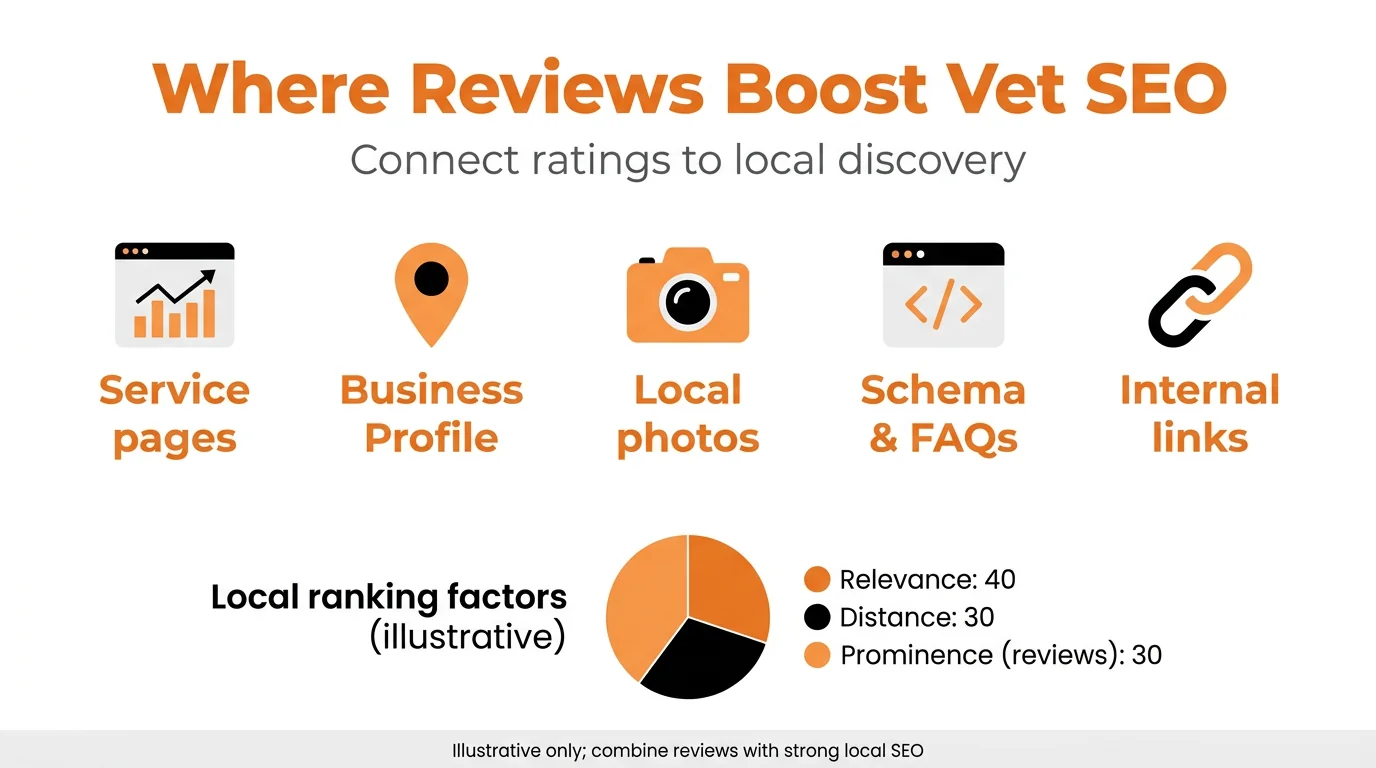
Reputation signals work alongside foundational assets. Integrate review generation with service pages, location optimization, and fast, privacy-safe lead flows for sustained growth and resilience.
Reputation signals alongside service pages, location pages, and medical content
Pair testimonials with targeted pages and an optimized Business Profile. For local foundations and photos that drive calls, review Google Business Profile guidance for vets.
Internal links from testimonials to bios and service detail pages
Link quotes to clinician bios and relevant services to reinforce expertise and next steps. For strategy context, see our comprehensive veterinary SEO guide and ensure privacy across forms per PHI-safe lead flows.
Frequently Asked Questions
When is the best time to ask veterinary clients for a review?
Evidence suggests requests sent within 24-48 hours of a routine visit may see higher acceptance. For complex cases, waiting 48-72 hours and personalizing the request may improve outcomes.
Can veterinarians respond to negative reviews without violating privacy?
Yes, by keeping responses general, avoiding case specifics, and inviting the client to discuss offline. Avoid sharing any health details and reference practice policies rather than patient information.
Do Google reviews impact local search visibility for clinics?
Industry analyses suggest review volume, rating, and recency may correlate with local pack rankings. While no single factor guarantees results, improved review signals often align with better discovery.
Should we post the same testimonial across multiple pages?
It’s better to use unique excerpts tailored to each page and add structured data where relevant. Rotating testimonials may reduce duplication and keep content fresh.
Is it acceptable to offer incentives for veterinary reviews?
Most platforms discourage or prohibit incentives. A neutral, consistent request process without rewards is safer and may maintain credibility.
Conclusion
Ethical review generation, disciplined replies, and thoughtful showcasing may strengthen credibility and conversions. Start with opt-in, privacy-safe requests, then respond quickly and professionally. Turn feedback into testimonials, bios, and schema-enhanced assets that support E-E-A-T and better client decisions. Finally, monitor velocity, themes, and booking lifts, and iterate monthly to keep your reputation program resilient and effective.
References
- ED Garcia (2020). Streamline your online reputation.. 2020 - cabidigitallibrary.org. View article
- J Phillips (2022). Branding, websites and the importance of first impressions in the veterinary industry. In Practice.
- N Widmar et al. (2020). Public perceptions of veterinarians from social and online media listening. Veterinary Sciences. View article
- KL Xie et al. (2018). The effects of reviewer expertise on future reputation, popularity, and financial performance of hotels: Insights from data-analytics. Journal of Hospitality & Tourism Research. View article