12 Types of Blog Posts That Drive Sales for Pet Stores


Table of Contents +
- Why Some Pet Store Blog Posts Sell and Others Do Not
- Type 1: Breed-Specific Buying Guides
- Type 2: Product Comparison Posts
- Type 3: "Best For" Posts
- Type 4: Seasonal Guides
- Type 5: How-To Posts With Product Integration
- Type 6: Local Event Roundups
- Type 7: Customer Spotlight Stories
- Type 8: Vet Q&A Content
- Type 9: New Product Announcements
- Type 10: Complete Care Guides
- Type 11: Problem-Solution Posts
- Type 12: Behind-the-Scenes Content
- How to Choose Which Types to Prioritize
- The ROI of Content-Driven Sales
- FAQ
- References
Discover 12 types of blog posts that drive real sales for pet stores. Includes conversion data, content mix frameworks, and tracking tips backed by research.
Not all blog posts drive revenue. Some generate thousands of visits and zero sales. Others attract fewer readers but consistently turn them into buyers. Companies with active blogs get 55% more traffic and 67% more leads than those without[1] - but only when the content matches where readers are in their buying journey.
The pet e-commerce market is worth $94.89 billion globally[2], and U.S. pet owners alone spend $152 billion per year[3]. That spending starts with a search. This guide breaks down 12 blog post types that capture that search traffic and convert it into sales - with data on why each type works and how to write it for your pet store.
Why Some Pet Store Blog Posts Sell and Others Do Not
The posts that drive sales share three characteristics: they target readers with purchase intent, they connect naturally to products you sell, and they build enough trust that the reader is ready to buy. Posts that miss even one of these elements generate traffic without revenue.
Here is the fundamental distinction. A post titled "Fun Facts About Golden Retrievers" attracts people who are curious but not buying. A post titled "Best Joint Supplements for Senior Golden Retrievers" attracts people who are actively looking for a product to solve a specific problem. Same breed, completely different commercial value.
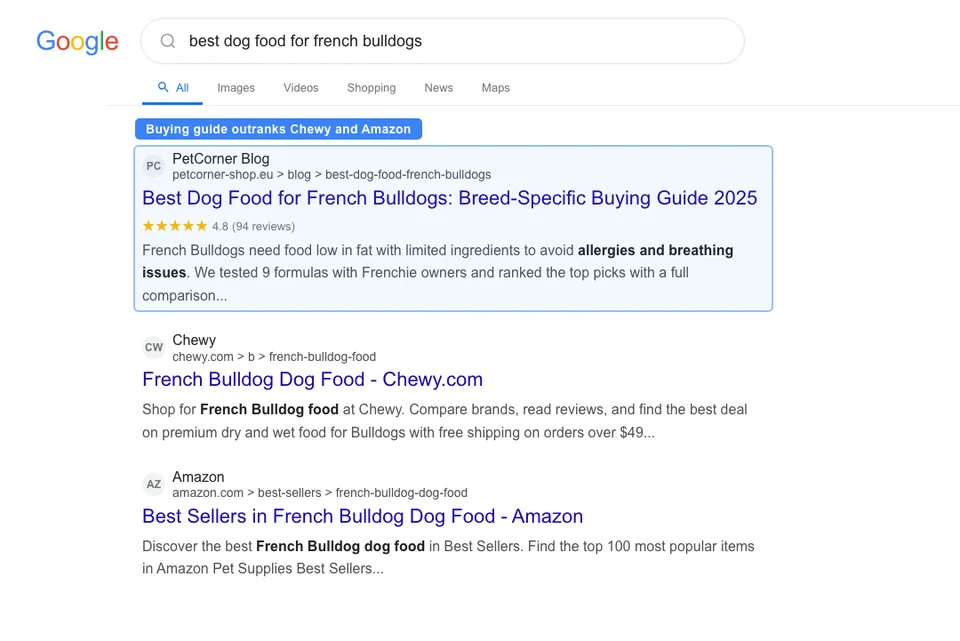
Long-tail keywords like that second example convert at 36%[4] - because the searcher already knows what they need. Compare that to broad, high-volume keywords where conversion rates hover in the low single digits.
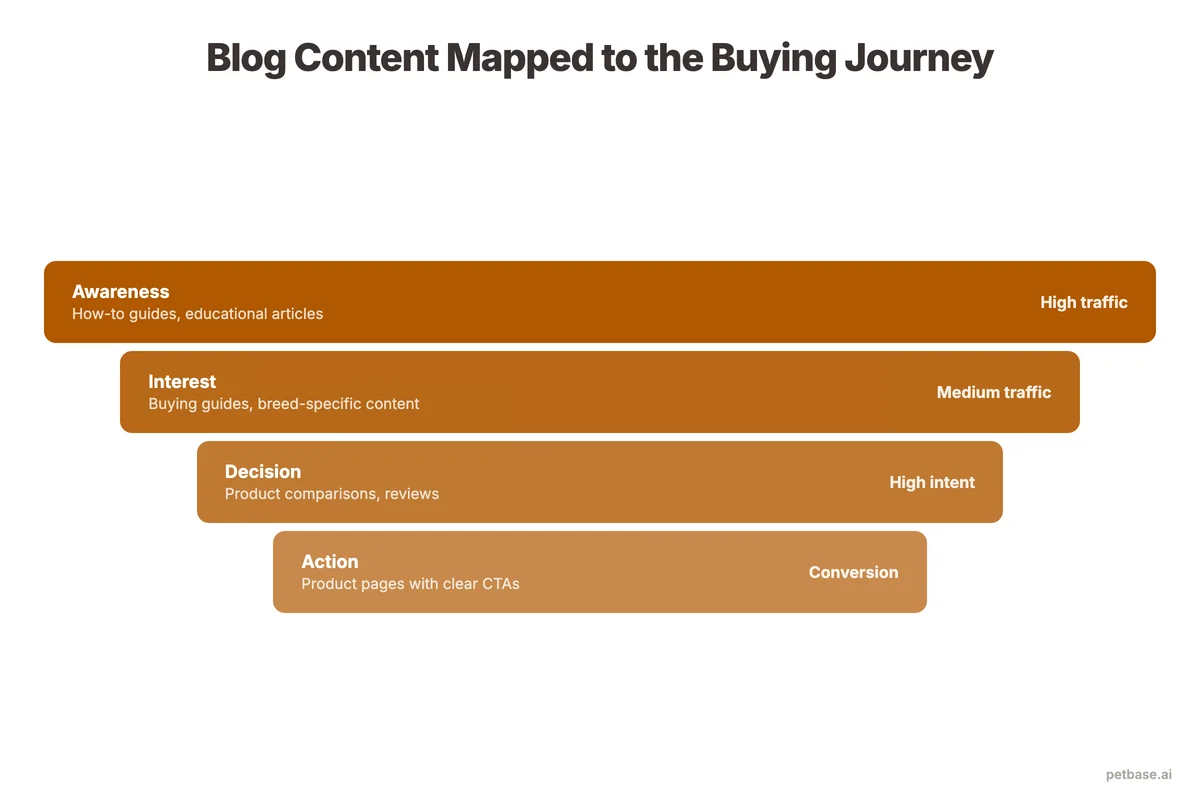
The key is understanding where each content type sits on the intent spectrum:
- Awareness content (low intent): general education, breed facts, industry news. High traffic, low conversion.
- Consideration content (medium intent): how-to guides, problem-solution posts, comparisons. Good traffic, moderate conversion.
- Decision content (high intent): product reviews, buying guides, "best of" lists. Lower traffic, high conversion.
A balanced blog strategy includes all three, but most pet stores over-invest in awareness content and under-invest in decision content. The 12 types below cover the full spectrum, with emphasis on the types that directly drive purchases.
For the complete framework on building a blog that generates both traffic and revenue, see our pet store blog strategy guide.
Petbase automates SEO content for pet stores - publishing 10 optimized articles monthly so you can focus on running your shop - start your free trial.
Type 1: Breed-Specific Buying Guides
Breed-specific buying guides are among the highest-converting blog post types for pet stores. They target pet owners who already have a specific breed and are looking for products tailored to that breed's needs. The search intent is almost always commercial - they are ready to buy, they just need guidance on what to buy.
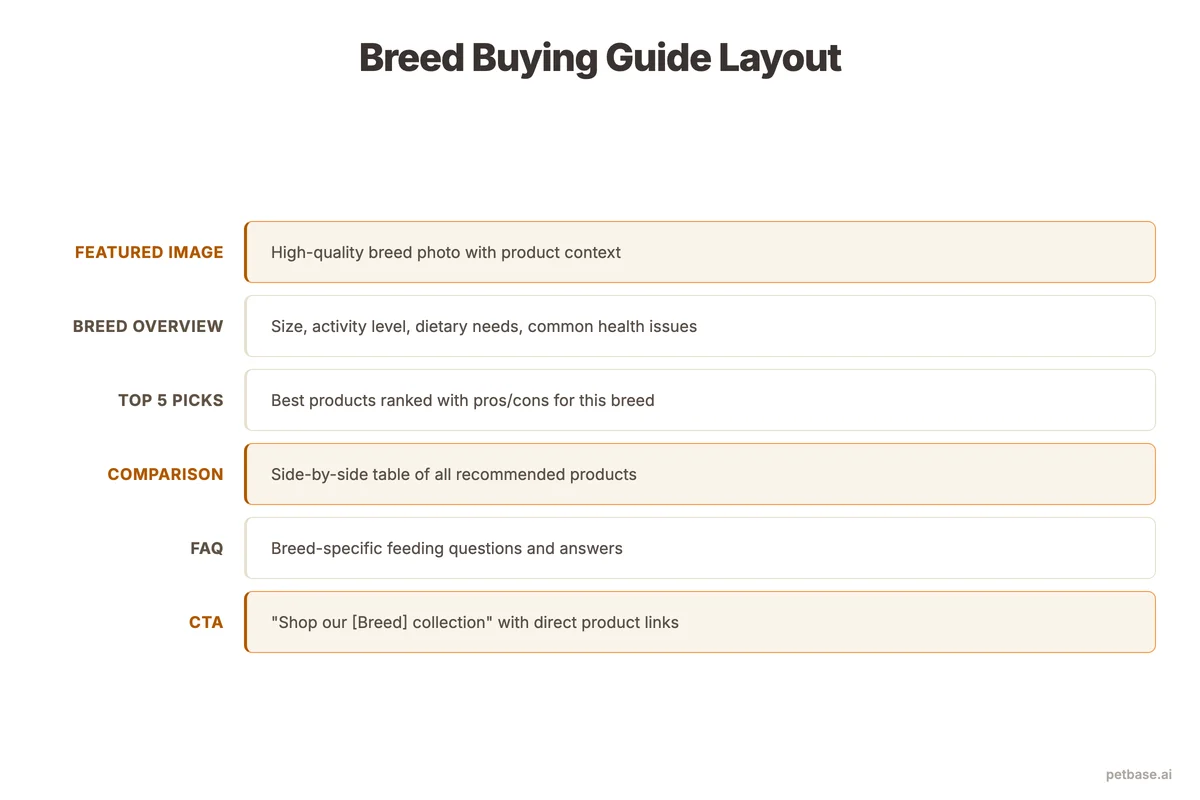
Examples: "Best Dog Food for French Bulldogs," "Essential Supplies for a New Dachshund Puppy," "Complete Gear Guide for Border Collie Owners."
Why they sell: breed owners are emotionally invested in doing right by their specific dog. They trust content that demonstrates breed-specific knowledge and will pay premium prices for products recommended by someone who understands their breed's unique needs.
How to write them: cover 5-7 product categories relevant to the breed. For each category, recommend 2-3 specific products with brief explanations of why they work for that breed. Include a comparison table. Link to your product pages or categories.
Writing one breed guide takes hours of product research and comparison tables. Multiply that by every breed your customers own and you are looking at months of full-time writing. Petbase builds breed-specific buying guides automatically, pulling from its pet industry knowledge model to match the right products to each breed's needs - 10 posts per month, published directly to your store. Start your free trial to see what it writes for your top breed.
Type 2: Product Comparison Posts
Product comparisons capture readers at the exact moment they are deciding between options. "Brand A vs. Brand B" and "Top 5 [Product Category]" posts rank well because they match high-intent searches and provide the decision-making framework readers need.

Examples: "Orijen vs. Acana: Which Is Better for Large Breeds?" "5 Best Elevated Dog Beds Compared," "Harness vs. Collar: What Is Safer for Dogs That Pull?"
Why they sell: the reader has already decided to buy something in this category. They just need help choosing. Your recommendation becomes the deciding factor.
How to write them: use a comparison table with clear criteria (price, features, best for, pros, cons). Be honest about trade-offs - credibility drives conversions more than hype. Include your recommendation at the end with clear reasoning.
Type 3: "Best For" Posts
"Best for" posts combine the specificity of breed guides with the comparison format. They target extremely specific needs and attract readers who are deep in the buying process.
Examples: "Best Dog Food for Sensitive Stomachs," "Best Cat Litter for Small Apartments," "Best Chew Toys for Aggressive Chewers."
Why they sell: these queries indicate a specific problem the reader needs to solve right now. They are not browsing - they are shopping. Long-tail queries like these convert at 36%[4], which is typically 3-5x higher than broad informational content.
How to write them: start by validating the problem (yes, sensitive stomachs are common in certain breeds). Then present 5-7 options with clear differentiation. Include a comparison table and a "quick pick" recommendation at the top for readers who want an immediate answer. For more on optimizing these posts for search, see our guide on keyword research for pet businesses.
Type 4: Seasonal Guides
Seasonal content has predictable traffic spikes that you can plan around. Pet owners search for seasonal topics at the same time every year, creating reliable traffic patterns that you can monetize with timely product recommendations.
Examples: "Summer Safety Kit for Dogs: Everything You Need," "Holiday Gift Guide for Cat Lovers," "Winter Paw Care: Products That Actually Protect."
Why they sell: seasonal urgency drives purchasing behavior. A dog owner reading your summer safety guide in June is likely buying products that week. The time pressure is built into the content.
How to write them: publish seasonal content 4-6 weeks before the season starts so Google has time to index and rank it. Include product bundles or checklists that encourage multi-item purchases. Update and republish each year rather than creating new posts. For seasonal SEO strategy, see our guide on seasonal SEO for pet stores.
Type 5: How-To Posts With Product Integration
How-to posts are the workhorses of content marketing. Content marketing costs 62% less than outbound marketing and generates 3x more leads[5] - and how-to guides are a big reason why. They attract high volumes of traffic from people looking to solve specific problems. The key to making them sell is naturally integrating your products into the solution.
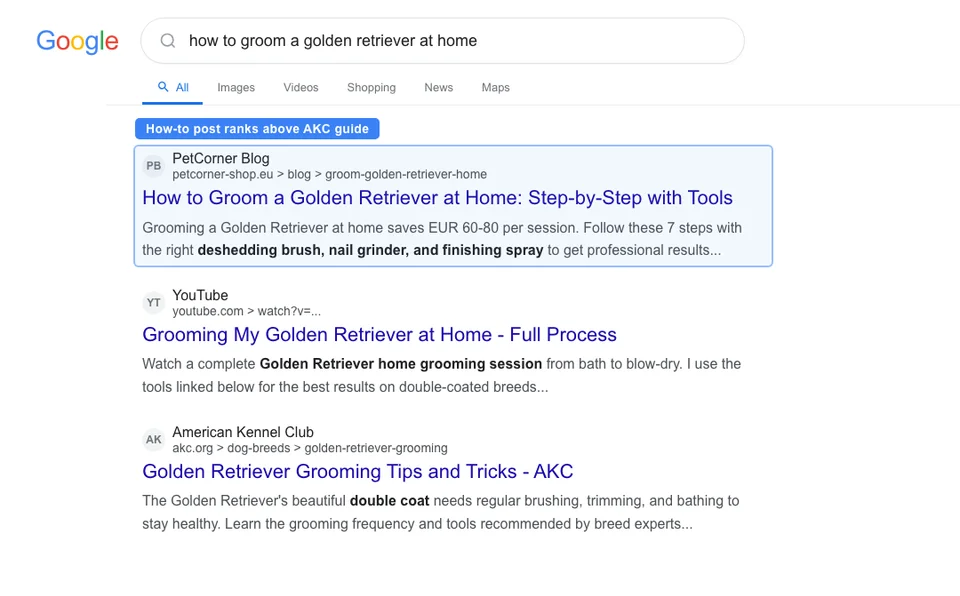
Examples: "How to Groom a Double-Coated Dog at Home," "How to Set Up a New Aquarium Step by Step," "How to Transition Your Dog to Raw Food."
Why they sell: the reader needs specific tools or products to complete the task. If you recommend those products within the tutorial, you become the natural place to buy them. The trust built through helpful instruction transfers directly to product confidence.
How to write them: use numbered steps with clear instructions. At each step where a product is needed, mention it by name with a brief note on why that product works. Do not turn every step into a sales pitch - let the helpfulness of the guide do the selling.
The tricky part is not writing the tutorial. It is knowing exactly where to place product mentions so they feel helpful instead of pushy. Petbase handles this with smart product linking - connecting your actual inventory to the right steps in every how-to post so readers find what they need without feeling sold to.
Type 6: Local Event Roundups
Local event content drives foot traffic to physical pet stores. It captures searches from pet owners looking for activities in their area and positions your store as a community hub.
Examples: "Pet Events in [City] This Weekend," "Dog-Friendly Markets and Fairs in [Region]," "Adoption Events Near [City]: Where to Find Your Next Pet."
Why they sell: local event content brings local pet owners to your site. Even if the event is not at your store, readers discover your business through the content. Include a section on what to bring or buy for the event, linking to products you carry.
How to write them: create a comprehensive calendar format with dates, locations, and descriptions. Update regularly. Include practical tips for attending with pets, and mention relevant products (travel carriers, portable water bowls, car seat covers). For more on local content strategy, see our guide on content marketing for pet businesses.
Type 7: Customer Spotlight Stories
Customer stories build social proof and emotional connection. They show real people (anonymized composites, not identifiable individuals) solving real problems with products from your store.
Examples: "How One Dog Owner Solved Chronic Skin Allergies," "From Picky Eater to Clean Bowl: A Feeding Journey," "First-Time Cat Owner: Building the Perfect Setup."
Why they sell: readers see themselves in the story. When a composite customer profile describes the same problem they are facing and shows how specific products solved it, the path to purchase feels natural and proven.
How to write them: structure as a problem-journey-solution narrative. Describe the challenge, what was tried, and what finally worked. Include specific product mentions and results. Always use anonymized composite profiles - never real customer identities without explicit permission.
Type 8: Vet Q&A Content
Vet-informed content carries the highest trust signals in pet content. Posts that include veterinary perspective on product choices, health topics, and nutrition give readers the confidence to make purchasing decisions.
Examples: "What Vets Say About Grain-Free Dog Food," "Supplements Your Vet Actually Recommends for Senior Dogs," "Vet-Approved Dental Chews: Do They Work?"
Why they sell: veterinary authority removes the last barrier to purchase. When a reader sees that a product aligns with veterinary guidance, they buy with confidence. These posts also rank well because Google values expertise signals in pet health content.
How to write them: consult with a veterinary professional or cite published veterinary sources. Present the expert perspective honestly, including any limitations or caveats. Link to products that meet the criteria discussed. For more on building credibility with health content, see our guide on pet blog SEO.
Type 9: New Product Announcements
New product content captures early search demand and positions your store as a go-to source for the latest products. Pet owners actively search for new releases, especially from popular brands.
Examples: "New Arrivals: Spring Dog Toy Collection," "First Look at [Brand]'s New Grain-Free Formula," "Just In: Best New Cat Furniture for 2025."
Why they sell: new product content attracts both existing customers checking for updates and new visitors searching for specific new items. The novelty factor drives immediate purchasing action.
How to write them: be first to publish. Include detailed product descriptions, photos, pricing, and your honest initial assessment. Compare to existing alternatives so readers can decide whether to upgrade or switch.
Type 10: Complete Care Guides
Comprehensive care guides are long-form content pieces that cover everything a pet owner needs to know about a topic. They generate sustained traffic and include multiple natural product touchpoints. Since organic search drives 53% of all website traffic[6], a thorough care guide with 10-15 internal links creates multiple entry points for Google to send visitors your way.
Examples: "The Complete Guide to Bringing Home a New Puppy," "Everything You Need for a Happy Indoor Cat," "Senior Dog Care: A Year-Round Guide."
Why they sell: care guides cover multiple product categories in a single post. A new puppy guide might reference food, crates, toys, training treats, grooming tools, and health supplements. Each mention is a natural selling opportunity.
How to write them: aim for 3,000+ words covering every aspect of the topic. Use clear sections with product recommendations woven into the advice. Include a checklist or shopping list at the end. These posts become reference resources that readers bookmark and return to.
Type 11: Problem-Solution Posts
Problem-solution posts start with a specific pain point and walk the reader toward a resolution that includes product recommendations. They rank well because they match the exact way pet owners search when something goes wrong.
Examples: "My Dog Will Not Stop Scratching: Causes and Solutions," "How to Stop Your Cat From Peeing Outside the Litter Box," "Dog Pulling on Leash? Here Is What Actually Works."
Why they sell: the reader has an active, urgent problem. They are motivated to spend money to fix it right now. A post that accurately diagnoses the issue and recommends specific products as part of the solution has excellent conversion potential.
How to write them: start by listing possible causes (this builds trust through thoroughness). Then present solutions organized from simplest to most involved. Include product recommendations for each solution path. For more on writing product-focused content, see our guide on writing pet product descriptions that rank and sell.
Type 12: Behind-the-Scenes Content
Behind-the-scenes content humanizes your store and builds the emotional connection that turns one-time buyers into loyal customers. It does not drive direct product sales, but it increases customer lifetime value and brand loyalty.
Examples: "How We Choose the Brands We Carry," "A Day in the Life at [Store Name]," "Why We Stopped Carrying [Product Type] and What We Recommend Instead."
Why they sell (indirectly): transparency builds trust. When customers understand your values, sourcing standards, and expertise, they choose you over competitors - even at a higher price point. This content also performs well on social media, driving referral traffic.
How to write them: be genuine and specific. Do not just say you care about quality - show your evaluation process. Describe a specific decision you made and why. Include photos or details that could not come from a generic business. For broader content strategy, see our guide on pet store SEO.
How to Choose Which Types to Prioritize
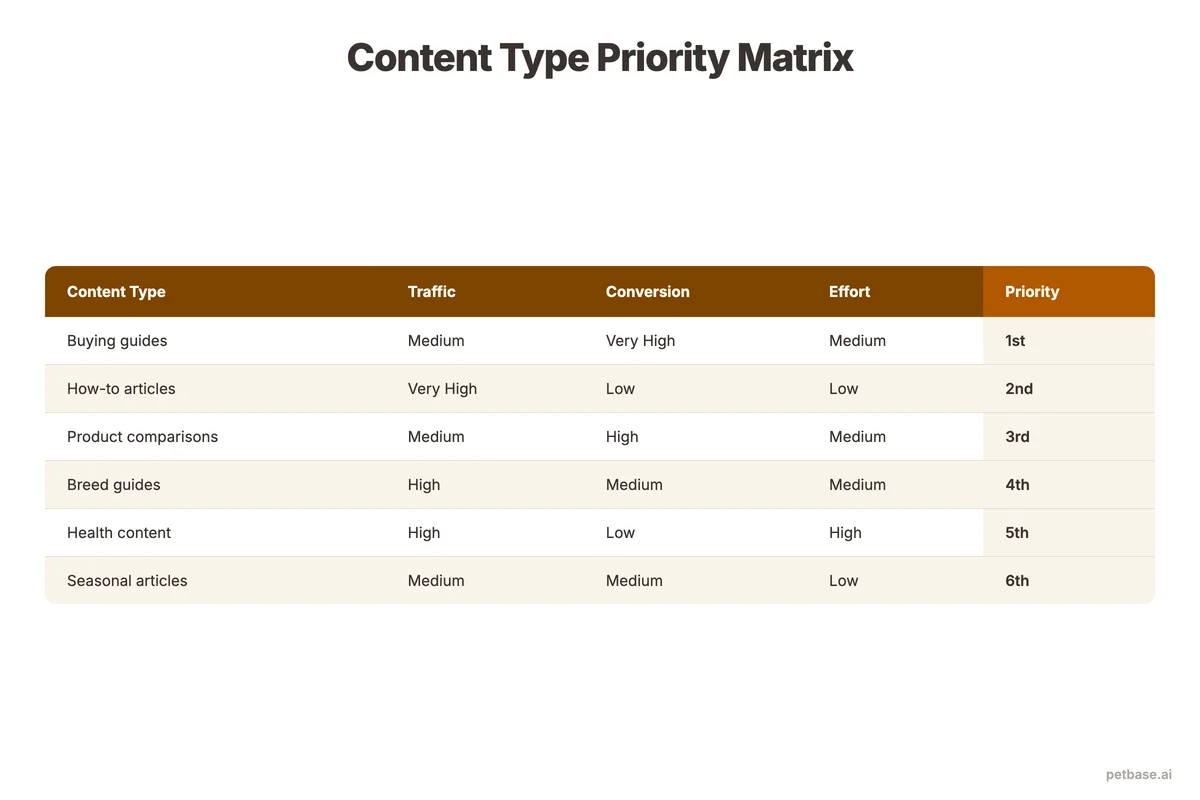
You cannot write all 12 types at once. Prioritize based on your business model, product mix, and where your customers are in their buying journey. Here is a framework for choosing.
| Blog Post Type | Conversion Potential | Effort Level | Best For |
|---|---|---|---|
| Breed-specific buying guides | Very high | Medium | Stores with breed-specific expertise |
| Product comparisons | Very high | Medium | Stores with wide product range |
| "Best for" posts | Very high | Medium | All pet stores |
| Seasonal guides | High | Medium | Stores with seasonal inventory |
| How-to with products | High | Medium-high | Stores with hands-on expertise |
| Local event roundups | Medium-high | Low-medium | Physical stores |
| Customer spotlights | Medium | Medium | Stores with engaged community |
| Vet Q&A content | High | High | Stores with vet partnerships |
| New product announcements | Medium-high | Low | Stores updating inventory often |
| Complete care guides | High | High | All pet stores |
| Problem-solution posts | Very high | Medium | All pet stores |
| Behind-the-scenes | Low (indirect) | Low | Stores building brand identity |
For most pet stores, the best starting mix is: 40% high-intent posts (types 1-3), 30% helpful posts with product integration (types 4-5, 10-11), 20% local and community content (types 6-7), and 10% brand-building content (types 9, 12).
Here is what that looks like in practice at different publishing volumes:
| Posts per Month | High-Intent | Helpful + Products | Local/Community | Brand Building |
|---|---|---|---|---|
| 4 posts | 2 posts | 1 post | 1 post | Rotate monthly |
| 8 posts | 3 posts | 3 posts | 1 post | 1 post |
| 10 posts (Petbase) | 4 posts | 3 posts | 2 posts | 1 post |
Companies publishing 16 or more blog posts per month get 3.5x more traffic than those publishing four or fewer[1]. But keeping up with even 10 posts per month across 4 content categories means planning, researching, writing, and publishing 120 articles per year. For a store owner already running operations, that is a second full-time job.
Petbase delivers this exact mix - 10 SEO-optimized pet industry blog posts per month for EUR 199/mo, covering the full range of content types. It handles keyword research, content creation, and publishes directly to your CMS so you can focus on running your store while your blog drives sales.
Tracking which types drive the most sales
Set up basic attribution tracking to see which blog posts lead to purchases. At minimum, track:
| Metric | Tool | What It Tells You |
|---|---|---|
| Organic traffic by post | Google Analytics | Which posts attract the most visitors |
| Product page clicks from blog | Google Analytics (events) | Which posts drive product interest |
| Conversion rate by landing page | Google Analytics | Which posts lead to purchases |
| Revenue by blog entry point | E-commerce analytics | Actual revenue per blog post |
| Assisted conversions | Google Analytics | Posts that contribute to sales over multiple visits |
Most pet stores will find that Types 1-3 and Type 11 generate the highest direct revenue per post, while Types 5 and 10 generate the highest total revenue due to broader traffic volume. Use this data to continuously refine your content mix.
The ROI of Content-Driven Sales
Content marketing returns $7.65 for every $1 spent, compared to $1.80 for paid advertising[7]. That 4x difference compounds over time because blog posts keep generating traffic months and years after publication, while ad spend stops the moment you pause a campaign.
Content marketing also costs 62% less than outbound marketing while generating 3x more leads[5]. For a pet store spending EUR 2,000-5,000 per month on ads, shifting even a portion of that budget to content creates a durable traffic asset that does not reset to zero each month.
A single well-optimized buying guide or "best for" post can generate 500-1,500 organic visits per month for years. At an average conversion rate of 2-3% and an average order value of EUR 50, one post producing 1,000 monthly visits generates EUR 1,000-1,500 in monthly revenue. Multiply that across 12 strategically chosen post types and the math changes your business.
FAQ
How many of these types should I use at the same time?
Start with 3-4 types that best match your products and audience. Most stores should begin with breed-specific buying guides, "best for" posts, and problem-solution posts - these have the highest conversion potential and are straightforward to write. Add more types as you build your content library and understand what resonates with your audience. Trying to cover all 12 types from the start spreads your effort too thin.
Can blog posts really drive sales for a physical pet store?
Yes. Organic search accounts for 53% of all website traffic[6], and local pet owners use the same search queries as online shoppers. When someone nearby searches "best dog food for sensitive stomachs" and finds your blog post, they discover your store exists. Physical stores actually have an advantage - readers can visit the same day to buy the product you recommended. The blog post replaces the in-store sales conversation, pre-selling the customer before they walk through the door.
Should I mention specific product brands and prices in blog posts?
Yes, mention specific brands. Pet owners search for brand names, and including them helps your post rank for branded queries. Be specific about why you recommend each product - generic "this is great" statements do not build trust. As for prices, include price ranges rather than exact prices, since prices change. Update product posts quarterly to keep pricing and availability current. If a product you recommended is discontinued, update the post with a current alternative rather than leaving outdated information.
How long does it take for blog content to start driving sales?
Expect 8-12 weeks before a new blog post reaches stable search rankings. Posts targeting long-tail, high-intent keywords (types 1-3 and 11) often see initial traffic within 4-6 weeks because competition is lower. Broader informational content (types 5 and 10) takes longer but generates more total traffic once established. The compounding effect matters most: companies with active blogs see 55% more traffic overall[1], with each new post strengthening the authority of every other post on your site.
References
- HubSpot (2024). Marketing Statistics. hubspot.com
- Grand View Research (2024). Pet Care E-Commerce Market Analysis. grandviewresearch.com
- American Pet Products Association (2024). Industry Trends and Stats. americanpetproducts.org
- Embryo (2024). 30 Statistics About Long-Tail Keywords. embryo.com
- Siege Media (2024). Content Marketing Statistics. siegemedia.com
- BrightEdge (2024). How Much Traffic Comes from Organic Search. seoinc.com
- Genesys Growth (2024). Content Marketing ROI Stats for Marketing Leaders. genesysgrowth.com