Why EEAT Matters in Pet Business


Table of Contents +
- What E-E-A-T Means and Why Google Cares
- E-E-A-T Signals by Pillar: What Each One Looks Like for Pet Content
- Experience: Show You Have Done the Work
- Expertise: Depth Over Surface-Level Content
- Authoritativeness: Earning Recognition in Your Niche
- Trustworthiness: The Foundation of Every E-E-A-T Signal
- Technical SEO: The Trust Layer Google Checks First
- E-E-A-T and Local SEO
- E-E-A-T for Different Pet Business Models
- Social Proof as an E-E-A-T Signal
- Measuring E-E-A-T Impact
- Building a Long-Term E-E-A-T Strategy
- Conclusion
- FAQs
Why EEAT matters for pet businesses and how expertise, authority and trust improve your visibility. Practical Petbase insights.
E-E-A-T (Experience, Expertise, Authoritativeness, Trustworthiness) is Google's framework for evaluating content quality. For pet businesses, it determines whether your articles, product pages, and guides rank or get buried. Pet care falls into Google's "Your Money or Your Life" category, meaning E-E-A-T signals carry extra weight and can directly affect your visibility in search results.
Organic search drives 53% of all website traffic[1]. If your site does not send strong E-E-A-T signals, you are handing that traffic to competitors who do. This guide breaks down each pillar with concrete actions for pet businesses - groomers, trainers, retailers, and online shops.
What E-E-A-T Means and Why Google Cares
The Four Pillars
E-E-A-T stands for Experience, Expertise, Authoritativeness, and Trustworthiness. Google's Search Quality Evaluator Guidelines use these four pillars to assess whether content deserves to rank. The framework applies to every niche, but it carries more weight in categories where bad advice causes real harm - pet health, nutrition, and medication included.
Google's goal is to deliver accurate, reliable information. When it comes to pets, poor advice can lead to serious health issues or behavioral problems. That is why Google favors content backed by credentials, real experience, and user trust.
Why It Matters Now More Than Ever
The global pet care market is valued at $273.42 billion[2]. As competition grows, standing out in search results requires more than a good-looking website. You need to prove your expertise to both Google and your customers. Yet 61% of small businesses are not investing in SEO at all[3] - which means the ones that do invest have a real advantage.
Petbase writes and publishes this kind of content automatically - 10 SEO articles per month for pet businesses - start your free trial.
E-E-A-T Signals by Pillar: What Each One Looks Like for Pet Content
Understanding what each signal looks like in practice helps you apply them to your own site. The table below breaks down each pillar with concrete pet-industry examples.
| E-E-A-T Pillar | What It Means | Strong Signal (Pet Example) | Weak Signal (Pet Example) |
|---|---|---|---|
| Experience | First-hand involvement with the topic | A groomer writing about breed-specific coat care from 8 years of hands-on work | Generic listicle with no author bio or professional context |
| Expertise | Depth of knowledge in the subject area | A vet tech explaining why certain ingredients cause allergies, with citations | Vague product descriptions with no ingredient breakdown or safety context |
| Authoritativeness | Recognition and reputation within the niche | Other pet blogs and vets linking to your content as a reference | No backlinks, no mentions, no external validation |
| Trustworthiness | Accuracy, transparency, and site credibility | HTTPS site, clear return policy, real team bios, verified customer reviews | No contact page, no author attribution, no security certificate |
Use this as a self-audit checklist. If any pillar is weak on your site today, that is your starting point. For a deeper look at how pet health topics specifically require strong trust signals, see our post on the type of pet health content Google rewards.
Experience: Show You Have Done the Work
What Counts as Experience?
Experience is the first E in E-E-A-T, added by Google in late 2022. It asks: has the author actually done the thing they are writing about? For pet businesses, this means showing real, hands-on involvement - not just restating what other websites say.
Google distinguishes between formal and everyday expertise:
- Formal expertise includes certifications, licenses, or degrees (for example, a certified vet writing about pet health).
- Everyday expertise involves lived experience or demonstrable knowledge (for example, a trainer with 10 years of hands-on work with dogs).
What matters is authenticity. If you sell dog treats, have you documented how you sourced the ingredients, consulted animal nutritionists, or tested your products? These are signals of real experience.
How Pet Businesses Demonstrate Experience
- Pet food brands publish detailed ingredient breakdowns, cite studies, and feature veterinary advisors on their websites.
- Dog trainers offer case studies, client success stories, and video tutorials that reflect years of hands-on work.
- Pet grooming salons blog about grooming techniques, showcase before-and-after transformations, and offer breed-specific advice - and often dominate local search results because of it.
The more real, useful knowledge you share - and the more it is backed by credentials or proof - the more Google sees your brand as a trusted source.
Expertise: Depth Over Surface-Level Content
Why Thin Content Fails
Publishing lots of short, keyword-stuffed blog posts does not work. Google's E-E-A-T framework penalizes thin, low-value, or duplicate content - especially in industries where incorrect information could harm users or their pets.
Common mistakes include repeating generic advice found on every other site, citing no sources for health or behavioral tips, and publishing 300-word posts on topics like "best dog food" with no ingredient breakdowns or expert input.
Companies with active blogs get 55% more website traffic and 67% more leads than those without[4]. But the quality bar matters. If your content does not demonstrate deep knowledge, it will not rank - no matter how often you publish.
Content Types That Prove Expertise
Focus on content that reflects your daily work with animals, customers, and industry challenges:
- How-to guides: "How to calm an anxious dog during fireworks" is both practical and search-friendly.
- Behind-the-scenes posts: Show how you prepare for a grooming session or walk through a training consultation.
- Case studies: Detail how you helped a difficult pet improve, with before-and-after results.
- Video content: Tutorials, pet care tips, or day-in-the-life content establishes credibility in a relatable way.
Consistency matters. A regular publishing schedule tells both users and Google that your site is active and trustworthy. For a deeper look at how to structure content around topics instead of random keywords, see our guide on content clustering for pet websites.
Authoritativeness: Earning Recognition in Your Niche
Building Authority Through Content and Links
Authority does not happen overnight. It is built over time with consistent, valuable content that gets noticed and referenced. The #1 result on Google has 3.8x more backlinks than positions 2 through 10[5]. And 90% of marketers use content creation as their primary link-building strategy[6].
Pet businesses that dominate Google are not just lucky - they publish regularly. They create blog posts optimized for long-tail pet keywords, infographics that explain common pet problems, and free guides that solve pet parent pain points. All of this content positions your brand as a go-to resource. The more people reference your content, the more authoritative your site becomes in Google's evaluation. Check out the latest pet industry SEO trends to see what content formats are gaining the most authority right now.
External Validation: Reviews, Endorsements, and Certifications
Authoritativeness also comes from external validation:
- Get featured on reputable sites or collaborate with trusted voices in the industry.
- Collect and showcase customer testimonials - real stories, with photos and names where possible.
- Join pet industry associations, attend events, and earn certifications that lend credibility.
When others vouch for your business - whether customers or institutions - it strengthens your authority with both users and search engines. For practical link-building tactics, see our guide on how to build backlinks for your pet store.
Trustworthiness: The Foundation of Every E-E-A-T Signal
Trust Signals That Convert Visitors Into Buyers
Trust is the foundation that holds everything together. Without it, even the most expert content falls flat. 93% of consumers read online reviews before buying from a local business[7]. That number alone shows how much weight people place on trust before spending money.
What do pet parents look for when evaluating a website?
- Transparent About Us pages explaining who you are and why you do what you do.
- Visible contact info, physical address, and customer service channels.
- Clear return and refund policies for pet products.
- Secure checkout and privacy protection (especially for e-commerce pet sites).
- Real photos of your team, facilities, or happy pet customers - not stock images.
These details can drastically improve conversion rates and reduce bounce times. People buy from businesses they feel safe with.
How Transparency Drives Trust
If you make a mistake or receive a bad review, do not hide it. Address it publicly and professionally. Pet owners value honesty and accountability.
Share your sourcing practices, safety protocols, or behind-the-scenes looks into your business. When customers see you have nothing to hide, trust increases - and so does loyalty. For a full guide on managing your online reputation, see our post on online reviews for pet stores.
Technical SEO: The Trust Layer Google Checks First
Mobile Optimization and UX
Most people searching for pet services or products are doing it from their phones. Google prioritizes mobile-first indexing, which means the mobile version of your site is what Google evaluates first. If it is slow, hard to navigate, or broken on mobile, your rankings suffer - even if your content is excellent.
What pet businesses need to do:
- Ensure responsive design: Your site should adapt smoothly to all screen sizes.
- Simplify navigation: Make it easy to find services, products, and contact info on mobile.
- Speed up load times: Compress images without sacrificing quality and minimize code bloat.
- Use mobile-friendly CTAs: Large, clear buttons for bookings, calls, or purchases improve engagement.
For a complete technical audit framework, see our guide on technical SEO for pet websites.
Schema Markup and Structured Data
Schema markup can increase click-through rates by up to 30%, yet only 30% of websites use it[8]. Adding structured data - such as LocalBusiness, Product, or FAQ schema - helps Google understand your content and display rich results in search. That means star ratings, prices, and FAQ answers can appear directly in the search listing, giving your site a visual advantage over competitors who skip this step. For implementation details, see our post on schema markup for pet stores.
HTTPS as a Trust Factor
Security is a direct part of E-E-A-T. At a minimum, your website must use HTTPS. Without it, both Google and your users see a warning - not a trust booster.
A secure site protects user data, reduces bounce rate (users stay longer when they feel safe), and provides a minor but confirmed ranking boost from Google. Showcase trust badges like SSL Secured or affiliations with known pet organizations to make your credibility visible.
E-E-A-T and Local SEO
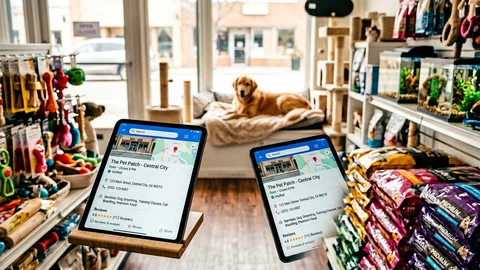
Google Business Profile for Pet Services
For local pet businesses - grooming salons, vet clinics, training centers - Google Business Profile (GBP) is your digital front door. It is often the first impression potential customers get, and it is packed with E-E-A-T signals.
Your GBP should be:
- Complete: Add photos, hours, services, pricing, and location.
- Updated regularly: Post updates, offers, or service changes.
- Review-rich: Encourage happy customers to leave detailed reviews.
Add your credentials, highlight certified trainers or licensed vets on staff, and upload real pet photos from satisfied clients. These build trust and credibility before a user even visits your website. For a full GBP optimization guide, see our post on Google Business Profile for pet stores.
Local Backlinks, Citations, and Reviews
To improve E-E-A-T at a local level:
- Local backlinks: Get listed on neighborhood directories, chamber of commerce sites, or local pet blogs.
- NAP consistency: Make sure your business Name, Address, and Phone Number are identical across all platforms.
- Online reviews: Responding to reviews - positive and negative - shows engagement and transparency.
A well-optimized GBP with strong reviews and accurate citations can help a local pet groomer outrank national chains in nearby searches. For more on local visibility, see our guide on local SEO for pet businesses.
E-E-A-T for Different Pet Business Models
Service Businesses: Groomers, Trainers, and Daycares
Each type of pet service business can tailor E-E-A-T differently:
- Groomers: Showcase before-and-after transformations, client testimonials, and certifications in pet aesthetics or safety.
- Trainers: Share video tutorials, detailed training methods, and stories of challenging pets you have helped.
- Daycares: Focus on safety procedures, staff training, pet-to-handler ratios, and client feedback.
Emphasize pet-specific knowledge. A daycare that documents how it manages both high-energy puppies and elderly dogs with mobility issues demonstrates well-rounded expertise.
Online Retailers and Subscription Boxes
If you sell products online, your E-E-A-T efforts should go into:
- Detailed product descriptions written or reviewed by experts.
- Ingredient sourcing and ethical production practices.
- Customer reviews and Q&A sections to build trust.
- Shipping transparency and a clear return policy.
You can also publish blog posts that support your products - for example, a post on why hypoallergenic dog treats matter, linking back to your product line. It is not just content; it is contextual authority. For tips on writing product copy that ranks, see our guide on writing pet product descriptions that rank and sell.
Social Proof as an E-E-A-T Signal
Customer Testimonials and User-Generated Content
Social proof is one of the most effective trust-building tools a pet business can use. People trust other people - especially when it comes to their pets.
Here is how to use customer testimonials effectively:
- Add them to product pages: Include verified reviews under each item.
- Use photo and video testimonials: A video of a happy customer with their well-groomed dog is far more persuasive than plain text.
- Include names and photos: A first name alongside a photo of a pet is more credible than an anonymous quote.
Encourage customers to post on Instagram or TikTok using your branded hashtag and share those posts (with permission) on your website. These act as authentic endorsements and are E-E-A-T-friendly because they are organic and real.
Social Media as a Credibility Engine
Regularly posting pet tips, behind-the-scenes content, and engaging with followers shows you are active, informed, and invested in your community. Answer pet-related questions in comments, organize content into highlights (FAQs, Meet the Team, Pet Tips), and collaborate with micro-influencers in the pet space. The more social validation you have, the more credible your brand appears to both customers and Google.
Measuring E-E-A-T Impact
Tools and KPIs to Track
You cannot improve what you do not measure. Track how E-E-A-T efforts affect your site with:
- Google Search Console: Check keyword rankings and click-through rates.
- Google Analytics: Monitor bounce rate, time on site, and conversion rates.
- SEO tools: See how your content ranks compared to competitors and where you are earning backlinks.
Focus on KPIs like organic traffic growth, high-intent keyword rankings, lead conversions or sales, and review volume. Also look at behavioral signals like time on page and repeat visits. These show that users not only found your content but trusted and engaged with it. For a full tracking setup, see our guide on tracking your pet store Google rankings.
Building a Long-Term E-E-A-T Strategy
Invest in Quality Over Quantity
Hiring a generic freelancer to write "10 Tips for Training Your Puppy" saves money now but does not deliver lasting value. Instead, invest in writers with pet industry experience, vets or trainers who can contribute or consult, and content editors who ensure accuracy and SEO best practices.
High-quality content is your most valuable digital asset - treat it that way. Petbase delivers 10 strategically planned articles per month for EUR 199/mo, each built around topic clusters that compound over time instead of random keyword targets.
Periodic Audits and Content Refreshes
Google rewards fresh content. Make it a habit to:
- Audit old posts and update outdated facts or references.
- Add expert quotes or new images to evergreen content.
- Optimize for new keywords based on search trends.
Set a quarterly schedule to keep your content relevant. E-E-A-T is not a one-time push - it is a sustained commitment. For a step-by-step refresh process, see our guide on updating old pet store blog posts.
Conclusion
E-E-A-T is the backbone of digital success for pet businesses. Whether you run a local grooming salon, a nationwide pet supply shop, or a niche cat behavior consultancy, implementing E-E-A-T principles will improve your credibility, visibility, and customer loyalty.
From showcasing real expertise and earning backlinks to building trust through transparency and technical SEO, E-E-A-T is a complete approach that drives both search performance and real-world business results. 61% of small businesses are not investing in SEO yet[3]. That is your window. Start weaving E-E-A-T into every aspect of your online presence now - before your competitors do.
References
- Organic search drives 53% of all website traffic
- Global pet care market valued at $273.42B
- 61% of small businesses are not investing in SEO
- Companies with blogs get 55% more traffic and 67% more leads
- #1 Google result has 3.8x more backlinks than positions 2-10
- 90% of marketers use content creation for link building
- 93% of consumers read reviews before buying locally
- Schema markup increases CTR by up to 30%, only 30% of sites use it
FAQs
How can small pet businesses build E-E-A-T?
Start by publishing high-quality, experience-based content, collecting real customer reviews, and showcasing credentials like certifications or staff bios. Even local businesses can dominate with trust and authority. The key is consistency - one strong post per week outperforms five thin posts published in a rush.
Is E-E-A-T only important for SEO?
No. E-E-A-T benefits your entire brand reputation. It helps increase conversions, build customer loyalty, and reduce refund rates because people are more confident buying from trustworthy sources. A strong E-E-A-T strategy also reduces the cost of paid acquisition over time, since organic traffic compounds.
How often should I update my website content for E-E-A-T?
Aim for a quarterly content audit. Refresh stats, add new insights, update product pages, and delete or merge underperforming posts to keep your content relevant. Google's quality raters pay attention to last-updated dates, especially on health-related pet content.
Does having a vet on staff help with E-E-A-T?
Yes. A certified vet adds instant credibility and expertise, especially for pet health content. Feature their name, bio, and contributions across your site. Even a consulting relationship - where a vet reviews your content - counts as a strong E-E-A-T signal if you disclose it clearly.
Can social media engagement impact E-E-A-T?
Yes. Active, authentic engagement on platforms like Instagram or Facebook acts as social proof, which can indirectly boost trust signals and brand authority. Social media also drives external links back to your site from bloggers and journalists who discover your content there.
What types of pet content require the strongest E-E-A-T signals?
Any content touching pet health, nutrition, medication, or behavioral intervention carries the highest E-E-A-T requirements. Google classifies these as YMYL (Your Money or Your Life) topics. Articles covering topics like safe flea treatments, dog food ingredient safety, or signs of illness in cats need author credentials, cited sources, and a clear review date to compete. For a full breakdown, see our guide on pet health content Google trusts.