Google Rankings for Pet Stores: A Realistic Timeline

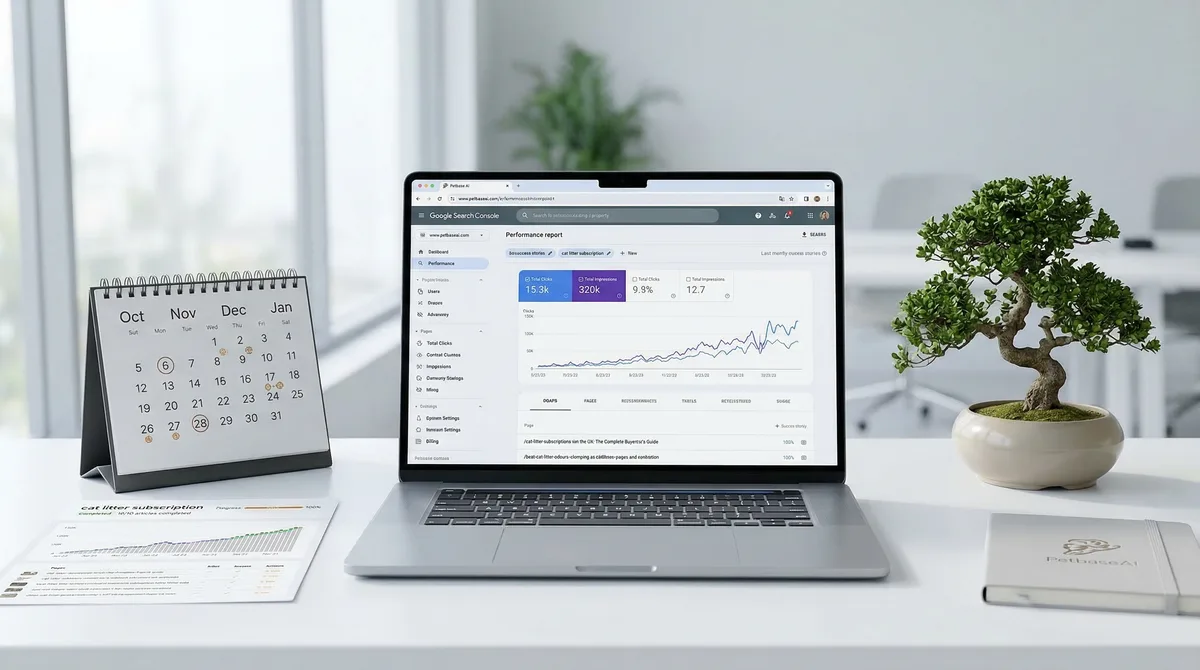
Table of Contents +
- How Long Does It Actually Take for a Pet Store to Rank?
- What Factors Determine How Fast You Will Rank?
- Week 1-4: What Happens After You Start
- Week 4-8: When Google Starts Paying Attention
- Week 8-12: When Rankings Begin to Show
- Month 3-6: When Traffic Starts Compounding
- What Slows Down Pet Store Rankings?
- What Speeds Up Pet Store Rankings?
- How to Set Realistic SEO Expectations
- FAQ
- References
See the realistic timeline for pet store SEO results. Week-by-week breakdown of what to expect from Google rankings and what speeds up progress.
Organic search drives 53% of all website traffic[1]. For pet stores, that means more than half your potential customers start with Google. Yet 61% of small businesses are still not investing in SEO[2]. That gap is your advantage - if you understand the timeline and commit to it.
Every pet store owner who starts investing in SEO asks the same question: how long until I see results? The honest answer is that it depends - but not in the vague way most agencies say it. There are specific factors that determine your timeline, predictable milestones along the way, and clear signals that tell you whether your efforts are working or stalling.
This guide lays out a realistic, week-by-week timeline for pet store SEO results. No inflated promises, no generic advice. Just what actually happens when a pet store starts publishing optimized content and building its online presence.
How Long Does It Actually Take for a Pet Store to Rank?
For most pet stores starting from a low baseline, expect 8-12 weeks before you see meaningful ranking improvements, and 3-6 months before organic traffic becomes a consistent source of visitors and revenue. That is the honest range. Anyone promising page-one rankings in 2 weeks is either targeting zero-competition keywords or misleading you.
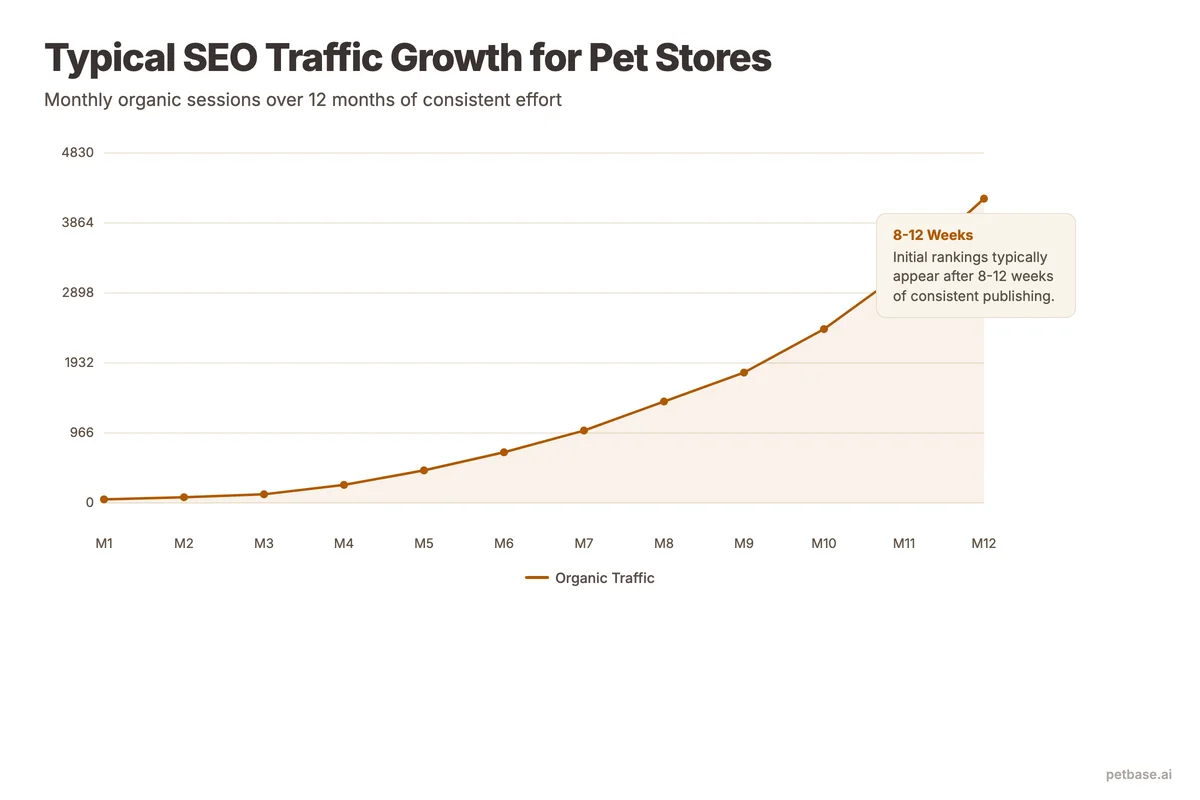
The timeline varies based on several factors, but here is the general pattern:
| Timeframe | What Happens | Typical Results |
|---|---|---|
| Week 1-4 | Foundation - indexing, initial content, technical fixes | Pages indexed, minimal ranking movement |
| Week 4-8 | Google starts evaluating - crawling patterns, initial positions | Pages appearing on page 3-5, impressions growing |
| Week 8-12 | Rankings begin to move - content authority building | Some pages reach page 2, long-tail keywords ranking |
| Month 3-6 | Compounding - topical authority kicks in | Page 1 rankings for targeted terms, traffic growing weekly |
| Month 6-12 | Maturity - established authority | Consistent page 1 rankings, traffic compounds month over month |
The most important thing to understand is that SEO results are not linear. You will see almost nothing for the first several weeks, then a slow trickle, then a noticeable acceleration. The stores that succeed are the ones that keep publishing through the quiet early weeks.
Petbase automates SEO content for pet stores - publishing 10 optimized articles monthly so you can focus on running your shop - start your free trial.
What Factors Determine How Fast You Will Rank?
Not every pet store starts from the same position. A store with an established website, some existing content, and a few backlinks will see results faster than a brand-new site with no history. The global pet care market is worth $273.42 billion[3], and competition for visibility is growing every year. Here are the factors that most influence your timeline.
| Factor | Faster Rankings | Slower Rankings |
|---|---|---|
| Domain age | 2+ years with existing content | Brand new domain (under 6 months) |
| Existing content | 20+ indexed pages | Under 5 pages total |
| Backlink profile | Some quality local and industry links | Zero or very few backlinks |
| Technical health | Fast, mobile-friendly, properly indexed | Slow, errors, poor mobile experience |
| Competition level | Small city, niche keywords | Major metro, broad keywords |
| Content frequency | 8-10 posts per month | 1-2 posts per month |
| Content quality | Expert, detailed, well-structured | Thin, generic, poorly optimized |
| Local SEO setup | Optimized GBP, consistent citations | No GBP or incomplete profile |
Most pet stores fall somewhere in the middle. They have a website that has been around for a year or two, a handful of pages, and a basic Google Business Profile. From that starting point, the 8-12 week timeline for initial rankings is realistic.
Backlinks play a measurable role in how fast you climb. Pages that rank #1 on Google have 3.8x more backlinks than pages in positions 2-10[4]. You do not need hundreds of links, but building 5-10 quality links from local pet organizations and industry directories early on makes a real difference in your timeline.
For a complete view of your competitive landscape, see our pet store SEO playbook.
Week 1-4: What Happens After You Start
The first month is about laying the foundation. You will not see ranking improvements during this period, and that is completely normal. This is the phase where most pet store owners get anxious and want to quit - but quitting now means wasting everything you have already set up.
What you should be doing
- Technical audit and fixes. Make sure your site loads fast, is mobile-friendly, has proper meta tags, and is free of crawl errors. Speed matters: 53% of mobile visitors leave a page that takes longer than 3 seconds to load, and every 0.1 seconds of improvement can lift conversions by 8.4%[5]. Fix any broken links, missing alt text, or duplicate content issues.
- Google Business Profile optimization. Complete every field, add photos, set accurate hours, and start collecting reviews. Your Google Business Profile is critical for local rankings. 93% of consumers say online reviews influence their purchasing decisions[6], so getting those first reviews early creates a compounding advantage.
- Publish your first 4-6 blog posts. Target long-tail keywords with clear search intent. Long-tail queries make up 70% of all searches and convert at 36% - far higher than broad terms[7]. Focus on your core product categories and the questions customers ask most often.
- Set up Google Search Console. This is where you will track your progress. Submit your sitemap and monitor indexing status.
- Build initial citations. Get your business listed on pet industry directories, local business directories, and review sites with consistent NAP information.
What to expect
Google will crawl and index your new pages within a few days to two weeks. You might see some impressions in Search Console, but clicks will be near zero. Your pages will appear at positions 50-100+ for most keywords. This is normal - Google is still evaluating your content.
Do not make the mistake of checking rankings daily. Set a weekly check-in using Search Console and focus your energy on creating more content.
Week 4-8: When Google Starts Paying Attention
Around week 4, you will notice the first signs of life. Google has indexed your content, started establishing crawl patterns for your site, and is beginning to evaluate where your pages fit in the search results. This is the phase where patience gets tested most.
What you should see
- Impressions growing in Search Console. Your pages are showing up in search results, even if users are not clicking yet. Growing impressions mean Google is testing your content for various queries.
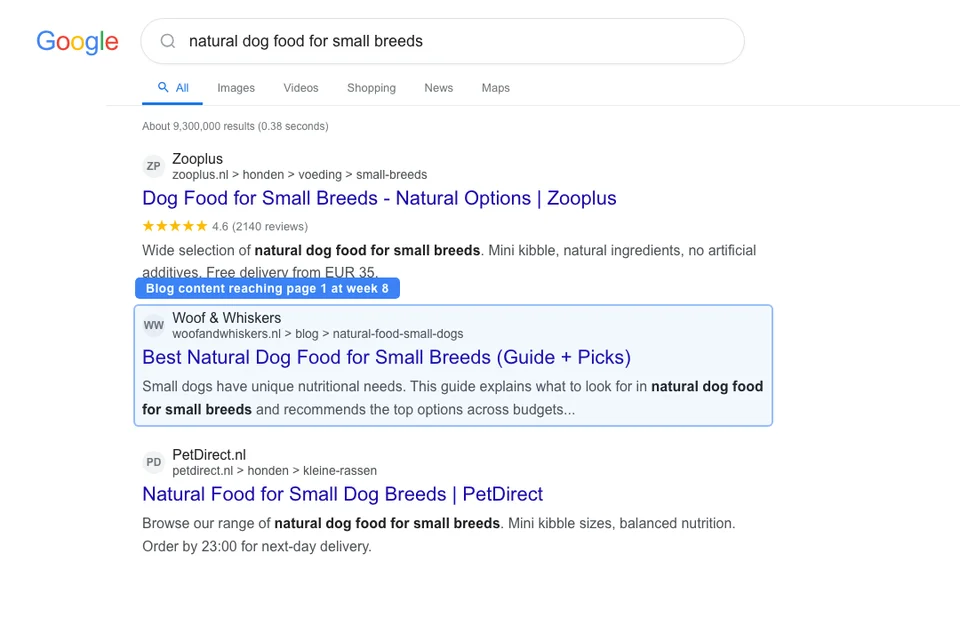
- Positions on page 3-5. Your best-optimized posts will start appearing somewhere between position 20 and 50. This might seem discouraging, but it is actually a strong signal - Google is ranking your content, just not on page one yet.
- Long-tail keywords showing up. You will rank for variations of your target keywords that you did not specifically target. Since long-tail queries convert at 36%[7], even a handful of these rankings can generate real sales.
- Crawl frequency increasing. Check your crawl stats in Search Console. Google should be visiting your site more frequently as you add content.
What you should be doing
- Keep publishing. Aim for 2-3 new posts per week if possible, or at minimum 1 per week. Each new post strengthens your site's topical authority and gives Google more content to evaluate.
- Build internal links. As your content library grows, link new posts to existing ones and go back to add links from older posts to newer ones. This helps Google discover and value all your content.
- Start building backlinks. Reach out to local pet organizations, event organizers, and community sites. Pages with strong backlink profiles rank significantly higher[4], and even a few quality local links can accelerate your timeline.
For strategies on building topical authority through content clusters, see our guide on content clustering for pet websites.
Week 8-12: When Rankings Begin to Show
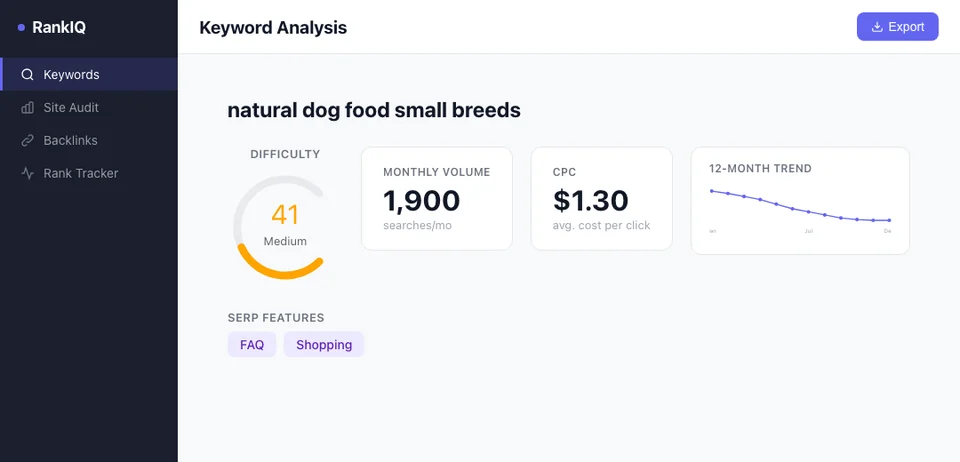
This is when the early investment starts to pay off visibly. Posts that were sitting on page 3-4 begin climbing to page 2, and your best long-tail content starts appearing on page 1. You will see your first organic clicks turning into real visitors.
What you should see
- Page 1 rankings for long-tail keywords. Specific, lower-competition queries like "best grain-free dog food for French Bulldogs" or "how to set up a hamster cage for beginners" will hit page 1 before broader terms.
- Click-through rate improving. As your positions improve, your CTR will increase. Moving from position 15 to position 8 can triple your clicks for a given keyword.
- Organic traffic becoming measurable. You should see a clear upward trend in organic sessions. It might be 50-100 visits per week at this point, but the trajectory matters more than the absolute number.
- Google discovering more of your content. Pages you published in week 2 that seemed stuck may suddenly jump 20-30 positions. This "ranking jump" happens when Google recalculates your site's overall authority.
What you should be doing
- Optimize your best performers. Identify the posts that are closest to page 1 (positions 8-15) and improve them. Add more detail, update the content, improve internal linking, and strengthen the title tag and meta description.
- Expand your content clusters. If your dog nutrition cluster is performing well, add more supporting articles. If cat care is lagging, investigate whether the competition is too strong or the content needs improvement.
- Track and document everything. Start a simple spreadsheet tracking keyword positions weekly. This data will show you which strategies work and help you make smarter decisions going forward.
For guidance on tracking your progress, see our article on tracking pet store Google rankings.
Month 3-6: When Traffic Starts Compounding
This is where SEO becomes genuinely exciting. Your earlier posts have matured, your topical authority is established, and new content ranks faster because Google already trusts your site on pet-related topics. Traffic growth becomes exponential rather than linear.
What you should see
- Multiple page 1 rankings. Your best content clusters should have several posts ranking on page 1. This drives significant traffic because you own multiple spots in the search results for related queries.
- New posts ranking faster. While your first posts took 8-12 weeks to rank, new posts on established topics may reach page 1 in 3-4 weeks. This is the topical authority dividend.
- Organic traffic growing 20-40% month over month. The compounding effect means each month builds on the last. A store that had 200 organic visitors in month 3 might have 500 in month 5 and 1,000+ by month 6.
- Conversions from organic traffic. Visitors are finding your product-related content, clicking through to product pages, and buying. This is when SEO starts paying for itself.
This compounding effect is why consistency matters so much. Companies publishing 16 or more blog posts per month get 3.5x more traffic than those publishing four or fewer[8]. The stores that publish 10 articles per month for 6 months build an asset that generates traffic for years. The stores that publish 5 articles and stop never reach the compounding phase.
What Slows Down Pet Store Rankings?
Even with a solid strategy, certain mistakes and circumstances can delay your results. Knowing what slows you down helps you avoid common traps that waste months of effort.
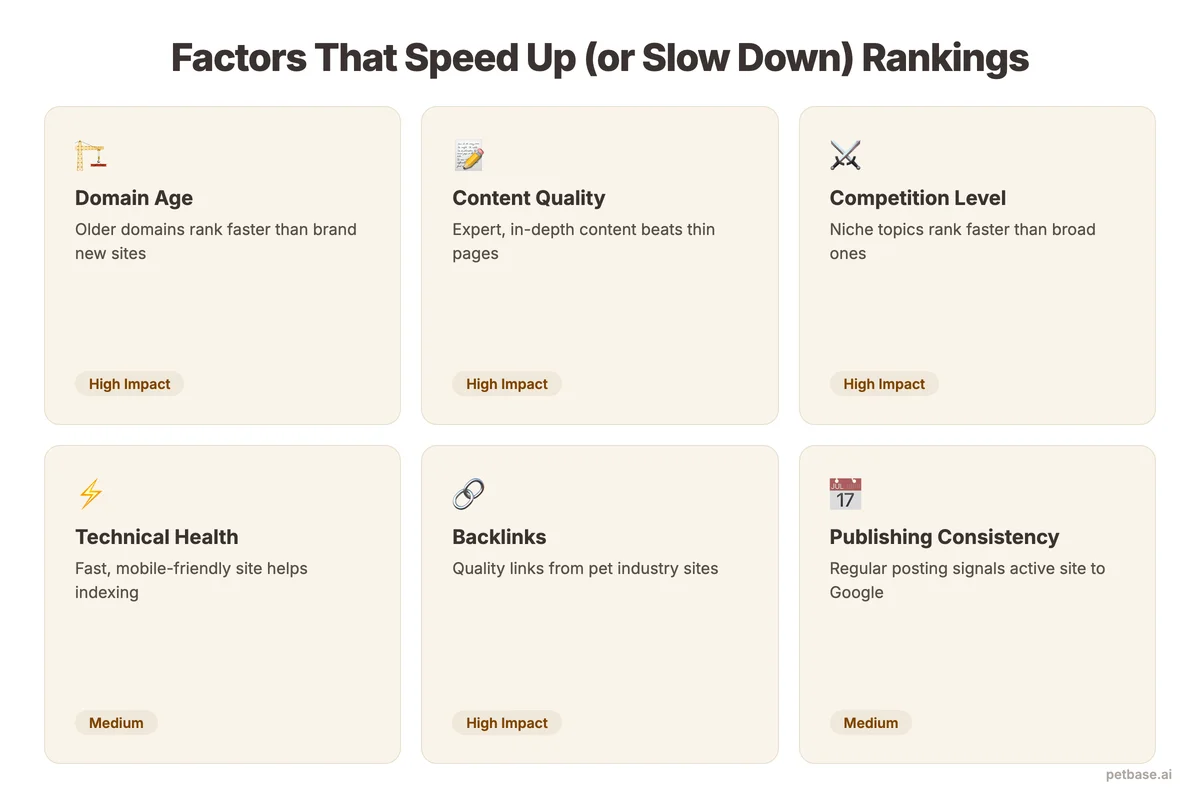
- Inconsistent publishing. Publishing 8 posts in January and zero in February resets your momentum. Google looks for consistent signals of an active, maintained website.
- Targeting keywords that are too competitive. Going after "dog food" (millions of searches, dominated by Amazon and Chewy) instead of "best dog food for Dachshunds with sensitive stomachs" wastes your effort on fights you cannot win yet. Long-tail keywords make up 70% of all search queries[7] - that is where small pet stores win.
- Technical issues. Slow page speed, mobile usability problems, broken links, and crawl errors all slow down your rankings. A 0.1-second improvement in load time can lift conversions by 8.4%[5]. Fix technical issues before investing heavily in content.
- Thin content. Publishing 300-word posts that barely skim a topic will not rank. Google expects comprehensive, helpful content that fully answers the searcher's question.
- No internal linking strategy. Isolated posts that do not link to each other cannot build topical authority. Every post should connect to at least 3-5 related pieces of content on your site.
- Ignoring local SEO. For physical pet stores, local SEO signals - Google Business Profile, citations, reviews, local content - are just as important as blog content. With 93% of consumers influenced by online reviews[6], neglecting these limits your visibility in the most valuable searches.
For a comprehensive audit checklist, see our pet store SEO strategy roadmap.
What Speeds Up Pet Store Rankings?
Just as some factors slow you down, others can meaningfully accelerate your timeline. Here are the proven accelerators for pet store SEO.
- Publishing volume. The math is simple: 10 posts per month builds topical authority 5x faster than 2 posts per month. Companies publishing 16+ posts per month get 3.5x more traffic[8]. More content means more keywords, more internal links, and faster signals to Google that your site is a comprehensive resource.
- Content quality and depth. Posts that fully answer a question, include tables and comparisons, cover related subtopics, and provide genuine expertise outrank thin content faster. Quality accelerates ranking speed for every post on your site.
- Strategic content clustering. Publishing 5 interconnected articles about dog nutrition in one month is more powerful than 5 unrelated articles across random topics. Clusters compound each other's authority.
- Local SEO fundamentals. A fully optimized Google Business Profile, consistent local citations, and active review generation accelerate local rankings significantly. These are often quick wins that produce results within weeks.
- Existing domain authority. If your website has been around for years and has some backlinks, new content benefits from that existing trust. Do not start a new domain if your current one has history - build on what you have.
- Quality backlinks. Pages ranking #1 have 3.8x more backlinks than those in positions 2-10[4]. Even 5-10 links from relevant local sites, pet industry blogs, or supplier websites can noticeably accelerate your rankings. Focus on earning links through genuinely useful content, not buying them.
The single biggest accelerator is publishing consistently at volume. That is why tools like Petbase exist - to help pet stores maintain a pace of 10 articles per month at EUR 199/mo, rather than the EUR 5,000+ an agency would charge for similar output.
How to Set Realistic SEO Expectations
Setting the right expectations upfront prevents frustration and premature abandonment. Here is what realistic SEO expectations look like for different starting points.

| Starting Point | Content Plan | First Rankings | Meaningful Traffic | ROI Break-Even |
|---|---|---|---|---|
| New website, no history | 10 posts/month | 10-14 weeks | 5-7 months | 7-10 months |
| Existing site, minimal content | 10 posts/month | 8-12 weeks | 3-5 months | 4-7 months |
| Established site, some authority | 10 posts/month | 4-8 weeks | 2-4 months | 3-5 months |
| Any site, low volume | 2 posts/month | 12-20 weeks | 8-12 months | 12-18 months |
These numbers assume consistent publishing and reasonable keyword targeting. Targeting extremely competitive keywords will push timelines out further, while focusing on long-tail, local, and niche terms can pull them in.
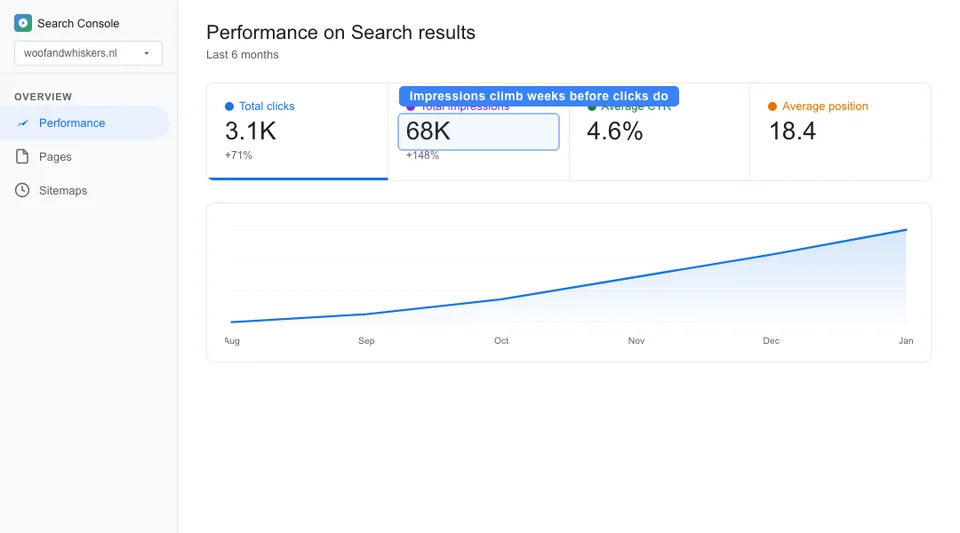
The most important metric to track early on is impressions in Google Search Console, not traffic. Impressions grow before clicks do. If your impressions are climbing week over week, your rankings are improving - even if clicks have not caught up yet.
For more on the overall SEO approach for pet stores, see our guide on content marketing for pet businesses. And to understand the broader strategy behind these numbers, see our analysis of 50 pet store websites.
FAQ
Can I rank faster by publishing more content?
Yes, up to a point. Companies publishing 16+ posts per month get 3.5x more traffic than those publishing four or fewer[8]. However, quality cannot be sacrificed for quantity. Ten well-researched, comprehensive posts outperform twenty thin, rushed articles. The sweet spot for most pet stores is 8-10 posts per month, which is what Petbase delivers at EUR 199/mo. Beyond that, the returns diminish unless you also invest in backlink building and technical optimization.
Should I worry if my rankings drop temporarily?
Temporary ranking fluctuations are completely normal, especially in the first 3-4 months. Google frequently tests pages at different positions to measure user engagement signals. A post might appear on page 1 for a day, drop to page 3 for a week, then climb back. This is part of Google's evaluation process. Only be concerned if rankings drop steadily over 3-4 weeks with no recovery - that may indicate a content quality or technical issue worth investigating.
Is SEO worth it for a small pet store competing against big chains?
Absolutely. Big chains dominate broad, national keywords - but they cannot compete on local terms, long-tail queries, or niche content. Long-tail keywords account for 70% of all searches and convert at 36%[7]. A small pet store in Munich does not need to outrank Fressnapf for "dog food." It needs to rank for "best dog food store Munich Schwabing" or "organic dog treats near Englischer Garten." Those searches have high purchase intent, low competition, and directly drive foot traffic. SEO levels the playing field in local and niche search - which is exactly where small stores win.
How important are backlinks for pet store SEO?
Very important. Pages ranking #1 on Google have 3.8x more backlinks than pages in positions 2-10[4]. For pet stores, the most effective backlinks come from local pet organizations, veterinary clinics, breed clubs, and community event pages. You do not need hundreds of links. Five to ten quality, relevant links can noticeably accelerate your rankings compared to a site with none.
References
- BrightEdge (2024). How Much Traffic Comes from Organic Search. seoinc.com
- Clutch (2025). SEO Statistics. clutch.co
- Fortune Business Insights (2024). Pet Care Market Size and Growth. fortunebusinessinsights.com
- BuzzStream (2024). Link Building Statistics. buzzstream.com
- Magnet (2024). Understanding Google's Core Web Vitals. magnet.co
- BrightLocal (2024). Local SEO Statistics. brightlocal.com
- Embryo (2024). 30 Statistics About Long-Tail Keywords. embryo.com
- HubSpot (2024). Marketing Statistics. hubspot.com