Local Link Building for Pet Stores: 15 Tactics That Work

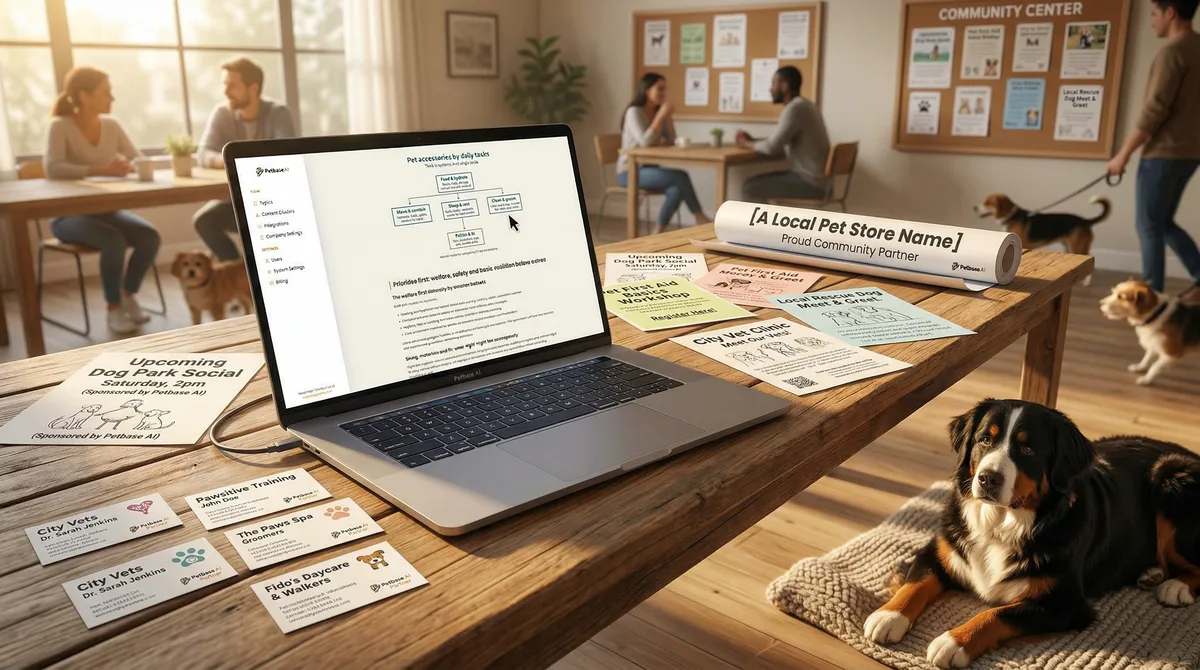
Table of Contents +
- Why Do Local Links Matter More Than General Backlinks?
- How Many Local Links Does a Pet Store Actually Need?
- Quick Wins: 5 Tactics You Can Start This Week
- Medium-Effort Tactics: Building Community Connections
- High-Effort, High-Reward: Tactics That Build Authority
- Which Tactics Should You Prioritize? A Comparison
- What Mistakes Should Pet Stores Avoid With Local Link Building?
- How Long Does It Take for Local Links to Improve Rankings?
- Frequently Asked Questions
- References
15 local link building tactics for pet stores, organized by effort level. Covers vet partnerships, shelter sponsorships, local media, supplier links, and more.
You know backlinks matter for Google rankings. Every SEO guide says so. But when you run a pet store, the advice feels disconnected from reality. You are not a tech startup with a PR team. You are not an e-commerce giant with a brand marketing department. You sell pet food, toys, supplements, and expert advice to people in your area.
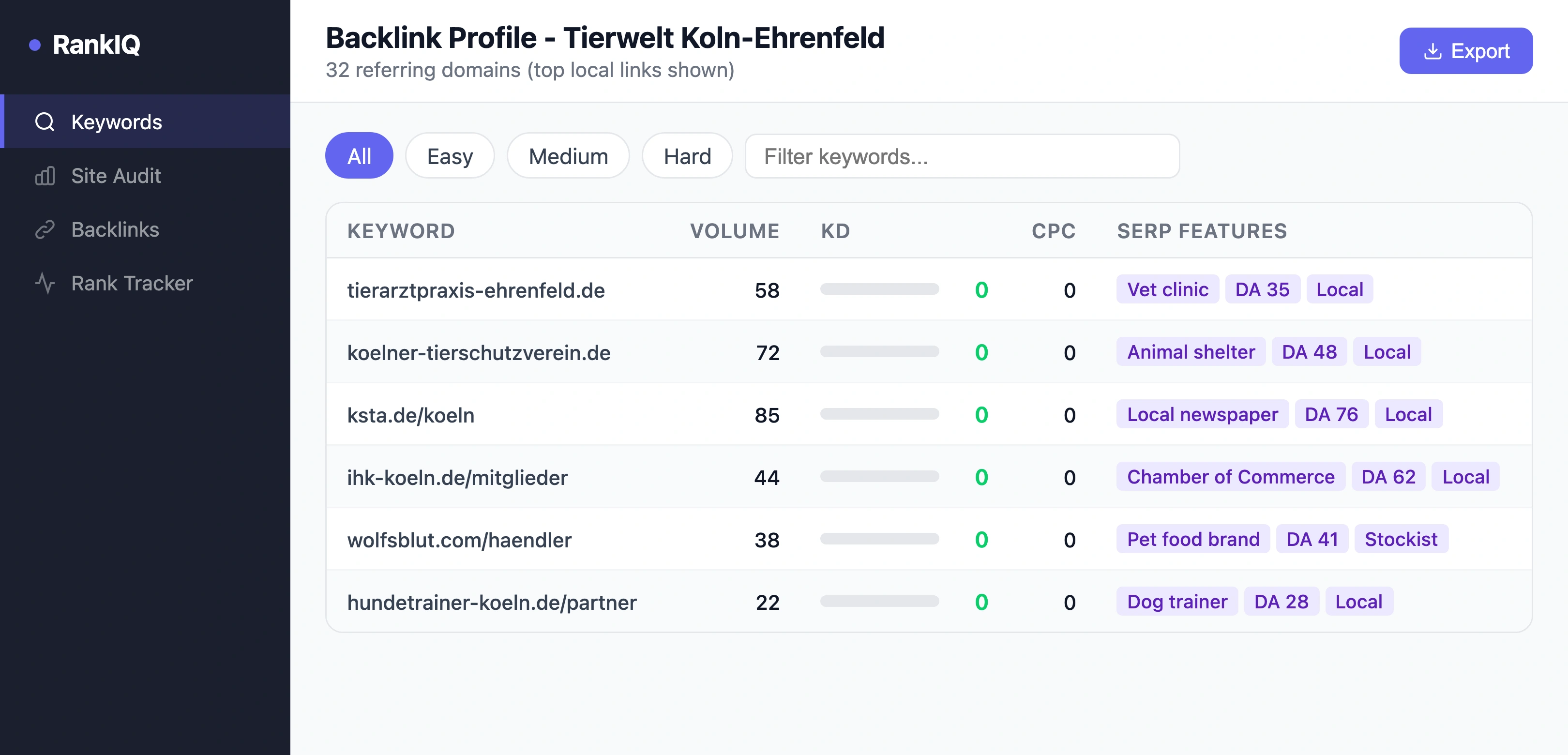
The good news: local link building is different from general link building. You do not need thousands of links from random websites. You need a focused set of links from locally relevant, topically relevant sources - vets, shelters, trainers, local media, community organizations, and pet industry partners. These are the links that move the needle for local rankings.
Link signals account for 29% of local organic ranking factors[1]. That makes links the single largest factor for where your pet store appears in local organic results. And according to Whitespark's latest report, inbound links from locally relevant domains jumped 257% in importance[2]. Google is getting better at rewarding links that come from your geographic area and your industry niche.
This guide covers 15 local link building tactics for pet stores, organized by effort level, with a comparison table so you can prioritize. Every tactic is mapped to the pet industry, with specific partnership types and outreach approaches that work for your business.
TL;DR
Local links matter more than ever for pet store rankings. Focus on vets, shelters, trainers, local media, and supplier partnerships. Start with quick wins (directories, supplier stockist pages), then build toward community sponsorships and content partnerships. You do not need hundreds of links - 30 to 50 quality local links can move you into the top 3 for most local pet store searches.
Why Do Local Links Matter More Than General Backlinks?
Not all backlinks carry equal weight for a pet store. A link from a pet blog in another country helps your domain authority slightly. But a link from a local veterinary clinic, your city's chamber of commerce, or a regional pet shelter tells Google something much more specific: this pet store is a trusted part of its local community.
The data supports this. 46% of all Google searches have local intent[3], and "near me" searches have grown over 500% in recent years[3]. When someone searches "pet store near me" or "best dog food [your city]," Google evaluates how well connected your business is to the local area. Local links are a primary signal for that evaluation.
The #1 ranking page on Google has 3.8x more backlinks than pages ranked #2 through #10[4]. But for local searches, you do not need to win the overall backlink race. You need to win the local link race in your area, which is a much smaller competition.
In my experience working with pet stores across Europe, the ones that rank in the local 3-pack almost always have one thing in common: a network of links from local organizations, pet professionals, and community partners. It is not about volume. It is about relevance.
Petbase automates SEO content for pet stores - publishing 10 optimized articles monthly so you can focus on running your shop - start your free trial.
How Many Local Links Does a Pet Store Actually Need?
For local pet store searches, you do not need hundreds of backlinks. The typical benchmarks:
- Local Pack (top 3 map results): 15 to 30 quality local links from unique domains
- Local organic results (page 1): 30 to 50 referring domains with a mix of local, niche, and general links
- Competitive urban areas: 50 to 80+ referring domains, with strong emphasis on locally relevant links
Most pet stores start with fewer than 10 referring domains. Even moving to 25 to 30 can produce a visible ranking improvement within 8 to 12 weeks. The key is that those links come from relevant, trusted local sources, not from random directories or link farms.
85% of marketers believe link building will remain important for the next five years[5], and 73.2% believe backlinks influence whether your business appears in AI search results[5]. Investing in local links now builds a foundation that pays off for years. For the full picture of what drives local rankings, read our guide on local SEO for pet businesses.
Quick Wins: 5 Tactics You Can Start This Week
1. Claim and Complete Your Directory Listings
Start with the directories that matter most for local pet store visibility: Google Business Profile, Bing Places, Apple Business Connect, Yelp, and Trustpilot. Then add pet-specific and local directories - your country's pet business listings, your city or regional business directory, and niche platforms like BringFido.
Each directory listing is a backlink. More importantly, consistent NAP (name, address, phone number) across directories strengthens your local SEO foundation. Businesses with 40+ accurate citations rank 53% higher in local search[6]. For a complete citation strategy, read our local citations guide for pet businesses.
2. Get Listed on Supplier and Brand Stockist Pages
You carry products from dozens of pet food, toy, and supplement brands. Many of these brands maintain "Where to Buy" or "Find a Retailer" pages on their websites. Contact each brand's marketing team and ask to be listed. Most brands want their retailers listed because it helps them sell more product.
A pet store carrying 30 brands can realistically earn 10 to 15 stockist page links within a few weeks. These are high-quality, niche-relevant links from established domains.
3. Exchange Links With Local Pet Professionals
Vets, dog trainers, pet groomers, and pet sitters in your area are natural link partners. You serve the same customers but do not compete directly. A simple approach: create a "Local Pet Resources" page on your website listing recommended local professionals. Then let them know and suggest they do the same.
This is not a link scheme. This is genuinely useful content for pet owners who want to find trusted local services. Keep it to 5 to 10 real partnerships, not 50 random exchanges. For more on optimizing your Google Business Profile to support these partnerships, see our GBP guide for pet stores.
4. Submit Your Store to Local "Best Of" Lists
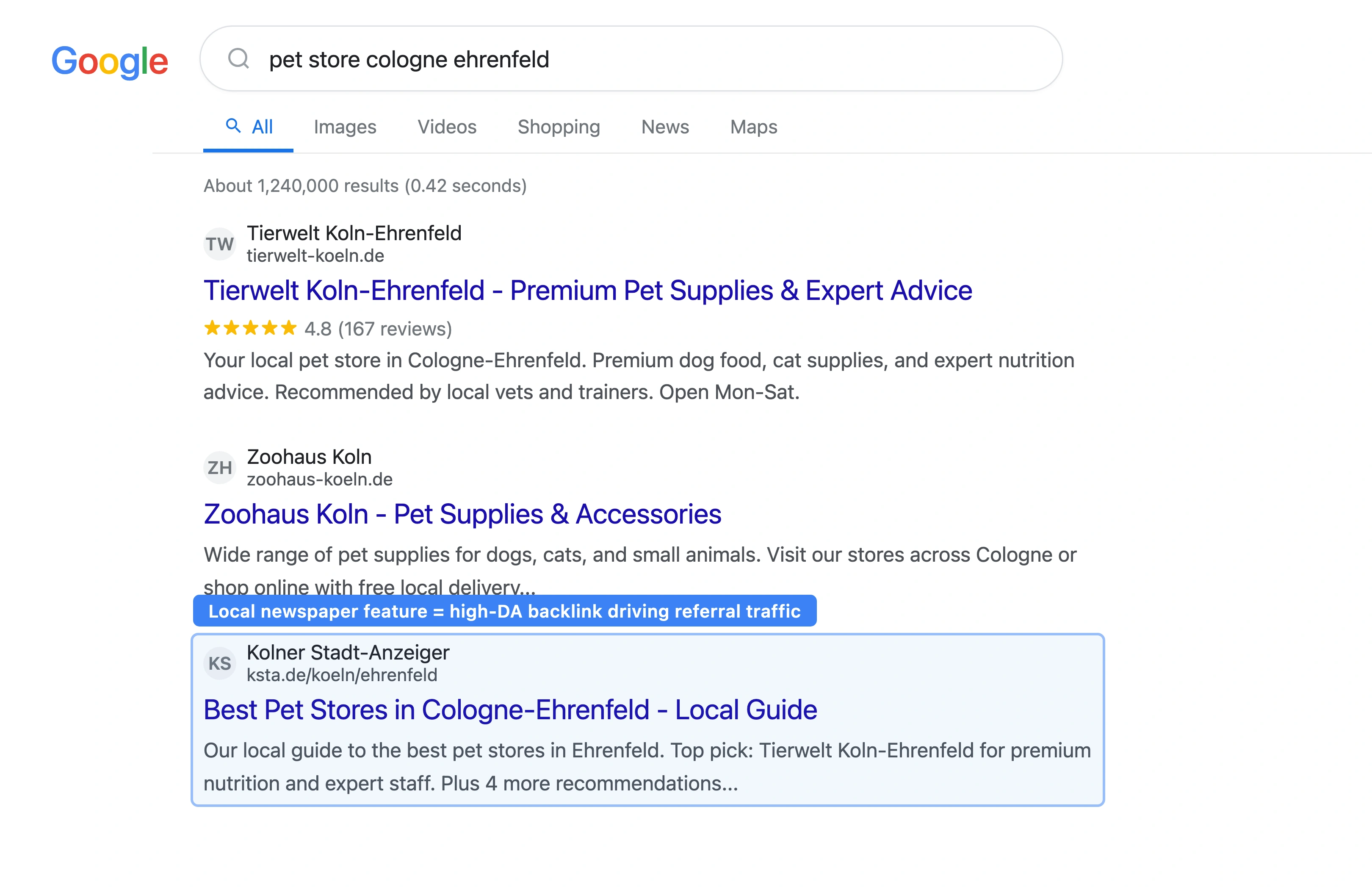
Every city has "best of" lists - best pet stores, best local shops, best places to take your dog. These lists appear on local media websites, community blogs, and local business platforms. Search for "best pet stores [your city]" and "pet-friendly businesses [your area]" to find them. Then submit your store or ask to be included.
These links often come from high domain authority local media sites, making them particularly valuable for local rankings.
5. Claim Unlinked Brand Mentions
If your pet store has been mentioned online without a link - in a local news article, a blog review, or a community forum - reach out and ask the publisher to add a hyperlink. Set up a Google Alert for your store name to catch new mentions. Turning an existing mention into a backlink takes minimal effort because the content already exists.
Medium-Effort Tactics: Building Community Connections
6. Sponsor Local Pet Events and Adoption Days
Pet adoption events, dog shows, charity walks, and pet-friendly community festivals happen regularly in most areas. Sponsoring these events earns you a link on the event page, mentions in local media coverage, and often links from partner organizations promoting the event.
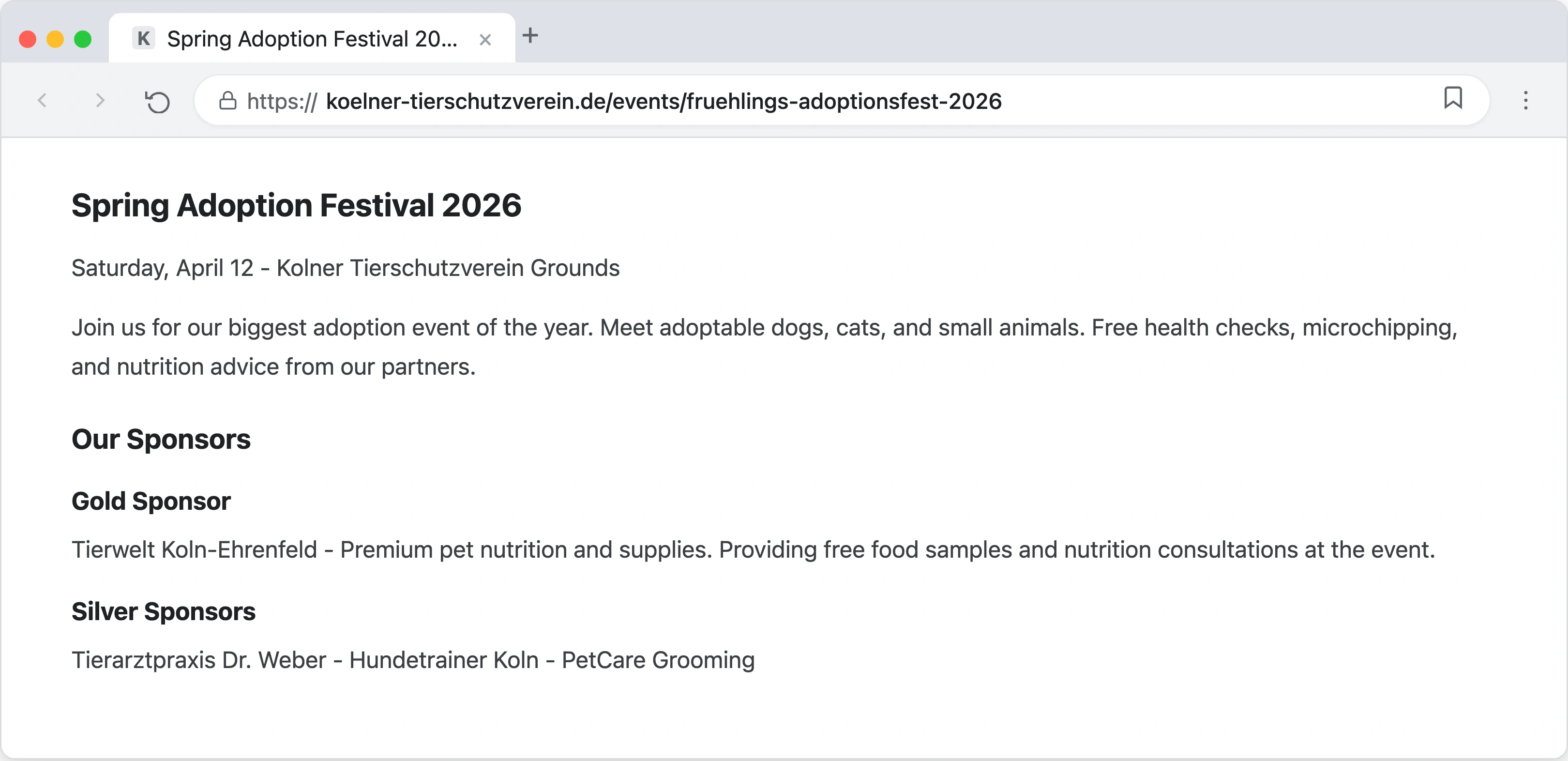
Nonprofit organizations and event organizers often have high domain authority websites (DA 40 to 80+)[7]. A EUR 100 to EUR 500 sponsorship can earn you a link worth far more than that in SEO value. Plus, it builds real community goodwill.
7. Partner With Local Animal Shelters and Rescues
Shelters and rescue organizations are natural partners for pet stores. Donate products, host adoption events in your store, or sponsor a specific shelter program. In return, shelters list sponsors on their website with links. Many also promote partner businesses through their social media and email newsletters.
One pattern I have seen repeatedly: pet stores that partner with shelters do not just earn links. They earn the kind of community trust that drives foot traffic, word-of-mouth referrals, and review volume. 93% of consumers say reviews affect their buying decisions[8], and community involvement naturally generates positive reviews.
8. Contribute Expert Content to Local Media
Local newspapers, magazines, and online publications need expert sources for pet-related stories. Position yourself as the local pet expert: seasonal pet safety tips, advice on holiday pet gifts, local pet adoption trends, or nutrition guidance for specific breeds popular in your area.
Digital PR is the most effective link building tactic, with 48.6% of SEO professionals ranking it first[9]. That is three times more effective than guest posting (16%). One feature article in your local newspaper can earn a DA 60+ link and drive direct traffic to your store.
9. Create a Local Pet Resource Guide
Build a comprehensive resource page on your website: "The Complete Guide to Pet Services in [Your City]." List local vets, trainers, groomers, dog parks, pet-friendly restaurants, and shelters. Include maps, hours, and brief descriptions.
This type of content attracts links naturally because it is genuinely useful. The professionals and businesses you feature will often link back to your guide. Local bloggers and community sites link to it as a resource. And it targets valuable local search terms. For more on how content drives links, read our content marketing guide for pet businesses.
10. Join Your Local Chamber of Commerce and Business Associations
Chamber of commerce websites typically have DA 40 to 70 and provide member directory listings with links. Business improvement districts, downtown associations, and local merchant groups offer similar opportunities. The annual membership fee (often EUR 100 to EUR 500) buys you a quality local link plus networking opportunities that can lead to more partnerships.
High-Effort, High-Reward: Tactics That Build Authority
11. Publish Original Research and Local Pet Data
94% of all online content earns zero external links[10]. The content that does earn links is typically original, data-driven, or uniquely valuable. As a pet store, you have access to data nobody else has: bestselling products by season, breed popularity trends in your area, customer feeding preferences, or local adoption rate trends.
Package this into a report. "Pet Ownership Trends in [City]: 2026 Report" or "What [City] Dogs Eat: A Local Pet Store Analysis" are the kind of content that local media, pet bloggers, and community sites want to reference and link to. For guidance on creating content that earns links, see our backlink building guide for pet stores.
12. Guest Post on Local Pet Blogs and Community Sites
Write valuable, genuinely helpful content for other websites in your area. Local pet blogs, community lifestyle sites, and regional publications accept guest contributions. The key: provide real expertise, not thinly disguised promotion.
Topics that work well for pet store guest posts: seasonal nutrition advice, breed-specific care guides for popular local breeds, pet safety tips, or "what to look for when choosing a pet store." Include one or two natural links back to relevant content on your website.
13. Build Relationships With Local Pet Bloggers and Influencers
Local pet bloggers and micro-influencers (1,000 to 10,000 followers) are often looking for local businesses to feature. Invite them to your store, offer product samples for honest reviews, or collaborate on content. A local dog blogger writing "My Favorite Pet Stores in [City]" with a link to your site is worth more than a generic directory listing.
These relationships also generate social signals, referral traffic, and brand awareness that reinforce your local SEO efforts. For more on how reviews and social proof support your rankings, see our guide on online reviews for pet stores.
14. Host In-Store Events and Workshops
Puppy socialization classes, raw feeding workshops, pet first-aid training, breed meetups - these events naturally generate links when promoted through event listing sites, local media, and partner organizations. Create an events page on your website and submit each event to local event calendars and community boards.
The link building benefit is compounding: each event generates multiple links from different sources, and the events page becomes a hub that accumulates authority over time.
15. Create Scholarships or Community Programs
A pet care scholarship for local veterinary students or an annual community award for "Best Local Pet Rescue Volunteer" creates a linkable program that educational institutions, news outlets, and community organizations reference year after year. The initial setup takes effort, but the links compound annually.
Local .edu links (from schools or universities) and .org links (from nonprofits) carry significant trust signals. Even a small EUR 500 scholarship can generate links from sources that would otherwise be very difficult to earn.
Which Tactics Should You Prioritize? A Comparison
Not every tactic fits every pet store. Use this table to choose tactics based on your time, budget, and current link profile.
| Tactic | Effort | Link Quality | Timeline to Results | Estimated Cost |
|---|---|---|---|---|
| 1. Directory listings | Low | Medium | 2-4 weeks | Free to EUR 200 |
| 2. Supplier stockist pages | Low | Medium-High | 2-6 weeks | Free |
| 3. Local pet professional exchanges | Low | Medium-High | 2-4 weeks | Free |
| 4. "Best of" list submissions | Low | High | 4-8 weeks | Free |
| 5. Unlinked mention outreach | Low | Varies | 1-3 weeks | Free |
| 6. Event sponsorships | Medium | High | 4-8 weeks | EUR 100-500 |
| 7. Shelter partnerships | Medium | High | 4-12 weeks | Product donations |
| 8. Local media contributions | Medium | Very High | 4-12 weeks | Free (time) |
| 9. Local resource guide | Medium | High | 8-16 weeks | Free (time) |
| 10. Chamber of commerce | Low-Medium | Medium-High | 2-4 weeks | EUR 100-500/yr |
| 11. Original local research | High | Very High | 8-24 weeks | Free (time) |
| 12. Guest posting | High | High | 6-12 weeks | Free (time) |
| 13. Blogger/influencer outreach | High | High | 8-16 weeks | Product samples |
| 14. In-store events | High | High | 4-12 weeks | EUR 50-300/event |
| 15. Scholarships/community programs | High | Very High | 12-24 weeks | EUR 500+/yr |
Start with the quick wins (tactics 1 through 5) to build a foundation of 15 to 20 links in your first month. Then layer in medium-effort tactics (6 through 10) over months two and three. Save the high-effort tactics (11 through 15) for when you have a steady process in place.
What Mistakes Should Pet Stores Avoid With Local Link Building?
Local link building has a lower risk profile than general link building, but there are still mistakes that can waste your time or hurt your rankings.
- Mass directory submissions. Submitting to 500 random directories with no editorial standards dilutes your link profile. Stick to 20 to 40 relevant, quality directories.
- Buying local links. Paying a local blog to insert your link violates Google's guidelines. Sponsoring a legitimate event and being listed as a sponsor is fine. Paying for a link insertion in an existing article is not.
- Ignoring relevance. A link from a local plumbing company has almost no value for a pet store. Focus on links from pet-related, community, and local business sources.
- Reciprocal link schemes. Exchanging links with 30 random businesses creates an unnatural pattern. A few genuine partnerships with related local professionals are natural and fine.
- Neglecting the content behind the link. Earning a great link to a thin, unhelpful page wastes the opportunity. Make sure your linked pages provide real value.
For a deeper look at niche-specific link building strategies, explore our guides on SEO for dog training businesses and SEO for pet groomers - the partnership tactics in those guides apply to pet stores as well.
How Long Does It Take for Local Links to Improve Rankings?
Google typically discovers and processes new backlinks within 1 to 4 weeks. The ranking impact becomes visible 4 to 12 weeks after processing. For local search specifically, the timeline depends on your starting position:
- Starting from zero links: Expect visible improvements within 8 to 12 weeks after building your first 15 to 20 quality local links.
- Already have some links: Each new batch of 5 to 10 quality local links can produce incremental ranking improvements within 4 to 8 weeks.
- Competitive markets: Larger cities with more pet stores may require 4 to 6 months of consistent link building to break into the top 3.
The important thing is consistency. Link building is not a one-time project. Aim to earn 3 to 5 new quality local links per month through ongoing partnerships, community involvement, and content. Over 12 months, that adds up to 36 to 60 new referring domains - enough to dominate local search in most markets.
Agencies allocate an average of 32.1% of their total SEO budget to link building[9]. For a pet store handling it in-house, the investment is mostly time. Budget 2 to 4 hours per week for outreach, relationship building, and content creation.
Frequently Asked Questions
Can a pet store rank locally without any link building?
It is possible for low-competition areas, but unlikely in cities with multiple pet stores competing for the same searches. Google Business Profile optimization, reviews, and on-page SEO can get you partway there, but link signals account for 29% of local organic ranking factors[1]. Skipping link building means leaving one of the three biggest ranking signals on the table. In practice, pet stores that rank in the top 3 locally almost always have more quality links than the ones that do not.
Should I focus on local links or general pet industry links?
Both matter, but prioritize local links first. Links from locally relevant domains jumped 257% in importance[2], signaling that Google is placing more weight on geographic relevance. A link from your city's animal shelter or local newspaper carries more local ranking power than a link from a national pet blog. Once you have 20 to 30 solid local links, start building pet industry links to strengthen your topical authority.
Is it safe to exchange links with local vets and trainers?
Yes, as long as the exchanges are genuine and small-scale. A pet store linking to a recommended local vet, and that vet linking to your store as a recommended product source, is natural and useful for both audiences. What Google penalizes is large-scale, systematic link exchange schemes with dozens of unrelated businesses. Keep it to 5 to 10 genuine local partnerships and make sure the linked pages provide real value to visitors.
How do I know if a local link is worth pursuing?
Ask three questions: Is the linking site relevant to pets or to your local area? Does the site have real traffic and real content (not just a page of links)? Would this link make sense to a human visitor, not just a search engine? If all three answers are yes, the link is worth pursuing. A link from your city's chamber of commerce (locally relevant, real traffic) is valuable. A link from a random web directory with no editorial standards is not.
References
- Moz (2025). Local Search Ranking Factors. moz.com
- Whitespark (2026). Local Search Ranking Factors Report. whitespark.ca
- BrightLocal (2025). Local SEO Statistics. brightlocal.com
- BuzzStream (2025). 70 Link Building Statistics. buzzstream.com
- Editorial.link (2026). Link Building Statistics: Insights from 518 SEO Experts. editorial.link
- Custom Web Audits (2025). Local Citations for Local SEO Success. customwebaudits.com
- Search Engine Journal (2025). Link Building with Local Charities and Events. searchenginejournal.com
- BrightLocal (2025). Local Consumer Review Survey. brightlocal.com
- Editorial.link (2026). Link Building Statistics: Insights from 518 SEO Experts. editorial.link
- Backlinko (2025). Search Engine Ranking Factors Study. backlinko.com