The Complete Guide to Ranking, Engagement & Organic Growth


Table of Contents +
A complete pet blog SEO guide covering keyword strategy, content structure, topic clusters, and internal linking to grow organic traffic.
Organic search drives 53% of all website traffic[1], and blogs are one of the most effective ways to capture that traffic. Companies with active blogs get 55% more visitors and 67% more leads than those without[2]. For pet stores, blogging is the fastest path to showing up when pet owners search for answers about nutrition, training, grooming, and product recommendations.
But publishing random posts once a month will not move the needle. The stores that rank well publish in topic clusters - groups of 4-6 related articles that link to each other - and they do it consistently. This guide covers the research-backed strategy behind pet blog SEO: what to write, how to structure it, and how to scale without spending 40 hours a month writing.
Why Pet Blog SEO Matters
Pet owners search Google multiple times a week for breed advice, health questions, product comparisons, and care tips. If your store publishes helpful answers, you become the trusted source. If you do not, even your best products stay invisible.
The numbers support this. 70% of all blog traffic comes from organic search, not social media or direct visits[3]. Content marketing costs 62% less than outbound marketing and generates 3x more leads per dollar[4]. A well-optimized blog post keeps delivering traffic for months or years after you hit publish - unlike paid ads, which stop the moment you stop paying.
Pet blog SEO helps you:
- Rank for keywords pet owners actively search
- Build topical authority so Google trusts your site
- Attract organic traffic without ongoing ad spend
- Earn backlinks naturally (the #1 result on Google has 3.8x more backlinks than positions 2-10[5])
- Grow your email list and product sales through helpful content
Google ranks pet blogs based on topical authority - how comprehensively your site covers a subject. A single post about dog food will not rank well. But 10 interconnected articles about dog nutrition signal to Google that your site genuinely understands the topic. This is why topic clusters matter more than isolated articles.
For a broader look at how blogging fits into your overall SEO approach, read our pet store SEO guide.
Petbase builds this SEO foundation automatically for pet businesses - 10 optimized articles published every month - start your free trial.
How Pet Owners Search
SEO starts with understanding what your audience types into Google. Pet owners search in emotional, problem-driven ways. They want quick answers, reassurance, product recommendations, and step-by-step guidance.
Common search patterns:
- "why is my dog itching after eating"
- "best toys for indoor cats"
- "how to train a stubborn puppy"
- "dog food for sensitive stomachs"
- "cat hairball remedies that actually work"
These are long-tail keywords - specific, multi-word queries that reveal exactly what someone needs. Long-tail keywords account for 70% of all searches and convert at 36%[6]. They are easier to rank for than broad terms like "dog food" and they attract visitors who are closer to making a decision.
Matching your blog content to these intent-based searches is the foundation of pet blog SEO. For more on aligning content with search intent, see our guides on dog training business SEO and pet store SEO.
Keyword Research for Pet Blogs
Keyword research tells you what your audience wants before you write a single word. Instead of guessing, you base every article on real search data.
1. Start with core topics
Identify 2-3 subjects where your expertise and product catalog overlap: nutrition, health, training, grooming, breeds, or product categories.
2. Target long-tail queries
Long-tail keywords convert at 36%[6] because they attract people with specific needs. Instead of targeting "dog food," target "best dog food for sensitive stomachs and diarrhea."
3. Build keyword clusters
A cluster is a group of related articles that link to each other. Example cluster for "puppy training":
- how to potty train a puppy
- how to crate train a puppy at night
- puppy behavior problems by age
- puppy teething solutions and safe chew toys
Clusters build topical authority and directly support your rankings across the entire group. Learn more about this approach in our content clustering guide.
Mapping keyword clusters manually means juggling spreadsheets, search tools, and competitor tabs for every topic group. For a cluster like "puppy training" with 4+ supporting articles, that is hours of research before you write a word. Petbase runs this entire research step automatically - it finds the long-tail queries, groups them into clusters, and builds your content plan. Start your free trial to skip straight from topic idea to a ready-to-publish article queue.
How to Structure a High-Performing Pet Blog Post
A well-structured pet article helps both readers and search engines. The average blog post takes 3 hours and 51 minutes to write and runs 1,400-2,200 words[3]. That investment pays off only if the structure is right.
Start with empathy
Every pet problem is emotional. A dog owner searching "why is my dog losing hair" is worried. Acknowledge that feeling before jumping into advice.
State the topic clearly in the introduction
Google wants clear intent signals. Tell readers exactly what the post covers and what they will learn.
Use keyword-rich subheadings
Descriptive H2s and H3s make your article scannable for readers and help Google understand your content structure.
Write in a helpful, reassuring tone
Pet owners want clarity and comfort, not jargon. Use short sentences and active voice.
Link internally
Every blog post should link to 3-5 related pages: other articles, product pages, category pages. Internal links help Google discover your content and pass authority between pages. When writing about product reviews, link to your pet product brand SEO guide. When covering local topics, connect to the pet business local SEO strategy.
End with a clear call to action
Guide readers to the next step - whether that is a related article, a product page, or signing up for updates.
Getting this structure right on one post takes effort. Getting it right on 10 posts per month - each with keyword-optimized subheadings, internal links, and proper intent targeting - is a part-time job. Petbase generates every article with this structure built in, including internal links to your existing content and product pages.
Building Authority Through Topic Clusters
Google rewards depth, not random posts. One article about "dog grooming tips" will not rank well on its own. But five related articles covering brushing techniques, home grooming tools, coat types, breed-specific schedules, and skin health create a topic cluster that signals genuine expertise.
Here is what a topic cluster looks like:
Main topic: Dog Grooming
- Brushing techniques by coat type
- Home grooming tools worth buying
- How often to groom each breed
- Skin and coat health indicators
- When to groom at home vs. visit a professional
When you internally link these articles to each other and to related pages like your pet groomer SEO guide, you create a semantic web that Google recognizes as authoritative coverage.
The compounding effect is what makes clusters so effective. Each new article in a cluster strengthens every other article. Your tenth post about dog nutrition ranks faster than your first because Google already trusts your site on that topic. Since 70% of blog traffic comes from organic search[3], every article in your cluster is another entry point for visitors.
Planning a 5-article cluster is one thing. Writing all 5, linking them together, and keeping links current as you add posts is where most stores stall. Petbase builds the entire cluster for you - it plans the supporting articles, writes them with proper internal links, and publishes on schedule. Your "dog grooming" cluster goes from idea to 5 indexed pages without you writing a sentence.
Our dedicated guide on content clustering for pet websites goes deeper on how to plan and link your clusters correctly. For the full publishing workflow, see our guide to building an SEO content calendar for your pet store.
Blog Content Approaches: Which Strategy Produces Results?
Not all blogging strategies are equal. Pet stores commonly fall into three patterns, and the results vary sharply.
| Approach | Content Pattern | Monthly Output | SEO Impact | Best For |
|---|---|---|---|---|
| Random Posts | Unrelated topics, no linking plan | 1-2 posts | Low - Google sees no topical depth | Nobody - this approach rarely builds rankings |
| Clustered Strategy | Groups of 4-6 related articles, interlinked | 4-8 posts | High - builds topical authority fast | Stores with a clear content plan and writing capacity |
| Automated (Petbase) | Keyword-driven clusters, auto-generated and scheduled | 10 posts | Very high - consistent output with pet-specific context | Stores that want rankings without spending hours writing |
Companies publishing 16 or more blog posts per month get 3.5x more traffic than those publishing four or fewer[2]. The clustered strategy beats random posting in every metric. Petbase takes clustering further by generating the content itself at EUR 199/mo for 10 articles. For a full breakdown of how to structure your cluster plan, read our pet store blog strategy guide.
Content marketing also extends beyond blogging. See our overview of content marketing for pet stores to understand how blog posts fit into a wider organic growth strategy.
Scaling Your Pet Blog
Writing one great article takes 3-5 hours[3]. Writing 10 great articles per month takes 30-50 hours - time most pet store owners do not have. The math gets worse when you factor in keyword research, cluster planning, internal linking, and optimization.
Content marketing costs 62% less than outbound marketing[4], but only if you can produce content efficiently. Here are three approaches:
Freelance writers: EUR 200-500 per article. Quality varies, most lack pet industry knowledge, and you still handle keyword research and strategy yourself.
SEO agencies: EUR 2,000-5,000+ per month. Professional output, but generic content and no pet-specific expertise.
Petbase: EUR 199/mo for 10 articles. Built specifically for pet businesses - the platform handles keyword research, cluster planning, article generation, internal linking, and auto-publishing to your CMS. Review time: 2-4 hours per month instead of 30-50.
When you need content about service topics like veterinary SEO or marketing topics like pet affiliate SEO, Petbase automatically includes the right terminology, context, and internal links.
Ready to see how it works? Check Petbase pricing or start your free trial.
Frequently Asked Questions
How often should a pet store blog?
At minimum, 2 articles per month. Stores that publish 4-6 articles per month build topical authority roughly twice as fast. Companies publishing 16+ posts per month get 3.5x more traffic[2]. Consistency matters more than volume - a store that publishes 2 articles every month for a year will outrank a store that publishes 20 in January and then goes quiet.
What should pet stores blog about?
Focus on topics your customers actually search for: ingredient comparisons, breed-specific care guides, seasonal buying advice, training tips tied to products you sell, and local pet care topics. Long-tail keywords account for 70% of all searches[6], so target specific queries rather than broad subjects.
Does blogging help pet store SEO?
Yes, directly. Blog posts increase the number of indexed pages, attract backlinks, and build topical authority around your core product categories. Companies with blogs get 55% more traffic and 67% more leads[2]. The effect compounds over time - older posts keep attracting traffic long after they are published.
How long should a pet store blog post be?
Most ranking pet blog posts are between 1,200 and 2,500 words. The average blog post is 1,400-2,200 words[3]. Length should match the complexity of the topic. A simple how-to guide can succeed at 800 words. A comprehensive buying guide or breed comparison typically needs 1,500-2,500 words to cover the topic thoroughly.
References
- BrightEdge (2024). How Much Traffic Comes from Organic Search. seoinc.com
- HubSpot (2024). Marketing Statistics. hubspot.com
- Orbit Media (2024). Blogging Statistics. orbitmedia.com
- Siege Media (2024). Content Marketing Statistics. siegemedia.com
- BuzzStream (2024). Link Building Statistics. buzzstream.com
- Embryo (2024). 30 Statistics About Long-Tail Keywords. embryo.com
Related Reading

Pet SEO: The Complete Guide to AI-Powered Growth for Pet Brands, Retailers, and Services

Pet Page SEO Optimization: The Complete Orientation Guide for Pet Brands, Retailers, and Services
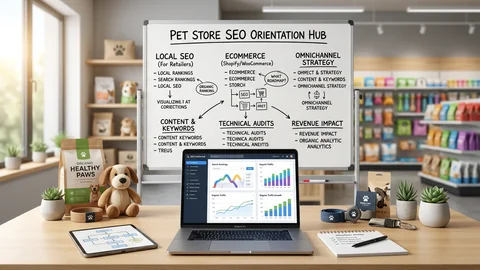
Pet Store SEO: The Complete Orientation Hub for Retailers, eCommerce, and Local Services