25 Pet Store Marketing Ideas That Drive Growth


Table of Contents +
- How Do Different Marketing Channels Compare for Pet Stores?
- Content and SEO Ideas (1-10): The Foundation
- Local SEO Ideas (11-15): Win Your Area
- Email Marketing Ideas (16-18): Highest Per-Dollar Return
- Social Media Ideas (19-22): Support, Not Replace
- Community Ideas (23-25): Long-Term Trust Building
- Where Should You Start?
- Frequently Asked Questions
- References
25 pet store marketing ideas ranked by ROI. Content and SEO return $7.65 per dollar vs $1.80 for ads. Organized by category with costs and action steps.
The global pet care market is worth $273.42 billion[1], and in the US alone, pet industry spending reached $152 billion in 2024[2]. That market size means enormous opportunity - but also fierce competition. Every pet store, from independent shops to online retailers, is competing for the same customers.
The question is not whether to invest in marketing. It is where to invest for the highest return.
TL;DR
The highest-ROI marketing channel for pet stores is organic search and content - $7.65 per dollar spent compared to $1.80 for paid ads. This guide ranks 25 marketing ideas by long-term return, organized from highest impact (content and SEO) to supporting channels (social and community).
Content marketing costs 62% less than outbound marketing and generates 3x more leads[3]. Organic search delivers 53% of all website traffic[17]. And the average cost per lead from SEO is $31 - compared to $164 from paid advertising[18].
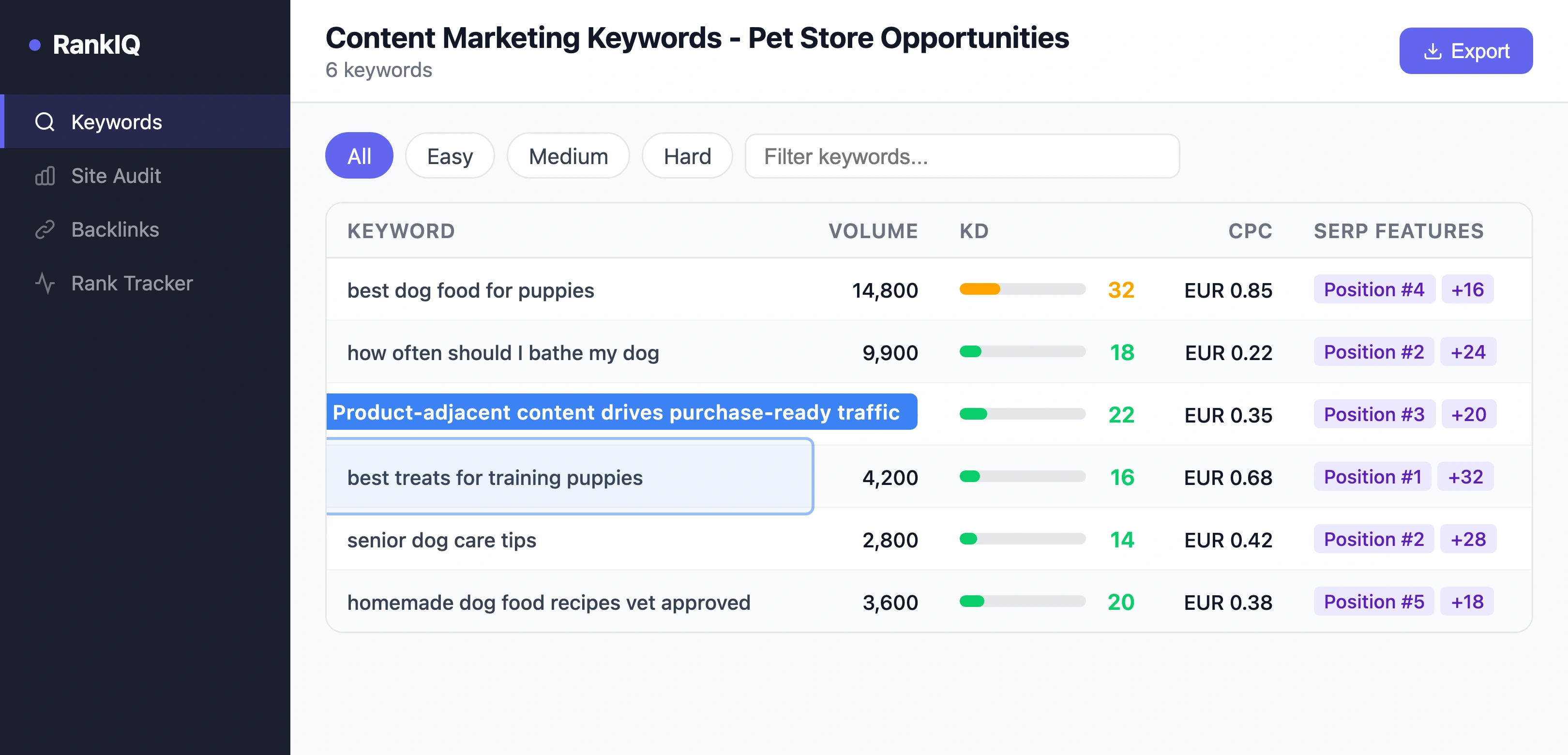
Yet 61% of small businesses are still not investing in SEO at all[19]. That gap is your opportunity. Here are 25 marketing ideas for pet stores, ranked by long-term ROI and organized into five categories.
How Do Different Marketing Channels Compare for Pet Stores?
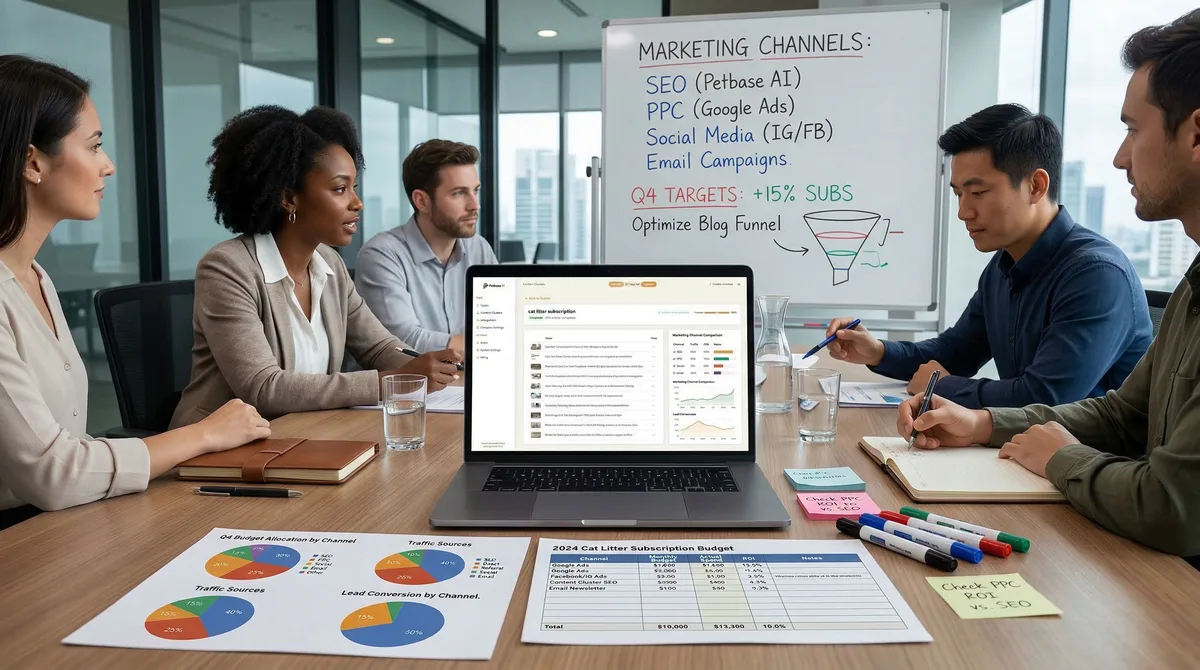
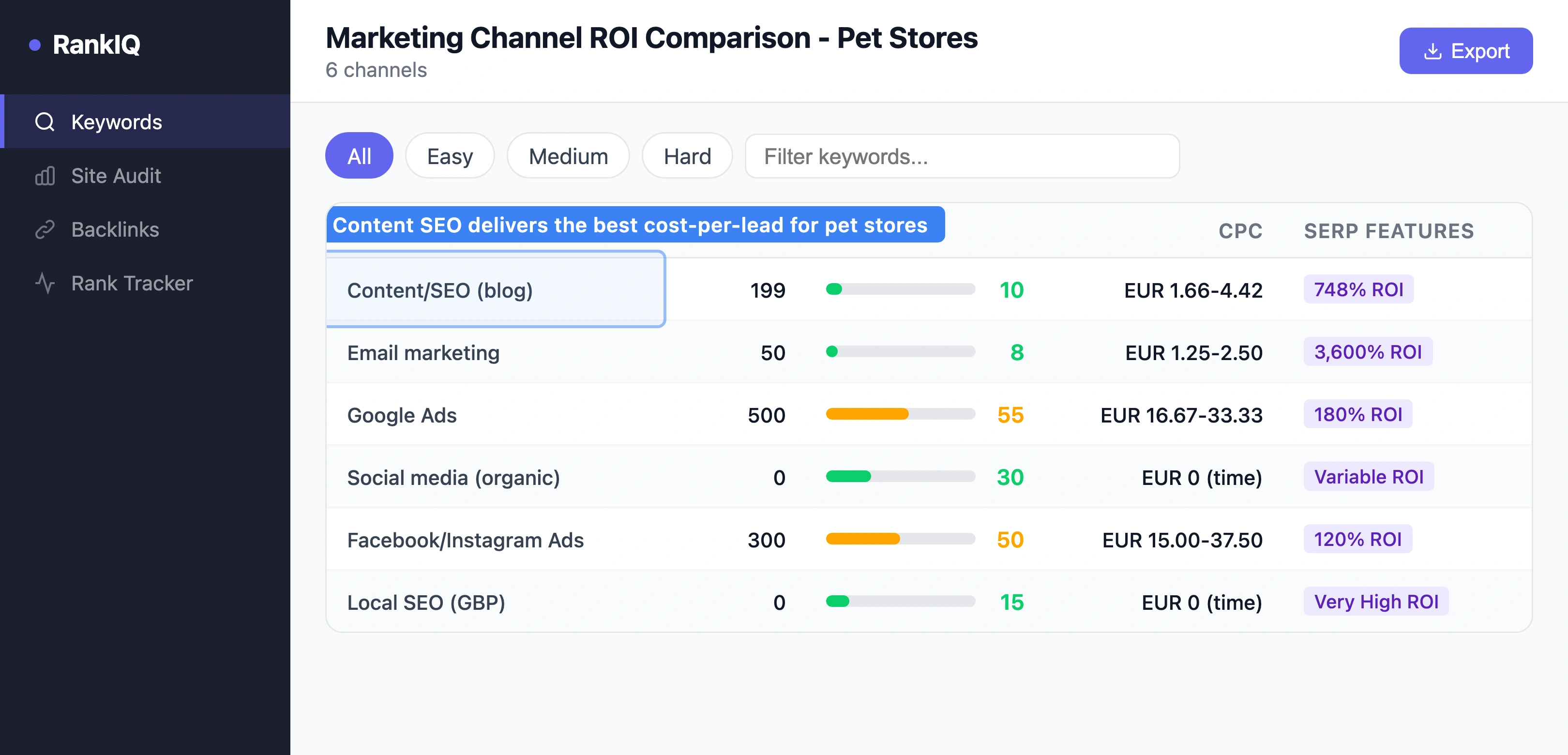
Before diving into individual tactics, here is how the five main marketing categories stack up against each other:
| Strategy Category | Monthly Cost | Time to Results | Estimated ROI | Compounds Over Time? |
|---|---|---|---|---|
| Content and SEO | USD 0-500 | 8-12 weeks | $7.65 per $1 | Yes - every post builds authority |
| Local SEO | USD 0-100 | 4-8 weeks | High (free traffic) | Yes - reviews and citations accumulate |
| Email Marketing | USD 0-100 | 2-4 weeks | $36 per $1 | Yes - list grows over time |
| Social Media | USD 0-500 | 1-4 weeks | Variable | Partially - followers grow but reach declines |
| Community | USD 0-200 | 1-3 months | Low-medium direct | Yes - reputation compounds |
The compounding effect is what separates content and SEO from every other channel. A blog post published today continues generating traffic for years. A social media post generates engagement for 24-48 hours. Invest where results accumulate.
Petbase automates SEO content for pet stores - publishing 10 optimized articles monthly so you can focus on running your shop - start your free trial.
Content and SEO Ideas (1-10): The Foundation
These 10 ideas form the backbone of pet store marketing. They take longer to produce results but deliver the highest return over 12-24 months.
1. Start a pet store blog targeting long-tail keywords. Long-tail keywords convert at 2.5x the rate of head terms[6]. A post targeting "best grain-free food for Labrador puppies with sensitive stomachs" faces far less competition than "best dog food" - and the person searching that phrase is much closer to buying. Start with 10 posts targeting specific questions your customers ask daily. See our pet store blog strategy guide for a step-by-step plan.
2. Build content clusters around your core product categories. Instead of publishing random blog posts, organize content into interconnected topic clusters. A cluster of 10 articles about dog nutrition - each linking to the others - tells Google your site is the authority on that topic. Ten clustered posts routinely outperform 30 disconnected articles in search rankings.
3. Create breed-specific buying guides. Pet owners search for breed-specific advice: "best food for French Bulldogs," "grooming tools for Golden Retrievers," "toys for high-energy Border Collies." Each guide targets a specific, high-intent keyword and naturally links to your products. With 400+ recognized dog breeds alone, the content potential is enormous.
4. Write seasonal content 6-8 weeks before each season. Flea and tick prevention in March, summer travel gear in April, holiday gift guides in October. Publishing early lets Google index and rank your content before the search spike. Our seasonal SEO guide maps the full pet retail calendar with keyword targets for each period.
5. Publish pet health and nutrition guides. Health content attracts high-intent traffic and builds trust. Topics like "signs of food allergies in dogs" or "senior cat nutrition guide" target searchers who are actively looking for solutions you sell. Follow our guidelines on creating pet health content that Google trusts to ensure accuracy and E-E-A-T compliance.
6. Optimize product descriptions for search and conversion. Most pet stores use manufacturer descriptions - the same text that appears on every competitor's site. Unique, detailed product descriptions that include breed recommendations, use cases, and ingredient analysis rank higher and convert better. Learn how to write product descriptions that rank and sell.
7. Update and expand your best-performing old content. Updating existing blog posts with fresh data and expanded content can increase organic traffic by 106%[7]. And 76% of a blog's traffic comes from posts published more than a month ago[5]. Review your analytics quarterly, identify top performers, and improve them. See our guide on updating old pet store blog posts for the exact process.
8. Create comparison content. "Raw vs kibble," "wet food vs dry food," "harness vs collar" - comparison searches show high purchase intent. These posts target two keywords simultaneously and naturally include product recommendations. Structure them as honest, data-backed comparisons with a clear recommendation.
9. Answer "People Also Ask" questions in blog content. Google's People Also Ask boxes appear in 65%+ of search results. Publishing content that directly answers these questions increases your chance of winning a featured snippet - which gets 35% of clicks on the page. Check PAA boxes for every keyword you target and include those questions as H2s in your content.
10. Develop a content calendar and publish consistently. Consistency matters more than volume. Ten posts per month, every month, outperforms 30 posts in January followed by silence until June. Content marketing returns $7.65 for every $1 spent[4] - but only if you maintain the investment. A content calendar keeps you on track.
Local SEO Ideas (11-15): Win Your Area
46% of all Google searches have local intent[10]. For pet stores with a physical location, local SEO is the fastest path to visibility.
11. Claim and fully optimize your Google Business Profile. 56% of local businesses have still not claimed their Google Business Profile[8]. Those that do see up to 4x more website visits[9]. Add every detail: business hours, product categories, photos, services offered. Post updates weekly. Respond to every review. Regular GBP posts increase interactions by 21% - see our GBP posting playbook. See our complete Google Business Profile guide for pet stores.
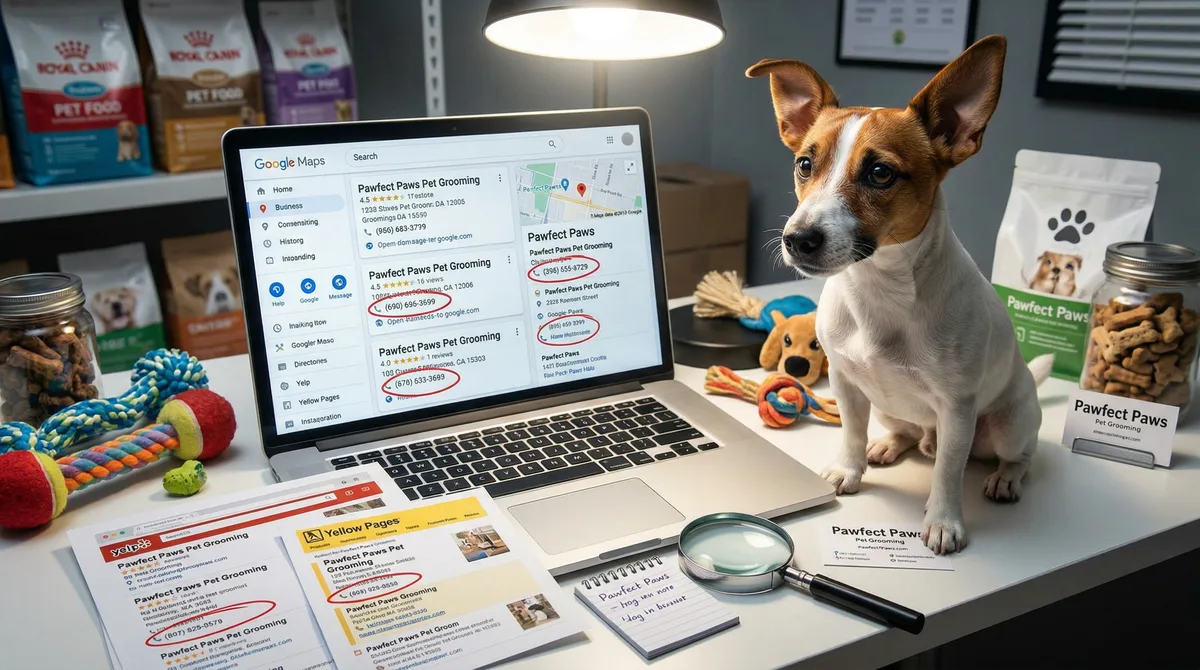
12. Get listed in local directories and pet-specific directories. Consistent NAP (Name, Address, Phone) data across local directories strengthens your local search presence. Start with Google, Yelp, Facebook, and Apple Maps, then add pet-specific directories in your market. Our local citations guide lists the top directories for pet businesses.
13. Earn and respond to customer reviews. Businesses in the Google Local Pack receive 126% more traffic than those below[10]. Reviews are the second most important Local Pack ranking factor. Ask satisfied customers to leave a Google review, and respond to every review - positive and negative. Read our guide on online reviews for pet stores for a systematic approach. For templates and best practices, see our review response guide.
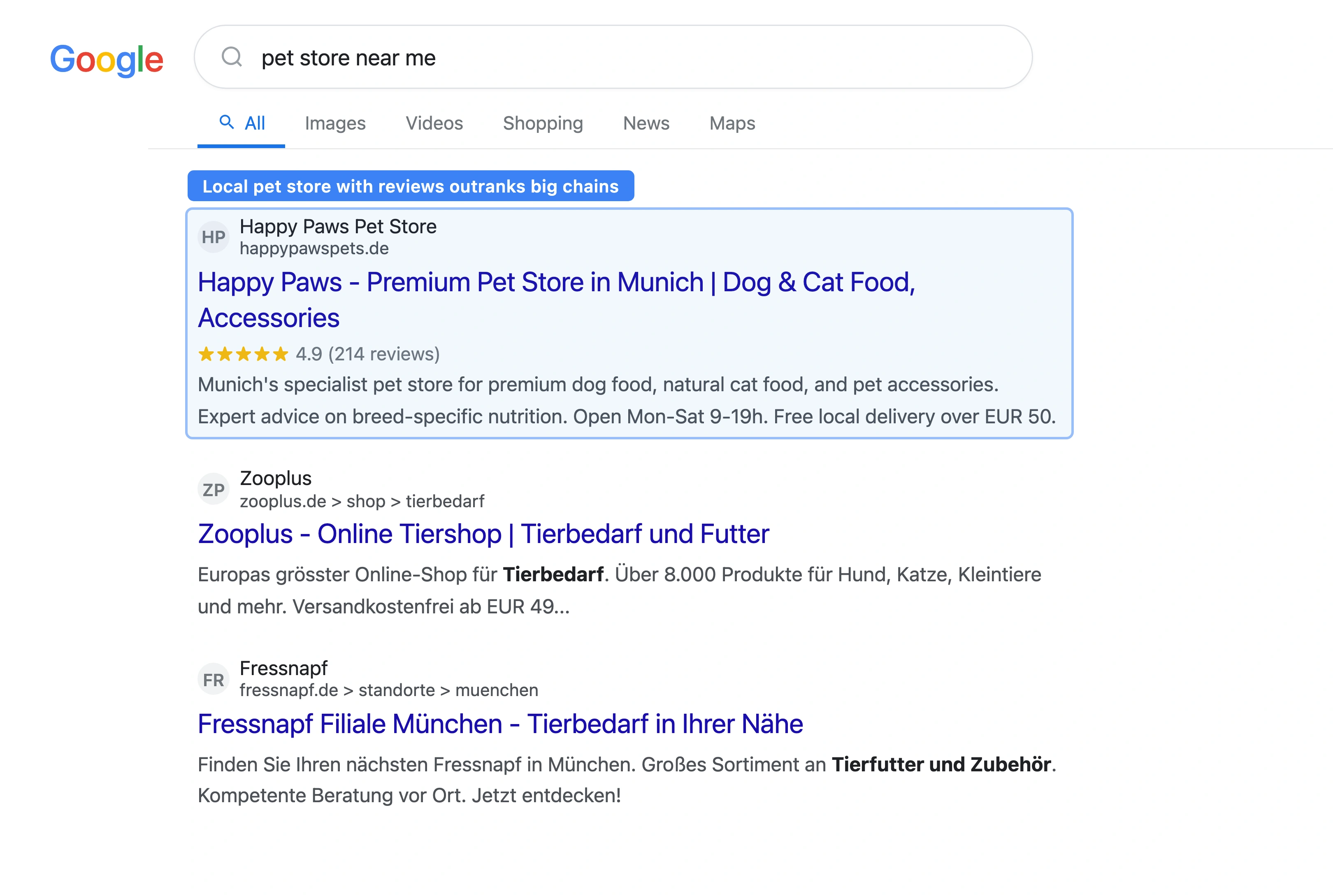
14. Add location pages to your website. If you serve multiple areas, create a dedicated page for each one: "Pet Store in [City Name]." Each page should include local keywords, driving directions, area-specific services, and unique content. Businesses with optimized location pages see 42% more direction requests[11].
15. Create locally-focused blog content. "Best dog parks in [city]," "pet-friendly restaurants in [area]," "local pet events this month" - this content targets local searches, builds community connection, and earns natural backlinks from local organizations. It also demonstrates E-E-A-T through genuine local knowledge that no out-of-area competitor can replicate.
Email Marketing Ideas (16-18): Highest Per-Dollar Return
Email marketing returns $36 for every $1 spent[12] - the highest ROI of any marketing channel. For pet stores, email turns one-time buyers into repeat customers.
16. Build a segmented email list by pet type. Dog owners and cat owners need different content and product recommendations. Segment your list from the start by asking one question at signup: "What type of pet do you have?" Then send targeted recommendations, seasonal tips, and product launches relevant to each segment.
17. Send a monthly pet care newsletter with seasonal tips. Monthly is the right frequency for most pet stores - frequent enough to stay top of mind, infrequent enough to avoid unsubscribes. Include 2-3 seasonal tips, one product highlight, and a link to your latest blog post. Keep it under 500 words.
18. Create automated welcome and re-engagement sequences. A 3-email welcome sequence (day 0, day 3, day 7) introduces your store, shares your most popular blog content, and offers a first-purchase incentive. A re-engagement sequence triggers after 60 days of inactivity. Both run automatically once set up.
Social Media Ideas (19-22): Support, Not Replace
Pet content generates 2.08x more engagement than average on social media[13], and 63% of pet owners follow at least one pet influencer[14]. Social media works best as a supporting channel - driving awareness that leads to search and direct visits.
19. Share customer pet photos with permission. User-generated content is the most trusted form of marketing. Ask customers to share photos of their pets with products from your store. Repost with credit. This builds community, provides free content, and creates social proof more authentic than any ad. Customer content builds trust and saves time - read our UGC strategy for pet stores.
20. Create short-form educational videos. 60-second videos answering common pet care questions - "how to brush a cat's teeth," "signs your dog needs more exercise" - perform well on Instagram Reels, TikTok, and YouTube Shorts. Gen Z pet spending has grown 43.5% year-over-year[15], and short-form video is their primary content format. Video content delivers 890% ROI - see our video SEO guide for pet stores.
21. Partner with local micro-influencers. Pet influencers average 7% engagement rates[16] - well above the 1-3% average across other niches. A local pet influencer with 5,000-20,000 followers can drive meaningful foot traffic and online sales for the cost of free products plus a small fee. Start with one partnership and measure results before scaling.
22. Run educational social media series. A weekly "Breed of the Week" or "Nutrition Myth Monday" series gives your social channels consistent, plannable content. These series position your store as a knowledge source, not just a product seller. They also generate ideas for longer blog content.
Community Ideas (23-25): Long-Term Trust Building
23. Host in-store events or workshops. Puppy socialization classes, nutrition workshops, breed meetups, adoption days. Events bring potential customers through the door, generate social media content, earn local press coverage, and build the community reputation that drives word-of-mouth - still the most powerful marketing channel for local businesses.
24. Partner with local veterinary clinics and shelters. Cross-referral relationships with vets and shelters create a steady stream of new customers. Offer shelter adoption discounts, sponsor vet clinic waiting room materials, or co-host educational events. These partnerships also generate natural backlinks to your website.
25. Create a pet store loyalty program. Loyalty programs increase repeat purchase rates by 20-30% across retail. For pet stores, a simple points system - earn points on purchases, redeem for discounts on food and supplies - keeps customers coming back instead of switching to Amazon. Digital loyalty cards (via app or email) cost nothing to maintain.
Where Should You Start?
Do not try to do all 25 ideas at once. Start with the three highest-impact actions:
- Claim and optimize your Google Business Profile (idea #11) - free, takes 2 hours, and delivers results within 4-8 weeks.
- Start a blog with 4 long-tail keyword posts (idea #1) - target specific questions your customers ask. Use a pet-specific AI tool to produce content if writing time is limited.
- Build your first content cluster (idea #2) - plan 10 interconnected articles around your strongest product category.
These three actions cover local SEO, content marketing, and topical authority building - the foundation every other marketing effort builds on. Once these are established, layer in email (idea #16-18), social (ideas #19-22), and community efforts (ideas #23-25).
For a complete SEO roadmap with timelines, read our pet store SEO checklist. If you want to understand why content and SEO consistently outperform other channels, our analysis of how blog posts drive sales includes the data.
Frequently Asked Questions
What is the cheapest way to market a pet store?
The cheapest starting point is your Google Business Profile - it is free, takes 2 hours to set up, and directly drives foot traffic and website visits. After that, blogging with long-tail keywords costs nothing but time (or USD 199/month with an AI tool). Email marketing platforms are free for the first 500-1,000 subscribers. These three channels together cost under USD 200/month and deliver the highest long-term ROI of any marketing combination.
Do pet stores really need a blog?
Yes. Organic search drives 53% of all website traffic[17], and the average cost per lead from SEO is $31 compared to $164 from paid advertising[18]. A blog is how you create the pages that rank for the specific keywords your potential customers search. Without a blog, your website has a homepage, a few product pages, and an about page - not enough content for Google to consider you an authority on any topic.
How often should pet stores post on social media?
3-5 times per week is the practical sweet spot for most pet stores. Consistency matters more than frequency - posting 3 times per week every week outperforms daily posting that drops off after a month. Focus on content types that generate engagement: customer pet photos, quick tips, product highlights, and behind-the-scenes content. Do not let social media consume time that would be better spent on SEO and content - those channels compound while social reach declines.
Should I invest in Google Ads or SEO for my pet store?
Start with SEO. Content marketing returns $7.65 per dollar spent compared to $1.80 for paid ads[4]. Google Ads deliver immediate traffic but stop the moment you stop paying. SEO takes 8-12 weeks to show results but compounds over time - a blog post published today still generates traffic 3 years from now. Use Google Ads only for time-sensitive promotions (seasonal sales, new product launches) or to fill the gap while your SEO builds momentum.
References
- Fortune Business Insights (2024). Pet Care Market Size and Growth. fortunebusinessinsights.com
- APPA (2024). Pet Industry Spending and Trends. americanpetproducts.org
- Siege Media (2024). Content Marketing Statistics. siegemedia.com
- Genesys Growth (2024). Content Marketing ROI Stats. genesysgrowth.com
- HubSpot (2024). Marketing Statistics. hubspot.com
- Embryo (2024). 30 Statistics About Long-Tail Keywords. embryo.com
- Orbit Media (2024). Blogging Statistics. orbitmedia.com
- Wiser (2024). Google Business Profile Statistics. wiser.com
- Birdeye (2025). State of Google Business Profile. birdeye.com
- BrightLocal (2024). Local Pack Analysis and Consumer Review Survey. brightlocal.com
- Sterling Sky (2024). Local SEO Statistics. sterlingsky.ca
- Litmus (2024). Email Marketing ROI. litmus.com
- FWV (2024). Pet Industry Social Media Statistics. fwv.com
- Amra and Elma (2024). Pet Influencer Statistics. amraandelma.com
- APPA (2024). Gen Z Pet Spending Trends. americanpetproducts.org
- inBeat (2024). Pet Influencer Statistics. inbeat.co
- BrightEdge (2024). Organic Search Channel Share. brightedge.com
- First Page Sage (2024). Average Cost Per Lead by Industry. firstpagesage.com
- Clutch (2025). SEO Statistics. clutch.co