Rural vs Urban SEO for Pet Stores: Different Strategies for Different Markets

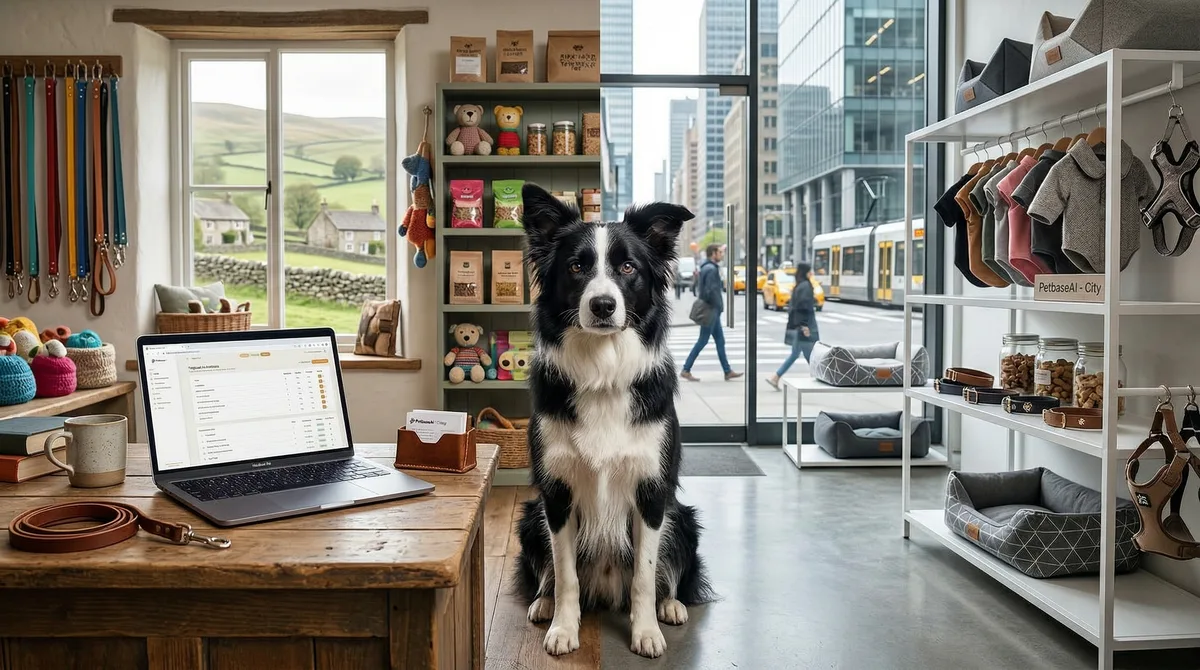
Table of Contents +
- Why does one-size-fits-all local SEO fail for pet stores?
- How does Google handle local search differently in rural vs urban areas?
- Rural vs urban SEO: a direct comparison
- What should rural pet stores focus on?
- What should urban pet stores focus on?
- How does content strategy differ between rural and urban pet stores?
- What about multi-location pet stores?
- How do you measure success differently?
- Practical action plan: rural pet stores
- Practical action plan: urban pet stores
- Frequently Asked Questions
- References
Rural and urban pet stores need different local SEO strategies. Compare search radius, review targets, content tactics, and action plans for your market size.
Most local SEO guides treat every pet store the same. They tell you to optimize your Google Business Profile, collect reviews, and publish local content. That advice is not wrong, but it ignores something fundamental: a pet store in a town of 5,000 people faces completely different search dynamics than one in a city of 500,000.
46% of all Google searches have local intent[1]. That number applies everywhere. But how Google interprets and serves those searches changes dramatically based on where your store is located. The local pack radius, the number of competitors, the review threshold needed to rank, and the type of content that builds authority all shift depending on market density.
This guide breaks down exactly how rural and urban pet store SEO strategies differ, so you can focus on the tactics that actually move the needle in your specific market.
TL;DR
Rural pet stores benefit from wider Google search radius (up to 15 miles vs 3 miles in cities) and lower competition, but need to cover more surrounding towns with content. Urban pet stores face tighter radius and more competitors, making reviews, hyper-local content, and citation volume the deciding factors. Both markets require consistent effort, but the priorities differ.
Why does one-size-fits-all local SEO fail for pet stores?
The European pet care market is valued at USD 81.44 billion[2], and pet stores across the continent compete for local visibility in very different environments. A pet store in rural Bavaria and one in central Berlin both want the same thing: to appear when pet owners search for products and services nearby. But Google treats these two searches differently.
Proximity accounts for approximately 48% of the local search algorithm[3]. That leaves 52% determined by controllable factors like relevance, prominence, reviews, and content. In a rural market with two pet stores, that 48% proximity weight works in your favour because the search radius expands. In an urban market with 30 pet stores, the same proximity weight creates intense competition within a very small area.
This is why the same advice produces different results in different markets. A rural pet store that publishes one blog post per month about a nearby town will likely see ranking improvements within weeks. An urban pet store doing the same thing will barely move the needle without also stacking reviews, citations, and neighbourhood-level content on top.
Petbase automates SEO content for pet stores - publishing 10 optimized articles monthly so you can focus on running your shop - start your free trial.
How does Google handle local search differently in rural vs urban areas?
Google adjusts the local pack radius based on business density. In urban areas, results typically show businesses within 3 miles. In rural areas, that radius expands to 15 miles or more[4]. This single difference changes every aspect of local SEO strategy.
For a rural pet store, this wider radius is an advantage. If you are one of only two or three pet stores serving a 15-mile area, Google will show your business to searchers across multiple towns and villages. You do not need to outrank 20 competitors for the same keyword. You need to outrank one or two.
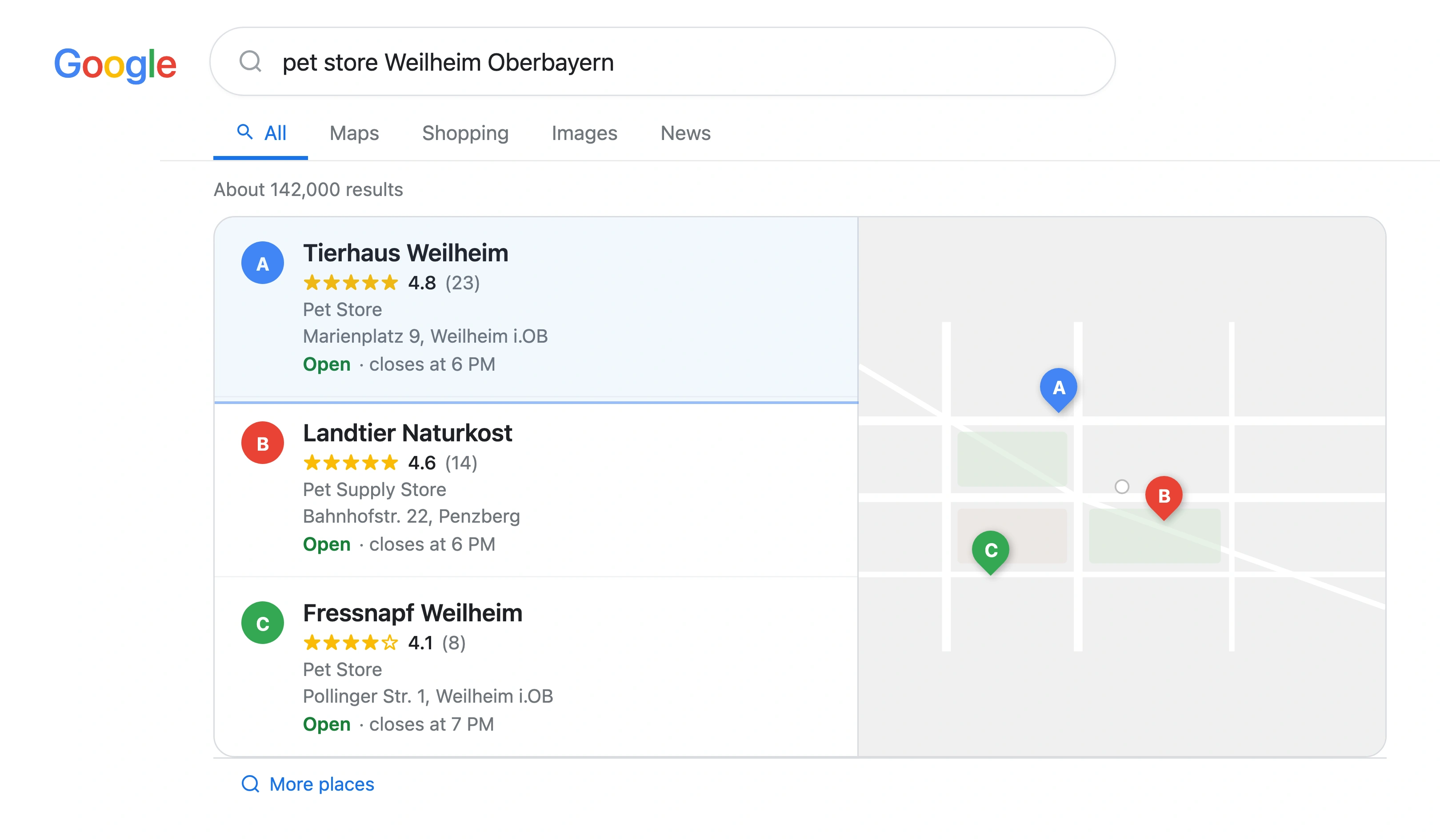
For an urban pet store, the tight radius means you are competing with every pet store, pet supply chain, and online retailer with a local presence within a few kilometres. Businesses in the Google 3-pack get 126% more traffic and 93% more actions compared to those ranked 4 through 10[3]. In a city, falling outside the top 3 means near-invisibility.
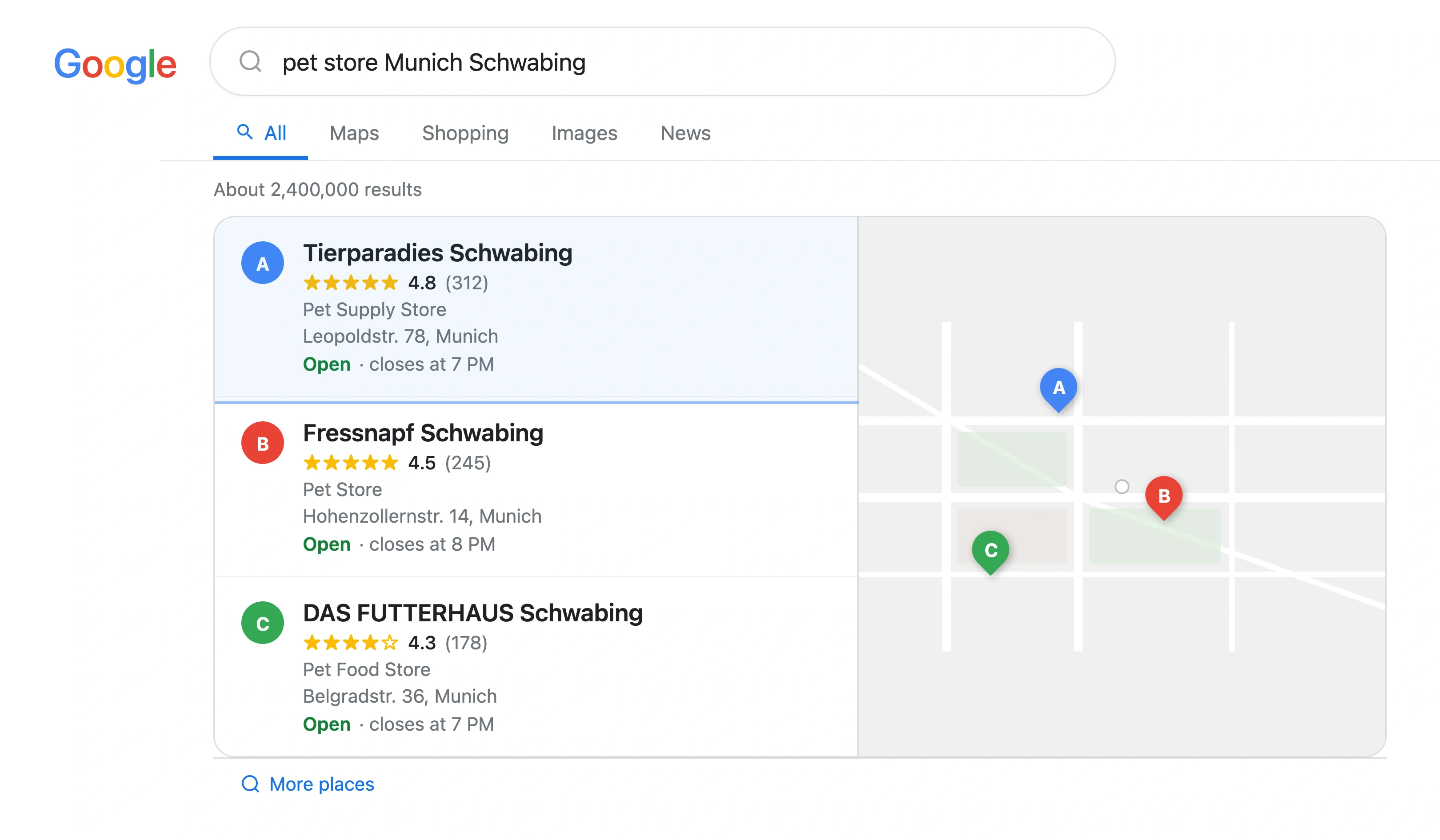
In my experience working with pet stores in both environments, urban stores often need 3 to 4 months of consistent work before they break into the local pack. Rural stores with a solid Google Business Profile and a handful of reviews sometimes appear within weeks.
Rural vs urban SEO: a direct comparison
The following table summarizes how key local SEO factors differ between rural and urban pet store markets. Use it to identify which tactics deserve your time and budget.
| Factor | Rural pet stores | Urban pet stores |
|---|---|---|
| Google local pack radius | Up to 15 miles; fewer competitors in range | Under 3 miles; high competitor density |
| Keyword competition | Low; keyword tools often show little data | High; multiple businesses target same terms |
| Reviews needed to rank | 10-20 genuine reviews often enough | 40-50+ reviews needed; recency matters most |
| Content strategy | Cover surrounding towns and regions | Cover neighbourhoods, districts, landmarks |
| Citation priority | Regional directories and local newspapers | Volume matters: 40+ accurate citations rank 53% higher |
| Voice search impact | Higher share of voice queries (less typing, more driving) | Standard mobile search dominates |
| Google Business Profile | Completeness is the primary differentiator | Completeness + weekly updates + photo volume |
| Backlink sources | Local clubs, shelters, regional events | Local media, business associations, co-marketing |
| Time to results | 4-8 weeks for local pack visibility | 8-16 weeks with consistent effort |
What should rural pet stores focus on?
Rural pet stores have a structural advantage: less competition. But that advantage only matters if you claim it. 58% of businesses do not optimize for local search at all[1]. In a rural market, that means your closest competitor is probably not doing much either. The first store to invest in local SEO often dominates for years.
Cover your entire service area with content
Rural pet owners often drive 15 to 30 minutes to reach a store. They search using town names, regional names, and county-level terms. Your content should reflect this reality. Create pages and blog posts that reference every town and village within your service area. A post titled "Dog food delivery options near [Town Name]" or "Best pet supplies in the [Region] area" captures searches that generic pages miss entirely.
This is the same approach described in our guide to local content that ranks for pet stores. The difference in a rural market is that you need to cover more geographic ground with fewer, more targeted pages.
Prioritize Google Business Profile completeness
Customers are 2.7 times more likely to trust a business with a complete Google Business Profile, 70% more likely to visit, and 50% more likely to purchase[5]. In a rural market where you have only one or two competitors, a complete profile with photos, updated hours, service descriptions, and regular posts is often the single biggest ranking factor.
For a step-by-step setup guide, read our Google Business Profile guide for pet stores.
Build reviews steadily, not urgently
In rural markets, you do not need 50 reviews to rank. Top-ranking businesses on Google average 47 reviews[6], but that average is heavily skewed by urban businesses. In a low-competition area, 10 to 20 genuine reviews with a 4.5+ star average will place you firmly in the local pack. What matters most is recency: Google prefers reviews less than 30 days old, which can enhance rankings by 15%[6].
Claim regional directory listings
Rural pet stores benefit from appearing in regional business directories, local newspaper websites, chamber of commerce listings, and community event pages. These citations carry more weight in low-competition environments because they are harder to earn and more clearly tied to your service area.
Optimise for voice search
76% of consumers use voice search to find local businesses[7]. In rural areas, voice search use is often higher because people search while driving. Your content should include natural, conversational phrases like "Where is the nearest pet store" or "pet shop open on Sunday near [Town]." These match the longer, question-based queries that voice assistants process.
What should urban pet stores focus on?
Urban markets demand more volume, more consistency, and more specificity. The advantage of density - more potential customers - comes with the cost of density: more competitors fighting for the same visibility.
Build review volume and velocity
In urban markets, reviews are the most competitive ranking factor. Businesses with 4+ stars rank 11% higher[6], and responding to 80% or more of your reviews boosts ranking by an additional 10 to 20%[6]. Your goal is not just to collect reviews, but to maintain a consistent flow of fresh ones. Ask every satisfied customer. Respond to every review within 24 hours. Make it part of your daily routine.
For more on review strategy, see our pet business local SEO guide.
Create hyper-local neighbourhood content
Urban pet stores should publish content targeting specific neighbourhoods, districts, and landmarks. Instead of "pet store in Berlin," write about "pet supplies near Prenzlauer Berg" or "dog food delivery in Kreuzberg." This hyper-local approach matches how urban searchers think and search. 88% of consumers who perform a local search on their smartphone visit or call a business within 24 hours[8], so appearing for the right neighbourhood query can translate directly into foot traffic.
Our guide on "pet stores near me" searches explains how these hyper-local queries work and how to capture them.
Invest in citation volume
Businesses with 40 or more accurate citations rank 53% higher in local search results[9]. In urban markets, citation volume is a competitive differentiator because your competitors likely have citations too. First-page businesses average 80 citations[9]. That means listing your store on every relevant directory, pet industry portal, local business association, and review platform you can find. Consistency matters: businesses with inconsistent NAP (Name, Address, Phone) data rank 2 to 3 positions lower[10].
Update your Google Business Profile weekly
In a competitive urban market, a static GBP loses ground. Post weekly updates about new products, seasonal promotions, pet care tips, or in-store events. Upload new photos regularly. Google rewards active profiles with higher visibility, and 80% of consumers search for local businesses at least once a week[1]. Your profile is often the first thing they see.
Pursue high-quality local backlinks
Urban pet stores have more backlink opportunities: local media coverage, co-marketing with nearby businesses, sponsoring community events, partnerships with dog parks and shelters. Each backlink signals to Google that your store is a relevant, prominent part of the local business ecosystem. One pattern I have seen repeatedly is that pet stores partnering with local shelters for adoption events earn both backlinks and review spikes at the same time.
How does content strategy differ between rural and urban pet stores?
Content is the controllable factor that separates pet stores that rank from those that stay invisible. But the content playbook differs significantly by market type.
Rural content strategy
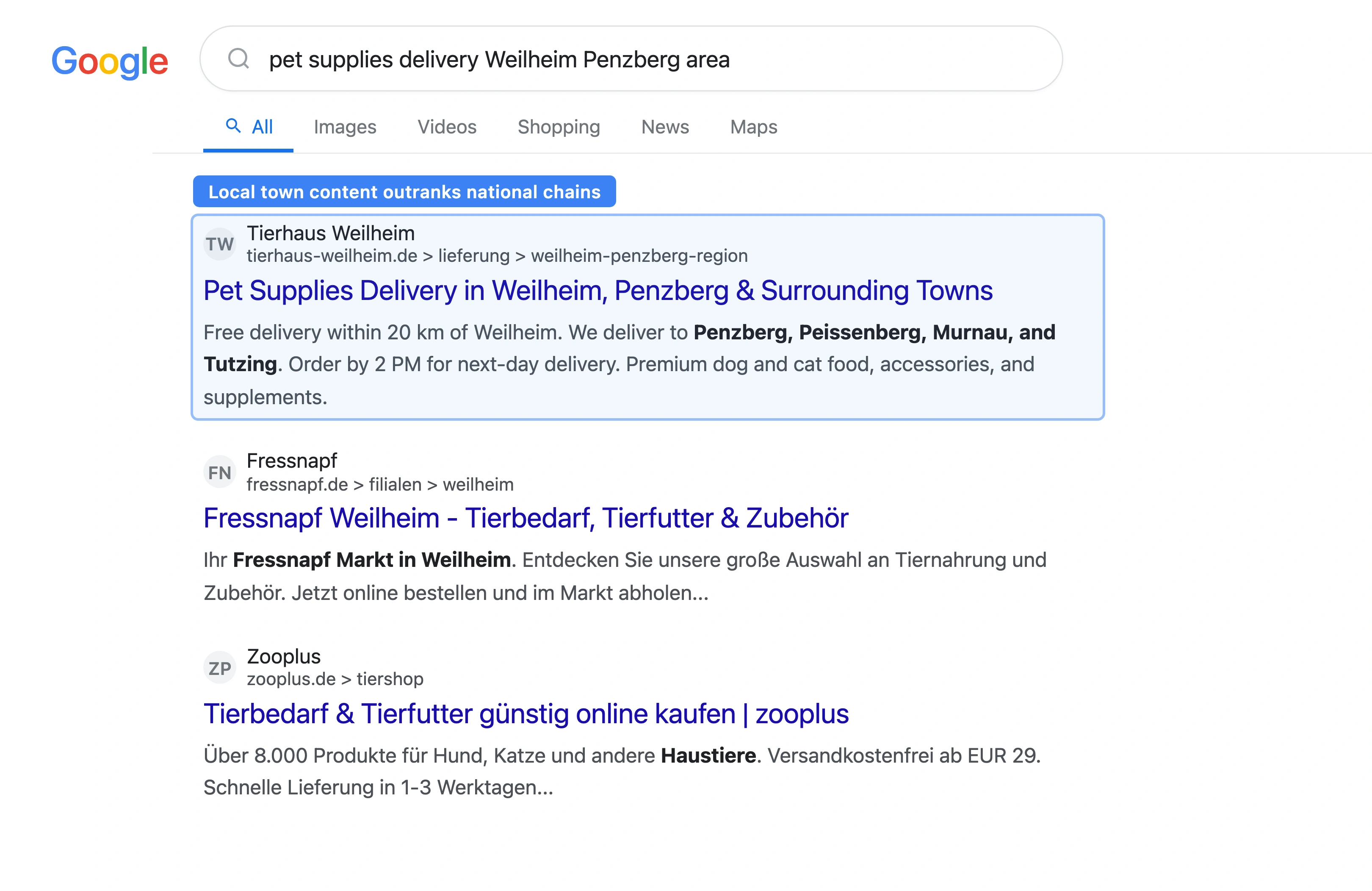
Rural pet stores should think regionally. Your content covers a wide geographic area because your customers come from multiple towns. Effective content includes:
- Regional guides: "Pet care resources in the [County/Region] area"
- Town-specific pages: one page per town you serve, each with unique local details
- Seasonal regional content: "Winter pet safety tips for [Mountain/Coastal/Rural] areas"
- Community event coverage: local dog shows, adoption drives, agricultural fairs
The key is to become the go-to online resource for pet owners across your entire service region. When you are the only pet store publishing content about nearby towns, Google has no choice but to rank you for those terms.
Urban content strategy
Urban pet stores should think in neighbourhoods. Your content needs to be specific enough to stand out in a crowded market. Effective content includes:
- Neighbourhood guides: "Best dog walking routes in [District]"
- Comparison content: "Independent pet stores vs chain stores in [City]"
- Event-driven content: pop-up markets, adoption events, seasonal sales
- Expert content: breed-specific care advice tied to your store's specialities
Building topical authority through consistent local content is essential in both markets, but the geographic scope differs. For a deeper look at how content clusters work for pet stores, see our core pet store SEO guide.
What about multi-location pet stores?
If you operate pet stores in both rural and urban locations, you need separate strategies for each. A single approach will under-serve one market or the other.
Each location should have its own Google Business Profile, its own location page on your website, and its own content calendar. The rural location publishes regional content covering surrounding towns. The urban location publishes neighbourhood-specific content targeting nearby districts.
Our multi-location SEO guide for pet stores covers the technical setup in detail: separate location pages, location-specific schema markup, and how to avoid duplicate content across locations.
How do you measure success differently?
The metrics that matter are the same - rankings, traffic, calls, visits - but the benchmarks differ.
| Metric | Rural benchmark | Urban benchmark |
|---|---|---|
| Local pack ranking | Top 3 within 4-8 weeks | Top 3 within 8-16 weeks |
| Review count target | 15-25 reviews in first 3 months | 40-50 reviews in first 3 months |
| Citation count | 20-30 accurate listings | 60-80+ accurate listings |
| Content publishing | 4-6 local articles per month | 8-10 neighbourhood articles per month |
| GBP impressions growth | 50-100% increase in 3 months | 20-40% increase in 3 months |
76% of "near me" mobile searches lead to a store visit within 24 hours[5]. Track how many of your GBP impressions convert to direction requests or calls. This conversion rate tells you whether your local SEO effort is reaching the right people - regardless of market size.
Practical action plan: rural pet stores
If your pet store is in a rural area or small town, start here:
- Complete your Google Business Profile - fill every field, upload 20+ photos, set accurate hours and service descriptions
- Create town-specific content - write one page for each town within 20 kilometres of your store
- Ask for reviews consistently - aim for 2 to 3 new reviews per week with specific mention of your location
- List on regional directories - chamber of commerce, local newspaper listings, regional pet directories
- Publish regional blog content - cover seasonal pet care, local events, and regional pet owner concerns
- Optimise for voice search - use question-based headings and natural language in your content
Practical action plan: urban pet stores
If your pet store is in a city or dense suburban area, start here:
- Audit your review profile - identify your top 3 competitors' review counts and aim to match or exceed them
- Build citation volume - target 60+ accurate listings with consistent NAP across all platforms
- Publish neighbourhood content weekly - target specific districts, landmarks, and local search terms
- Update your GBP weekly - new photos, posts, and product highlights every 7 days
- Pursue local backlinks - partner with shelters, sponsor events, collaborate with complementary businesses
- Monitor competitor activity - track when competitors earn new reviews or publish new content
For a complete SEO foundation that applies to both markets, see our pet store SEO strategy guide. If your store also sells online, combine this with our e-commerce SEO guide for pet stores.
Frequently Asked Questions
Is rural SEO easier than urban SEO for pet stores?
Rural SEO is less competitive but not necessarily easier. You face fewer direct competitors, and Google expands the local pack radius to 15 miles in low-density areas[4]. However, rural markets have less search volume, fewer citation opportunities, and keyword research tools often show little or no data for small-town queries. The opportunity is real - 58% of businesses do not optimise for local search[1] - but you still need consistent effort to claim and hold your position.
How many reviews does a rural pet store need to rank in the local pack?
In most rural markets, 10 to 20 genuine reviews with a 4.5+ star average are enough to rank in the local pack. The national average for top-ranking businesses is 47 reviews[6], but that figure is driven by urban competition. What matters more than total count is recency. Google prefers reviews less than 30 days old[6], so aim for 2 to 3 new reviews per week rather than collecting them all at once.
Should urban pet stores target neighbourhood keywords or city-wide keywords?
Both, but prioritise neighbourhood keywords first. City-wide terms like "pet store in Berlin" have high competition and require significant authority to rank for. Neighbourhood terms like "dog food Prenzlauer Berg" have lower competition and higher conversion intent because they match how urban residents actually search. Once you rank for multiple neighbourhood terms, your site builds enough authority to compete for city-wide keywords too.
Do rural pet stores need as many citations as urban ones?
No. Businesses with 40+ accurate citations rank 53% higher in local search[9], but that benchmark applies mainly to competitive urban markets. Rural pet stores benefit more from fewer, higher-quality citations on regional directories, local newspaper sites, and community platforms. Consistency matters more than volume: businesses with inconsistent NAP data rank 2 to 3 positions lower regardless of market size[10].
References
- BrightLocal (2025). Local SEO Statistics. brightlocal.com
- Market Data Forecast (2025). Europe Pet Care Market Size, Share, Growth & Trends. marketdataforecast.com
- Marketing LTB (2025). Local SEO Statistics: 98+ Stats & Insights. marketingltb.com
- Search Engine Land (2025). The Proximity Paradox: Beating Local SEO's Distance Bias. searchengineland.com
- Backlinko (2025). Local SEO Stats. backlinko.com
- Shapo (2025). Google Review Statistics: Key Data & Trends for Local SEO. shapo.io
- Synup (2025). 80+ Industry Specific Voice Search Statistics. synup.com
- Cube Creative (2025). 63+ Proven Local SEO Stats That Drive Service Calls Now. cubecreative.design
- Custom Web Audits (2025). Local Citations: Why They Still Matter for Local SEO Success. customwebaudits.com
- SEOWerkz (2025). Ultimate Guide To NAP Consistency For Local SEO. seowerkz.com