Seasonal SEO for Pet Stores: A Month-by-Month Guide

Table of Contents +
- Why Seasonal Content Is a Growth Channel for Pet Stores
- January-March: New Year Pet Health and Resolutions
- April-June: Spring Flea Season and Outdoor Pet Gear
- July-September: Summer Travel, Heat Safety, and Back-to-School
- October-December: Holiday Gifts, Winter Care, and Year-End Deals
- How Far in Advance Should You Publish Seasonal Content?
- How to Update Last Year's Seasonal Content
- Seasonal Keyword Research for Pet Stores
- Turning Seasonal Spikes Into Year-Round Growth
- Frequently Asked Questions
- References
Plan seasonal SEO for your pet store month by month. Get the full calendar with keywords, timing, and content ideas to capture traffic before every peak season.
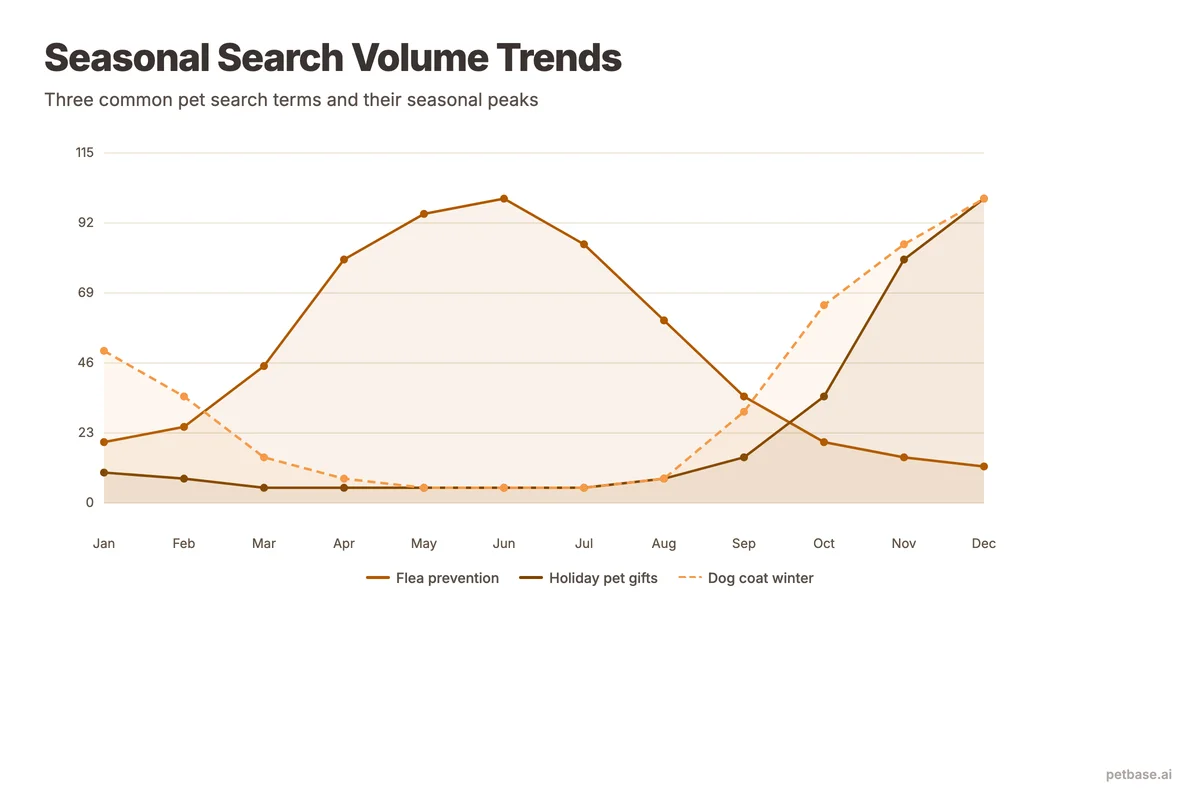
Organic search drives 53% of all website traffic[1]. For pet stores, a large share of that traffic is seasonal. Pet owners search for flea prevention in spring, cooling products in summer, Halloween costumes in October, and gift guides in November. The stores that capture this traffic are the ones publishing content 60 to 90 days before the season peaks - because Google needs weeks to index and rank new pages.
This guide breaks down the entire year into actionable seasonal SEO windows. You will learn exactly what to publish, when to publish it, and how to turn seasonal spikes into year-round organic growth for your pet store SEO strategy.
Why Seasonal Content Is a Growth Channel for Pet Stores
Seasonal content works because it matches what pet owners are actively searching for at specific times of the year. When someone searches "Christmas gifts for dogs" in November, they have high purchase intent. They are not browsing - they are buying.

The U.S. pet industry alone reached $152 billion in 2024[2], with pet e-commerce projected to hit $94.89 billion globally[3]. A growing share of that spending begins with a search engine query. Here is why seasonal SEO matters specifically for pet stores:
- Lower competition: Most pet stores ignore seasonal keywords entirely. While big retailers focus on broad terms, you can rank for specific seasonal queries with less effort.
- Higher conversion rates: Long-tail seasonal keywords convert at 36% - far above average - because they carry strong buying intent[4]. Someone searching "summer dog cooling vest" in June is ready to purchase today.
- Recurring traffic: A well-optimized seasonal post can rank year after year. One article about "best dog Halloween costumes" published in 2024 can drive traffic every October for years.
- Content planning clarity: Seasonal calendars remove the guesswork from your content calendar. You always know what to write next.
Seasonal content also builds topical authority. When you cover flea prevention in spring, summer heat safety, holiday gift guides, and winter coat care, Google sees your store as a comprehensive resource for pet owners - not just a shop listing products.
A pet store in central Europe tracked its organic traffic over 12 months after implementing a seasonal content strategy. Traffic increased 340% year-over-year, with the biggest spikes in March (flea season content), July (travel content), and November (gift guides). The content published 8 to 12 weeks ahead consistently outperformed content published less than 4 weeks before the season.
Petbase automates SEO content for pet stores - publishing 10 optimized articles monthly so you can focus on running your shop - start your free trial.
January-March: New Year Pet Health and Resolutions
The first quarter is dominated by "new year, new start" energy. Pet owners set goals for their pets just like they do for themselves. Weight loss, better nutrition, training commitments, and veterinary checkups spike in search volume.
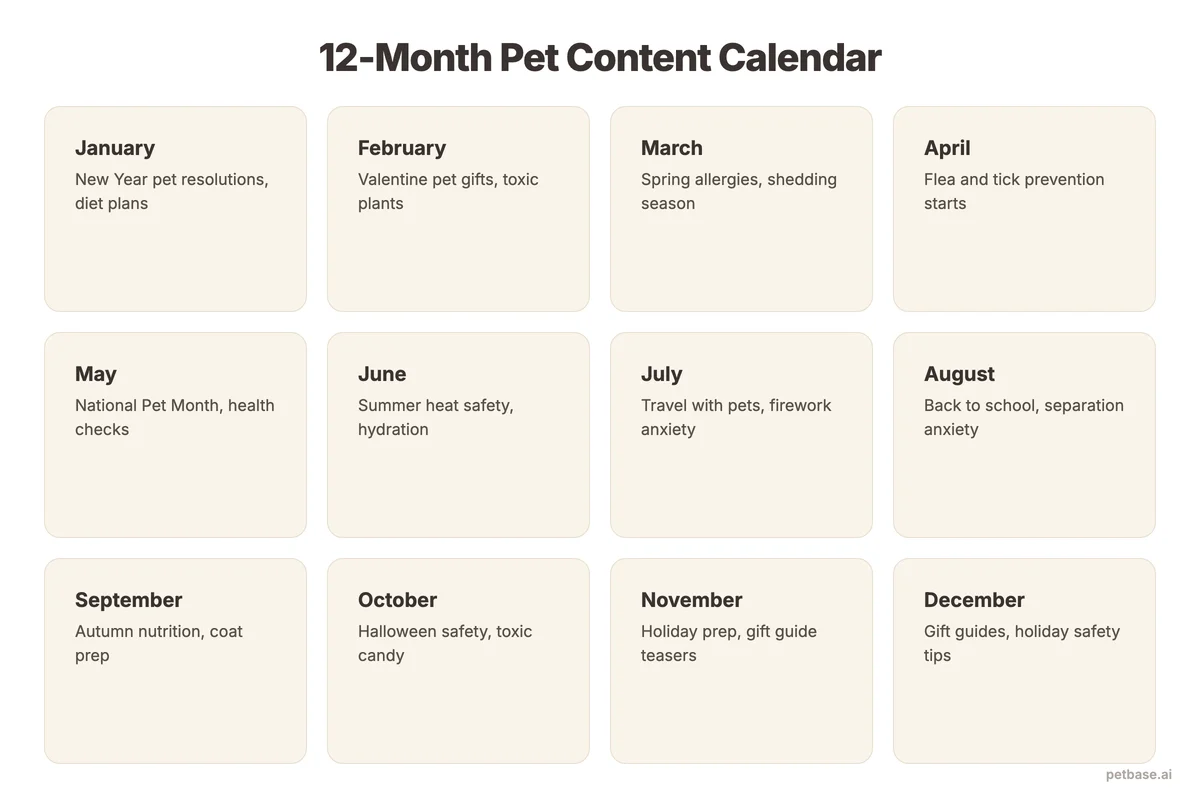
January: Pet Health Resolutions
January search trends for pet stores center on health and wellness. Owners who overfed their pets during the holidays now search for weight management solutions.
Target keywords:
- "dog weight loss plan"
- "healthy pet food brands"
- "new year pet health tips"
- "pet wellness checkup cost"
Content ideas: Write guides about healthy feeding schedules, low-calorie treat alternatives, and signs your pet needs to lose weight. Link these to your product pages for diet food and supplements.
February: Valentine's Day and Pet Pampering
Valentine's Day generates a surprising amount of pet-related searches. "Valentine gifts for dog lovers" and "pet spa day" see sharp spikes.
Target keywords:
- "Valentine gifts for pet owners"
- "dog-safe Valentine treats"
- "pet grooming packages"
March: Spring Prep and Allergy Season
March marks the transition to spring. Allergy content, shedding solutions, and spring cleaning with pets become hot topics.
Target keywords:
- "dog spring allergy symptoms"
- "best deshedding tools for cats"
- "spring cleaning pet safe products"
This quarter is ideal for building out your pet product brand SEO with health-focused content that connects to product pages.
April-June: Spring Flea Season and Outdoor Pet Gear
Spring and early summer are peak seasons for pet stores. Flea and tick prevention, outdoor gear, and travel accessories dominate search intent from April through June.
April: Flea and Tick Prevention
Flea season content is among the highest-converting seasonal content for pet stores. Pet owners actively search for prevention products, comparisons, and application guides.
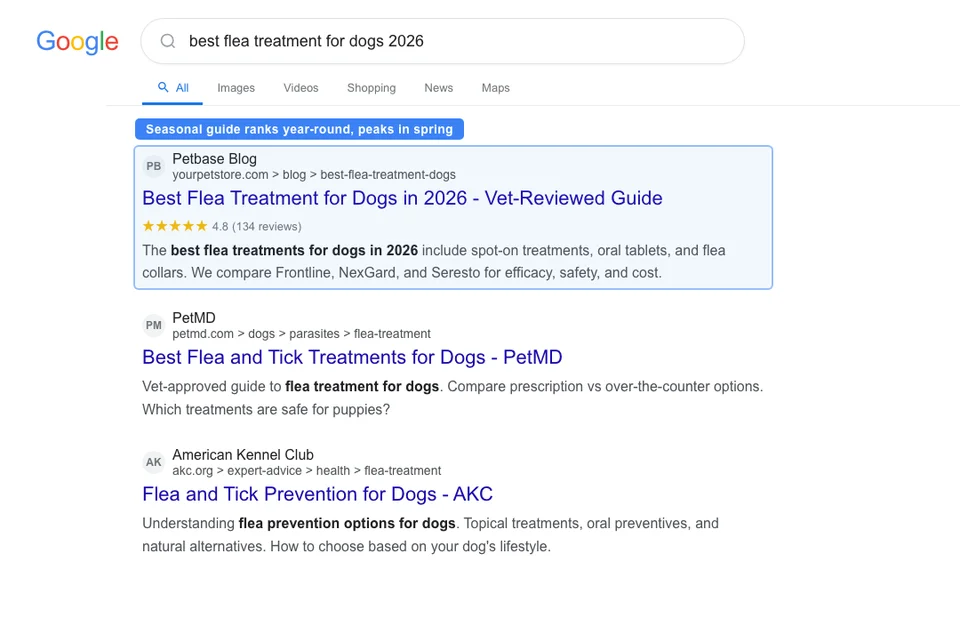
Target keywords:
- "best flea treatment for dogs 2026"
- "natural flea prevention cats"
- "flea collar vs topical treatment"
Write comparison articles that link to your product descriptions. Flea prevention comparison tables perform especially well because owners want to evaluate options side by side.
May: Outdoor Adventures and Training
As weather improves, searches for outdoor pet gear, harnesses, hiking equipment, and portable water bowls increase.
Target keywords:
- "best dog hiking harness"
- "portable dog water bottle"
- "outdoor cat enclosure"
June: Summer Travel Preparation
June sees the start of vacation planning. Pet travel, boarding, and summer safety content peaks.
Target keywords:
- "traveling with pets by car"
- "dog-friendly vacation destinations"
- "pet sitter vs boarding kennel"
Every seasonal article should include internal links to your evergreen content. A flea prevention guide links naturally to your category page optimization guide and your general keyword research strategy.
July-September: Summer Travel, Heat Safety, and Back-to-School
Midsummer through early fall brings heat safety concerns, continued travel content, and the back-to-school transition that affects pet routines.
July: Heat Safety and Hydration
July is dominated by safety content. Pet owners search urgently for information about heatstroke, paw pad burns, and cooling products.
Target keywords:
- "signs of heatstroke in dogs"
- "cooling mat for dogs"
- "can dogs get sunburn"
- "hot pavement dog paws"
Safety content builds E-E-A-T (Experience, Expertise, Authoritativeness, Trustworthiness) signals that Google values. A pet store publishing detailed heat safety guides positions itself as a trusted authority.
August: Back-to-School Pet Adjustment
When families return to school and work routines, pets experience separation anxiety. This creates a content window for enrichment toys, calming products, and training tips.
Target keywords:
- "dog separation anxiety solutions"
- "interactive cat toys for alone time"
- "calming treats for dogs"
September: Fall Transition and Senior Pet Care
September is an excellent month for senior pet content. As summer ends, owners turn attention to joint supplements, mobility aids, and autumn health checkups.
Target keywords:
- "senior dog joint supplements"
- "fall pet health checklist"
- "best dog bed for arthritis"
October-December: Holiday Gifts, Winter Care, and Year-End Deals
The fourth quarter is the highest-revenue period for most pet stores. Gift guides, holiday safety content, and winter care articles drive both traffic and sales.
October: Halloween Safety and Costumes
Halloween pet content is consistently among the most-searched seasonal pet topics. Costume guides drive massive traffic, while safety content builds trust.
Target keywords:
- "dog Halloween costumes 2026"
- "Halloween candy toxic to dogs"
- "cat-safe Halloween decorations"
November: Holiday Gift Guides and Black Friday
November is critical for revenue. Gift guide articles can rank for dozens of long-tail keywords and drive traffic directly to product pages. Long-tail keywords account for roughly 70% of all search queries[4], making these specific seasonal phrases a huge opportunity.
Target keywords:
- "best Christmas gifts for dogs"
- "pet store Black Friday deals"
- "gift guide for cat owners"
- "pet subscription box comparison"
Your blog-to-sales strategy is most visible during this quarter. Gift guides that link to product pages with optimized product descriptions create a direct path from content to purchase.
December: Winter Safety and New Pet Preparation
December combines holiday gift traffic with practical winter care content. Many families also get new pets during the holidays, creating demand for "new pet owner" content.
Target keywords:
- "winter paw protection dogs"
- "puppy starter kit checklist"
- "keep outdoor cats warm winter"
- "new puppy first week guide"
How Far in Advance Should You Publish Seasonal Content?
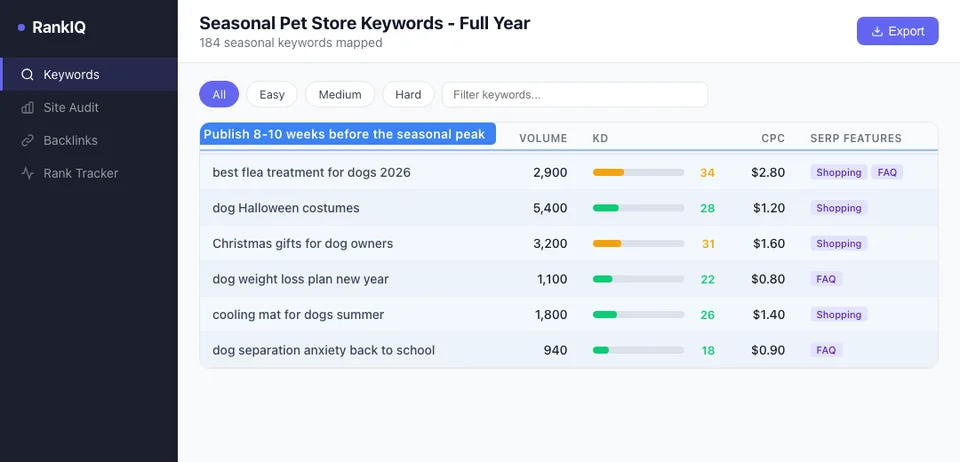
Publish seasonal content 60 to 90 days before the peak search period. This is the single most important timing rule for seasonal SEO. Google needs time to crawl, index, and rank your pages. Publishing a Halloween guide on October 15 means Google might not rank it until November - when nobody is searching anymore.
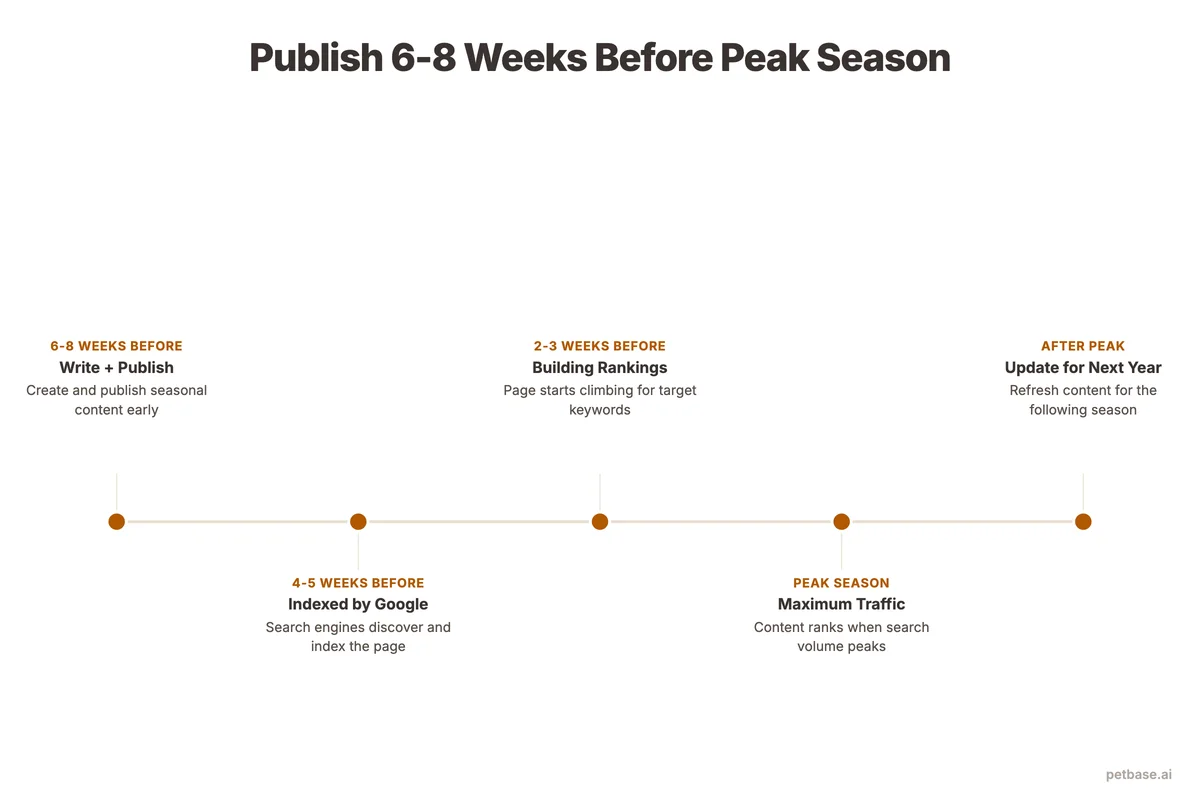
Here is the ideal publication timeline:
| Season/Event | Peak Search Month | Publish By | Update Existing Content By |
|---|---|---|---|
| New Year Pet Health | January | Late October | Early December |
| Valentine's Pet Gifts | February | Late November | Early January |
| Spring Allergies/Flea Season | March-April | Late December | Early February |
| Outdoor Gear/Travel | May-June | Late February | Early April |
| Summer Heat Safety | July | Late April | Early June |
| Back-to-School/Anxiety | August-September | Late May | Early July |
| Halloween Costumes/Safety | October | Late July | Early September |
| Holiday Gift Guides | November | Late August | Early October |
| Winter Care/New Pets | December | Late September | Early November |
New content needs 60 to 90 days. Updated content (refreshing last year's posts) needs 30 to 45 days. The table above gives you both timelines so you can plan your entire content calendar around these windows.
How to Update Last Year's Seasonal Content
Updating existing seasonal content is more efficient than writing new posts every year. Google prefers refreshed, authoritative pages over brand-new pages covering the same topic. A two-year-old gift guide that has been updated with current products and trends will typically outrank a brand-new guide.
Here is what to update in each seasonal refresh:
| Element | What to Do | Why It Matters |
|---|---|---|
| Year in title | Update to current year | Increases click-through rate from search results |
| Product recommendations | Replace discontinued items, add new options | Keeps content accurate and useful |
| Statistics and data | Replace with current year data | Maintains E-E-A-T signals |
| Internal links | Add links to new content published since last update | Strengthens site architecture |
| Images | Refresh product photos, add new visuals | Signals freshness to Google |
| Schema markup | Update dates and product details | Helps rich snippet eligibility |
| Meta description | Include current year | Improves CTR in search results |
Do not change the URL when updating seasonal content. Keep the same slug and let the page accumulate authority over time. A URL like /blog/best-dog-halloween-costumes that has been updated for three consecutive years will have significant ranking power.
Track your seasonal updates in a spreadsheet: URL, last updated date, next update date, and any notes about what changed. This system ensures nothing falls through the cracks as your content library grows.
Seasonal Keyword Research for Pet Stores
Standard keyword research tools show average monthly volume, which smooths out seasonal spikes. A keyword that averages 500 searches per month might actually get 3,000 in its peak month and 50 in its off-season. You need to look at monthly trends, not just averages.
Here are the top seasonal keywords by month for pet stores:
| Month | Top Seasonal Keywords | Estimated Peak Volume | Content Type |
|---|---|---|---|
| January | pet weight loss, healthy dog food, new year pet resolutions | 5,000-12,000 | Guide, Product Roundup |
| February | Valentine pet gifts, dog-safe chocolates, pet pampering | 3,000-8,000 | Gift Guide, Safety |
| March | dog allergies spring, deshedding tools, spring pet cleaning | 8,000-15,000 | Guide, Comparison |
| April | flea treatment dogs, tick prevention, flea collar reviews | 20,000-40,000 | Comparison, Product |
| May | dog hiking gear, outdoor cat enclosure, pet travel carrier | 10,000-20,000 | Product Roundup |
| June | traveling with dogs, pet-friendly hotels, dog car safety | 15,000-25,000 | Guide, Listicle |
| July | dog heatstroke signs, cooling mat dogs, hot pavement paws | 25,000-50,000 | Safety Guide |
| August | dog separation anxiety, calming treats, interactive pet toys | 8,000-15,000 | Guide, Product |
| September | senior dog supplements, fall pet health, arthritis dog bed | 5,000-10,000 | Product, Guide |
| October | dog Halloween costumes, toxic candy pets, pet costume contest | 30,000-60,000 | Listicle, Safety |
| November | Christmas gifts dogs, pet Black Friday, cat gift guide | 40,000-80,000 | Gift Guide, Deals |
| December | winter dog boots, new puppy checklist, keep pets warm | 15,000-30,000 | Guide, Product |
Use Google Trends to validate timing for your specific region. Flea season peaks earlier in southern Europe than in Scandinavia, for example. Adjust your calendar accordingly.
Companies with blogs get 55% more website traffic than those without[5], and companies publishing 16 or more posts per month get 3.5x more traffic than those posting four or fewer[5]. Seasonal content is one of the fastest ways to fill that publishing calendar with high-intent topics.
Petbase can help you identify and prioritize these seasonal keywords automatically. The platform's keyword research capabilities factor in seasonal trends and competition levels, so you focus on the keywords most likely to drive traffic to your store.
When doing seasonal keyword research, look for three types of queries:
- Informational: "How to keep dogs cool in summer" - These bring traffic and build authority.
- Comparison: "Best flea collar vs spot treatment" - These signal buying intent.
- Transactional: "Buy dog cooling vest" - These drive direct sales.
A complete seasonal strategy covers all three types. Your blog handles informational and comparison queries, while your category pages and product pages capture transactional searches.
Turning Seasonal Spikes Into Year-Round Growth
The real value of seasonal SEO is not just the traffic spikes - it is how those spikes compound into sustained growth. Content marketing returns $7.65 for every $1 spent, compared to $1.80 for paid ads[6]. Seasonal content contributes to that ROI because each post adds permanent pages to your site that Google can index and rank.
Here is how to turn seasonal content into a year-round asset:
- Link seasonal posts to evergreen content: A flea prevention guide should link to your general pet store SEO guide and your content clustering strategy. This passes authority between pages.
- Build seasonal clusters: Do not publish one Halloween article. Publish three to five: a costume guide, a candy safety article, a decoration safety post, and a local event roundup. Clustered seasonal content ranks higher than isolated posts.
- Refresh annually: Update product recommendations, statistics, and the year in your title. One article refreshed each year accumulates more authority than a new article written from scratch.
- Capture local intent: 46% of Google searches have local intent[7]. Add location-specific seasonal content - "best dog-friendly Christmas markets in [your city]" or "spring pet events near [your location]" - to capture nearby pet owners.
Petbase publishes 10 articles per month for EUR 199/mo, giving you the volume to cover both seasonal and evergreen topics without doing the writing yourself. That mix of timely seasonal content and steady evergreen publishing is what turns a seasonal traffic spike into a permanently higher traffic baseline.
Frequently Asked Questions
Can seasonal content rank year-round or only during the peak season?
Seasonal content primarily ranks during its peak months, but well-optimized posts can maintain some visibility year-round. A comprehensive flea prevention guide might rank for "flea treatment for dogs" even in winter because people in warmer climates search for it throughout the year. The key is writing thorough, evergreen-style content that happens to peak seasonally rather than thin content that is only relevant for a few weeks.
How many seasonal posts should a pet store publish per month?
Aim for 2 to 3 seasonal posts per quarter, published 60 to 90 days ahead of their peak. Combined with your evergreen content, this means roughly 1 seasonal article per month alongside your regular publishing schedule. If you publish 10 articles per month total, 2 to 3 of those should target upcoming seasonal keywords. The rest should be evergreen topics that build your foundational SEO.
Should I create new seasonal posts every year or just update the old ones?
Update the old ones whenever possible. Google rewards pages with a long history of updates and backlinks. Create a new post only if you are targeting a completely different angle or keyword cluster. For example, if you already have "Best Dog Christmas Gifts" from last year, update it with new products and the current year. But if you want to add "Christmas Gifts for Cat Owners" as a separate article, that is a new post targeting a different audience and keyword set. Petbase can help you identify which existing posts to refresh and which new topics to cover - keeping your content calendar efficient and strategic.
Ready to build a seasonal SEO strategy that drives traffic and sales year-round? See how Petbase automates seasonal content planning so you never miss a traffic window again.
References
- BrightEdge (2024). How Much Traffic Comes from Organic Search. seoinc.com
- American Pet Products Association (2024). Industry Trends and Stats. americanpetproducts.org
- Grand View Research (2024). Pet Care E-Commerce Market Analysis. grandviewresearch.com
- Embryo (2024). 30 Statistics About Long-Tail Keywords. embryo.com
- HubSpot (2024). Marketing Statistics. hubspot.com
- Genesys Growth (2024). Content Marketing ROI Stats for Marketing Leaders. genesysgrowth.com
- BrightLocal (2024). Local SEO Statistics. brightlocal.com