
Generic keyword lists miss how pet owners actually search. Real growth comes from structuring demand by breed, life stage, conditions, and shopping intent, then mapping it to the right page types and links.
This tactical guide shows how to build a pet-specific keyword universe and operationalize it with automation. You will turn modifiers into programmatic coverage, product linkage, and internal links that convert.
Pet search behavior is modifier-heavy and context-specific. A robust model recognizes how species, breed, life stage, and conditions change needs, vocabulary, and conversion paths.
Owners adopt humanized nutrition and care logic, so modifiers like “grain-free,” “joint support,” or “sensitive stomach” materially change product choice and brand trust signals. Research shows human food trends carry into pet purchases, shifting category demand and evaluation criteria[1].
Specificity outperforms head terms: “best large-breed senior dog food for joint support” encodes type, size, age, and need. Evidence suggests even exposure to different species can shift consumer mindsets and risk preferences, influencing query phrasing and conversion readiness[2]. Build for modifiers first.
Model demand in layers: core pet attributes, commercial attributes, and service qualifiers. This creates consistent inputs for programmatic coverage and internal linking.
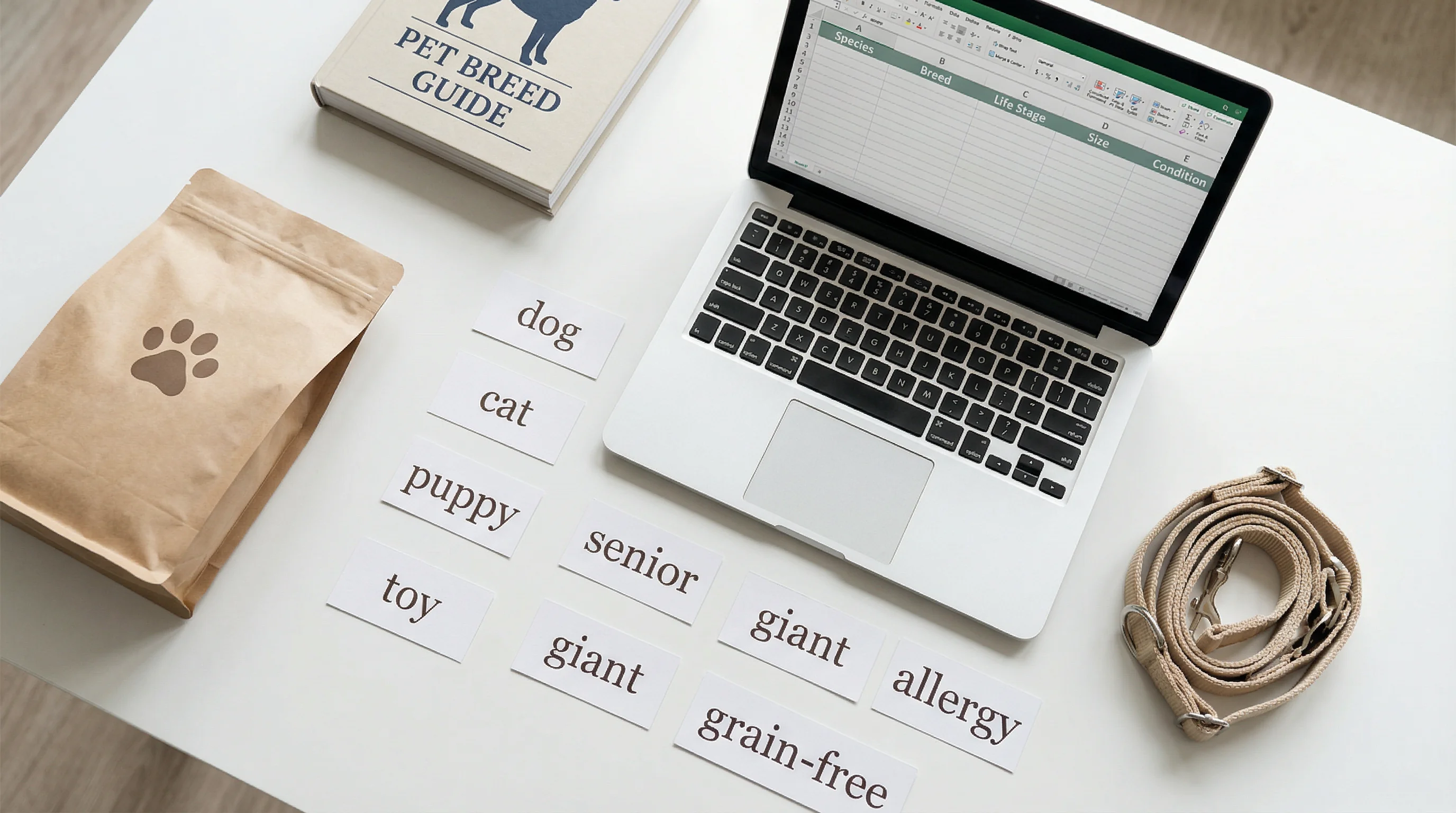
These define needs and vocabulary. Example: species (dog/cat), breed (canonical name), life stage (puppy/adult/senior), size (toy/giant), condition (allergies), activity (high energy). This scaffolds breed-specific keywords and life stage SEO at scale.
Transform pet eCommerce keywords by embedding attributes: “single-ingredient,” “hypoallergenic,” “durable,” “freeze-dried,” “under $30,” or specific brands. These modifiers map to collection filters, product options, and comparison content.
For veterinary SEO and services, add “near me,” “24/7,” “mobile,” and credential modifiers (board-certified, fear-free). These shape local packs, appointment CTAs, and trust schema.
Treat every modifier as a signal to a specific page type, schema, and internal link path.
Breed is the strongest disambiguator for needs, product fit, and tone. Use standardized names, then expand into long-tails and product intents.
Normalize naming with recognized bodies to avoid fragmentation and cannibalization. Align singular/plural and common aliases to a canonical breed page; map variants as synonyms for clean clustering and navigation.
Map recurring intents: sizing, shedding, sensitivities, training challenges, and exercise needs.
Use templates that slot breed + life stage + condition into consistent patterns: “Best [breed] [life stage] food for [condition],” “How to size a harness for [breed],” “Are [breed] good with [household context]?” Automate meta, schema, and internal links.
Life stage and health modifiers focus content, drive trust requirements, and influence product assortments. Treat them as core inputs, not afterthoughts.
Each stage implies nutrition density, training aids, or mobility support. Owner characteristics and attachments influence product choices across species, requiring content to reflect evolving priorities by stage and species differences[3].
Cluster conditions and tie them to product attributes and care guides. Example: “hypoallergenic single-protein treats,” “glucosamine supplements,” “low-calorie wet food,” and “calming chews.” Link informational guides to collections and top products.
Medical topics are YMYL. Use evidence-backed statements, expert review, and schema. For implementation patterns and editorial standards, see E‑E‑A‑T for Veterinary Content: Medical Pages, Schema, and Editorial Governance.
Translate intent modifiers into page types, structured data, and internal paths that match SERP features and move users from research to purchase.
Bucket queries: know (“what size harness”), compare (“vs.”), buy (“best price,” “free shipping”), care (“how to brush teeth”), local (“groomer near me”). Match snippets, FAQs, and local packs accordingly to lift CTR and conversions.
Use a consistent matrix to drive page creation and SERP targeting.
ModifierBest Page TypePrimary SERP Featurebreed + sizeCollection with filtersOrganic + SitelinksconditionGuide with product picksPAA + FAQscompareComparison tableFeatured snippetlocal + serviceService pageLocal pack
Design hub-and-spoke navigation: species > breed > need. Implement breadcrumb schema and visible breadcrumbs on long-tail guides pointing to hubs. See internal linking blueprints that pass authority to products for practical patterns and anchor strategies.

Ground your universe in real customer language, then scale with SERP mining and safe programmatic expansions for coverage depth.
Extract attributes from product catalogs, questions from vet FAQs, and problems from tickets. Industry analyses underscore diversified segments—food, supplies, training, medical—so seeds should span categories and service intents[4].
Pull questions from PAA, benefits/complaints from reviews, and attribute language from marketplace filters. Consolidate phrasing variants into canonical intents to reduce duplication and maximize coverage.
Generate at scale: breed × life stage × size × condition × attribute. Use programmatic templates for breed and size modifiers to ensure safe variable slots, schema defaults, and guardrails that prevent thin pages.
Connect research to execution by ingesting data, generating topical maps, and publishing product-linked pages with consistent quality controls.
Import product feeds, attributes, and inventory signals. The system derives category facets, builds hubs and collections, and proposes content outlines for each modifier combination with breed-specific keywords and pet product intent alignment.
Queries resolve to page types: hubs, collections, comparisons, and products. CTAs, FAQs, and related-items modules are generated to match intent. For streamlined execution, some teams use Start Now to generate SEO‑optimized, research‑backed, product‑linked posts automatically.
Automated checks merge near-duplicates, resolve keyword cannibalization, and schedule refreshes for decaying pages. Versioning keeps test variants isolated while preserving cluster integrity and internal link equity.
Prioritize by business impact, monitor clusters not pages, and enforce guardrails so coverage scales without compromising trust or UX.
Score topics with search volume, difficulty, and expected margin or LTV. Health-related modifiers carry higher trust requirements; category growth trends help calibrate investment across products and services[4].
Track visibility, CTR, revenue, and assisted conversions at the cluster level. Prune or consolidate underperforming long-tails into stronger hubs; expand winning spokes with deeper comparisons and FAQs.
Standardize product, FAQ, medical, and breadcrumb schema. Enforce anchor taxonomies and on-page patterns that match intent. Connect to the complete Pet SEO guide for architecture context and cross-cluster alignment.

Score keywords by search volume, difficulty, and margin impact. Cluster by breed and life stage, then publish hub pages first to capture authority before long‑tails. Validate intent in SERPs, and align releases with inventory and seasonality.
Use collection pages for broad breed modifiers, comparison guides for evaluative intent, and optimized product pages for transactional terms with attributes like size or durability. Include FAQs, filters, and breadcrumbs to support exploration and conversion.
Treat them as YMYL. Cite credible sources, add veterinary review, use medical schema where appropriate, and avoid unsupported claims while providing clear care guidance. Include disclaimers and clear paths to professional services when necessary.
Yes. Use programmatic templates that combine breed, life stage, size, and attribute modifiers, then deduplicate and cluster results before generating pages at scale. Automate internal links, schema, and refresh cycles to maintain quality.
Link informational guides to relevant collections and products with exact or partial‑match anchors and include breadcrumb, related‑items, and FAQ links to spread authority. Use hub pages to consolidate signals and guide users toward conversion.
Building a pet-specific keyword universe means treating modifiers as architecture, not decoration. When species, breed, life stage, conditions, and attributes drive page types and internal links, you convert intent efficiently. Operationalize with programmatic templates, rigorous QA, medical governance, and cluster-level measurement. The result is reliable coverage, stronger E‑E‑A‑T, and a site that mirrors how pet owners search, compare, and buy—today and as the category evolves.