Local SEO Audit Checklist for Pet Stores

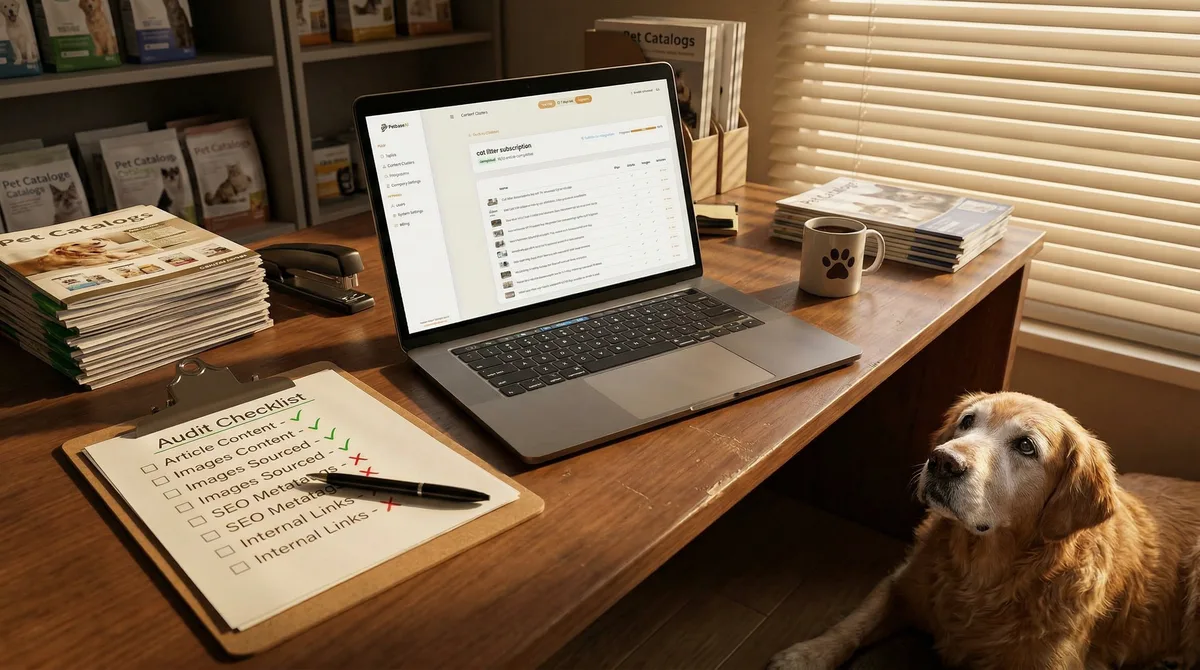
Table of Contents +
- Why Do Pet Stores Need a Local SEO Audit?
- How Often Should You Audit Your Local SEO?
- What Does a Local SEO Audit Cover?
- How Do You Audit Your Google Business Profile?
- How Do You Audit Citations and NAP Consistency?
- How Do You Audit Your Online Reviews?
- How Do You Audit On-Site Local SEO?
- How Do You Audit Technical SEO for Local Visibility?
- How Do You Audit Your Local Content Strategy?
- What Should You Fix First After the Audit?
- How Do You Track Audit Progress Over Time?
- Frequently Asked Questions
- References
Complete local SEO audit checklist for pet stores. 54 checkpoints across GBP, citations, reviews, on-site, technical, and content. Quarterly framework included.
46% of all Google searches have local intent[1]. That means nearly half the people typing into Google right now are looking for something nearby - a pet store, a groomer, a vet. Yet 58% of businesses do not optimize for local search at all[1]. If you have never audited your local SEO, you are flying blind. You do not know whether Google can find your pet store, whether your business information is correct across the web, or whether your competitors are quietly outranking you for every "pet store near me" search in your area.
A local SEO audit changes that. It is a structured review of every factor that affects your visibility in local search results - from your Google Business Profile to your website's technical health to the reviews customers leave about your store. This guide gives you a complete, pet-store-specific checklist you can work through in one afternoon.
TL;DR
A local SEO audit checks your Google Business Profile, citations, reviews, on-site SEO, technical setup, and content. Run one quarterly. This checklist covers every area with pet-store-specific checkpoints, a comparison table of audit areas, and a priority framework so you know what to fix first.
Why Do Pet Stores Need a Local SEO Audit?
Your pet store depends on local customers. Whether you sell premium dog food, natural supplements, or grooming supplies, the people who buy from you live within driving distance. Google's local algorithm determines which stores appear when those people search - and 44% of users click on local pack results before anything else[1].
The problem is that local SEO is not a set-it-and-forget-it task. Google updates its algorithm regularly. Your business information drifts across directories. Competitors add new reviews and content. Without a regular audit, small problems compound into major visibility losses.
Consider the numbers. Google Business Profile signals account for 32% of local pack ranking factors[2]. Review signals make up 20%[2]. On-page signals contribute 24% to local organic rankings[3]. Each of these areas can silently degrade if you are not checking them. A local SEO audit catches the problems before they cost you customers.
In my experience working with pet stores across Europe, the most common reaction after a first audit is surprise. Store owners assume their online presence is fine because they set up a Google profile years ago. The audit reveals outdated hours, missing categories, inconsistent addresses, and zero recent reviews - all of which are actively pushing them down in search results.
For a full overview of local SEO strategy beyond the audit, see our local SEO guide for pet businesses.
Petbase automates SEO content for pet stores - publishing 10 optimized articles monthly so you can focus on running your shop - start your free trial.
How Often Should You Audit Your Local SEO?
SEO experts recommend a local SEO audit at least once per quarter[4]. A quarterly cadence catches problems early - before they erode your rankings for weeks or months.
Here is a practical schedule for pet stores:
- Quarterly (every 3 months): Full audit using this checklist. Review all areas: GBP, citations, reviews, on-site, technical, content.
- Monthly: Quick check of Google Business Profile (new reviews, Q&A, posts) and Google Search Console (crawl errors, indexing issues).
- After major changes: Run an immediate audit after a website redesign, platform migration, address change, new location opening, or rebranding.
If you have never audited before, your first audit will take 2 to 4 hours. Subsequent quarterly audits take about 60 to 90 minutes because you are only checking for changes since the last review.
What Does a Local SEO Audit Cover?
A comprehensive local SEO audit examines six areas. Each one influences a different part of Google's local ranking algorithm. Here is how they break down, with the specific checkpoints for each area.
| Audit Area | What It Checks | Ranking Impact | Key Checkpoints |
|---|---|---|---|
| Google Business Profile | Profile completeness, categories, photos, posts, Q&A | 32% of local pack factors | 12 checkpoints |
| Citations and NAP | Business listings, directory accuracy, NAP consistency | 11% of local ranking factors | 8 checkpoints |
| Reviews | Review volume, recency, ratings, response rate | 20% of local pack factors | 7 checkpoints |
| On-Site SEO | Local keywords, title tags, schema markup, NAP on site | 24% of local organic factors | 10 checkpoints |
| Technical SEO | Mobile-friendliness, speed, indexing, HTTPS, sitemap | Foundation for all other signals | 9 checkpoints |
| Content | Local content, blog coverage, topical authority, freshness | Supports on-page and link signals | 8 checkpoints |
The rest of this guide walks through each area in detail with the specific checkpoints you need to verify.
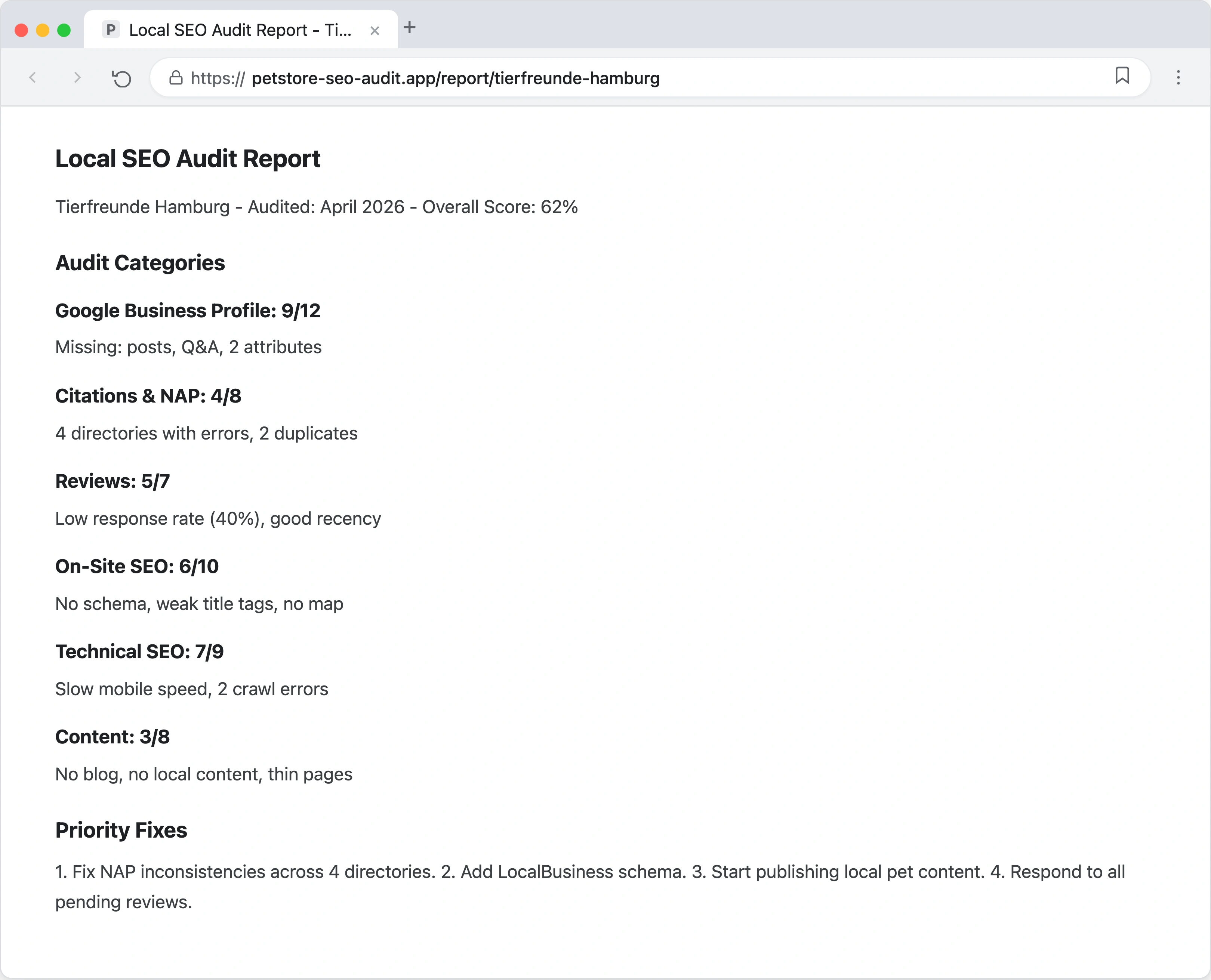
How Do You Audit Your Google Business Profile?
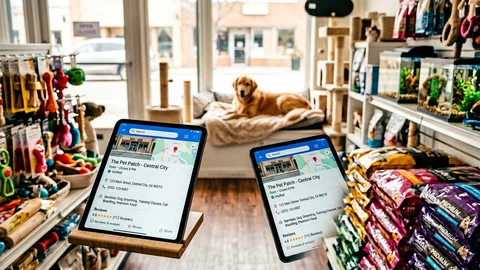
Your Google Business Profile (GBP) is the single most important element of local SEO. It drives 32% of local pack ranking factors[2], and customers are 2.7x more likely to trust a business with a complete profile[5]. Yet only 64% of businesses have even claimed and verified their GBP[1].
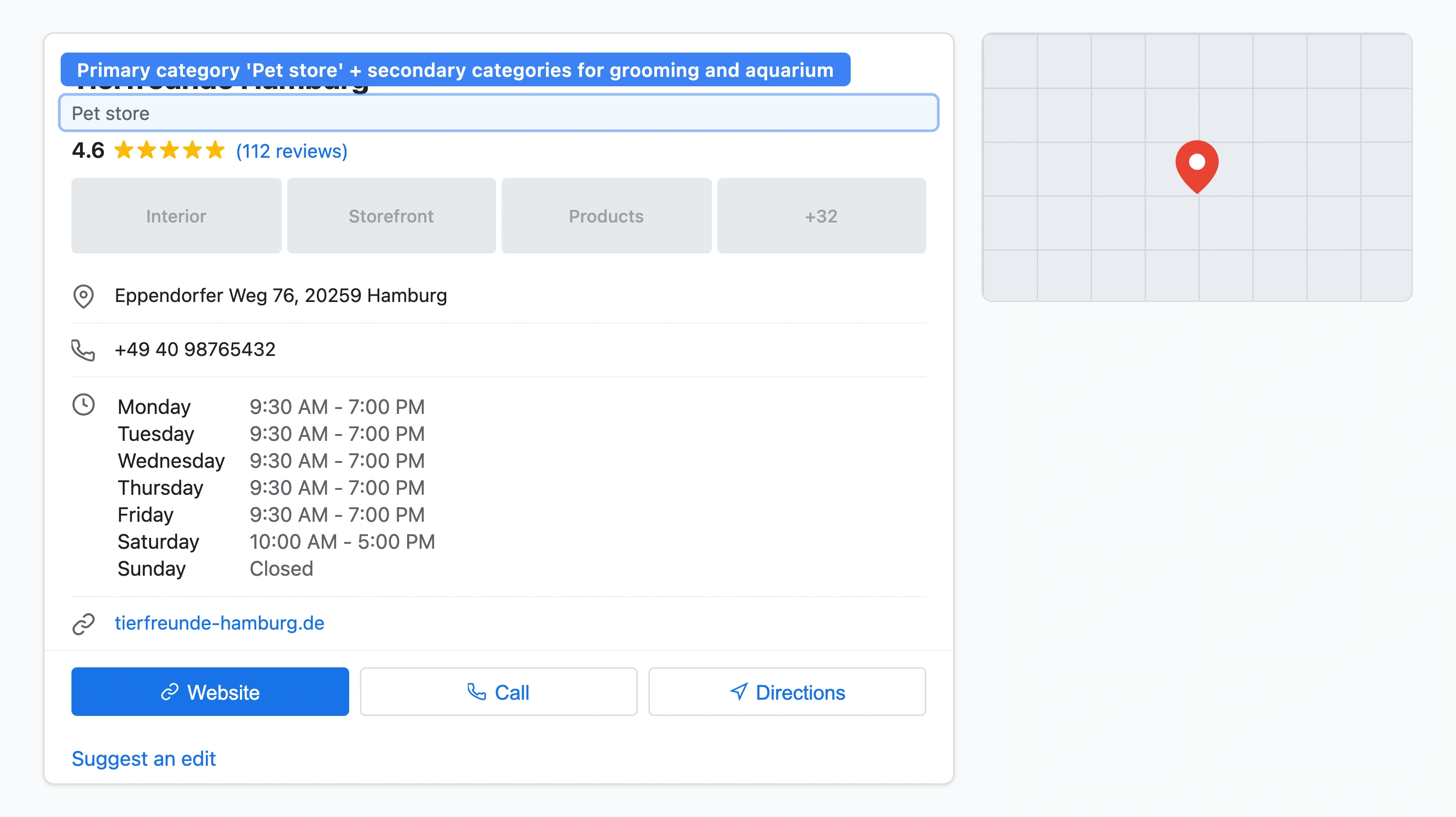
For a deep dive into GBP optimization, see our Google Business Profile guide for pet stores.
GBP Audit Checkpoints
- Claimed and verified. Log in to your GBP dashboard. If the profile says "Claim this business" or "Verify now," you have not completed setup. Do this first - nothing else matters until verification is done.
- Business name matches exactly. Your GBP name must match your real-world store name. Do not add keywords like "Best Pet Store London" - Google penalizes keyword stuffing in business names.
- Primary category is correct. For pet stores, the primary category should be "Pet Store" or "Pet Supply Store." Check that secondary categories cover your services: "Dog Groomer," "Pet Food Store," "Aquarium Store," or similar.
- Address and phone number are current. Compare your GBP address and phone to your website and all directory listings. Even small differences ("Street" vs "St.") can hurt consistency. 53% of consumers say accurate store hours are their top priority when checking business listings[1].
- Business hours are accurate. Check regular hours, holiday hours, and special hours. Outdated hours send customers to a closed store - and they leave a negative review.
- Business description is complete. Use all 750 characters. Include your city, key products (dog food, cat supplies, aquarium equipment), and what makes your store different.
- Photos are recent and high quality. GBP listings with quality photos get 42% more direction requests and 35% more website clicks[6]. Upload exterior shots, interior photos, product displays, and team photos. Aim for at least 20 photos, updated quarterly.
- Products and services are listed. Add your key product categories and services directly in GBP. Include descriptions and prices where possible.
- Posts are active. Profiles with regular posts appear 2.8x more frequently in the top 3 map results[6]. Check that you have posted within the last 7 days.
- Q&A section is monitored. Unanswered questions look abandoned. Check for new questions weekly and provide helpful, detailed answers.
- Attributes are set. GBP offers attributes like "Wheelchair accessible," "Free parking," "In-store pickup." Set every relevant attribute for your store.
- Website link points to the right page. Your GBP website link should go to your homepage or a dedicated location page - not a random product page.
How Do You Audit Citations and NAP Consistency?
Citations are mentions of your business name, address, and phone number (NAP) across the web. They appear on directories like Yelp, Yellow Pages, Facebook, Apple Maps, and industry-specific sites. Businesses with inconsistent NAP data rank 2 to 3 positions lower in local search[7], and 68% of consumers would stop using a local business if they found incorrect information online[8].
For the full citation strategy, read our local citations guide for pet businesses. For fixing consistency issues, see our NAP guide.
Citation Audit Checkpoints
- Core directories are claimed. Check that your pet store is listed on Google, Bing Places, Apple Maps, Yelp, Facebook, Yellow Pages, and any major local directories for your country (for example, Yelp.de, Das Telefonbuch, or Yell.com).
- NAP is identical everywhere. Your business name, address, and phone number must be character-for-character identical across every listing. Businesses with consistent NAP across at least 85% of citations see a 23% improvement in local pack rankings[9].
- Pet industry directories are covered. List your store on pet-specific directories and platforms relevant to your market. Examples include pet store aggregators, local pet community sites, and breed-specific forums with business directories.
- No duplicate listings exist. Search for your business on each platform. Duplicates confuse Google and split your ranking signals. If you find duplicates, merge or remove them. For a step-by-step process, see our duplicate listings guide.
- Old addresses and phone numbers are removed. If you moved locations or changed phone numbers, old information lingers on directories for years. Search for your old details and update or remove them.
- Category assignments are correct. Each directory lets you choose business categories. Verify that "Pet Store" or equivalent is your primary category on every platform.
- Website URLs are consistent. Some directories may link to HTTP instead of HTTPS, or to an old domain. Verify all links point to your current, live website.
- Citation volume is competitive. Businesses with 40+ accurate citations rank 53% higher in local search[10]. Count your citations and compare to competitors in your area.
How Do You Audit Your Online Reviews?
Review signals now account for 20% of local pack ranking factors - up from 16% in 2023[2]. Google looks at review quantity, recency, sentiment, and how you respond. For pet stores, reviews are also the primary trust signal for new customers deciding where to shop.
For the complete review management playbook, see our guide to online reviews for pet stores.
Review Audit Checkpoints
- Total review count. Top-ranking businesses on Google average approximately 47 reviews[11]. Count your Google reviews and compare to the top 3 pet stores in your local pack. If you are significantly behind, you need a review generation strategy.
- Average star rating. In 2026, 31% of consumers will only use a business with 4.5+ stars, and 68% require at least 4 stars[12]. Check your rating and identify any patterns in negative reviews that need addressing.
- Review recency. Google prefers businesses with reviews less than 30 days old, which can enhance rankings by 15%[11]. Check the date of your most recent review. If it has been more than 30 days, your review velocity needs attention.
- Response rate. Responding to 80% or more of reviews boosts ranking by 10 to 20%[11]. Check how many of your reviews (both positive and negative) have a business response.
- Review platforms beyond Google. Check your ratings on Yelp, Facebook, Trustpilot, and any pet-specific review sites. Inconsistent ratings across platforms raise red flags for potential customers.
- Negative review patterns. Read your 1-star and 2-star reviews. Are there recurring complaints (long wait times, out-of-stock products, unhelpful staff)? These are operational issues that affect both reviews and in-store experience.
- Review keywords. Google extracts keywords from reviews to understand what your business offers. Check whether your reviews naturally mention terms like "pet food," "dog supplies," "friendly staff," or "knowledgeable." If not, consider asking satisfied customers to mention specific products or services in their reviews.
How Do You Audit On-Site Local SEO?
On-page signals contribute 24% to local organic rankings[3]. This includes everything on your website that tells Google where you are located, what you sell, and who you serve. Many pet stores have websites that never mention their city, lack structured data, or hide their address in an image instead of crawlable text.
For the full on-site optimization guide, see our pet store SEO checklist.
On-Site SEO Audit Checkpoints
- NAP in HTML text on every page. Your name, address, and phone number should appear in your website footer as plain HTML text - not embedded in an image or JavaScript widget. Google needs to crawl this information.
- Title tags include location. Your homepage title tag should include your city or region. Example: "Premium Pet Supplies in Munich | Your Store Name." Check that category and service pages also include location where natural.
- Meta descriptions mention location and services. Each key page should have a unique meta description that includes your location and primary offerings. This does not directly affect rankings, but it improves click-through rates from search results.
- H1 headings are unique and descriptive. Every page needs exactly one H1 tag. Check that no pages share the same H1 and that your homepage H1 includes your primary keyword and location.
- LocalBusiness schema markup is present. Your website should have LocalBusiness (or a subtype like PetStore) structured data on your homepage or contact page. This tells Google your exact location, hours, and business type. Verify it using Google's Rich Results Test.
- Location pages exist for each store. If you have multiple locations, each one needs a dedicated page with unique content - not just the same template with a different city name. For multi-location guidance, see our local SEO guide for pet businesses.
- Embedded Google Map on contact or location page. A Google Maps embed on your contact page reinforces your location signal and makes it easy for customers to find you.
- Internal links use local keywords naturally. Check that your blog posts and product pages link to your location page and vice versa, using anchor text that includes your city or area where appropriate.
- Image alt text includes local references. Product photos and store images should have alt text that naturally includes your location. Example: "Organic dog treats display at [Store Name] Munich" rather than just "dog treats."
- Contact page is complete and linked from navigation. Your contact page should be accessible from every page via the main navigation. Include full NAP, a map, business hours, parking information, and public transport directions if applicable.
How Do You Audit Technical SEO for Local Visibility?
Technical SEO is the foundation that makes everything else work. If Google cannot crawl your site, index your pages, or render them on mobile, none of your local optimization efforts matter. 57% of local searches happen on mobile devices[13], so mobile performance is especially critical for pet stores.
For a comprehensive technical SEO walkthrough, see our technical SEO guide for pet websites. For a broader website health check, see our pet store website audit guide.
Technical SEO Audit Checkpoints
- Mobile-friendly test passes. Run your homepage and top product pages through Google's Mobile-Friendly Test. Fix any issues with text size, tap targets, or viewport configuration. 78% of location-based mobile searches result in an offline purchase[13] - you cannot afford to lose mobile visitors.
- Page speed scores above 70 on mobile. Run Google PageSpeed Insights on your homepage, top category page, and a product page. Pet store websites with heavy product images often score below 50. Compress images to WebP, enable caching, and defer non-essential scripts.
- Core Web Vitals are passing. Check Google Search Console for Core Web Vitals status. LCP (Largest Contentful Paint) should be under 2.5 seconds, CLS (Cumulative Layout Shift) under 0.1, and INP (Interaction to Next Paint) under 200 milliseconds.
- HTTPS is active across all pages. Open your website and verify the padlock icon appears. Check for mixed content warnings by looking for HTTP resources loaded on HTTPS pages. Mixed content hurts both rankings and customer trust.
- XML sitemap is submitted and error-free. Check Google Search Console for sitemap status. Verify it includes all important pages (homepage, category pages, product pages, blog posts, location pages) and excludes pages you do not want indexed (cart, thank-you, admin).
- Robots.txt is not blocking important pages. View your robots.txt file (yoursite.com/robots.txt). Confirm it does not block Google from crawling product pages, category pages, or your location/contact page.
- No crawl errors in Google Search Console. Check the Pages report for errors. Common issues for pet stores: 404 errors from discontinued products, redirect chains from platform migrations, and pages blocked by robots.txt.
- Canonical tags are correct. Product pages with filters (size, brand, flavor) often create duplicate URLs. Verify that canonical tags point to the main version of each page.
- Structured data validates without errors. Use Google's Rich Results Test to check your LocalBusiness schema, Product schema, and any FAQ or Review schema. Fix all errors and warnings.
How Do You Audit Your Local Content Strategy?
Content is what fills the gaps your audit reveals. Without local, relevant content on your website, you are relying entirely on your GBP and citations to rank - and that is not enough in competitive markets. For the playbook on which local content formats consistently rank, see how to create local content that ranks for pet stores. Proximity accounts for approximately 48% of the local algorithm[14], but the remaining 52% comes from controllable factors like relevance and prominence. Content drives both.
Content Audit Checkpoints
- Local content exists on your website. Do you have pages or blog posts about your specific area? Topics like "Best Dog Parks in [City]," "Pet-Friendly Cafes Near [Neighborhood]," or seasonal local content signal to Google that you are a real, active local business.
- Blog covers pet topics your customers search for. Check Google Search Console for queries where your site appears. Look for gaps - topics your customers are searching for that you have not written about. Breed-specific nutrition guides, seasonal pet care tips, and product comparison articles are high-value content for pet stores.
- Content is fresh and updated. Check publication dates on your blog posts. Posts older than 18 months should be reviewed and updated. Google rewards freshness, especially for health and care topics.
- Topical authority is developing. A single blog post about dog food will not rank. You need clusters of related content - multiple articles about dog nutrition, puppy feeding, senior dog diets - that together show Google you are an authority. Count how many topic clusters you have and how deep each one goes.
- Every blog post has internal links. Check that each post links to at least 3 to 5 other relevant pages on your site (product pages, category pages, related posts). Orphaned content with no internal links is nearly invisible to Google.
- Content targets local keywords. Review your top blog posts. Do they include location-specific terms where relevant? A post about "choosing the right dog food" is generic. "Choosing the right dog food for active dogs in Northern Europe's climate" signals local relevance.
- Product and category pages have unique descriptions. Check for thin content on product pages. If you are using manufacturer descriptions, Google sees the same text on hundreds of other sites. Unique, helpful descriptions are essential.
- Content supports your GBP categories. If your GBP lists "Pet Food Store" and "Dog Groomer" as categories, your website should have dedicated content about both pet food and grooming. A mismatch between your GBP categories and website content weakens your local relevance signals.
One pattern I have seen repeatedly across pet store audits: the website has 500 product pages but zero blog content. The store ranks for branded product searches but is invisible for informational queries like "best food for senior cats" or "how often to groom a golden retriever" - exactly the queries that bring in new customers who do not know the store exists yet.
What Should You Fix First After the Audit?
A thorough audit generates a long list of issues. Fixing everything at once is not realistic. Use this priority framework to focus on what moves the needle fastest.
| Priority | Audit Area | Fix First | Expected Impact | Time to Results |
|---|---|---|---|---|
| 1 | Google Business Profile | Complete profile, fix categories, update hours and photos | Immediate visibility improvement in local pack | 1 to 4 weeks |
| 2 | Technical SEO | Fix crawl errors, improve mobile speed, submit sitemap | Google indexes and ranks your pages correctly | 2 to 6 weeks |
| 3 | Citations and NAP | Correct inconsistencies, claim missing directories, remove duplicates | Stronger local trust signals | 4 to 8 weeks |
| 4 | Reviews | Start review generation, respond to existing reviews | Higher star rating and review velocity | 4 to 12 weeks |
| 5 | On-Site SEO | Add LocalBusiness schema, optimize title tags, add NAP to footer | Improved relevance signals | 4 to 8 weeks |
| 6 | Content | Publish local content, fill topic gaps, update old posts | Long-term topical authority and organic traffic growth | 8 to 16 weeks |
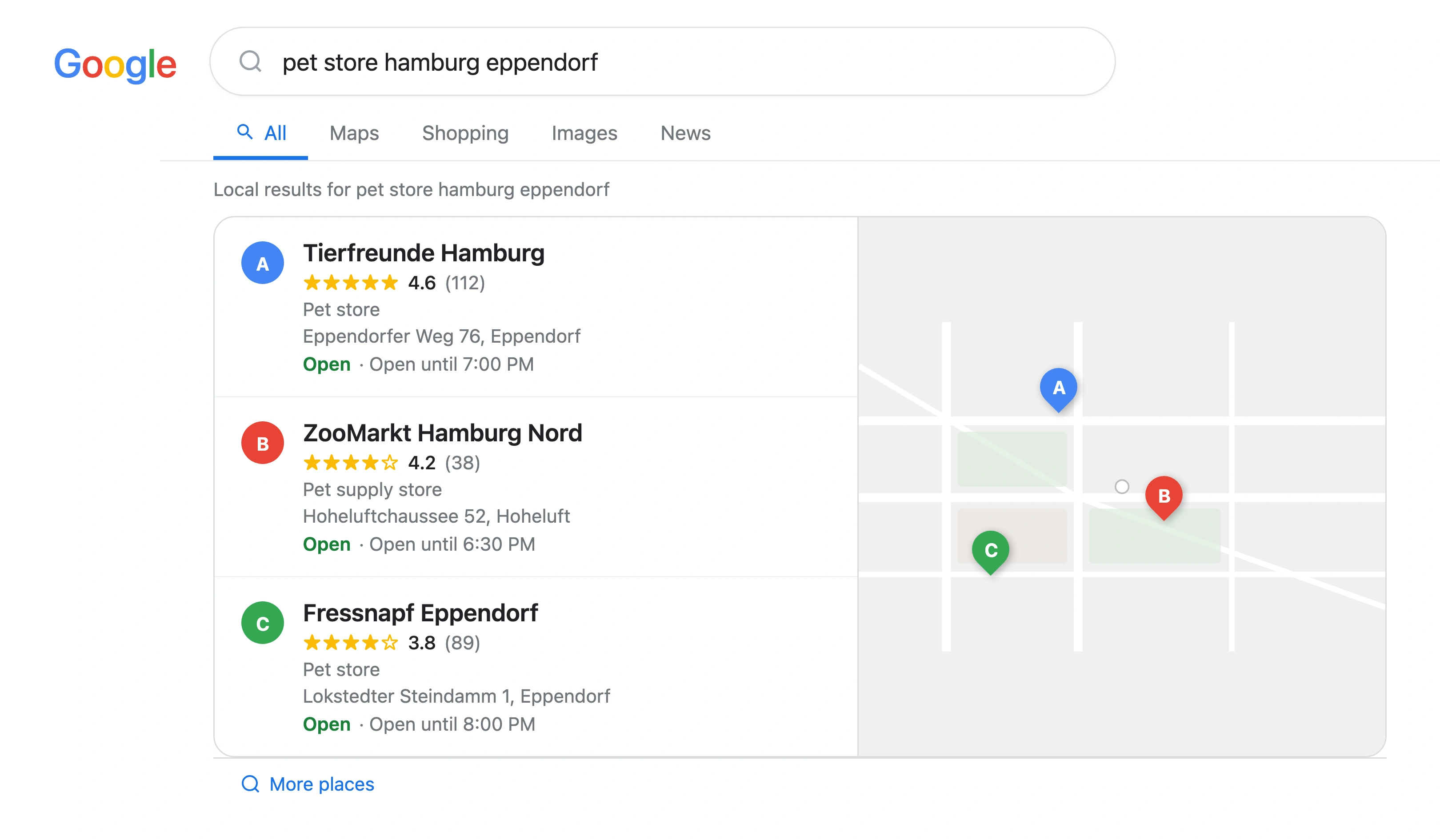
Start with Priority 1 and 2. These two areas require the least effort but deliver the fastest results. A pet store that completes its GBP profile and fixes technical crawl errors will typically see ranking improvements within 4 to 6 weeks.
For a full roadmap that goes beyond the audit, see our pet store SEO checklist. For the comparison between handling this yourself and using tools or agencies, read our comparison of SEO agencies and AI tools for pet stores.
How Do You Track Audit Progress Over Time?
An audit is only useful if you act on the findings and measure the results. Here is how to track your progress between quarterly audits.
Key metrics to monitor monthly
- Local pack impressions and clicks in Google Business Profile Insights. Track whether your visibility is increasing after GBP fixes.
- Google Search Console performance for local queries. Filter by queries that include your city or "near me" to see local search trends.
- Review count and average rating on Google. Track these monthly to ensure your review velocity stays consistent.
- Website traffic from organic search in Google Analytics. Focus on traffic from your target city or region.
- Citation accuracy score using a tool like BrightLocal or Moz Local. Run a citation check monthly to catch new inconsistencies.
Quarterly audit comparison
Each time you run the audit, compare results to the previous quarter. Score each checkpoint as "Pass," "Fail," or "Improved." Over four quarters, you should see the number of failing checkpoints decrease steadily. If the same issues keep appearing, the root cause needs a different solution - not just another quick fix.
Businesses in the Google 3-pack get 126% more traffic and 93% more actions compared to those ranked 4 through 10[14]. Every audit improvement moves you closer to those top 3 positions.
Frequently Asked Questions
How long does a local SEO audit take for a pet store?
A first-time comprehensive audit takes 2 to 4 hours. This includes checking your Google Business Profile, searching for citations across directories, reviewing your website's technical setup, and evaluating your content. Subsequent quarterly audits take 60 to 90 minutes because you are only verifying changes since the previous review. You can split the audit across multiple sessions if needed - start with the GBP and citation checks (1 hour), then do on-site and technical checks the next day.
Can I do a local SEO audit without paid tools?
Yes. Google Search Console, Google Business Profile Insights, Google PageSpeed Insights, and Google's Rich Results Test are all free and cover the most critical checkpoints. Screaming Frog's free version crawls up to 500 URLs, which is enough for most pet store websites. The main area where paid tools add value is citation monitoring - manually searching 30+ directories every quarter is time-consuming. BrightLocal or Moz Local (starting around USD 30/month) automate this significantly.
What is the biggest audit mistake pet store owners make?
Focusing on technical fixes while ignoring content. A technically perfect website with no local content, no blog, and no topical depth will still lose to a competitor who publishes helpful pet care articles regularly. The audit tells you what is broken, but content is what builds the authority that sustains rankings long term. 76% of "near me" mobile searches lead to a store visit within 24 hours[5] - but only if your store appears in those results, which requires both technical health and content depth.
Should I hire someone to do the audit, or do it myself?
For a single-location pet store, you can do the audit yourself using this checklist and free tools. The checkpoints are straightforward, and doing the audit yourself teaches you how your online presence works. Where professional help adds value is in interpreting findings and building the fix plan - especially for technical issues like redirect mapping, schema implementation, or site migration. If your audit reveals more than 20 to 30 issues across multiple areas, a one-time consultation with a local SEO specialist (typically USD 200 to USD 500) can save you weeks of trial and error.
References
- BrightLocal (2025). Local SEO Statistics. brightlocal.com
- Whitespark (2026). Local Search Ranking Factors Report. whitespark.ca
- Moz (2025). Local Search Ranking Factors. moz.com
- Search Engine Land (2025). Local SEO Audit Guide. searchengineland.com
- Backlinko (2025). Local SEO Stats. backlinko.com
- Birdeye (2025). State of Google Business Profiles. birdeye.com
- SEOWerkz (2025). NAP Consistency Local SEO Guide. seowerkz.com
- BrightLocal (2025). Local Citations Trust Report. brightlocal.com
- Local Dominator (2025). Local Search Ranking Factors. localdominator.co
- Custom Web Audits (2025). Local Citations for Local SEO Success. customwebaudits.com
- Shapo (2025). Google Review Statistics. shapo.io
- BrightLocal (2026). Local Consumer Review Survey. brightlocal.com
- SeoProfy (2026). Local SEO Statistics. seoprofy.com
- Marketing LTB (2025). Local SEO Statistics. marketingltb.com