Pet Industry Trends That Change How Pet Stores Should Do SEO

Table of Contents +
- How Is Gen Z Changing Pet Store SEO?
- What Does the Ecommerce Migration Mean for Pet Store SEO?
- How Are AI Overviews Reshaping Pet Search?
- What Does Premiumization Mean for Pet Store Content?
- How Is Pet Tech Creating New SEO Opportunities?
- Why Does Sustainability Matter for Pet Store SEO?
- How Does Omnichannel Retail Change Pet Store SEO?
- What Should Your Trend-Responsive SEO Roadmap Look Like?
- Staying Ahead With Petbase
- Frequently Asked Questions
- References
7 pet industry trends reshaping SEO: Gen Z surge, ecommerce migration, AI Overviews, premiumization, pet tech, sustainability, and omnichannel strategies.
The pet industry is not just growing - it is transforming. The US pet market alone reached $152 billion in 2024.[1] But the way pet owners discover, research, and buy is shifting faster than most pet store owners realize. Every major industry trend has a direct SEO implication.
If you are still doing SEO the same way you did in 2023, you are already falling behind. Here are seven trends reshaping the pet industry - and the specific SEO response each one demands.
TL;DR
Gen Z pet ownership is surging 43.5%, ecommerce now represents 30% of pet sales, and AI Overviews appear on 36.8% of pet queries. Each trend demands a specific SEO response. Seven trends mapped to seven actionable strategies - from short-form content for Gen Z to structured data for AI search to premiumization content for the spending surge.
How Is Gen Z Changing Pet Store SEO?
Gen Z pet ownership has surged 43.5% in recent years, making them the fastest-growing pet owner demographic.[2] This generation discovers products differently than any group before them:
- They search on TikTok and Instagram before Google
- They trust peer reviews over brand messaging
- They value sustainability and ethical sourcing
- They expect mobile-first, fast-loading experiences
- They consume short-form content and scan rather than read long pages
The SEO response: pet stores need to create content that works across platforms. Blog posts should be structured with scannable headers, short paragraphs, and clear takeaways that can be repurposed as social media content. Mobile page speed becomes even more critical - a slow-loading page loses Gen Z visitors instantly.
Gen Z also searches differently. Their queries tend to be more conversational and question-based: "is grain-free food actually bad for dogs" rather than "grain-free dog food." Content that answers specific questions in a conversational tone performs better with this demographic.
For keyword research strategies that capture these evolving search patterns, see our keyword research guide.
Petbase automates SEO content for pet stores - publishing 10 optimized articles monthly so you can focus on running your shop - start your free trial.
What Does the Ecommerce Migration Mean for Pet Store SEO?
Ecommerce now represents approximately 30% of all pet product sales, and the share is growing annually.[3] For pet stores that have traditionally relied on foot traffic, this shift changes the competitive landscape entirely.
Online pet product searches are dominated by Amazon, Chewy, and large retailers. But local and specialty pet stores have SEO advantages these giants cannot replicate:
- Local search dominance. "Pet store near me" searches favor local businesses in the Map Pack.
- Niche expertise. Content about specific breeds, conditions, or product categories outranks generic retail pages.
- E-E-A-T signals. A local store with real staff expertise, customer relationships, and community presence generates trust signals that marketplace pages lack.
The SEO response: pet stores must have both a local SEO strategy (Google Business Profile, local citations, review management) and a content strategy that captures informational searches that lead to online purchases. Product pages need unique descriptions, schema markup, and internal links from educational content.
Average pet spending has increased from $1,292 to $1,909 per household.[2] That rising spend means each organic visitor is worth more than ever. For the full European competitive landscape, see our European pet store SEO guide.
How Are AI Overviews Reshaping Pet Search?
This is the trend with the most immediate SEO impact. 36.8% of pet-related queries now trigger AI Overviews in Google search results.[4] Zero-click searches have risen from 56% to 69% of all Google searches.[5]
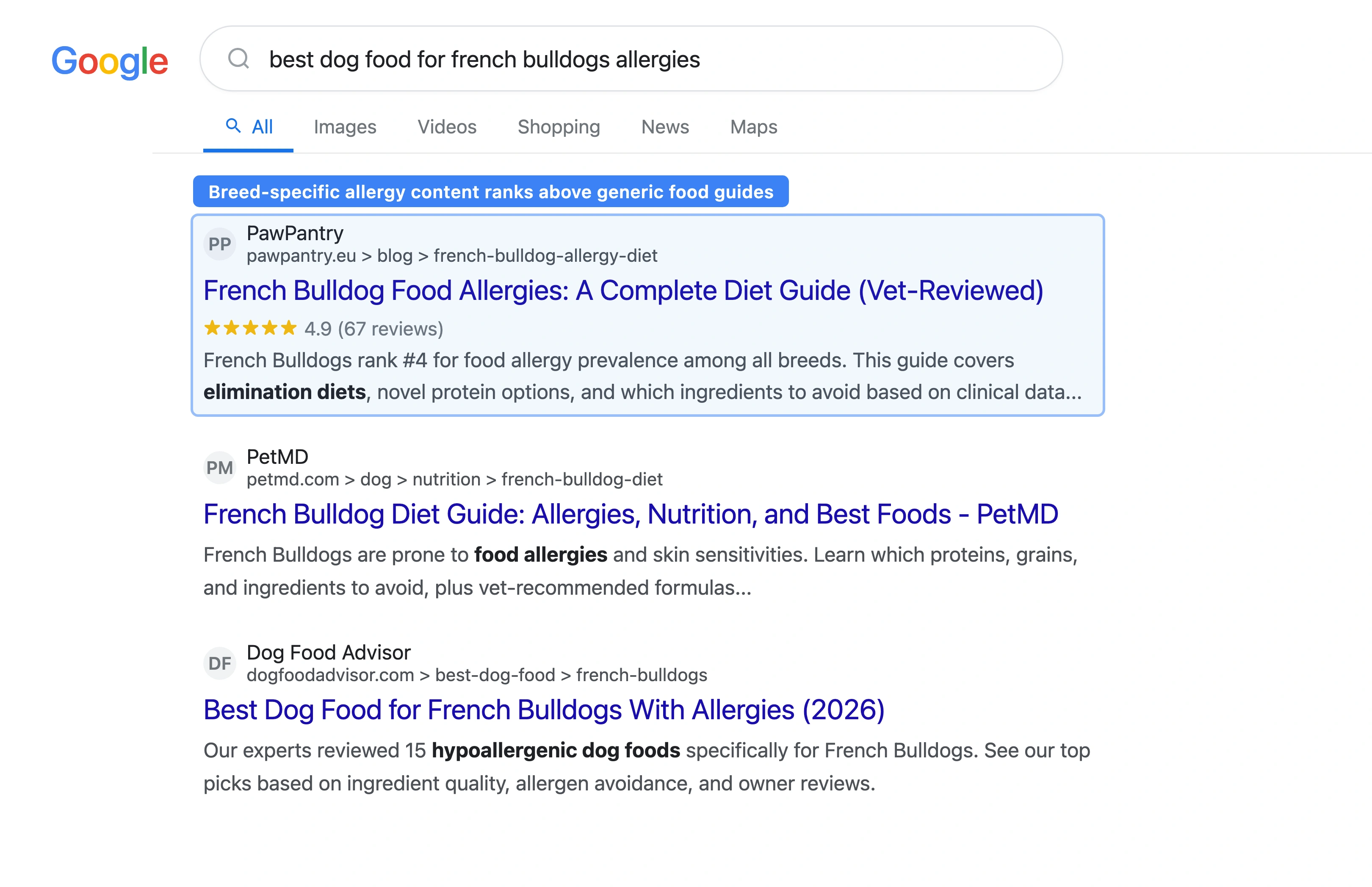
For pet stores, this means:
- Some searches that used to drive website clicks now get answered directly in the search results
- Content must be authoritative enough for Google to cite in AI Overviews - or risk being replaced entirely
- Structured data (FAQ schema, Product schema, How-To schema) increases the chance of being featured
- Long-tail, specific queries are less affected by AI Overviews than broad informational queries
The SEO response: prioritize content depth over content breadth. A comprehensive guide about "supplements for senior dogs with arthritis" is more valuable than a thin page targeting "pet supplements." Include structured data on every page. Focus on questions that require nuanced, experience-based answers that AI cannot easily generate.
For more on adapting to AI search, see our 2025 SEO trends guide.
What Does Premiumization Mean for Pet Store Content?
Pet owners are spending more per pet than ever before. Average annual spending has increased from $1,292 to $1,909 per household.[2] This premiumization trend means pet owners are willing to pay more for:
- Organic and natural pet food
- Breed-specific nutrition and supplements
- Premium grooming services
- Specialized veterinary care
- High-quality toys and accessories
The SEO response: create content that serves premium buyers. These consumers research extensively before purchasing. They search for ingredient comparisons, sourcing information, quality certifications, and expert recommendations. Content targeting premium keywords ("best organic dog food," "grain-free vs. raw diet for dogs") attracts higher-value customers.
Premium buyers also have higher lifetime value, meaning the organic traffic you generate from premium content is worth significantly more per visitor than generic search traffic.
How Is Pet Tech Creating New SEO Opportunities?
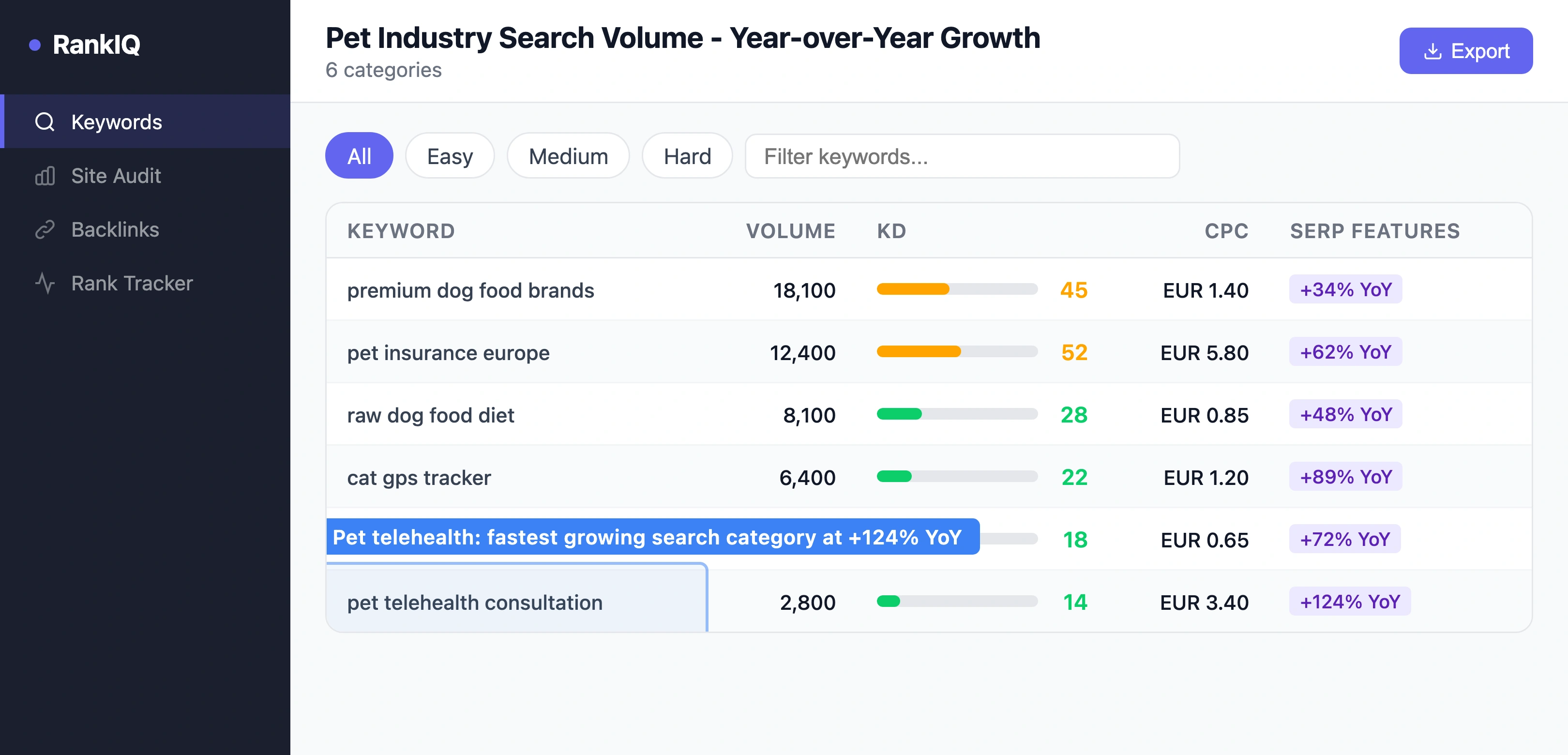
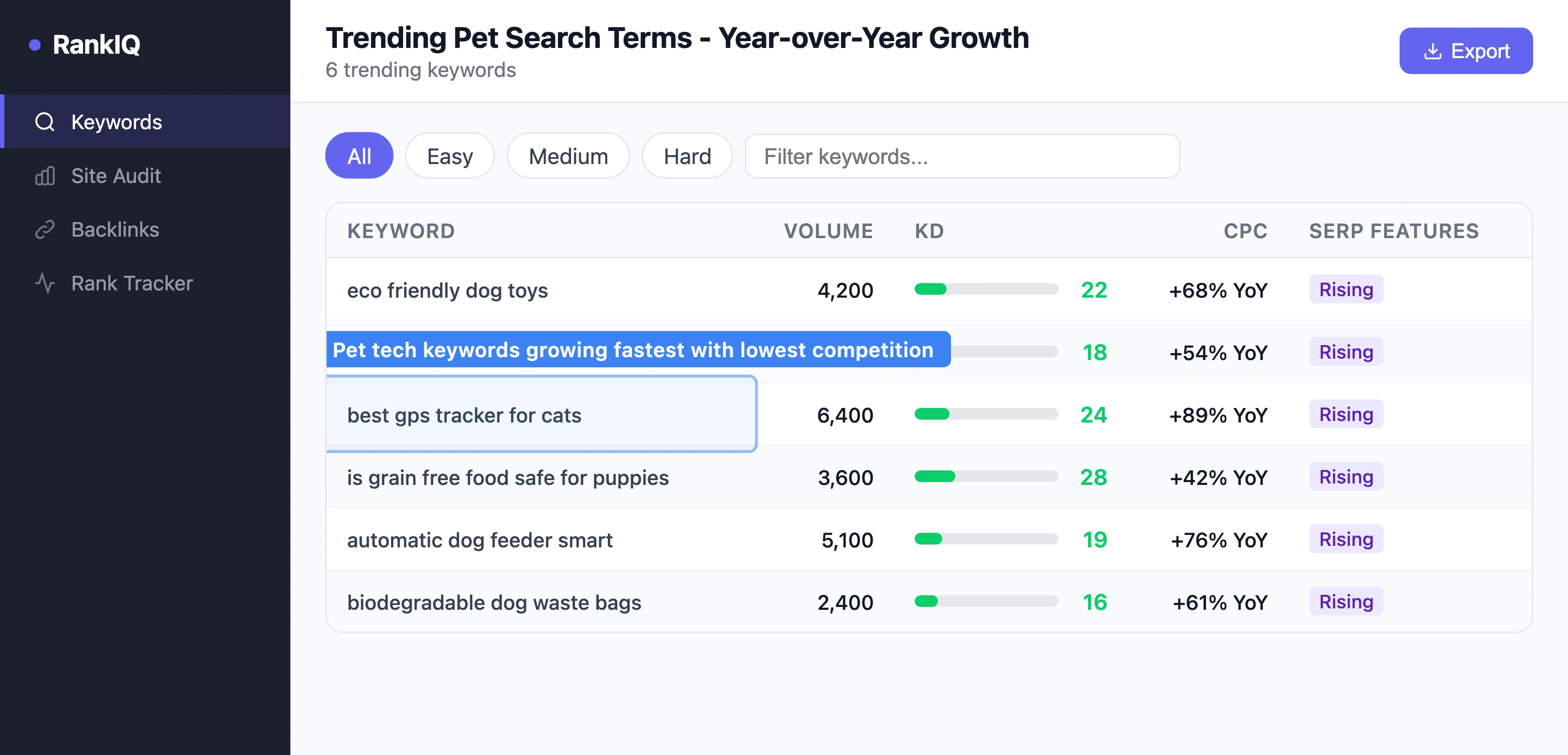
The pet tech market is valued at $4.16 billion and growing rapidly.[6] GPS trackers, smart feeders, health monitors, automated litter boxes, and pet cameras are creating entirely new search categories.
For pet stores, pet tech represents an untapped content opportunity:
- Product comparison content ("Best GPS trackers for dogs 2026")
- Setup and troubleshooting guides ("How to set up a smart pet feeder")
- Integration content ("Using a pet camera with your home security system")
- Review and recommendation content targeting specific use cases
The SEO response: publish content about pet tech products early and comprehensively. These are new keyword categories with lower competition than established pet product terms. The store that builds topical authority around pet tech now will own those keywords as the market grows.
Cat-related pet tech is particularly underserved in content. Cat food is the fastest-growing pet category at 6% CAGR[3], and cat owners are adopting tech products at increasing rates.
Why Does Sustainability Matter for Pet Store SEO?
Sustainability is no longer a niche concern. Pet owners - particularly Gen Z and Millennials - actively seek eco-friendly products, sustainable packaging, and ethically sourced ingredients. This creates a content opportunity for pet stores that stock sustainable products.
Sustainability-related pet searches include:
- "eco-friendly dog toys"
- "sustainable cat litter"
- "biodegradable poop bags"
- "ethically sourced pet food"
- "zero-waste pet products"
The SEO response: create dedicated content hubs around sustainability topics. A pet store that publishes guides on eco-friendly pet ownership, reviews sustainable products, and explains sourcing practices builds authority in a growing search category. This content also earns backlinks from environmental and lifestyle publications.
139 million EU households include at least one pet.[7] European pet owners are particularly motivated by sustainability - making this content strategy especially relevant for stores serving the European market.
How Does Omnichannel Retail Change Pet Store SEO?
The line between online and offline pet retail is disappearing. Pet owners research online and buy in-store, or discover in-store and reorder online. This omnichannel behavior means pet store SEO must serve both pathways.
Key omnichannel SEO strategies:
- Local inventory ads. Google Local Inventory Ads show in-stock products to nearby searchers.
- Click-and-collect optimization. Content and structured data that promote in-store pickup options.
- Google Business Profile product listings. Showcasing available products directly in your GBP listing.
- Location-specific landing pages. Each store location needs its own optimized page with unique content, hours, inventory highlights, and customer reviews.
The SEO response: bridge your online and offline presence. Your website should reflect what is available in your physical store. Your Google Business Profile should be updated weekly with product highlights, events, and promotions. Every touch point reinforces the others.
For seasonal strategies that align online and offline promotions, see our seasonal SEO guide.
What Should Your Trend-Responsive SEO Roadmap Look Like?
Here is how to prioritize these seven trends in your SEO strategy:
| Trend | SEO Priority | Action This Quarter | Expected Impact |
|---|---|---|---|
| AI Overviews | Critical | Add structured data to all pages; deepen existing content | Maintain organic visibility as zero-click searches grow |
| Ecommerce migration | High | Optimize product and category pages; build internal links | Capture 30% of sales shifting online |
| Gen Z ownership surge | High | Create scannable, question-based content; improve mobile speed | Reach fastest-growing buyer demographic |
| Premiumization | Medium-High | Publish premium product comparison and ingredient content | Attract higher-value customers |
| Pet tech growth | Medium | Publish 4-6 pet tech product guides | Establish early authority in growing category |
| Sustainability | Medium | Create eco-friendly product hub with 3-5 guides | Earn backlinks and reach values-driven buyers |
| Omnichannel | Medium | Update GBP weekly; add local inventory signals | Bridge online research to in-store purchases |
Staying Ahead With Petbase
These seven trends are not slowing down. Gen Z ownership will keep rising. Ecommerce share will keep growing. AI Overviews will cover more queries. The pet stores that adapt their SEO strategy to these trends will capture the growth. The ones that do not will lose ground to competitors who do.
Petbase generates 10 expert articles per month for USD 199/mo - each one aligned with current industry trends and optimized for how pet owners actually search today. From AI-ready structured content to Gen Z-friendly formats to premium product guides, Petbase keeps your content strategy current without requiring you to track every trend yourself.
The $152 billion pet industry[1] is growing, but the way pet owners find and choose their stores is changing. Adapt now or watch competitors capture the demand.
Start your free trial and build a trend-responsive content strategy.
Frequently Asked Questions
Which pet industry trend has the biggest SEO impact?
AI Overviews represent the most immediate SEO impact. With 36.8% of pet queries triggering AI Overviews[4] and zero-click searches rising to 69%[5], pet stores that do not adapt their content for AI citation risk losing organic traffic even if their rankings stay the same. Adding structured data and deepening content quality are the two most important responses.
How should pet stores target Gen Z buyers through SEO?
Gen Z pet ownership has surged 43.5%[2], making them a critical audience. Optimize for conversational, question-based queries rather than keyword-focused terms. Create mobile-first, scannable content with clear section headers and short paragraphs. Emphasize sustainability, ethical sourcing, and transparency - values that drive Gen Z purchase decisions. Content that can be repurposed across social platforms extends your reach beyond Google.
Is ecommerce SEO worth it for physical pet stores?
Absolutely. With 30% of pet sales happening online[3] and average household pet spending rising to $1,909[2], physical stores that ignore ecommerce SEO lose a growing share of revenue. Omnichannel strategies - where online content drives both online purchases and in-store visits - deliver the highest total return. Your website content works 24/7, even when your physical store is closed.
How often should pet stores update their SEO strategy based on trends?
Review your SEO strategy quarterly against current industry trends. Major algorithm changes (like AI Overviews) require immediate response. Demographic shifts (like Gen Z growth) require gradual content strategy adjustments over 6-12 months. Market trends (like premiumization) should inform your content calendar on a monthly basis. The key is consistent monitoring and incremental adaptation rather than annual overhauls that leave you behind for months.
References
- American Pet Products Association (2025). Pet Industry Trends. americanpetproducts.org
- Morgan Stanley (2024). The Pet Economy: Growth Trends and Market Analysis. morganstanley.com
- Euromonitor International (2025). Pet Care Global Overview. euromonitor.com
- BrightEdge (2025). Generative AI in Search Research Report. brightedge.com
- SparkToro (2024). New Search Market Data: Zero-Click Searches. sparktoro.com
- Grand View Research (2024). Pet Tech Market Size and Trends. grandviewresearch.com
- FEDIAF (2024). European Pet Statistics. fediaf.org