Pet Sitting SEO: Beat Rover in Local Search

Table of Contents +
- Why Is Pet Sitting SEO Harder Than Other Pet Services?
- How Do Pet Owners Actually Search for Sitters?
- What Is the Hyperlocal Content Strategy?
- How Do You Optimize Google Business Profile as an Independent Sitter?
- How Do You Beat Aggregator Pages in Search Results?
- Which Marketing Channels Work Best for Pet Sitters?
- What Is the 90-Day Pet Sitting SEO Sprint?
- How Do Vet Partnerships Accelerate Pet Sitting SEO?
- How Does Petbase Help Independent Pet Sitters Scale Content?
- Frequently Asked Questions
- References
SEO guide for pet sitters. Outrank Rover and PetBacker on hyperlocal queries and build a direct-booking business with data-backed strategies.
The global pet sitting market is valued at $2.94 billion in 2025 and projected to reach $5.14 billion by 2030 at an 11.8% CAGR[1] - the fastest-growing segment in the entire pet services industry. Yet when a pet parent searches "dog sitter near me," independent sitters rarely appear on page 1. Rover, PetBacker, Wag, and regional aggregator sites dominate the results - often for sitters who are not even in your city.
This guide is specifically for independent pet sitters who want to compete against marketplace aggregators and build a direct-booking business that does not pay 20% commissions forever.
TL;DR
Pet sitting is the fastest-growing pet services segment (11.8% CAGR) but marketplace aggregators (Rover, PetBacker) own most search results. Independent sitters can still win with hyperlocal content that aggregators cannot match: named neighborhoods, specific streets, local vet partnerships, and direct-booking incentives. This guide shows exactly how to outrank aggregators on "pet sitter [neighborhood]" queries.
Why Is Pet Sitting SEO Harder Than Other Pet Services?
Pet sitting has two unique SEO challenges:
- Marketplace aggregators dominate the SERP. Rover, PetBacker, Wag, and regional competitors run massive paid and organic campaigns for every "dog sitter [city]" query. Their domain authority crushes independent sitter websites.
- The commission trap. Many independent sitters give up on their own website and just list on Rover - paying 20% of every booking forever. The math gets worse every year as aggregators raise commission rates.
But there is a path. Aggregators have a structural weakness: their location pages are generic. A Rover page for "dog sitters in Cologne" lists 200 random sitters with 50-word bios. A well-optimized independent sitter page for "dog sitters in Cologne-Ehrenfeld" can rank above it with hyperlocal depth the aggregator cannot match.
The market context makes this worth fighting for. Pet sitting is the fastest-growing segment in pet services at 11.8% CAGR[1]. North America alone accounts for 37%+ of the global market[1]. Rover's $2.3 billion acquisition by Blackstone[2] confirms how much investor capital now targets this category. Independent sitters who build search visibility now capture demand that would otherwise flow to platforms forever.
For broader local strategy fundamentals, see our pet business local SEO guide.
Petbase builds this SEO foundation automatically for pet businesses - 10 optimized articles published every month - start your free trial.
How Do Pet Owners Actually Search for Sitters?
Pet sitting searches break into four patterns, and three of them favor independent sitters over marketplaces:
- Broad city searches - "dog sitter [city]," "pet sitter near me." Marketplaces dominate. Very hard to rank.
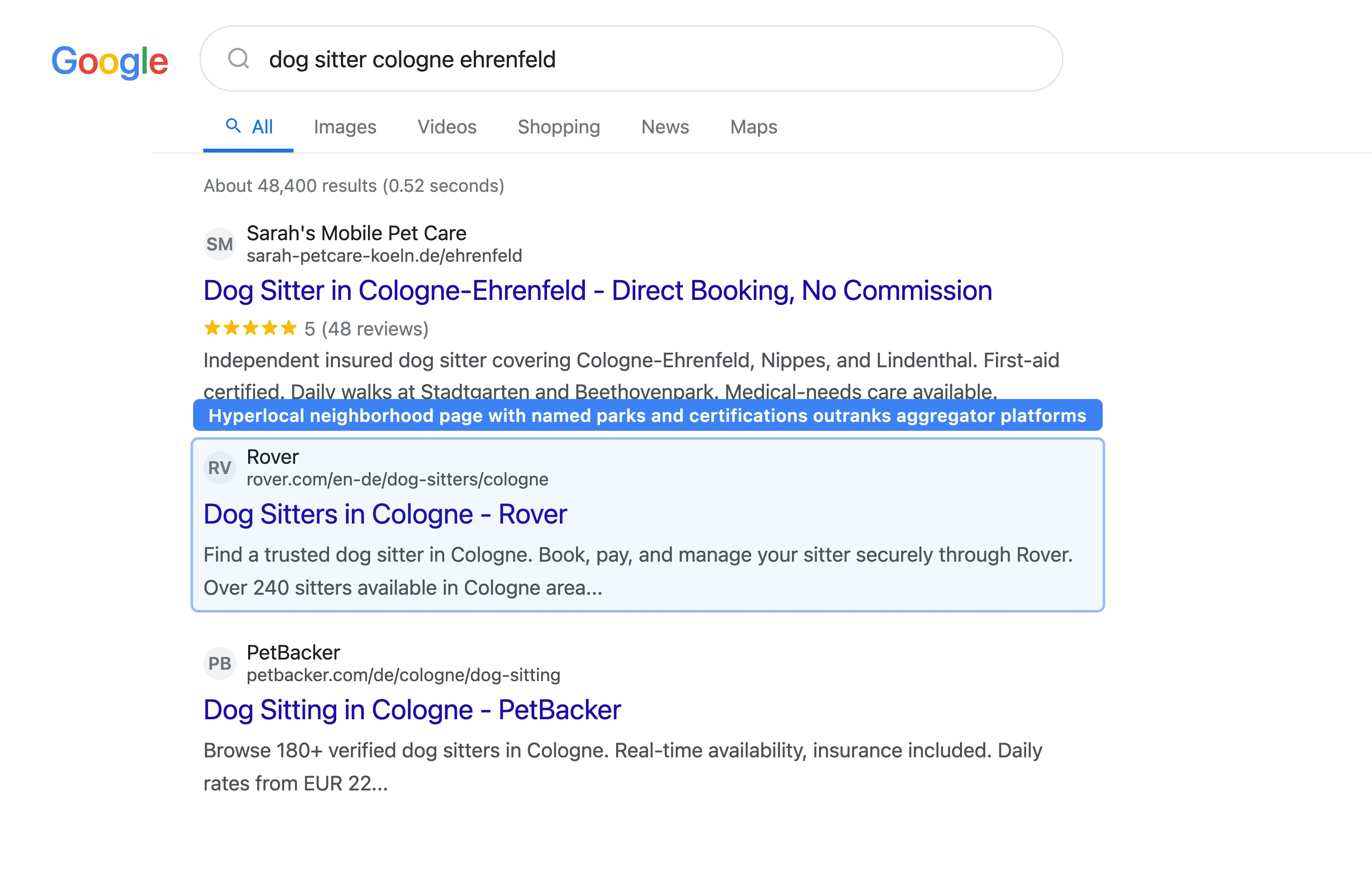
- Neighborhood searches - "dog sitter [neighborhood]," "pet sitter [specific district]." Marketplaces have thin location pages. Independents win here.
- Specialty searches - "cat sitter," "overnight pet sitter," "pet sitter for reactive dog." Marketplaces have generic filters. Dedicated independent pages outrank.
- Trust searches - "insured dog sitter [city]," "certified pet sitter," "best pet sitter reviews." Marketplaces show mixed sitters. Independents with clear credentials rank well.
The strategic shift: stop competing for "dog sitter [city]" against Rover's page and start dominating the long tail where aggregators are weak. One well-optimized sitter can rank for 40-80 neighborhood, specialty, and trust searches simultaneously.
What Is the Hyperlocal Content Strategy?
The core of independent pet sitter SEO is hyperlocal content - pages that mention specific neighborhoods, streets, parks, vet clinics, and community details by name. Aggregator pages cannot match this depth because they serve generic content at scale.
Build one page per neighborhood you serve
If you serve Cologne-Ehrenfeld, Cologne-Nippes, and Cologne-Lindenthal, you need three distinct landing pages. Each page should include:
- the neighborhood name in the page title, H1, and URL
- the parks where you walk dogs (Stadtgarten, Beethovenpark, etc.)
- the vet clinics you have relationships with
- the streets you most commonly walk
- neighborhood-specific pricing if it varies
- testimonials from clients in that neighborhood
- photos of you walking dogs in that neighborhood's recognizable locations
This hyperlocal depth is what aggregators cannot produce. Rover's page for Cologne-Ehrenfeld is a list of 40 sitters with generic bios. Your page for Cologne-Ehrenfeld is 1,500 words of neighborhood-specific detail with photos of you at the local dog park. Google rewards the depth.
Build one page per specialty service
Generic pet sitters get generic traffic. Specialty pages rank for specialty queries:
- overnight pet sitting (in-home stays)
- drop-in visits (30-60 minute check-ins)
- dog walking with pet sitting combo
- cat-only sitting
- pet sitting for medical-needs pets (diabetes, seizures, medication schedules)
- pet sitting for reactive or fearful dogs
- senior pet sitting
- puppy care (young puppy routines)
- exotic pet sitting (if you offer it)
- holiday and vacation sitting (extended stays)
Each page targets a different pet parent mindset. A first-time client searching "pet sitter for diabetic cat" is highly qualified and will pay 30-40% more than the generic rate. That search has zero aggregator competition because Rover's filter system does not create dedicated diabetic-cat pages.
How Do You Optimize Google Business Profile as an Independent Sitter?
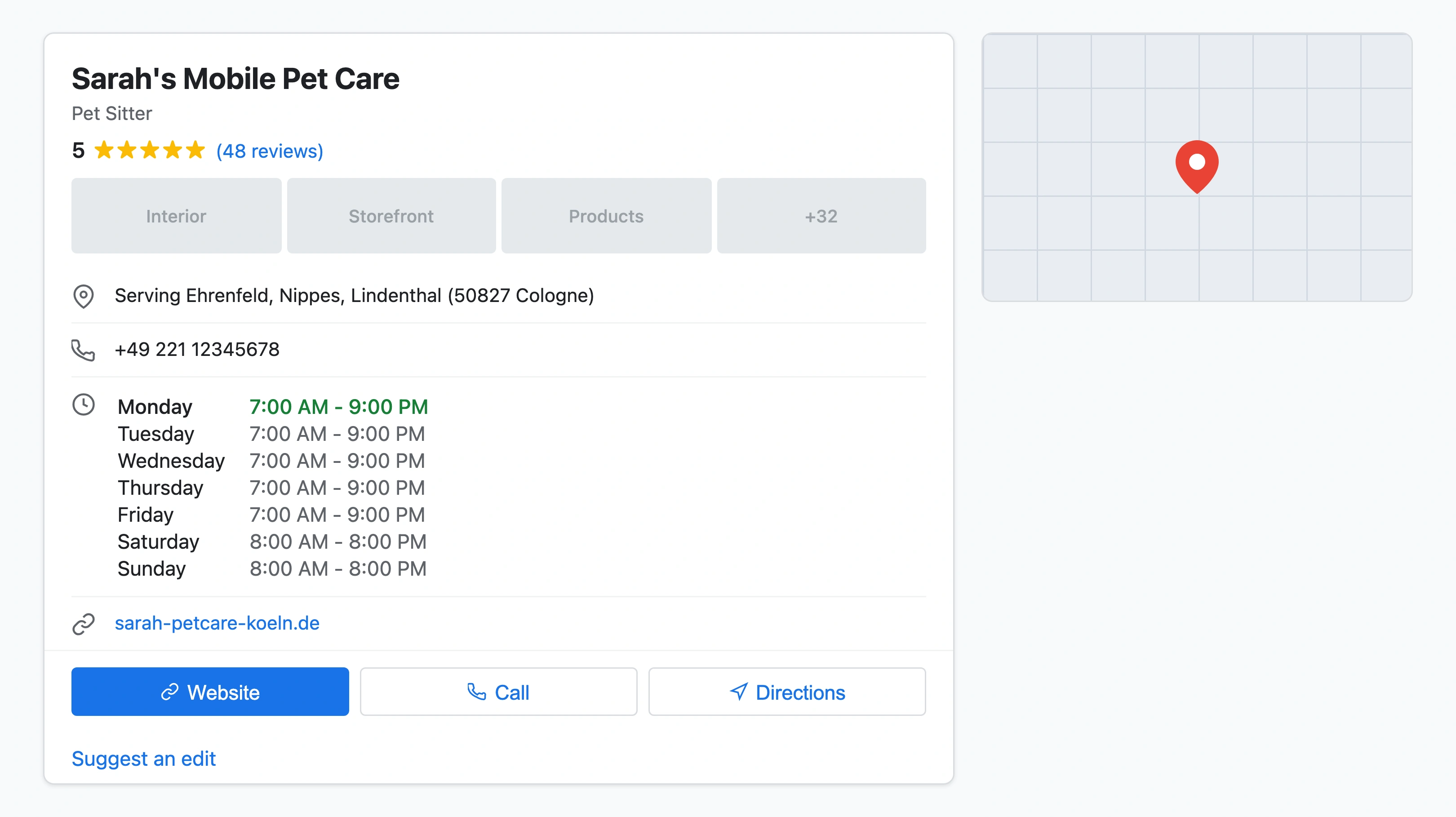
Your Google Business Profile (GBP) is your highest-ROI SEO asset. The Local Pack appears for 93% of local intent searches and receives nearly 44% of all clicks[3]. GBP is also a direct ranking signal for aggregator-beating queries because aggregators cannot list individual sitters as separate GBP profiles.
Choose the right primary category
Use "Pet Sitter" as your primary category. Add secondary categories that match your specific services (Dog Walker, Boarding Kennel, Pet Care Service). The primary category drives the bulk of category-match ranking signals.
Upload 30+ sitter-specific photos
Business profiles with photos receive 42% more direction requests and 35% more website clicks than profiles without[4]. Pet sitters have a photo advantage aggregator pages cannot match - photos of you as an individual sitter in recognizable neighborhood locations.
Include:
- you walking dogs in specific named parks
- you with client pets in recognizable neighborhoods
- before-and-after shots of anxious dogs settling during stays
- medication administration (if you offer medical-needs care)
- your own vehicle (shows mobility within service area)
- any certifications or first aid credentials
Set your service area correctly
Independent pet sitters should use a service-area business profile, not a physical location. Set your service area to specific neighborhoods, not a radius. "Cologne-Ehrenfeld, Cologne-Nippes, Cologne-Lindenthal" outranks "10km around Cologne center" because the neighborhood names match how pet parents actually search.
Collect reviews systematically
93% of consumers say online reviews affect their buying decisions[3]. Build a system: every client gets a review request 48 hours after the first booking, with a direct link and a prompt to mention the neighborhood, their pet's name, and what they appreciated. Neighborhood names in reviews are a significant ranking signal for hyperlocal queries.
Building neighborhood landing pages, writing specialty service pages, photographing yourself across multiple neighborhoods, and producing ongoing educational content takes 15-25 hours per month of focused work. Most independent pet sitters cannot find that time on top of actually sitting pets. Or let Petbase generate the neighborhood and specialty content automatically while you focus on the clients in front of you.
How Do You Beat Aggregator Pages in Search Results?
Aggregator pages look strong but have exploitable weaknesses. Here is the competitive playbook:
Weakness 1: Thin content
Rover's "Pet sitters in Cologne" page is mostly a sitter list with a 50-word intro paragraph. Your hyperlocal neighborhood page has 1,500+ words of specific detail. Google's helpful content updates systematically reward depth over thin directory pages. Every neighborhood where you publish dedicated content outranks aggregator filters within 3-6 months.
Weakness 2: No freshness signal
Aggregator location pages update when sitters join or leave, but they do not publish fresh content. Your blog posts and neighborhood guides publish monthly. Google interprets this as an active, authoritative local source. Aggregators lose freshness signals they cannot restore without massive content investment.
Weakness 3: No individual trust signal
When a pet parent searches "insured pet sitter [city]," aggregators cannot clearly rank because sitter insurance varies across their platform. Your site can be explicit: "fully insured through [insurer], first-aid certified through [certification body], 4 years of client history." Trust queries move to independent sites that can make specific claims.
Weakness 4: No direct-booking conversion
Aggregators charge 20%+ commission on every booking. Your site can show transparent direct pricing and position the direct-booking incentive clearly. Many pet parents will specifically search for independent sitters to avoid platform commissions - if your site ranks, you capture that intent at full margin.
Which Marketing Channels Work Best for Pet Sitters?
Not every channel delivers equal return. Compare the realistic options for independent pet sitters:
| Channel | Upfront Cost | Ongoing Effort | Long-Term Value | Best For |
|---|---|---|---|---|
| Google Business Profile (SEO) | Free | Medium (weekly updates) | Very High | Neighborhood map pack ranking |
| Hyperlocal Website SEO | Low to Medium | Medium (monthly content) | Very High (compounds over time) | Beating aggregator pages on long-tail queries |
| Rover / PetBacker Listings | Free | Low | Medium (20% commission forever) | Initial client acquisition while SEO builds |
| Vet Clinic Partnerships | Low | Low | Very High | Trust-based referrals, medical-needs clients |
| Neighborhood Facebook Groups | Free | Medium | Medium | Direct word-of-mouth and trust building |
| Instagram and TikTok | Free | High (daily posting) | Medium | Brand affinity, under-30 demographic |
| Google Ads (PPC) | High | Medium | Low | Expensive; aggregators often outbid |
| Flyer and Local Print | Low | Low | Low | Narrow neighborhood reach |
SEO - particularly GBP and hyperlocal website content - delivers the highest long-term return for most pet sitters. Unlike Rover commissions, SEO rankings continue generating direct bookings at full margin. With 61% of small businesses not yet investing in SEO[5], the opportunity window is wide open - and aggregators cannot compete on the hyperlocal queries where independent sitters can dominate.
What Is the 90-Day Pet Sitting SEO Sprint?
Here is a practical 90-day sprint that produces direct-booking traffic within one quarter:
| Week | Action | Impact |
|---|---|---|
| 1-2 | Claim Google Business Profile, set "Pet Sitter" primary category, configure service area by neighborhood names, upload 20+ photos | Very High (42% more direction requests) |
| 2-3 | Build 3-5 neighborhood landing pages with unique content for each area you serve | Very High (beats aggregator location pages) |
| 3-4 | Build 4-6 specialty service pages (overnight, drop-in, cat-only, medical-needs, holiday) | High (captures high-intent long-tail queries) |
| 4-5 | Audit NAP consistency across Yelp, PetBacker, Google, Facebook, local directories | High |
| 5-6 | Build review request workflow, target 5-10 new reviews per month with neighborhood mentions | Very High |
| 6-9 | Publish 4 pillar blog posts (holiday pet sitting, first-time booking, medication care, reactive-dog sitting) | High |
| 8-12 | Outreach to 10 local vets, trainers, groomers for cross-link partnerships | High |
| 10-12 | Add Person and LocalBusiness schema, FAQ schema to specialty pages | Medium |
| Ongoing | Weekly GBP posts (client stories, neighborhood walks), weekly review requests, monthly content publishing | Compounds over time |
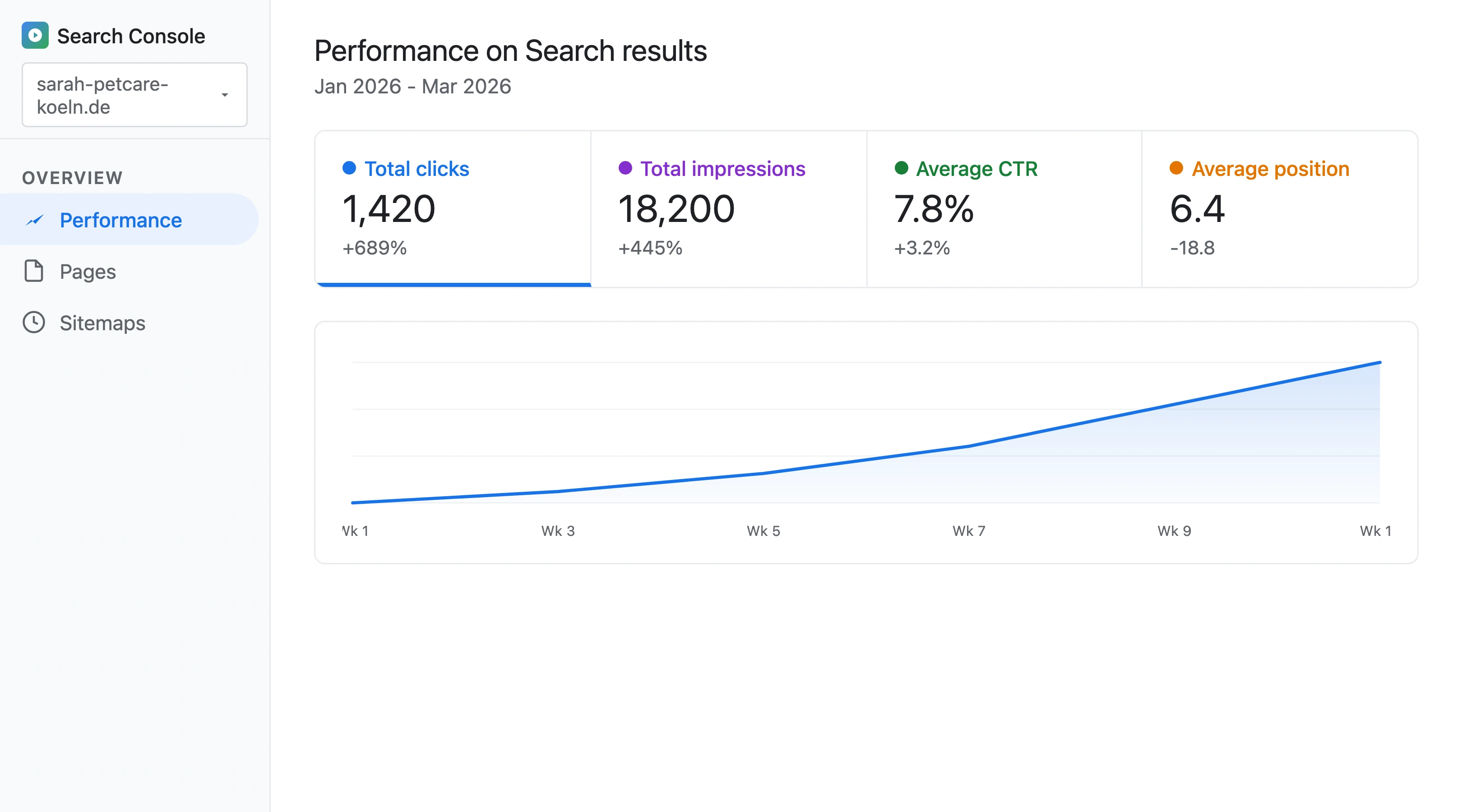
By week 12, an independent pet sitter should rank in the top 10 for their primary neighborhood queries, capture direct-booking traffic that bypasses aggregator commissions, and build the review velocity that compounds monthly. See our how long pet store SEO takes guide for the underlying ranking timeline.
How Do Vet Partnerships Accelerate Pet Sitting SEO?
Pet sitter backlinks are hard to earn organically. Vet clinic partnerships solve this problem and produce high-margin referrals at the same time.
The pattern: offer free or discounted drop-in visits for vet clinic clients who need medication administration or post-surgery care. In exchange:
- the clinic links to your medical-needs pet sitting page
- the clinic mentions you to clients who ask about pet sitting
- you appear on their "Recommended Local Partners" page (if they have one)
A single vet clinic partnership in a residential area can produce 3-5 new clients per month plus a backlink from a high-authority local domain. Three to five vet partnerships across your service area makes you the default pet sitter referral in your neighborhoods.
For broader local link building strategy, see our local link building guide.
How Does Petbase Help Independent Pet Sitters Scale Content?
The biggest reason independent sitters lose to Rover is content capacity. Rover has hundreds of location pages and millions in SEO budget. Independent sitters have 30 hours per week actually sitting pets and no time to write hyperlocal content.
That is exactly the gap Petbase fills. Petbase generates neighborhood landing pages, specialty service content, and educational blog posts tailored to the pet care industry. 10 articles per month, published directly to your website, for USD 199/month - a fraction of what the 20% platform commissions cost on a growing pet sitting business.
The pet sitting market is growing at 11.8% CAGR globally[1], faster than any other pet services segment. Every month you wait is a month of direct-booking demand going to Rover instead of you. The independent sitters who win the next three years will be the ones publishing hyperlocal content now.
Start your 7-day free trial and build the content library that beats aggregator pages in local search.
Frequently Asked Questions
Can independent pet sitters really outrank Rover on Google?
Yes, on specific query types. Independent sitters cannot easily outrank Rover on generic "dog sitter [city]" queries because aggregator domain authority is too high. But on neighborhood queries ("dog sitter [specific district]"), specialty queries ("cat sitter," "overnight pet sitter for diabetic cat"), and trust queries ("insured pet sitter [city]"), independents with hyperlocal content routinely outrank aggregators within 6-9 months.
Should I list on Rover while building my SEO?
Yes, but treat it as a bridge, not a destination. List on Rover for the first 6-12 months to validate demand and build review velocity. Simultaneously invest in your website SEO. By month 12, aim for 60%+ of your bookings to come from direct channels (website, referrals, GBP) rather than aggregators. This transitions your business from 20% commission forever to full-margin direct bookings.
How long does pet sitting SEO take to produce direct bookings?
Most independent pet sitters see their first direct SEO-driven bookings within 60-90 days of launching neighborhood landing pages and an optimized GBP. Ranking gains compound monthly - by month 6, independent sitters with consistent publishing typically capture 30-50 direct bookings per month from search. By month 12, SEO-driven direct bookings often exceed aggregator bookings entirely.
What content do aggregator sites lack that I can publish?
Aggregators lack hyperlocal depth: named parks, specific streets, named vet clinics, neighborhood event coverage, client stories with recognizable local details, and first-person voice from an individual sitter. Every one of these content types is unaffordable for a platform serving thousands of generic location pages, but straightforward for a single sitter covering 3-5 neighborhoods. This is where the SEO gap becomes permanent in your favor.
References
- Grand View Research (2025). Pet Sitting Market Size, Share And Trends Report. grandviewresearch.com
- OpenPR / SNS Insider (2025). Pet Sitting Market is Going to Boom. openpr.com
- BrightLocal (2024). Local SEO Statistics. brightlocal.com
- Sterling Sky (2024). How to Interpret Google Business Profile Performance. sterlingsky.ca
- Clutch (2025). SEO Statistics. clutch.co