Citations and NAP Consistency for Groomers: Directories that Move the Needle

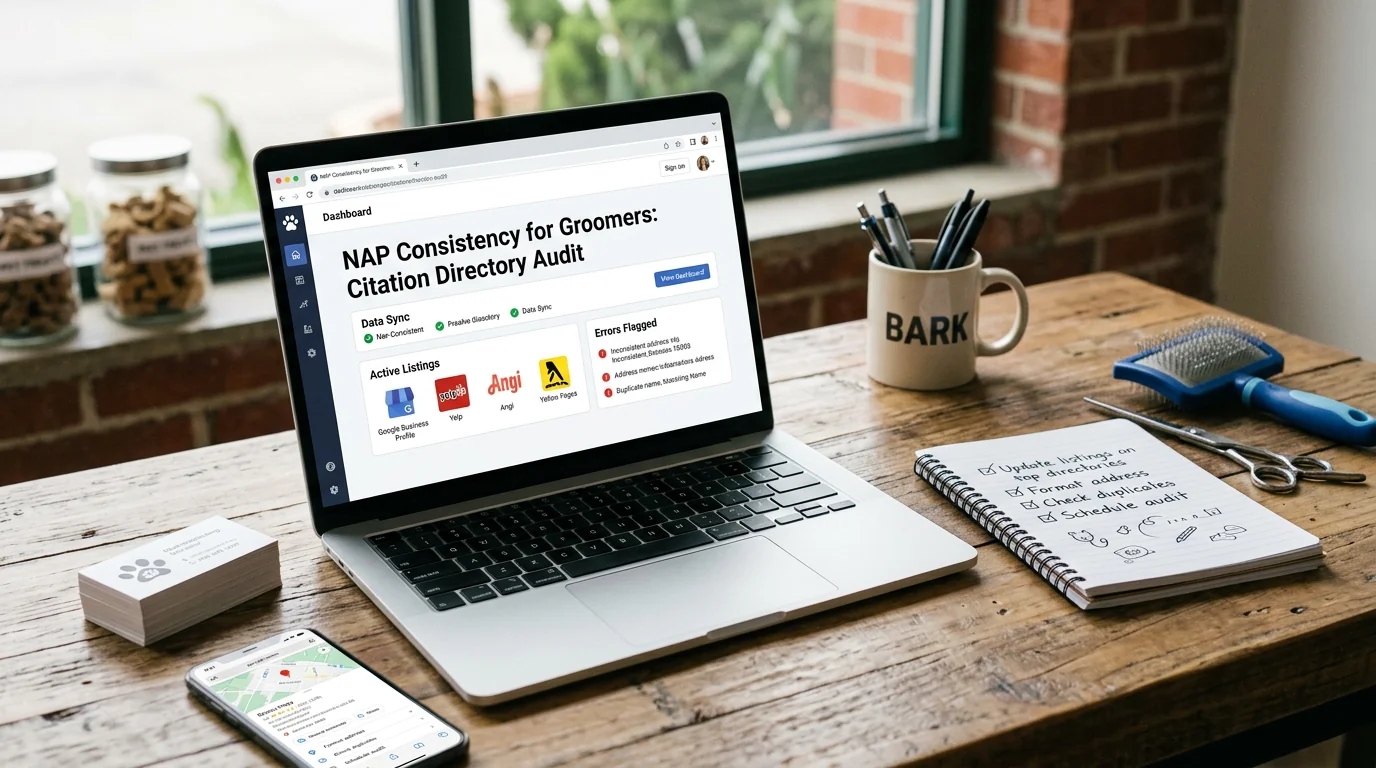
Table of Contents +
- Why NAP consistency may influence groomer map visibility
- Quick decision guide: if this, then do that
- Directories that may move the needle for groomers
- NAP formatting standards groomers should follow
- Duplicate and conflict cleanup workflow
- Monitoring: what to check after 7-14 days and 4-8 weeks
- Practical safety boundaries for citation work
- Evidence status and what current research suggests
- Sample 30-day schedule and reusable SOP
- Frequently Asked Questions
- Conclusion
- References
Learn which directories may impact groomers’ local SEO, how to format NAP, fix duplicates, and schedule audits to support map pack visibility.
Inconsistent listings quietly drain map visibility for grooming businesses. Conflicting names, addresses, or phone numbers confuse algorithms and customers. The fix is precise, methodical, and repeatable.
This guide narrows to one outcome. Standardize NAP, fix conflicts on top directories, and schedule audits. You will learn which directories to prioritize, how to format NAP, and how to handle duplicates safely. Expect pragmatic steps and measurable checkpoints.
Why NAP consistency may influence groomer map visibility
How citations are interpreted by local algorithms
Local systems cross-verify business name, address, and phone across trusted sources. Aligned data may reinforce entity confidence. Research on mapping datasets shows platforms tie storefront signals to listing labels, underscoring data coherence across sources[1]. For context on rankings, visit our local SEO hub for groomers.
The single scenario we’re solving: inconsistent listings across major directories
The focus is practical. We fix mismatched NAP across priority directories, then suppress duplicates. Cross-dataset research shows inconsistency complicates aggregation and benchmarking, which mirrors citation fragmentation challenges[2]. Our goal is a single, canonical identity everywhere.
Petbase writes and publishes this kind of content automatically - 10 SEO articles per month for pet businesses - start your free trial.
Quick decision guide: if this, then do that
Ownership gaps
If you cannot access a listing, claim or verify it before edits. Use official email domains, utility bills, or phone verification codes. Prioritize sites that syndicate to others.
Address and suite mismatches
If suite formats vary, choose a canonical version and update everywhere. Prefer “Suite” over “#” when supported. Avoid mixing abbreviations that may trigger duplicates.
Phone number conflicts
If multiple numbers exist, set one canonical primary. Update directories to match it. Add alternatives as secondary where supported, preserving NAP consistency grooming business standards.
Name variations and rebrands
If the name changed, update Tier 1 directories first. Use “Formerly [Old Name]” in descriptions when allowed. Avoid keyword-stuffed variations that are inconsistent.
Duplicate listings
If duplicates appear, keep the most complete, verified listing. Request merges or suppressions for others. Ensure surviving NAP matches your canonical standard perfectly.
Service-area vs. storefront
If you serve offsite, follow service-area rules. Hide the address when policies require. For storefronts, display the staffed address and consistent hours across platforms.
Franchise or multi-location
If multiple locations exist, create distinct listings for each. Use location-specific pages and phone numbers. Standardize brand naming with city modifiers to prevent intermixing.
Directories that may move the needle for groomers
Tier 1: Foundation citations (claim first)
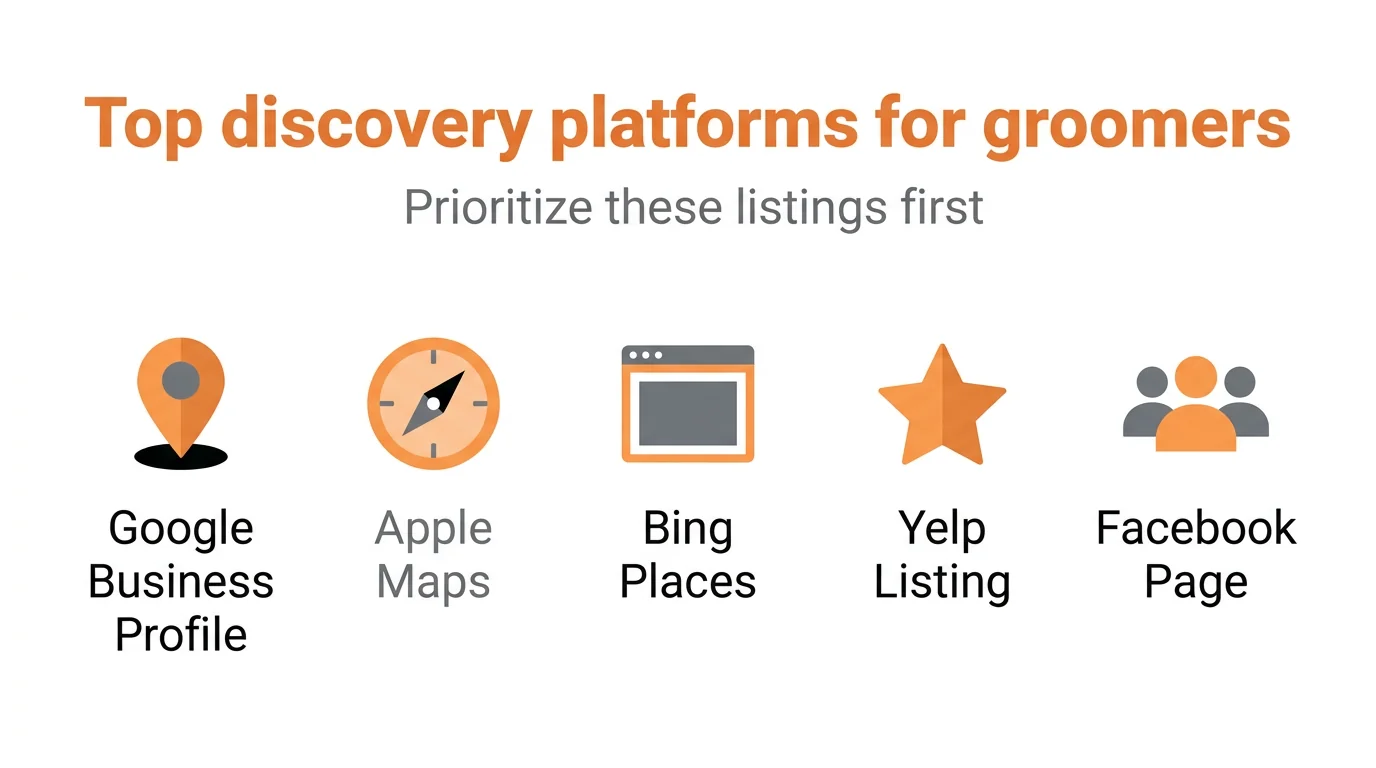
Start with the platforms most likely to influence discovery. Prioritize Google Business Profile for groomers, Apple Maps, Bing Places, Yelp, Facebook, and Foursquare. Add MapQuest and data aggregators where available. These are non-negotiable foundation entries.
Tier 2: Industry and pet-focused listings
Next, add grooming salon directories, regional pet associations, and reputable service marketplaces. Consider Nextdoor, Angi, BBB, and Manta where relevant. Industry directories can reinforce topical relevance for local SEO for pet groomers.
Tier 3: Regional and trust enhancers
Round out with Yellow Pages, Chamber of Commerce listings, city business portals, and local trade groups. These may not drive volume alone. However, they can strengthen authority and coverage in your operating region.
NAP formatting standards groomers should follow
Canonical business name and abbreviations
Adopt a single, canonical name. Use standardized abbreviations like “St” versus “Street” across all sites. Avoid adding services or cities to names unless registered and consistently used everywhere.
Address, suite formatting, and service areas
Pick one format for suite numbers and keep it universal. For service-area businesses, follow platform rules on address display. Maintain consistent city, region, and postcode formatting to limit fragmentation.
Primary phone, tracking numbers, and URLs
Keep one primary phone and homepage URL as canonical. If you use tracking numbers, list the main number as secondary where possible. This reduces confusion while enabling call attribution.
Duplicate and conflict cleanup workflow
Audit, verify, and prioritize conflicts
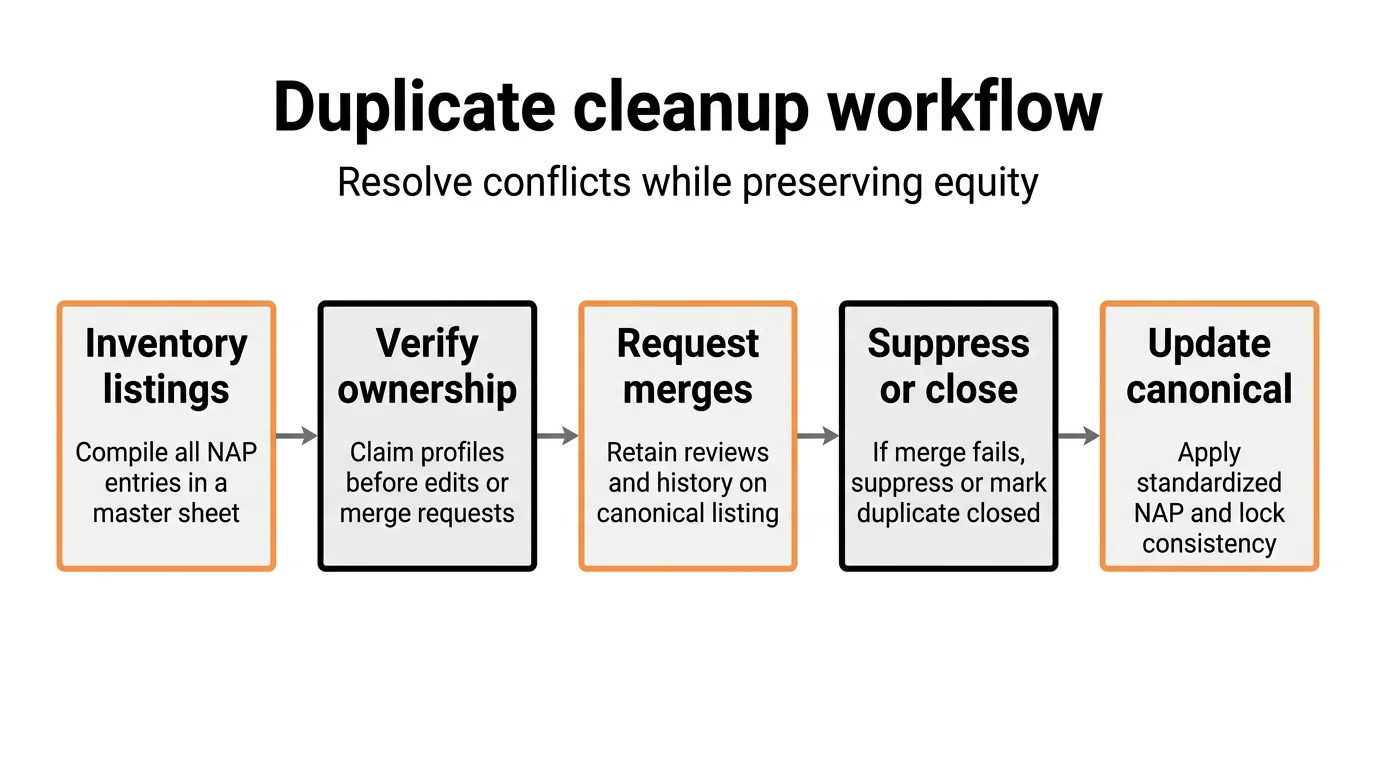
Start with a master spreadsheet. Record every listing and its NAP data. Prioritize conflicts on Tier 1, then Tier 2 directories. Verify ownership before edits to avoid reversions.
Suppress, merge, or remove duplicates
When duplicates exist, request merges to retain reviews and history. If merging fails, suppress or mark as closed. Update the canonical listing with the correct NAP afterward for stability.
Documenting change history for future audits
Maintain a change log with dates, URLs, and screenshots. This enables quicker re-audits and helps diagnose regressions. Pair with structured data for local businesses to reinforce consistency across your site.
Monitoring: what to check after 7-14 days and 4-8 weeks
Short-term checks (7-14 days): indexing and sync
Confirm edits are live on targeted directories. Check cache dates and indexing with site queries. Distributed systems often show sync lag, so staged changes reduce inconsistency risks[4]. Audit your Google Business Profile optimization to align categories and hours.
Medium-term checks (4-8 weeks): visibility and calls
Track map impressions, direction requests, and calls. Compare branded and non-branded query visibility. Pair operational metrics with attribution in your CRM. Review guidance in SEO KPIs for Grooming Shops: What to Track and How to Attribute Bookings.
Practical safety boundaries for citation work
When to avoid bulk changes
Avoid mass edits to name or address across dozens of platforms simultaneously. High-velocity changes may prolong sync variance. Stagger updates by tiers and confirm live status before moving to the next tier.
How to test call tracking safely
Use one tracking number as the primary on a limited set of Tier 2 listings. Keep the canonical number as secondary. Monitor for 4-8 weeks before wider rollout to protect NAP alignment.
Handling moves, rebrands, and hours changes
For moves, update Google Business Profile for groomers first. Then correct Tier 1 and Tier 2 directories. For rebrands, update all instances of the name and logo, and check hours consistency weekly.
Evidence status and what current research suggests
Where citations may help
Citations may support entity resolution and topical relevance when data is consistent and verified. Consistency across independent sources strengthens confidence, echoing broader data harmonization findings in other fields[2].
Where diminishing returns often appear
Once Tier 1 and selective Tier 2 platforms align, extra low-quality listings may add little. Prioritize accuracy and verification over volume. Platform coherence between images and listing labels further underscores quality over quantity[1].
Signals that may matter more in competitive areas
Beyond groomer local citations, completeness, reviews, and on-site clarity can influence visibility. Transparent, consistent disclosures reduce uncertainty in other decision systems, a helpful analogy for business data confidence[3]. Maintain content and engagement signals alongside NAP.
Sample 30-day schedule and reusable SOP
Week-by-week actions
Week 1: Finalize canonical NAP and brand style. Claim or verify Google, Apple, Bing, Yelp. Correct phone and suite formats. Capture screenshots. Week 2: Resolve Tier 1 duplicates. Update hours and categories consistently.
Week 3: Expand to Tier 2 industry and regional directories. Implement safe call tracking on two platforms. Add logo, images, and descriptions. Week 4: Complete Tier 3 listings. Re-scan for conflicts. Document outcomes and next audit date.
Complement citation work with steady content signals. Many teams use Petbase AI to automate topic research and on-site publishing while they manage directory cleanup.
Quarterly re-audit checklist
Quarterly: Re-crawl top directories. Confirm NAP matches the canonical record and website footer. Check for new duplicates or address drift. Review photos, categories, and UTM links. Refresh on-site content per strategy.
Frequently Asked Questions
How many citations does a grooming business need?
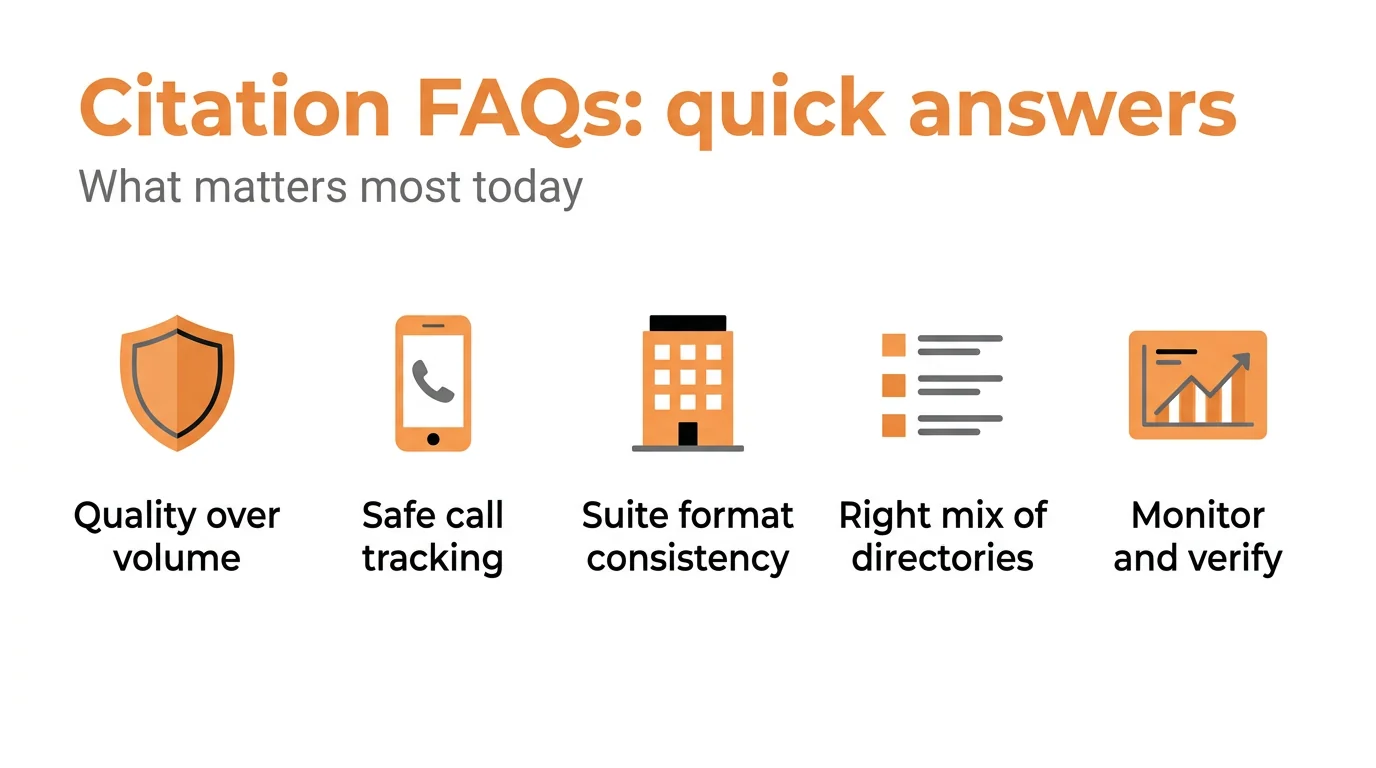
Evidence suggests quality and consistency matter more than raw counts. Start with core platforms and top industry directories, then add a handful of regional sites.
Should groomers use call tracking numbers in citations?
You can, but keep the main number consistent on Google Business Profile and key directories. If using tracking, ensure proper NAP rules and add the main number as secondary where supported.
Do suite numbers or abbreviations impact rankings?
Minor differences may cause listing fragmentation. Use a single canonical format across all sites to reduce mismatches and potential duplicate creation.
How long until citation changes reflect in search?
Some updates appear within days, but broader consistency effects may take 4-8 weeks as aggregators refresh and search engines re-crawl.
What if my grooming salon moved locations?
Update Google Business Profile first, then correct top directories and data aggregators. Mark old listings as moved or closed to limit confusion.
Conclusion
Fixing inconsistent business listings is a disciplined process. Standardize NAP, correct top directories first, eliminate duplicates, and monitor impacts with structured checkpoints. This approach may strengthen map confidence, reduce fragmentation, and support incremental visibility gains.
Keep changes measured, documented, and auditable. Then build complementary on-site signals and reputation. The combination tends to outperform isolated tactics, especially in competitive markets where precision compounds results.
References
- D Hendrycks et al. (2021). The many faces of robustness: A critical analysis of out-of-distribution generalization. Proceedings of the …. View article
- T Busch et al. (2022). Corporate carbon performance data: Quo vadis?. Journal of Industrial Ecology. View article
- B Reber et al. (2021). ESG disclosure and idiosyncratic risk in initial public offerings. Journal of business ethics. View article
- M Armbrust et al. (2020). Delta lake: high-performance ACID table storage over cloud object stores. Proceedings of the …. View article