Pet Daycare SEO: Fill Weekday Slots


Table of Contents +
- Why Is Daycare SEO Different From Boarding SEO?
- How Do Pet Owners Search for Daycare?
- What Makes a Daycare Website Rank?
- How Do You Optimize Google Business Profile for Daycare?
- What Daycare Content Builds SEO Authority?
- Which Marketing Channels Work Best for Daycare?
- How Do You Capture Commuter Daycare Demand?
- How Do Vet and Trainer Partnerships Improve Daycare SEO?
- What Is the 90-Day Daycare SEO Sprint?
- How Does Petbase Help Daycare Facilities Scale Content?
- Frequently Asked Questions
- References
SEO guide for pet daycare facilities. Rank for 'doggy daycare near me,' fill weekday slots, and turn search visibility into bookings.
The global pet daycare market is valued at $4.66 billion in 2025 and projected to reach $7.29 billion by 2031 at a 7.74% CAGR[1]. Dogs represent 76.20% of the market[1], and full-day care alone generates 53.90% of revenue. The US daycare market is on track to reach $2.85 billion by 2030[2]. The demand is real and recurring - and most facilities are losing it to whichever competitor shows up first on Google.
This guide covers exactly how doggy daycares rank on Google, attract weekday clients, and convert search visibility into recurring weekly bookings - backed by industry data at every step.
TL;DR
Pet daycare is a subscription-style local business: one client books 2-5 days per week for years. SEO matters more here than for boarding because the lifetime value per ranking is enormous. This guide shows the daycare-specific GBP setup, weekday-focused service pages, and content strategy that fills standing reservations - not just one-off stays.
Why Is Daycare SEO Different From Boarding SEO?
Boarding is occasional. Daycare is recurring. A single daycare client booking 3 days per week for 2 years generates USD 8,000-USD 15,000 in lifetime revenue. The math of customer acquisition cost is completely different - which means the math of SEO investment is completely different.
Boarding peaks around holidays. Daycare runs Monday through Friday year-round. Your search demand looks like a steady drumbeat, not a seasonal spike. Optimization choices reflect this:
- Boarding facilities optimize for "holiday dog boarding [city]." Daycares optimize for "doggy daycare near me" and "dog daycare [city]."
- Boarding wins by ranking 8 weeks before peak. Daycares win by being the first result every weekday morning when a dog parent searches in panic.
- Boarding sells trust for one-week stays. Daycare sells consistency for years.
The market context backs the urgency. The pet daycare market is growing at 7.74% CAGR globally[1] and 8.78% in the US[2]. Cat daycare specifically is growing at 9.12% CAGR - faster than dogs[1]. Whoever ranks first in your service area captures a disproportionate share of that growth.
For broader local strategy fundamentals, see our pet business local SEO guide.
Petbase builds this SEO foundation automatically for pet businesses - 10 optimized articles published every month - start your free trial.
How Do Pet Owners Search for Daycare?
Daycare searches break into four intent patterns:
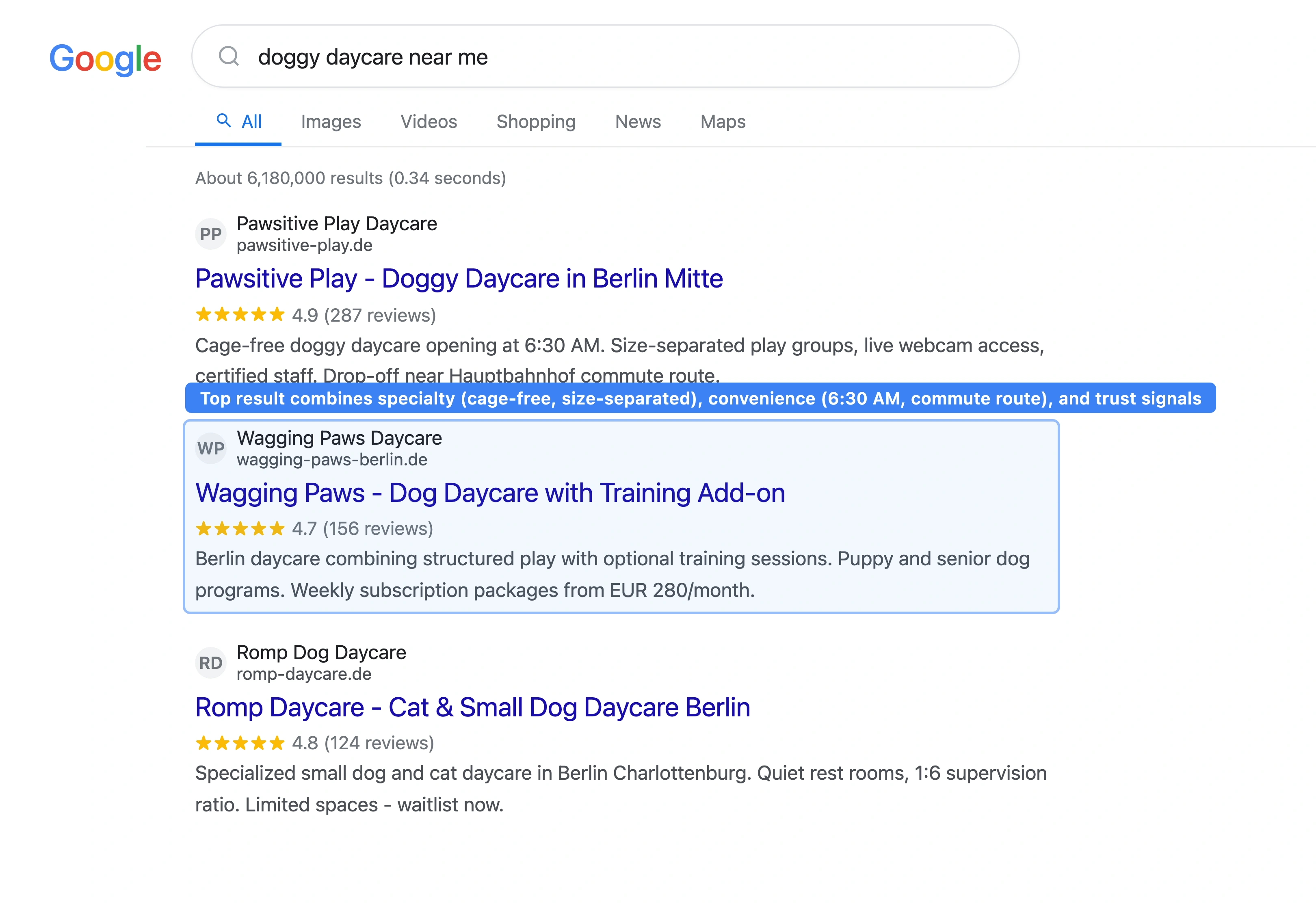
- Discovery searches - "doggy daycare near me," "dog daycare [city]." New customers researching options. Largest volume.
- Specialty searches - "puppy daycare," "small dog daycare," "daycare for reactive dogs," "cat daycare [city]." Specific need - high conversion intent because generic facilities are not a fit.
- Convenience searches - "dog daycare with pickup," "daycare near [office park name]," "daycare open 7am." Logistics-driven. Often work-day commuters.
- Trust searches - "safest dog daycare [city]," "dog daycare reviews," "cage-free daycare [city]." First-time customers worried about leaving their dog.
Each pattern requires different content. Discovery searches reward facilities with strong general GBP signals. Specialty searches reward dedicated service pages (puppy daycare = its own page, small dog daycare = its own page). Convenience searches reward pages that name nearby office parks, transit stations, and neighborhoods. Trust searches reward photos, certifications, and review depth.
What Makes a Daycare Website Rank?
Google evaluates three core areas when ranking pet daycare businesses:
1. Local SEO Signals
Your business name, address, and phone number (NAP) must be consistent across your website, Google Business Profile, directories, and social profiles. Inconsistencies confuse Google and depress rankings.
For multi-location daycares, every location needs its own dedicated landing page with unique NAP data and unique copy. Cookie-cutter pages with swapped city names hurt more than they help.
This matters because 98% of consumers search online for nearby businesses[3]. If your NAP data is wrong, those listings still rank - and they send pet parents to a disconnected number.
2. Daycare Service Pages
Most daycare websites have one "Services" page covering all care options. That is a missed opportunity. Each service deserves its own page:
- full-day daycare (the highest-revenue service - 53.90% of market revenue[1])
- half-day daycare
- puppy daycare
- small dog daycare (separate from large dog)
- senior dog daycare
- cat daycare (the fastest-growing segment at 9.12% CAGR[1])
- daycare with training
- daycare with grooming add-on
- weekly subscription packages
- occasional drop-in care
Each page should describe what the day looks like, who it is best for, group sizes, supervision ratios, exercise schedule, rest periods, feeding policy, vaccination requirements, drop-off and pick-up windows, and pricing structure. This level of detail builds trust and matches the keyword variety pet parents search.
3. Facility Photos and Live Tour Content
Photos do more than decorate. Business profiles with photos receive 42% more direction requests and 35% more website clicks than profiles without[4]. For daycare, this is the single highest-ROI activity.
Pet parents want to see:
- actual play yards (indoor and outdoor)
- group play sessions in progress
- size-separated play groups
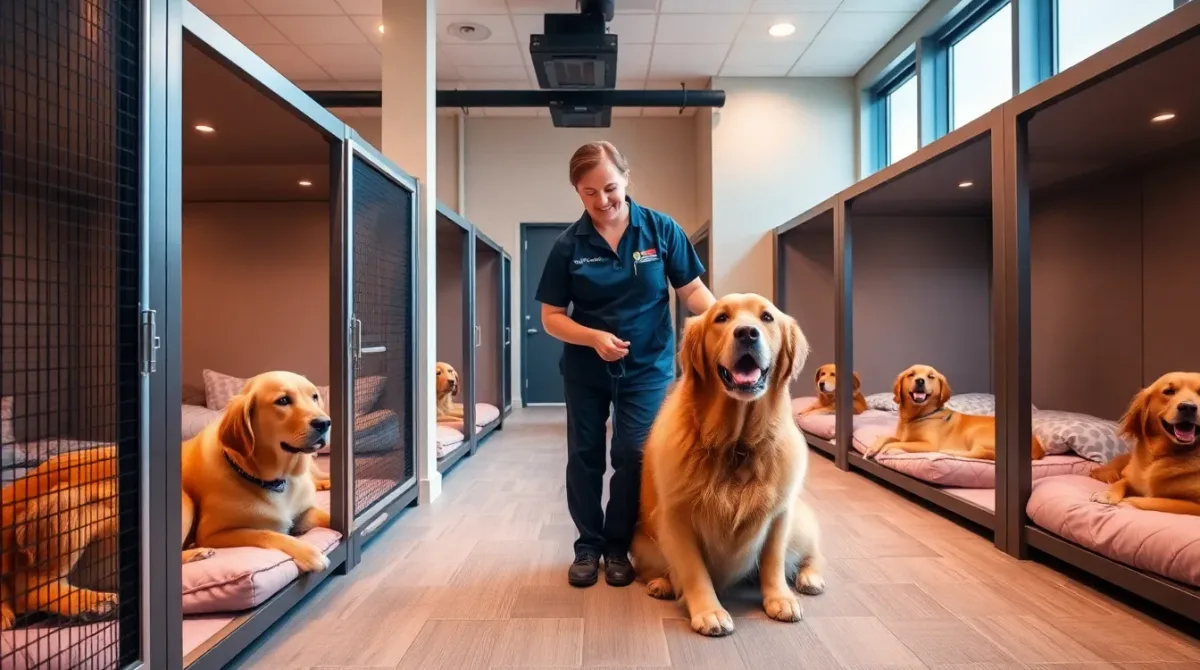
- quiet rest rooms with raised beds
- supervised water and feeding areas
- secure fencing and gates
- staff actively engaging with dogs
- your live webcam setup if you offer one
Live webcams have become a competitive advantage in the daycare segment. Facilities that offer customer-accessible live video typically command 15-25% premium pricing and rank higher in trust searches.
How Do You Optimize Google Business Profile for Daycare?
Your Google Business Profile (GBP) drives map pack visibility, phone calls, direction requests, and new bookings. The Local Pack appears for 93% of local intent searches and receives nearly 44% of all clicks[3]. If you rank in the Local Pack for daycare queries in your area, you capture nearly half the available search traffic.
Choose the right primary category
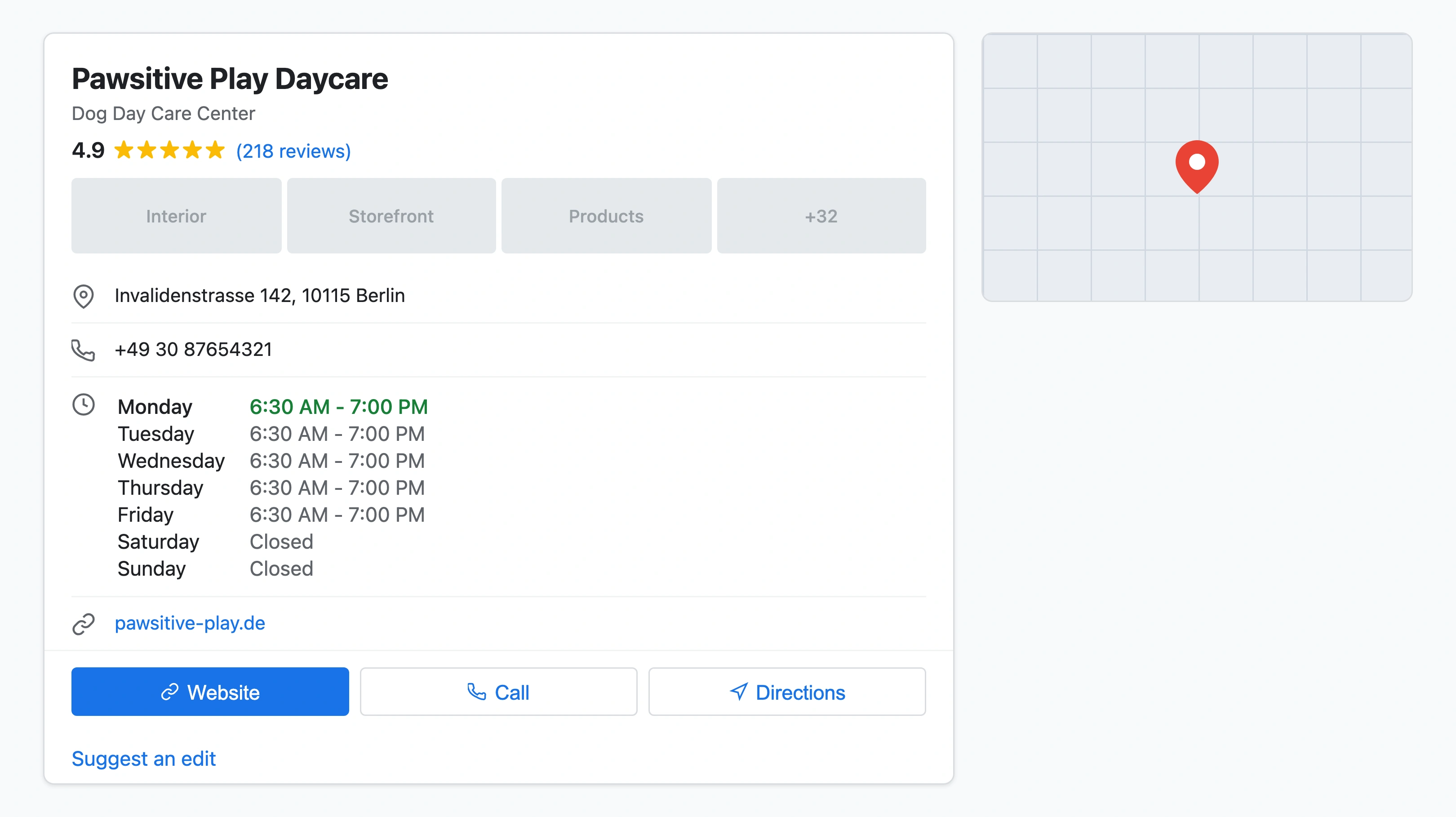
Use "Dog Day Care Center" as your primary category. Add secondary categories for related services (Pet Boarding Service, Dog Trainer, Pet Groomer if you offer add-ons). The primary category drives the bulk of category-match ranking signals.
Upload 30-50 daycare-specific photos
Cover indoor play areas, outdoor yards, group play, size-separated groups, rest rooms, food and water areas, and staff engagement. With the 42% direction request boost photos deliver, this is non-negotiable. Refresh the photo set every 6-8 weeks so pet parents see current dogs in current conditions - not photos from two years ago.
Write a keyword-rich description
Mention daycare specialties (puppy, small dog, cat, training-integrated), group sizes, supervision ratios, hours (especially early-morning availability for commuters), service area neighborhoods, and any subscription packaging. Include geographic terms naturally - "serving downtown [city] commuters and surrounding neighborhoods including [list]" - to match how customers search.
Collect reviews systematically, not occasionally
93% of consumers say online reviews affect their buying decisions for local businesses[3], and businesses with a 4+ star average are 3x more likely to get clicks. Build a system: every new client gets a review request after the first week (when the experience is fresh and impressions are formed), and every recurring client gets a periodic prompt every 6 months.
Daycare reviews are uniquely powerful because they describe ongoing relationships, not one-off stays. Train your team to ask for reviews that mention the dog's name, breed, what your facility helped with (separation anxiety, socialization, exercise needs), and frequency of visits.
Setting up GBP, building review collection workflows, writing service-specific landing pages, and producing 50 photo captions takes 12-15 hours of focused work. Most daycare owners cannot find that time during the daily grind of supervising play groups. Or let Petbase generate the optimized service pages and ongoing content automatically while you stay focused on the dogs in your care.
What Daycare Content Builds SEO Authority?
Daycare facilities can build topical authority fast by publishing helpful educational content. High-impact topics include:
- signs your dog is ready for daycare
- how to introduce a new dog to daycare
- puppy socialization through daycare
- daycare for working parents - logistics guide
- daycare versus dog walker - which is right
- cat daycare - what it actually looks like
- daycare for reactive or anxious dogs
- weekend daycare for irregular schedules
- daycare and training combo programs
Each post should answer a specific search query and link internally to your relevant service page. A post on "introducing a new dog to daycare" should link to your puppy daycare service page. A post on "daycare for reactive dogs" should link to your specialized care page or your training-integrated service.
For breed-specific content strategy, see our breed guides SEO strategy - the same approach works for daycare-specific breed care content.
Which Marketing Channels Work Best for Daycare?
Not every channel delivers equal return for pet daycare businesses. Compare the realistic options:
| Channel | Upfront Cost | Ongoing Effort | Long-Term Value | Best For |
|---|---|---|---|---|
| Google Business Profile (SEO) | Free | Medium (weekly updates) | Very High | Local discovery, map pack ranking |
| Organic Blog and Website SEO | Low to Medium | Medium (monthly content) | Very High (compounds over time) | Specialty and convenience keyword ranking |
| Google Ads (PPC) | High | Medium (bid management) | Low (stops when budget stops) | Filling new-location capacity quickly |
| Instagram and TikTok | Free | Very High (daily posting) | Medium (algorithm dependent) | Daily updates for current customers, brand affinity |
| Facebook Local Groups | Free | Medium | Medium | Word of mouth and trust building |
| Yelp and Directory Listings | Free to Medium | Low | Medium | Review-driven discovery |
| Vet and Trainer Partnerships | Low | Low | Very High | Steady weekday referral pipeline |
| Office Park Partnerships | Low | Low | High | Commuter daycare clients |
SEO - particularly Google Business Profile optimization combined with consistent service-page and educational content - delivers the highest long-term return for most daycare businesses. The lifetime value of a single recurring daycare client (USD 8,000-USD 15,000 over 2-3 years) makes the SEO investment math overwhelmingly favorable. With 61% of small businesses not yet investing in SEO[5], the opportunity window is wide open.
How Do You Capture Commuter Daycare Demand?
Daycare is a commuter business in most cities. Pet parents drop off on the way to work and pick up on the way home. This shapes search behavior in ways that boarding does not:
- they search early in the morning, often from a phone
- they search for facilities near their workplace, not just their home
- they care about hours starting at 6:30-7:00 AM
- they care about pickup deadlines that align with workday end
- they search for facilities along commute routes
Optimize for this:
- Highlight early hours. If you open at 6:30 or 7:00 AM, mention it in your title tag, GBP description, and home page hero.
- Create commuter-friendly content. A blog post titled "Doggy daycare near [downtown / business district name]" captures intent that generic "daycare near me" searches do not.
- Build office-park partnerships. Many tech and corporate office parks have informal Slack channels or workplace bulletin boards. A free intro day or referral discount can seed dozens of new commuter clients.
- Map your service area carefully. Your GBP service area should reflect commute reality, not just driving distance from your facility. A facility 12 minutes from a major office park is often more convenient than a facility 4 minutes from someone's home if it is on the wrong commute side.
One pattern I have seen repeatedly with daycares opening near corporate office parks: the ones that publish 2-3 commuter-focused service pages within 60 days of opening fill weekday capacity 4-6 weeks faster than facilities relying on generic "dog daycare [city]" content alone.
How Do Vet and Trainer Partnerships Improve Daycare SEO?
Daycare facilities can earn high-value backlinks by collaborating with other local pet professionals:
- local vets link to your puppy socialization daycare page
- dog trainers link to your daycare-with-training packages
- groomers cross-link for stay-and-groom days
- boarding facilities cross-link for daytime care they do not offer
- local breeders link to your puppy daycare page
- pet sitters refer corporate clients who need structured care
These relationships strengthen your domain authority and produce direct referrals. A vet recommending your daycare for an under-socialized adolescent dog is worth ten generic search clicks because the trust signal carries over.
For broader link building strategy, see our local link building guide.
What Is the 90-Day Daycare SEO Sprint?
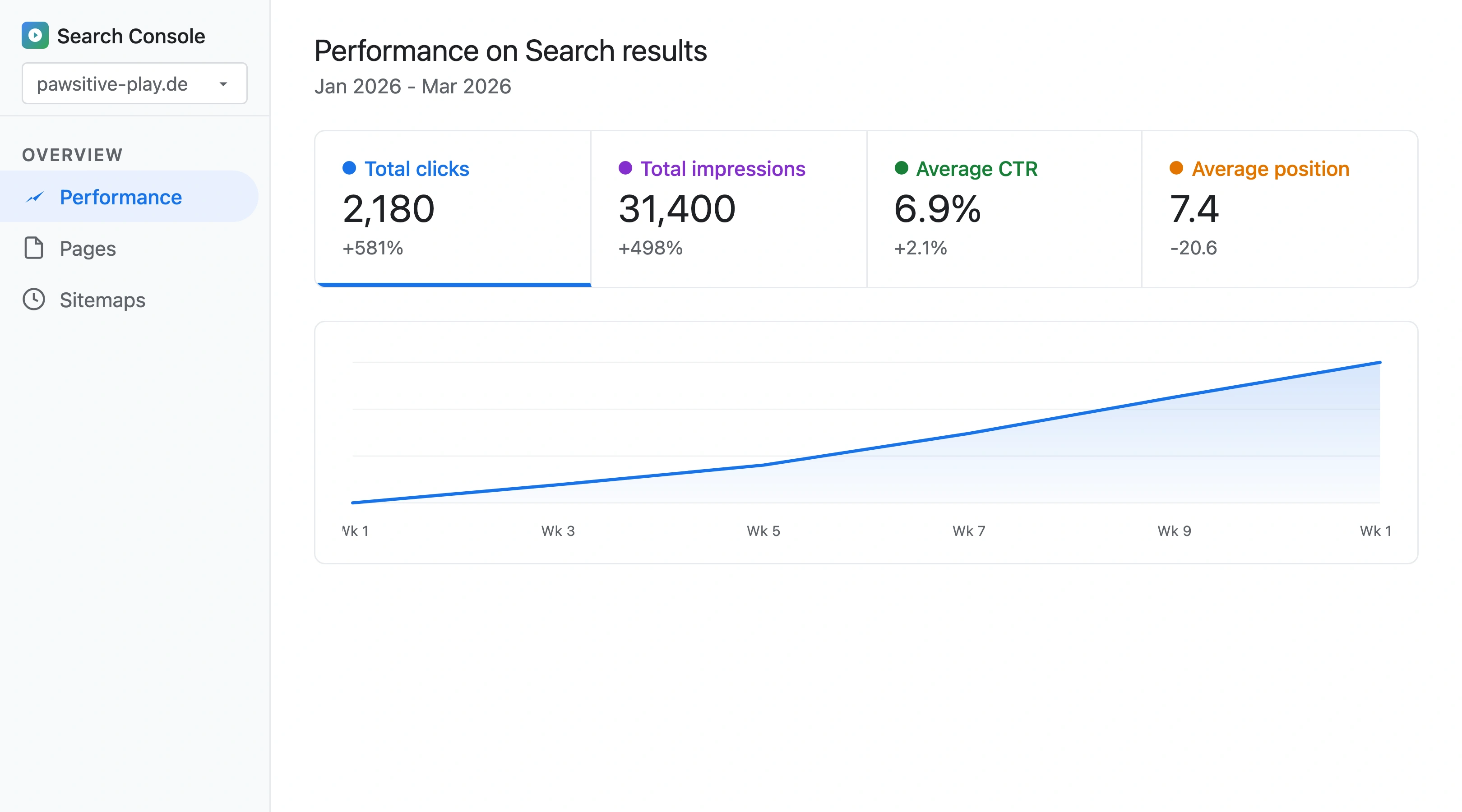
Daycare facilities want results inside one quarter. Here is a practical 90-day sprint that produces ranking improvements within 8-12 weeks:
| Week | Action | Impact |
|---|---|---|
| 1-2 | Claim and optimize Google Business Profile with "Dog Day Care Center" primary category, upload 30+ photos showing daily routine | Very High (42% more direction requests) |
| 2-3 | Create 6-8 individual service pages (full-day, half-day, puppy, small dog, cat, training-integrated) | Very High |
| 3-4 | Audit and fix NAP consistency across all directories | High |
| 4-6 | Build review request workflow targeting first-week new clients and 6-month recurring milestones | Very High (93% check reviews) |
| 5-8 | Publish 4 pillar blog posts (daycare readiness, socialization, commuter logistics, daycare versus walker) | High |
| 6-10 | Create 2-3 commuter-focused landing pages naming nearby office parks and neighborhoods | Very High |
| 8-12 | Outreach to 10 local vets, trainers, and pet sitters for cross-link partnerships | High |
| 10-12 | Add HowTo schema to readiness guides, FAQ schema to vaccination and policy pages | Medium |
| Ongoing | Weekly GBP posts (daily play highlights), weekly review requests, monthly content publishing | Compounds over time |
This sprint roughly maps to the cadence we cover in our how long pet store SEO takes guide - meaningful ranking gains within 8-12 weeks for most facilities.
How Does Petbase Help Daycare Facilities Scale Content?
Most daycare operators do not have time to write commuter-focused landing pages, breed-specific care content, socialization guides, and city-by-city service descriptions. Your day starts before 7 AM with the first drop-off and runs straight through evening pickup. SEO content sits at the bottom of every realistic to-do list.
That is exactly the gap Petbase fills. Petbase generates optimized service pages, daycare-specific educational content, breed care guides, and commuter-focused landing pages tailored to the pet care industry. 10 articles per month, published directly to your website, for USD 199/month.
The daycare market is growing at 7.74% globally and 8.78% in the US[1][2]. New office parks open. New residential developments fill with dog owners. The question is whether new pet parents in your service area find you, or the daycare facility one neighborhood over, when they start searching for weekday care.
Start your 7-day free trial and see what consistent, research-backed content does for your daycare calendar.
Frequently Asked Questions
How long does pet daycare SEO take to show results?
Most daycare facilities see meaningful ranking improvements within 60-90 days of consistent optimization. Google Business Profile optimization shows fastest results - often within 3-4 weeks of completing setup, photos, and the first 10 reviews. Daycare SEO compounds faster than boarding because weekday demand is steadier and search volume is more predictable. Service-page rankings typically stabilize between weeks 8 and 12.
Should daycare facilities use Google Ads?
Google Ads can fill capacity at a new location quickly while organic rankings build, but they are not a long-term strategy. Each click costs USD 2-USD 7 in competitive markets, and the moment your budget stops, the bookings stop. Given the USD 8,000-USD 15,000 lifetime value of a recurring daycare client, ads can be profitable - but only as a bridge to organic rankings, not a substitute. Use ads in months 1-6 of a new location, then taper as SEO takes over.
Do single-location daycares need a blog?
A blog accelerates ranking and trust building. Posts targeting daycare-specific questions, breed socialization needs, and commuter logistics attract organic search traffic and answer the questions anxious first-time pet parents ask before booking. With organic search driving over half of all website traffic for service businesses, a well-written daycare article can generate dozens of new inquiries each month. Start with 4-6 posts per quarter and build from there.
How is daycare SEO different from boarding SEO?
Daycare SEO targets steady weekday demand and recurring weekly clients. Boarding SEO targets seasonal peaks (holidays, summer) and one-off stays. Daycare keywords skew toward "near me" and "open early" - convenience-driven. Boarding keywords skew toward "holiday" and "long weekend" - planning-driven. Daycare investment is justified by lifetime value (USD 8,000-USD 15,000 per recurring client). Boarding investment is justified by peak-season capacity utilization. Most facilities offering both should treat them as separate SEO streams with separate landing pages and content calendars.
References
- Mordor Intelligence (2025). Pet Daycare Market Size, Growth, Share & Competitive Landscape. mordorintelligence.com
- Grand View Research (2025). U.S. Pet Daycare Market Size, Share & Growth Report. grandviewresearch.com
- BrightLocal (2024). Local SEO Statistics. brightlocal.com
- Sterling Sky (2024). How to Interpret Google Business Profile Performance. sterlingsky.ca
- Clutch (2025). SEO Statistics. clutch.co