Multilingual Pet SEO: US/UK/DACH Rollouts with Clean Indexation

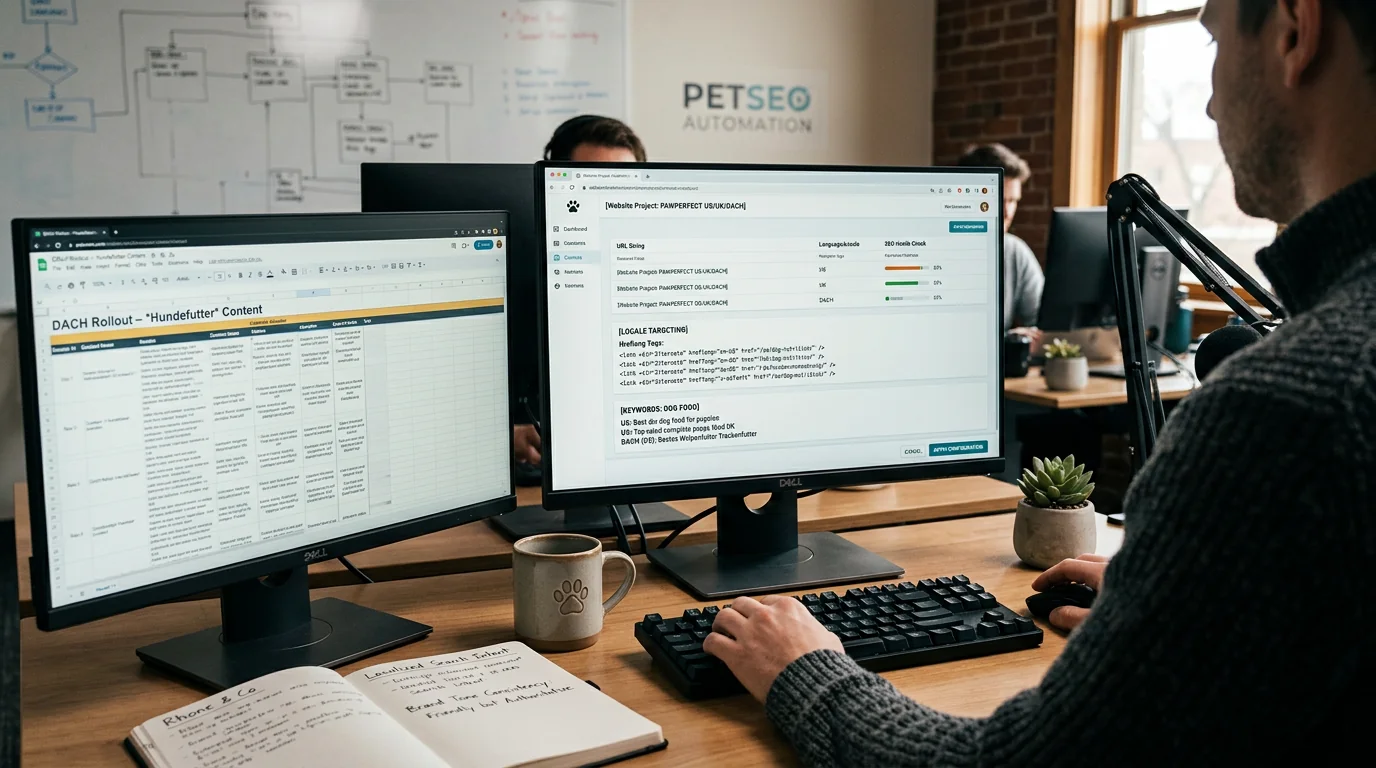
Table of Contents +
- The scenario: Launching English and German pet content without cannibalization
- Quick decision guide: If X, then Y
- Architecture and tags that may support clean indexation
- Localized keyword and content mapping for pet topics
- Indexation controls and duplication safeguards
- Monitoring: what to check after 7-14 days and 4-8 weeks
- Practical safety boundaries
- Evidence status
- Sample implementation blueprint
- Frequently Asked Questions
- Back to the AI Visibility hub
- References
Avoid cannibalization when launching English & German pet content. Use hreflang, localized keywords, and indexation controls for US/UK/DACH rollouts.
Launching English and German pages can grow reach fast. It can also introduce duplicate content and ranking cannibalization if not engineered carefully.
This guide keeps international rollouts tidy. It matters because small technical choices influence indexation and revenue. You will learn practical hreflang patterns, localized keyword mapping, and voice controls that maintain clean separation across US, UK, and DACH markets.
The scenario: Launching English and German pet content without cannibalization
When US, UK, and DACH pages look similar, search engines may struggle to select the right URL. Clear locale signals reduce ambiguity and protect market visibility.
The risk: same-language overlap (US vs UK) and cross-language duplication (EN vs DE)
Near-identical English pages risk competing on the same queries. German translations may mirror English structure too closely, creating duplicate content in SEO and diluting authority across locales.
Success definition: one URL per market ranking, others supporting via hreflang
Each market should surface the correct page. Hreflang for pet brands should connect alternates, while localized signals prevent collisions that suppress impressions, CTR, and conversions.

Petbase handles this entire content workflow automatically - 10 SEO articles published to your blog every month - start your free trial.
Quick decision guide: If X, then Y
Use this decision grid to move quickly without introducing indexation noise. Apply it page-by-page, prioritizing top revenue and traffic drivers first.
If you target US and UK English with near-identical copy, then separate slugs and apply x-default
Create /en-us/pet-insurance/ and /en-gb/pet-insurance-quotes/. Add x-default to your language selector. This may improve routing where user language is unclear.
If German pages serve DACH, then one /de/ with region-neutral DE and country-level business data
Centralize content in /de/ with neutral German. Localize addresses, currencies, and store info by country. Keep one German indexable page per topic.
If a page is informational only in one market, then index that locale and noindex soft-duplicate others
Publish the primary market as indexable. Use noindex, follow on alternates to avoid overlap. Maintain hreflang relationships to preserve clarity.
If a product is unavailable in DE, then use alternate with noindex and inventory schema
Keep the German informational variant accessible. Add noindex until inventory returns. Mark availability with structured data and maintain alternates for continuity.
If terms differ (leads vs. lead, flea vs. parasite), then create locale-specific keyword sets
Build distinct EN-US and EN-GB keyword maps. Emphasize local terminology and modifiers to separate queries and intent profiles.
If brand voice must stay consistent, then apply a shared tone guide with locale lexicons
Codify tone at a global level. Attach per-locale lexicons for spelling, measurements, and phraseology to preserve voice while signaling locale specificity.
If US ranks but UK struggles, then tighten UK on-page and UK backlinks before merging
Improve UK meta, H1, and internal links. Earn UK citations. Only consider merging content if segmentation remains insufficient after dedicated optimization.
Architecture and tags that may support clean indexation
Structure and tags do the heavy lifting for US UK DACH SEO. Pair a stable URL taxonomy with correct hreflang and conservative canonicals.
URL strategy: /en-us/, /en-gb/, /de/ with unique slugs for key terms
Use locale folders with meaningful slugs. Differentiate head terms across English markets. This separation often reduces cannibalization and aligns intent to the right page.
Hreflang matrix and x-default for language selector and AI Overviews
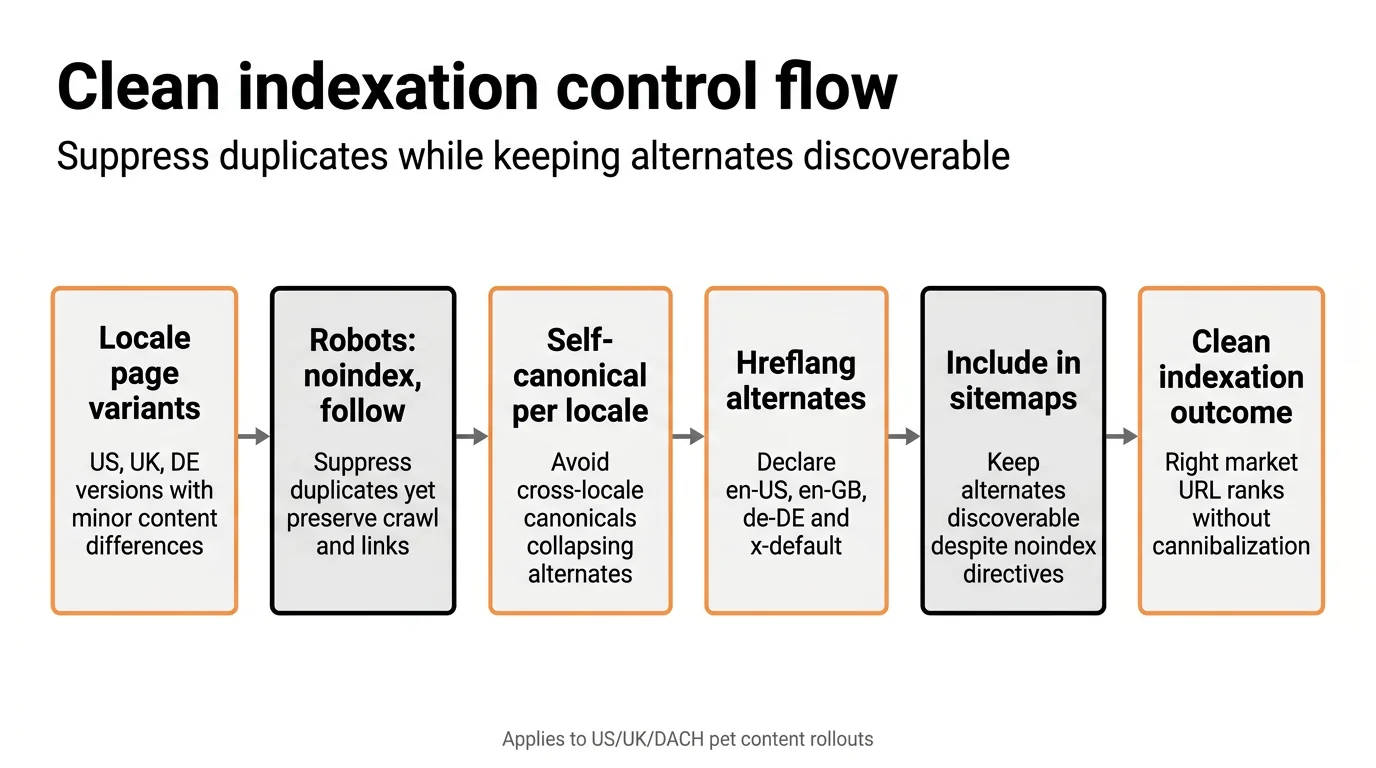
Declare en-us, en-gb, and de alternates across all variants. Include x-default pointing to a selector. Plugins with multilingual SEO features commonly support this pattern[3].
Canonical logic: self-canonical within each locale; no cross-locale canonicals
Use self-referential canonicals on every localized page. Avoid cross-locale canonicals to prevent suppression of alternates. This approach often preserves clean indexation across markets.
To coordinate at scale, editorial automation and scheduling can help. See automated publishing frameworks for pet brands. For templated rollouts, review multi-language content creation approaches for catalogs. When publishing at scale, systems like Petbase AI may enforce hreflang pairs and locale controls automatically.
Localized keyword and content mapping for pet topics
Separate markets win on localized demand, not literal translations. Map terms by locale, then weave them into titles, H1s, and body copy to send unambiguous signals.
EN-US vs EN-GB: term shifts (vet vs veterinarian, kitten food vs cat food for kittens)
Favor US: “veterinarian,” “flea medication,” and imperial units. Favor UK: “vet,” “parasite treatment,” and metric units. Distinct head terms clarify targeting and help reduce overlapping queries.
DE (DACH): German head terms and modifiers (Welpe, Tierarzt, Anti-Floh, Kauspielzeug)
Use localized German pet keywords and compound nouns. Pair neutral DE content with country-specific business details. Keep copy idiomatic to signal genuine German intent and relevance[2].
Template variance: shipping, regulations, measurements, and price displays
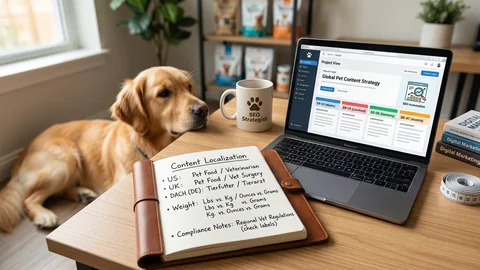
Localize shipping terms, returns, and compliance notes. Convert measurements and dosage information. Display currency by market. Tie related products using internal linking blueprints for eCommerce and product schema guidance.
Indexation controls and duplication safeguards
Use robots directives, meta tags, and sitemaps to keep alternates discoverable while suppressing unavoidable soft duplicates. Avoid boilerplate sameness across locales.
Robots and meta directives: when to use noindex, follow on soft duplicates
Noindex, follow preserves crawl paths while removing duplicates from the index. Keep sitemap entries for visibility. Ensure alternates remain declared for clarity between markets.
Parameter handling and hreflang in sitemaps
Exclude tracking parameters from indexation. Surface canonical URLs only. Declare hreflang in sitemaps for redundancy, which may assist discovery of alternates across locales[3].
Avoiding near-duplicate intros and boilerplate across locales
Change intros, CTAs, and FAQs per locale. Target 20-30% on-page variance. Adjust examples, measurements, and legal notes to create market-specific relevance.
Monitoring: what to check after 7-14 days and 4-8 weeks
International rollouts benefit from staged validation. Verify tags first, then track market separation and incremental visibility over several weeks.
7-14 days: Search Console hreflang coverage, index status, cannibalizing queries
Confirm no “no return tag” or conflicting canonical errors. Check alternates linking correctly. Inspect queries for both English versions to detect early cannibalization.
4-8 weeks: country impressions, CTR shifts, ranking separation, and AI Overview presence
Segment performance by country and URL. Look for diverging query sets and stable impressions per locale. Track AI Overview inclusion on market-relevant, informational searches.
To extend measurement, explore AI Visibility metrics beyond rankings. For broader context, consult the AI Visibility for Pet Brands orientation hub.
Practical safety boundaries
These guardrails reduce rework and prevent long-term indexation debt. Apply them before large-scale localization, particularly for catalog or regulatory content.
Do not deploy cross-locale canonicals
They often collapse alternates and mute visibility in intended markets. Prefer self-canonicals with correct hreflang to maintain separation and discovery.
Do not auto-translate product compliance or medical content without human QA
Regulatory and health content requires expert review. Automated translation can miss nuance and legal phrasing, creating risk and mismatches across jurisdictions.
Limit near-identical headings; aim for 20-30% locale-unique on-page signals
Vary H1s, early paragraphs, FAQs, and internal links. Evidence suggests distinct on-page signals help align intent and mitigate duplication across markets.
Evidence status
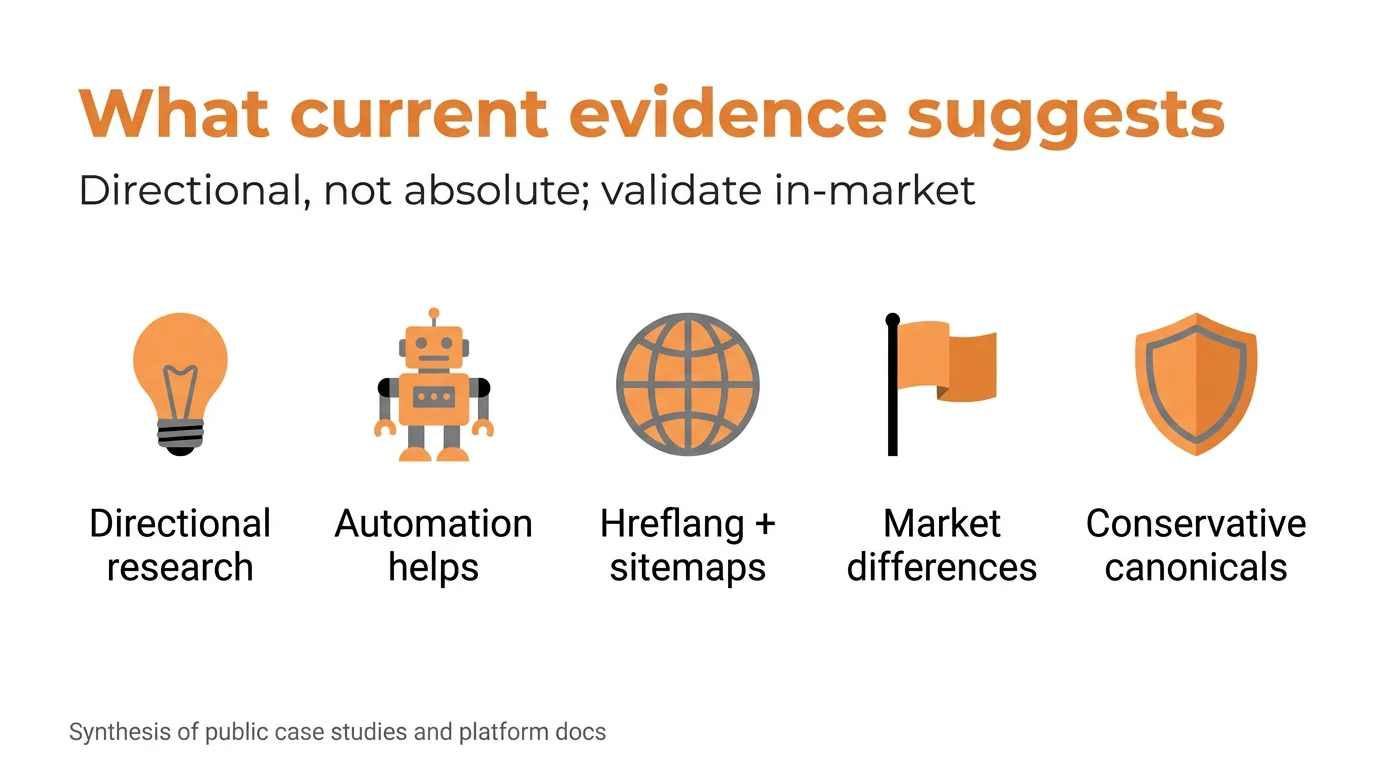
Research provides directional guidance for multilingual SEO, automation’s role, and user behavior. However, thresholds and ranking impacts can differ by site and query class.
What industry data suggests about hreflang impact
Multilingual plugins and systems commonly integrate hreflang, sitemaps, and translation workflows, indicating operational benefits and discoverability improvements for alternates[3].
Where evidence is mixed: x-default usage, minor-variant duplication thresholds
Multilingual users switch languages and accept mixed-language SERPs, complicating clean routing and duplication thresholds[4]. LLM-driven workflows may improve localization speed, while requiring governance and QA[1].
Sample implementation blueprint
Use a consistent pattern for sitemaps, tags, and on-page elements. Validate in a staging environment before deployment, then spot-check in production.
Sitemap and hreflang snippet example
<url>
<loc>https://example.com/en-us/kitten-food/</loc>
<xhtml:link rel="alternate" hreflang="en-us" href="https://example.com/en-us/kitten-food/"/>
<xhtml:link rel="alternate" hreflang="en-gb" href="https://example.com/en-gb/cat-food-for-kittens/"/>
<xhtml:link rel="alternate" hreflang="de" href="https://example.com/de/katzenfutter-fuer-kitten/"/>
<xhtml:link rel="alternate" hreflang="x-default" href="https://example.com/language-selector/"/>
</url>
Locale-specific on-page elements: title, H1, FAQs, and product linking
EN-US Title: Best Kitten Food. EN-GB Title: Best Cat Food for Kittens. DE Title: Bestes Katzenfutter für Kitten. Localize FAQs and link to regional product pages using structured data guidance.
Frequently Asked Questions
Should I use one English page for US and UK with hreflang only?
Separate pages may support clearer ranking separation due to term and SERP differences. Hreflang helps disambiguate, but distinct on-page signals for US and UK often reduce cannibalization.
Can I canonicalize UK to US to avoid duplicates?
Cross-locale canonicals may suppress the alternate from indexing and visibility. Evidence suggests self-canonical per locale with correct hreflang is safer for international targeting.
How unique should localized content be?
Aim for 20-30% locale-unique elements across title, H1, key paragraphs, FAQs, and internal links. This may help search engines align each page to its market intent.
Do I need x-default?
x-default may guide users to a language selector when geo/language is unclear. Impact on rankings is uncertain; use mainly for user routing and clarity.
What if German inventory is limited?
Keep the DE informational page indexed if useful, but consider noindex for unavailable product variants. Maintain hreflang between live alternates to avoid mismatches.
Back to the AI Visibility hub
Checklist: hreflang validated, self-canonicals set, locale slugs unique, 20-30% content variance, and sitemaps updated. Back to the AI Visibility hub.
Conclusion: Launching English and German variations without cannibalization requires discipline across URLs, hreflang, and localized keyword mapping. Emphasize clean indexation, controlled duplication, and brand voice consistency. Iterate using measured feedback, and scale with robust automation and QA frameworks.
References
- G Chodak et al. (2023). Large language models for search engine optimization in e-commerce. International Advanced Computing Conference. View article
- A Al-Tarawneh et al. (2025). The Multilingual Marketplace: Translation Strategies for E-commerce Success. From Machine Learning to Artificial …. View article
- A Vasiļjevs et al. (2024). Advancing Digital Language Equality in Europe: A Market Study and Open-Source Solutions for Multilingual Websites. Proceedings of the 25th …. View article
- B Steichen et al. (2021). How do multilingual users search? An investigation of query and result list language choices. Journal of the Association for Information …. View article