Multilingual Pet SEO: US/UK/DACH Localization Without Losing Voice


Table of Contents +
- The Scenario: One Brand Voice, Three Regions
- Localization Framework: Terms, Units, and Intent
- Voice Guardrails: Keep Tone Consistent Across Markets
- Quick Decision Guide
- Monitoring: 7-14 Days and 4-8 Weeks
- Practical Safety Boundaries
- Evidence Status
- Implementation Checklist
- Frequently Asked Questions
- Conclusion
- References
Localization workflow for pet brands across US, UK, and DACH. Align terms, units, and schema while keeping brand voice consistent and search-ready.
Localization makes or breaks multilingual pet SEO. One voice must adapt to three markets without confusion or compliance risk. Miss the nuance, and relevance drops.
This matters because search intent, terminology, and measurement expectations vary meaningfully. You will learn a practical localization workflow for US/UK/DACH that protects voice. We will cover terms, units, intent, and structured data, with decision rules and guardrails. For broader strategy context, see AI Content for Pet Brands: Strategy, Priorities, and Playbooks.
The Scenario: One Brand Voice, Three Regions
Scope and constraints for US/UK/DACH pet content
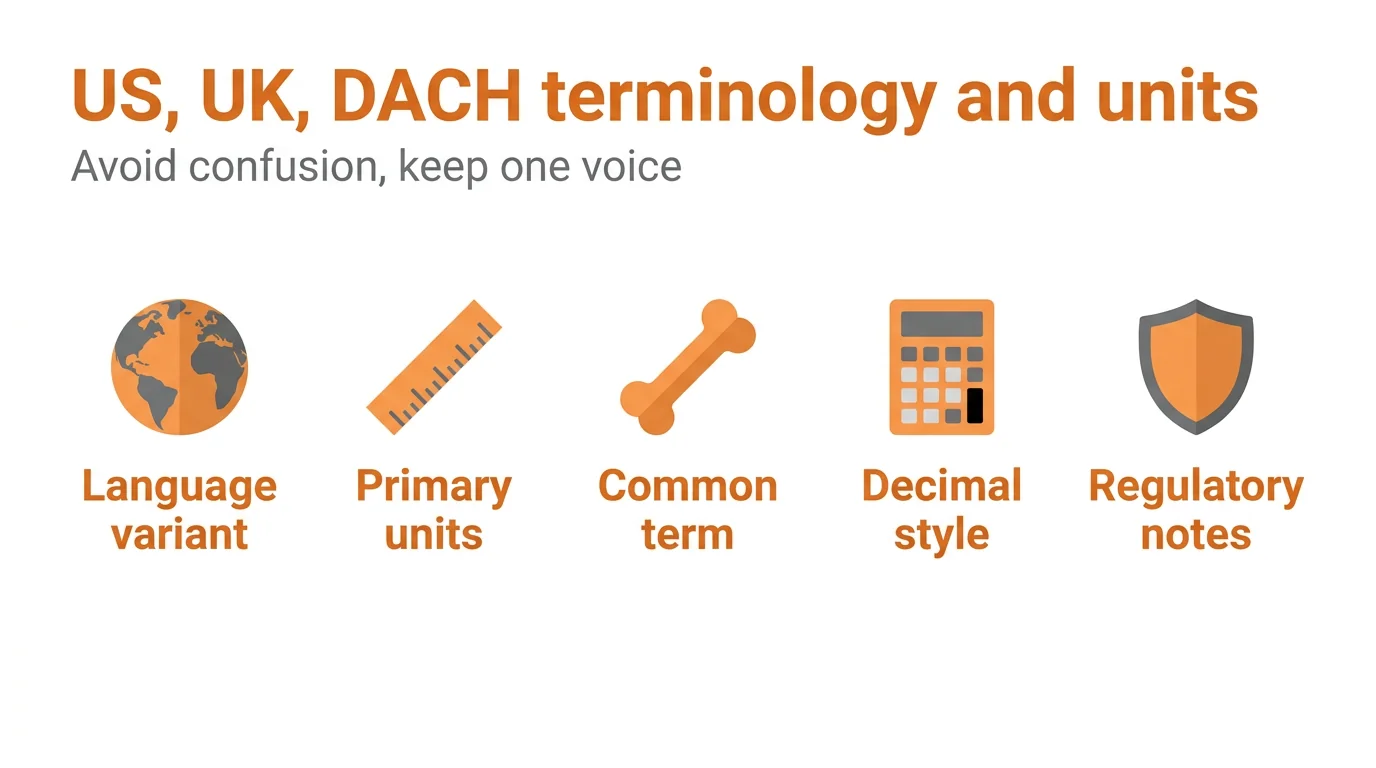
Operate with one global tone and regionalized execution. US uses en-US, imperial defaults, and US regulatory language. UK uses en-GB, metric-first with imperial references. DACH uses de-DE/AT/CH, strict metric, and different consumer protection expectations.
Risks of literal translation and voice drift
Literal translation invites ambiguity and compliance issues. “Kibble” versus “dry food,” ounces versus grams, and decimal commas confuse readers. Over-localizing humor or empathy can fracture trust. Under-localizing units or claims may reduce click-through and conversion.
Petbase handles this entire content workflow automatically - 10 SEO articles published to your blog every month - start your free trial.
Localization Framework: Terms, Units, and Intent
Term maps: vocabulary, spelling, and breed/food naming
Build a term map that fixes spelling, synonyms, and category names by locale. Include product attributes, care terms, and sensitive terminology. Pair each canonical term with acceptable alternates to guide writers and models. This aligns language and SEO intent across locales[2].
Unit maps: weight, volume, sizing, and feeding guides
Create a conversion matrix for weight, volume, and sizing. US defaults to lb, oz, and cups; UK prefers g, kg, and ml; DACH uses g, kg, and ml exclusively. Show primary regional units with secondary conversions in parentheses to reduce errors.
Search-intent deltas: how pet parents phrase needs regionally
Audit modifiers, question forms, and problem statements by locale. US searchers often use “best” and “near me.” UK shows more “recommended” and “guide.” DACH queries favor direct nouns and utility phrasing. Align on-page language with intent patterns for each region[3].
Structured data alignment: Product, Review, and LocalBusiness
Localize Product schema with regional currency, availability, and GTIN. Use Review schema with language tags per locale. For store pages, adapt LocalBusiness details, hours, and phone formats. JSON-LD and per-locale fields may strengthen clarity for multilingual management[1]. For scalable patterns, see Programmatic SEO for Large Pet Catalogs: Safe Templates by Breed and Use-Case.
Voice Guardrails: Keep Tone Consistent Across Markets
Create a cross-market voice charter
Document tone pillars, empathy boundaries, and sentence cadence that define brand voice. Add locale notes for formality, idiom sensitivity, and compliance-safe phrasing. Include validated example paragraphs per locale and a glossary reference to reduce drift.
Reusable prompt and style tokens for writers and models
Package voice elements into short tokens: tone, pacing, reading level, empathy cues, and banned phrases. Add locale-specific tokens for units, spelling, and regulatory verbs. Enforce these within briefs, templates, and editorial reviews for consistency.
Examples: when to localize humor, idioms, and empathy cues
Keep humor sparse and opt-in. Light UK idioms may resonate domestically but confuse DACH. US empathy often prefers clear reassurance. When in doubt, choose plain language that delivers care, evidence, and next-step guidance without idiomatic load.
For deeper governance practices, review Guardrails for Brand Voice: Style, Glossary, and Review Loops for AI Content.
Quick Decision Guide
If product specs exist only in imperial/metric, then…
Publish with the region’s primary units and add conversions in parentheses. Round conservatively to avoid dosing errors. Note the source system in a short footnote. Avoid mixing decimal points and commas within a single locale.
If a term conflicts across regions (kibble vs. dry food), then…
Use the locale’s preferred primary term in headings and first mentions. Introduce the alternate within body text if search data supports it. Keep meta titles and URLs consistent with the primary term for clarity.
If regulatory wording differs (supplement claims), then…
Adopt the strictest safe phrasing as a base. Layer locale-specific claims and disclaimers via componentized snippets. Route sensitive pages through compliance review. Archive change rationales with dates and references for auditability and rollbacks.
If breed names vary or are controversial, then…
Default to recognized registry standards per market. Provide neutral descriptors and avoid inflammatory labels. Add a glossary note when terms diverge substantially. Monitor feedback and adjust the term map if confusion persists regionally.
If internal links point to global vs. regional PDPs, then…
Prefer regional PDPs using locale-aware menus and canonical rules. Ensure hreflang alternates resolve correctly. Maintain UTM standards in campaigns. Broken regional deep-links erode trust and inflate bounce due to misaligned prices and availability.
If reviews are multi-lingual, then…
Display locale-matching reviews first, with a filter to see all languages. Mark each review with lang tags. Summaries can be localized while preserving original quotes. Avoid machine-translating testimonials without clear labeling.
If search volume is thin in one locale, then…
Cluster semantically related topics and consolidate intent. Target head terms sparingly. Expand with how-to and comparison angles. Use internal links from stronger locales where policy allows. Reassess after eight weeks for traction and refinement.
Monitoring: 7-14 Days and 4-8 Weeks
Early checks: coverage, crawl, and snippet sanity
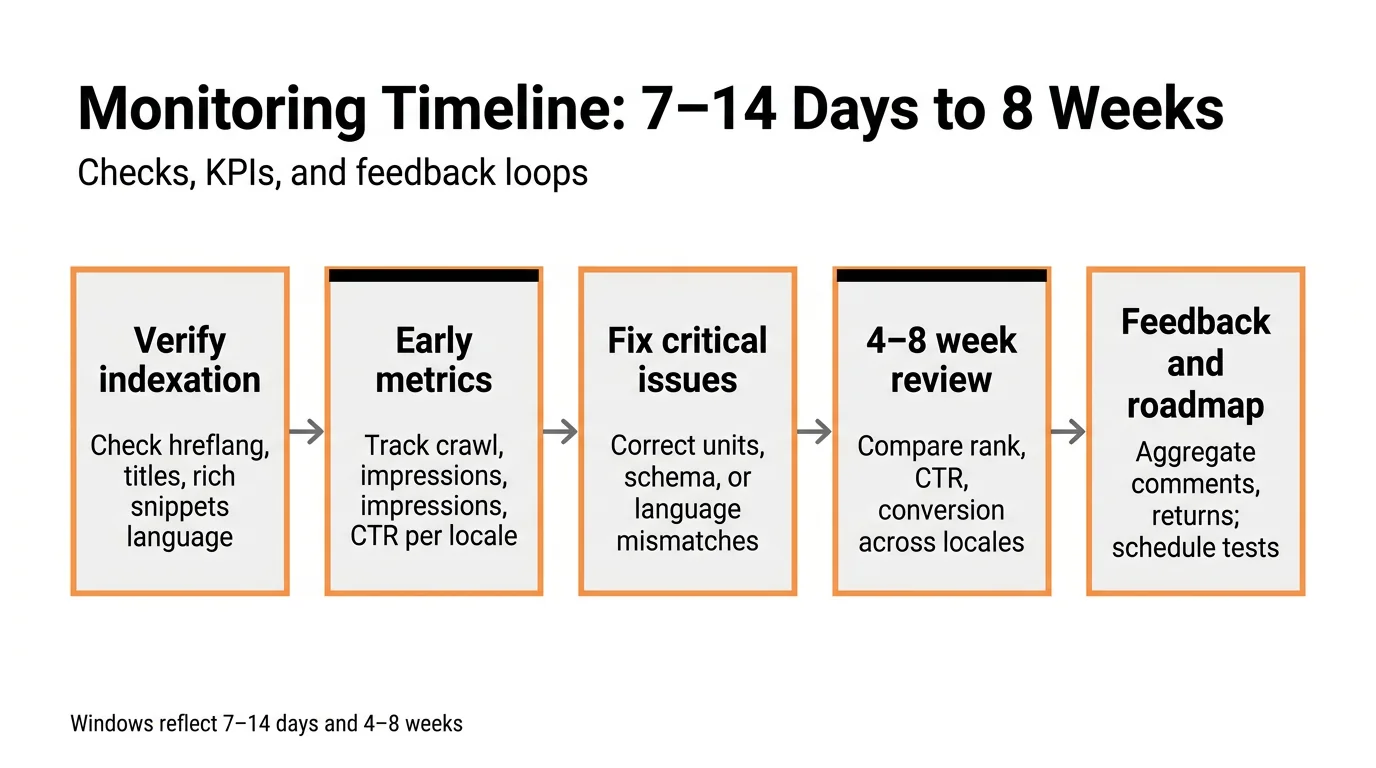
Within two weeks, verify indexation and hreflang coverage. Inspect titles, meta descriptions, and rich snippets for correct language and units. Track cannibalization between US/UK pages. Confirm that schema currency and decimal formats render regionally appropriate.
Mid-term checks: rank, CTR, conversions, and feedback loops
At four to eight weeks, compare rank and CTR by locale for prioritized terms. Monitor conversion benchmarks and return rates. Aggregate customer comments about clarity, units, and claims to refine maps. For performance reporting practices, see Proving ROI: KPIs and Dashboards for AI Content in Pet eCommerce.
Practical Safety Boundaries
Health guidance and veterinary disclaimers
Use careful language for health-related content. Prefer “may support” over prescriptive claims. Place visible disclaimers advising readers to consult qualified professionals for diagnosis or treatment. Update disclaimers per market guidance and document revision history.
Feeding and dosing conversions
State primary units per locale and include secondary conversions. Round conservatively, favoring safety margins. When dosing ranges apply, present low-to-high guidance clearly. Avoid ambiguous tablespoons versus measuring cups. Specify conversion factors used and maintain consistency sitewide.
Regulatory and warranty language per market
Localize consumer rights, returns, and warranty text. Align advertising claims with market rules and self-regulatory codes. Preserve records of approvals and legal notes. Use structured components so updates propagate safely across all localized templates.
Evidence Status
What industry data suggests about localization impact
Research in localization indicates that aligning content structure, language, and on-page SEO with regional expectations may improve usability and search visibility for multilingual sites, especially when schema and navigation are localized thoughtfully[3][1].
Where evidence is mixed and how to test safely
Impacts vary by niche, competitive density, and brand authority. Studies recommend benchmarking and iterative testing before wide rollout. Conduct A/B or phased deployments and measure localized schema, copy, and navigation effects across markets[4].
Implementation Checklist
Term and unit maps, hreflang, and schema variants
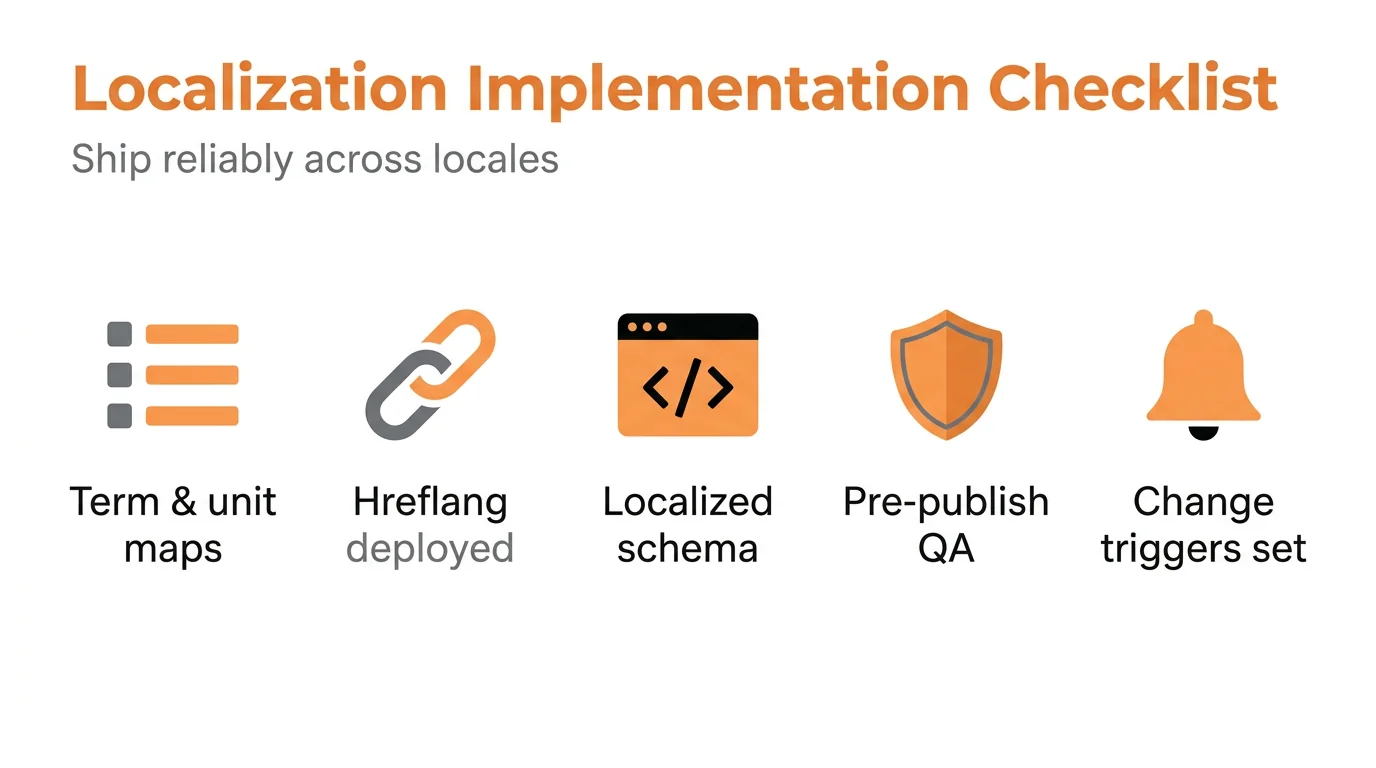
Finalize term and unit maps per locale with owner and update cadence. Implement hreflang across US/UK/DACH pages. Localize Product, Review, and LocalBusiness schema with correct currency, availability, and language tags for structured data for pet brands.
QA workflows, logs, and rollback plan
Establish pre-publish checks for terminology, units, and schema validation. Maintain change logs, review notes, and versioned snippets. Define triggers for rollback when metrics or compliance flags regress. Teams may use Petbase AI to automate locale variants and structured updates.
Frequently Asked Questions
Should I translate pet content or localize it for each region?
Localization may outperform direct translation because search behavior, terminology, and regulations vary by region. Adjust terms, units, and schema while preserving core voice. Validate with pilots and measure rank, CTR, and conversions before scaling.
How do I handle measurement units for feeding guides across US/UK/DACH?
Provide primary units for the region and include secondary units in parentheses. Use consistent conversion factors and round responsibly to avoid dosing errors. Document your method, and apply it uniformly across guides, labels, and FAQs.
Do I need separate schema markup for each locale?
Yes, evidence suggests per-locale schema with localized currency, availability, and language tags supports clarity. Pair with hreflang and consistent canonical rules. Validate in Rich Results Testing and re-check after publishing updates.
How can I keep brand voice consistent in multiple languages?
Create a voice charter with tone pillars, example phrases, do/don’t lists, and locale notes. Enforce via briefs, prompts, and editor checklists across all markets. Maintain a shared glossary and log exceptions for transparency.
What are common pitfalls in multilingual pet SEO?
Literal translations, mismatched units, missing hreflang, and unlocalized product claims are frequent issues. A term map and structured QA may reduce these risks. Monitor snippets, reviews, and feedback loops to correct early.
Conclusion
Multilingual pet SEO thrives when language variants, regional terminology, measurement units, and structured data align under a single voice. Build term and unit maps, enforce voice guardrails, and instrument monitoring. Evidence suggests careful localization may improve clarity and outcomes. Approach changes iteratively, document every decision, and keep testing. With a disciplined framework, US/UK/DACH SEO can scale without sacrificing trust, compliance, or brand identity.
References
- X Sarvinoz et al. (2026). TRANSLATION AND LOCALIZATION OF E-COMMERCE PLATFORMS: A COMPREHENSIVE ANALYSIS. Ustozlar uchun. View article
- P Valli (2019). Fundamentals of localization for non-localizers. Translation and Localization. View article
- ID Volkova et al. (2018). Text localization as a task of translation. … им. И. Канта. Серия: Филология, педагогика …. View article
- F Afarinasadi (2021). Inter in Iran: theory and practice of Web Site localization. 2021 - openaccess.wgtn.ac.nz. View article