AI Rewrites That Rank: Rescuing Underperforming Pet Product Pages

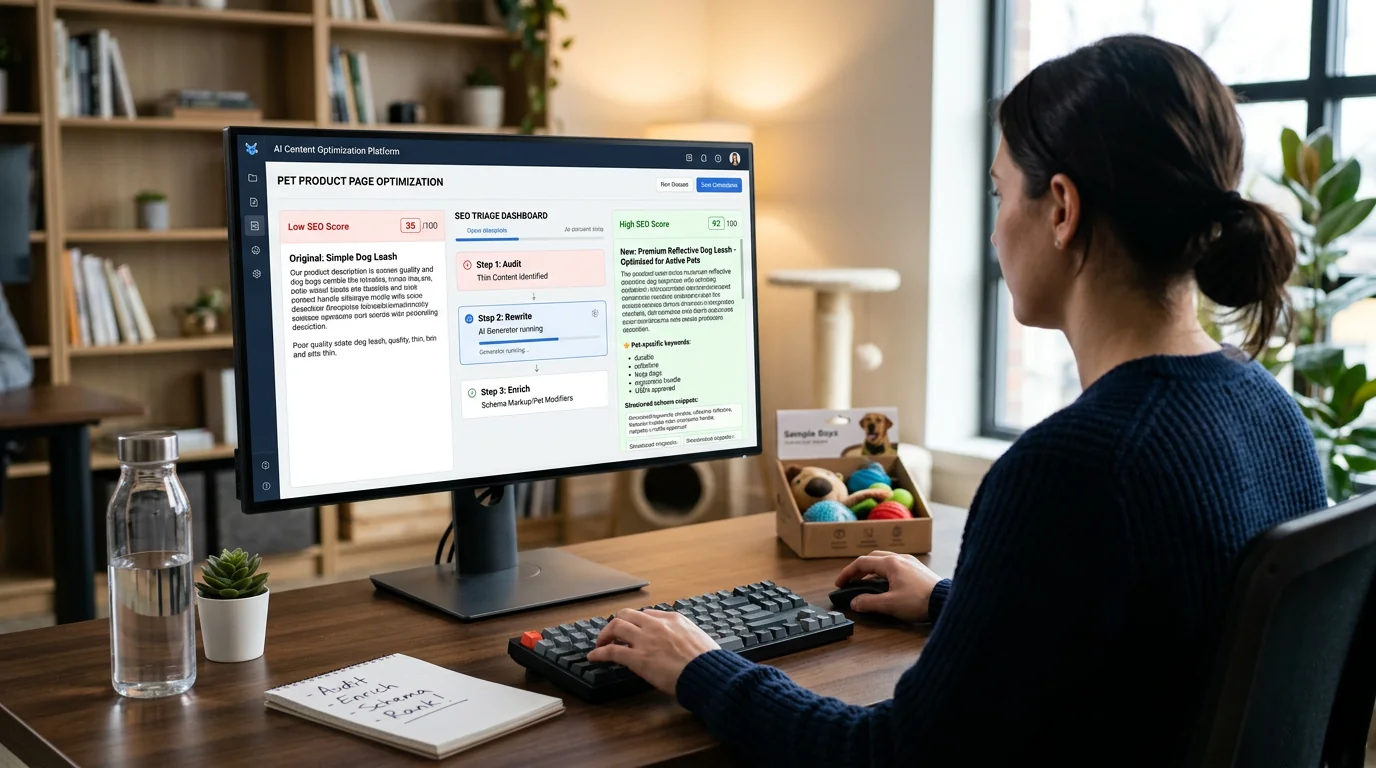
Table of Contents +
- Scenario focus: Underperforming pet product pages stuck on page 2-3
- Step-by-step triage: Audit, rewrite, enrich
- Quick Decision Guide: If X Happens, Do Y
- Monitoring: What to Observe in 7-14 Days and 4-8 Weeks
- Practical Limits and Operational Safety
- State of the Evidence: What the Data Suggests
- Rewrite Template: Example for a Dog Toy
- Technical and Content Checklist Before Publishing
- Frequently Asked Questions
- Conclusion
- References
Step-by-step triage to audit, rewrite, and enrich thin pet product pages with AI, pet-specific modifiers, and schema to improve rankings and conversions.
Your product pages work hard. Yet many stall on page two or three and never convert reliably. That plateau is fixable with focused rewrites.
Search engines reward relevance, clarity, and structured signals. Underperforming pages often lack these elements for pet audiences. In this guide, you will learn a precise triage to audit, rewrite, and enrich thin or outdated product pages using pet-specific modifiers and schema that may support stronger rankings and conversions.
Scenario focus: Underperforming pet product pages stuck on page 2-3
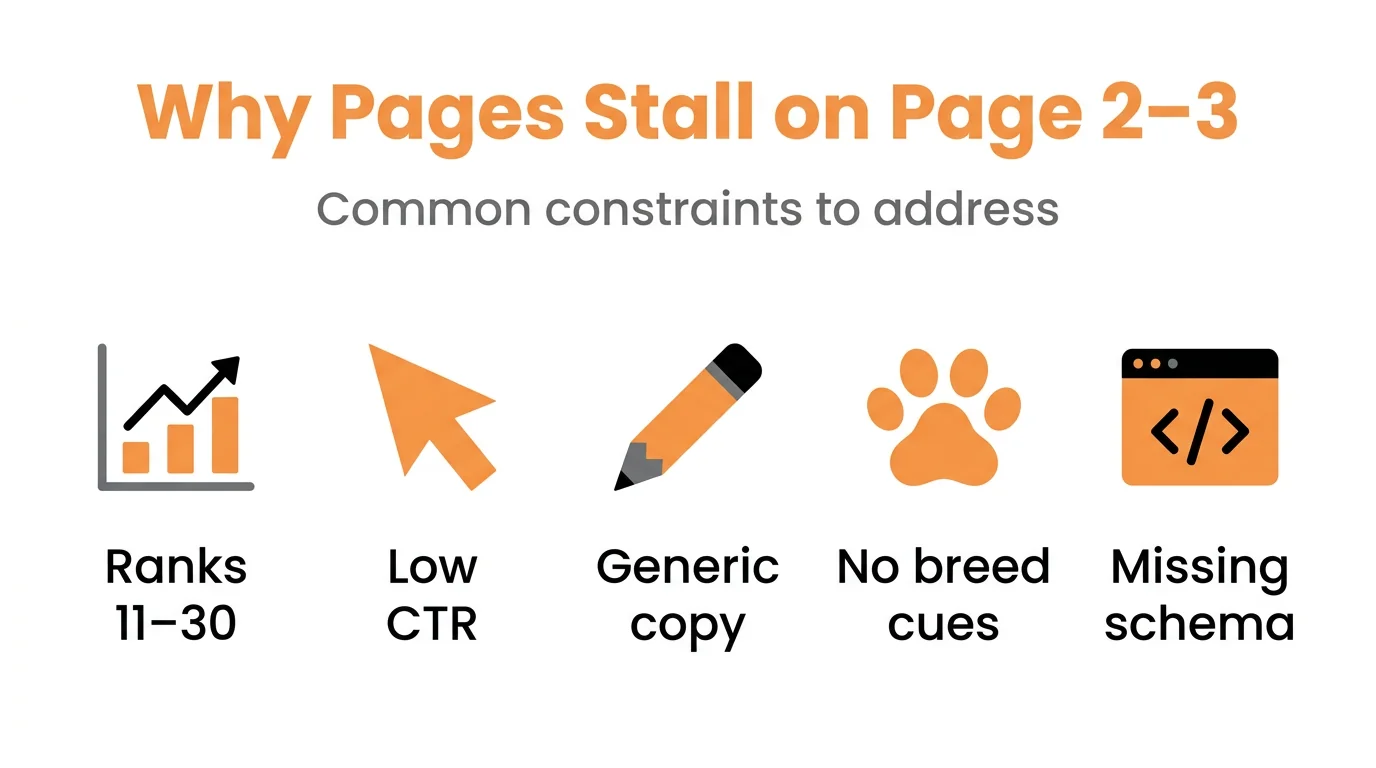
We target products that rank between positions 11 and 30. These pages typically have some authority and impressions but low click-through rates or weak intent match. A structured intervention can earn incremental gains without risky overhauls.
Symptoms to confirm the scenario
Stable impressions with low CTR, generic copy without breed or size cues, stale reviews or images, and missing Product schema. Rankings fluctuate within page two or three. Internal anchors use broad terms, not pet-specific modifiers.
What success may look like after a targeted rewrite
Higher CTR from improved titles and meta, movement into positions 5-10, richer snippets, and increased add-to-cart rate. Queries expand to long-tail variants aligned with breed, life stage, coat type, and use context.
Petbase automates SEO content for pet stores - publishing 10 optimized articles monthly so you can focus on running your shop - start your free trial.
Step-by-step triage: Audit, rewrite, enrich
Execute this triage within 7-10 days for fast iteration. Each step isolates a risk area: gaps, intent, and structured signals. Document pre-change benchmarks, then stage updates in controlled batches.
Audit: Find why the page underperforms
Map the primary intent. Confirm one topic per URL to prevent cannibalization. Review titles, H1s, on-page copy, internal anchors, and Core Web Vitals. Evidence shows titles, content quality, and speed are key SERP factors.[4] Align rewrite priorities with AI Content for Pet Brands: Strategy, Priorities, and Playbooks. Where catalog scale complicates analysis, machine learning can assist with classification and clustering for SEO audits.[1]
Rewrite: Add pet-specific intent and modifiers
Embed breed, size, life stage, chewing strength, coat type, and indoor/outdoor cues in titles, bullets, and FAQs. Serve layered search intents without stuffing. For consistent coverage, consider guided drafting with Petbase AI.
Enrich: Schema, media, and trust signals
Add Product, Offer, Review, and FAQ schema. Replace generic images with in-context media by size or breed. Add care and compatibility guides. Build internal links from high-authority categories using precise anchors with pet-specific modifiers.
Quick Decision Guide: If X Happens, Do Y
Use this at-a-glance triage to select the narrowest fix that addresses the true constraint. Where scale necessitates templates, pair rules with spot checks.
Thin content vs. intent mismatch
If content depth is under 120 words or ignores key use cases, expand to 250-400 words with scannable bullets. Address breed, size, life stage, and scenario-of-use to match pet product page SEO intent.
Duplicate variants vs. canonical consolidation
If near-identical pages differ only by color or pack size, consolidate with a canonical to the strongest URL. Keep variant pickers and unique copy blocks for availability and UX clarity.
Missing pet modifiers vs. structured enrichment
If copy is generic, integrate pet-specific modifiers and add schema attributes reflecting size ranges and materials. Use structured FAQs to address durability, coat compatibility, or dietary sensitivities.
Weak internal links vs. programmatic linking
If the page lacks internal authority, add links from collections and guides with descriptive anchors. Consider safe programmatic patterns documented in Programmatic SEO for Large Pet Catalogs: Safe Templates by Breed and Use-Case.
Low CTR vs. title/meta adjustments
If impressions are steady but clicks lag, test titles under 60 characters featuring key modifiers and value props. Refine meta descriptions to clarify fit, materials, and returns, which may improve CTR.
Slow LCP vs. media optimization
If LCP exceeds two seconds, compress hero images, preconnect CDNs, and lazy-load below-the-fold assets. Serve WebP/AVIF and correct dimensions. Speed improvements may correlate with better SERP positions.[4]
Out-of-stock vs. preservation of ranking signals
If unavailable temporarily, retain the URL and structured data with back-in-stock notices. Offer alternates via internal links. Avoid 404s that discard accumulated signals and topical authority.
Monitoring: What to Observe in 7-14 Days and 4-8 Weeks
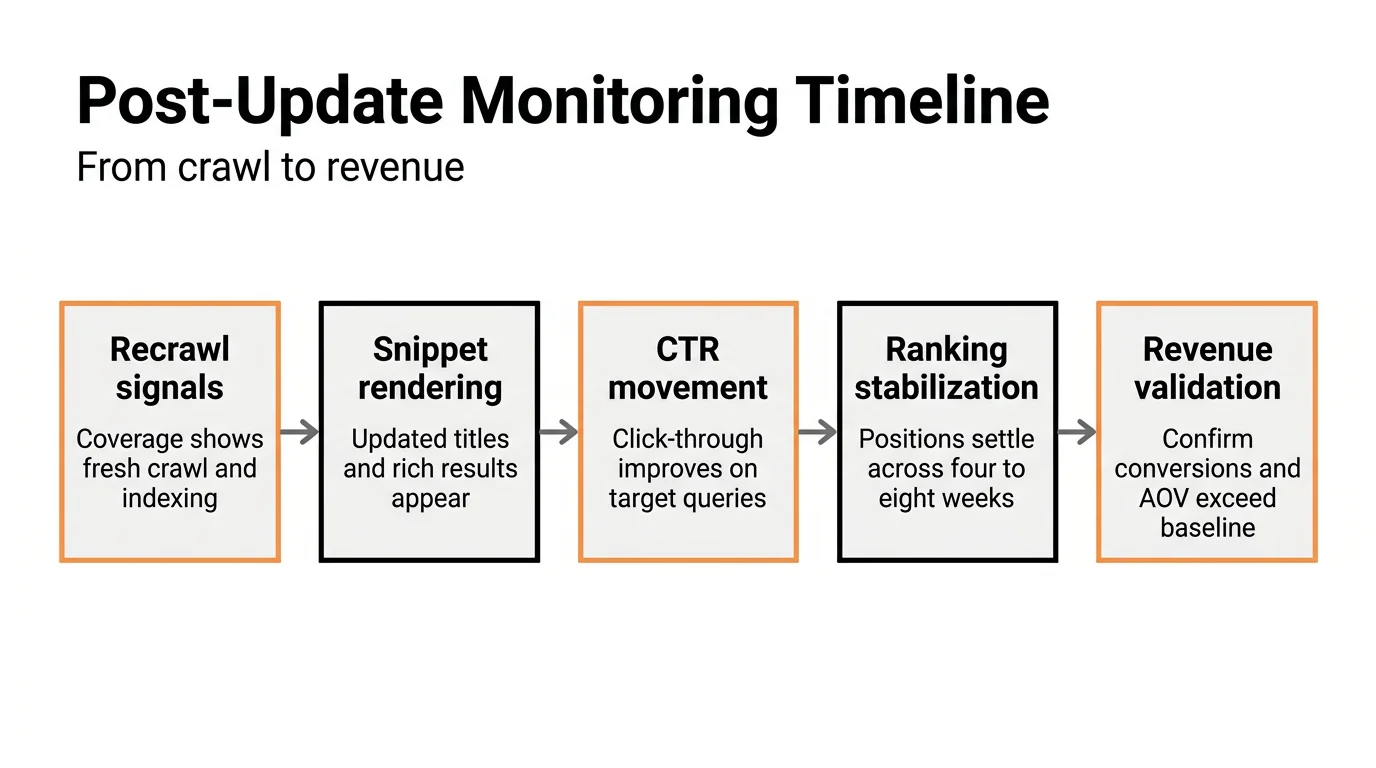
Observe early recrawl signals, then evaluate rankings and revenue stability. Avoid week-to-week overreactions. Measure impact against baseline and seasonality.
Early signals (7-14 days): indexing, CTR, coverage
Watch Search Console for “indexed, submitted” coverage, improved title rendering, and CTR lifts on target queries. Evaluate snippet enhancements from Product schema for pets and FAQs in relevant markets.
Later signals (4-8 weeks): positions, revenue, stability
Assess position shifts for primary and long-tail queries, add-to-cart rate, and refund rates by variant. Build dashboards as outlined in Proving ROI: KPIs and Dashboards for AI Content in Pet eCommerce for clear attribution.
Practical Limits and Operational Safety
Scale brings risk. Apply guardrails that protect revenue and brand trust while enabling iterative gains. Document every change for reversibility.
Avoid drastic changes without A/B tests
Test titles, primary images, and hero copy before global rollouts. Evidence indicates compound SEO factors interact, so isolate variables where possible to detect causal effect more reliably.[2]
Maintain history and safe redirects
Preserve ranking equity with 301s for consolidations. Keep legacy FAQs and reviews where relevant. Archive old assets instead of deleting, ensuring analytics continuity and seasonal reactivation options.
Compliance with pet health and safety guidelines
Avoid medical claims. Cite materials, testing standards, and supervision guidance. Include age and size recommendations. This protects users and reinforces E-E-A-T through transparent, safety-forward messaging.
State of the Evidence: What the Data Suggests
SEO outcomes vary by competition and authority. The following points summarize what current research and practitioner data indicate, with cautious interpretation.
Potential impact of pet-specific modifiers
Long-tail optimization aligned to user intent may drive incremental traffic with lower competition. Content marketing research highlights relevance and depth as core drivers of organic visibility.[3]
Observed benefits of Product schema and FAQ
Structured data may improve eligibility for rich results and enhance CTR. Studies emphasize the interplay of technical, content, and usability factors in stronger SERP outcomes.[2][4]
Risks of cannibalization and over-optimization
Creating multiple URLs for similar intents can dilute signals. Overuse of modifiers may appear manipulative. Evidence suggests clear topic-to-URL mapping and technical hygiene support sustainable growth.[4]
Rewrite Template: Example for a Dog Toy
Use this as a scaffold, then adapt by product class. Keep language specific and test-oriented. Link thoughtfully to buying guides and collections to support informed decisions.
Title, H1 and intent-oriented description
SEO Title: Durable Dog Chew Toy for Power Chewers | Non-Toxic Rubber, Medium-Large
H1: Heavy-Duty Dog Chew Toy for Strong Jaws
Description: Built for determined chewers with reinforced, BPA-free rubber. Choose sizes by jaw strength and weight. Indoor-friendly bounce. Dishwasher safe. Backed by a 60-day replacement promise for manufacturing defects.
Bullets with breed, size, and life-stage modifiers
- Fit: Medium-Large dogs, 30-80 lb, strong chewing strength.
- Breed cues: Suitable for broad-jawed breeds; pair with durable chew training tips.
- Life stage: Adult and senior; supervise adolescents during teething.
- Use case: Indoor fetch, crate enrichment, frozen treats for calm sessions.
Consider collection links like “durable dog toys” or “small-breed toys” to direct intent pathways without scattering equity.
Trust blocks: testing, materials, warranty
- Materials: BPA-free, phthalate-free rubber, third-party tested.
- Safety: Rounded edges; no sharp seams.
- Care: Dishwasher top rack; inspect weekly.
- Warranty: 60-day replacement on manufacturing defects; size-exchange support.
Tip: Add a mini hub linking to care guides, size charts, and compatibility checklists to deepen engagement and reduce returns.
Minimum viable structured data
| Property | Example |
|---|---|
| @type | Product |
| name | Heavy-Duty Dog Chew Toy (Medium) |
| image | https://example.com/images/chew-toy-medium.jpg |
| description | Durable rubber chew toy for strong chewers; BPA-free. |
| sku | DT-MED-001 |
| brand | YourBrand |
| offers | price, priceCurrency, availability, url |
| aggregateRating | ratingValue, reviewCount |
| faq | Question/acceptedAnswer pairs about fit, safety, cleaning |
Technical and Content Checklist Before Publishing
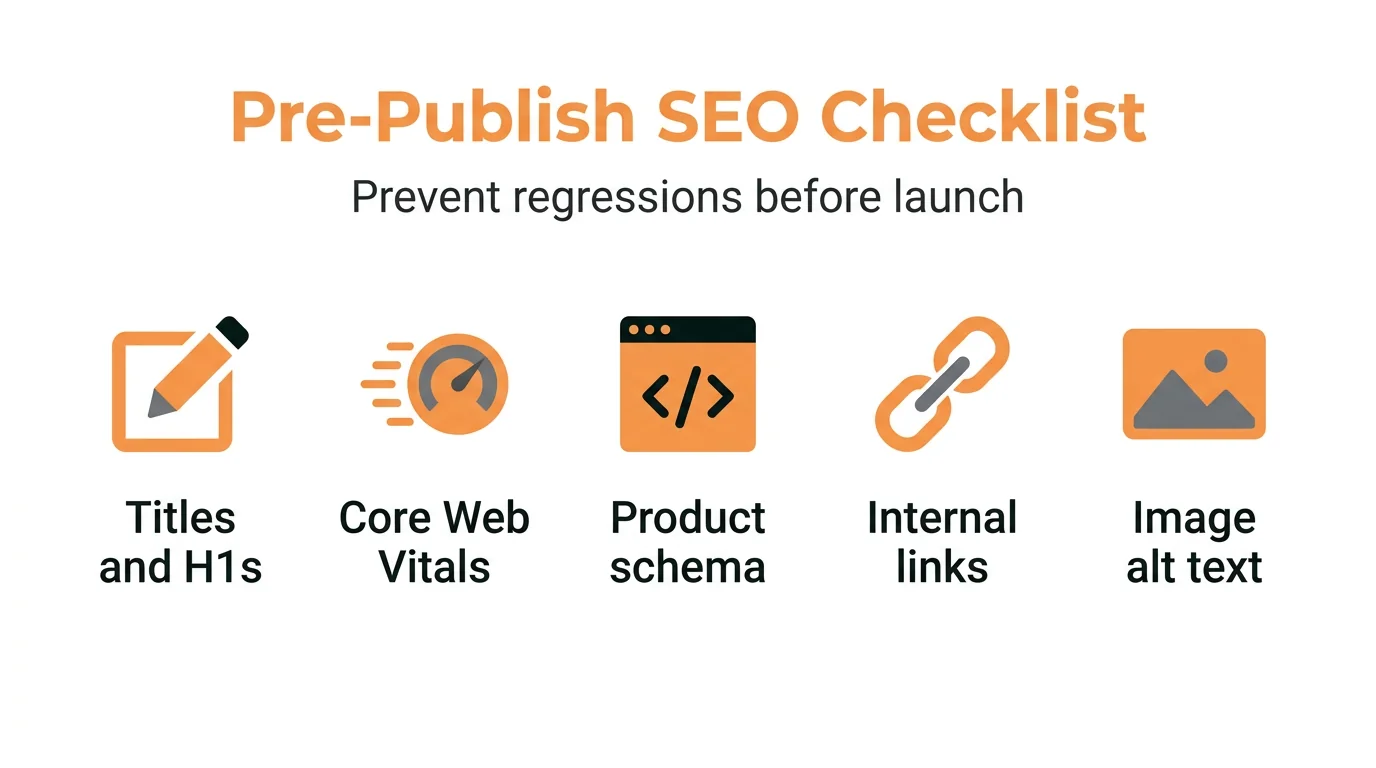
Run this last-mile checklist to avoid regressions. Coordinate with merchandising and customer support so the narrative matches fulfillment realities.
Content and UX
- H1 aligns with intent; bullets include pet-specific modifiers.
- Images show in-context use by size; include zoom and dimensions.
- Mini hub: care guide, compatibility chart, and size guide interlinked.
- Internal links follow the patterns in From Blog to Basket: Internal Linking Blueprints for Pet eCommerce.
SEO on-page and structured data
- Title under 60 characters; meta description under 155 characters.
- Canonical set; pagination correct for variants.
- Product schema for pets, Offer, Review, and FAQ validate with no errors.
- Alt text includes size and material context for AI content optimization.
Performance and media
- LCP under two seconds; CLS under 0.1; TTFB optimized.
- Serve next-gen formats; preload hero; lazy-load below the fold.
- Ensure responsive breakpoints for images and video transcripts for accessibility.
Frequently Asked Questions
What pet-specific modifiers should I add to a product page?
Consider breed, size, life stage, coat type, chewing strength, dietary sensitivities, and indoor/outdoor use. Evidence suggests these modifiers may improve relevance and long-tail rankings. Integrate naturally into titles, bullets, FAQs, and schema.
How long until AI rewrites may impact rankings?
Early signals may appear in 7-14 days, with more reliable trends in 4-8 weeks after recrawl and internal link updates. Timelines can vary by site authority and competition. Track CTR, positions, and conversions.
Should I create separate pages for sizes or use variants?
If search demand exists for size-specific queries with distinct intent, a dedicated page may help. Otherwise, use variants with clear anchors, canonicalization, and targeted on-page copy. Preserve consolidated equity where possible.
Do I need Product schema on every pet product page?
Product schema with offers, reviews, and images may support eligibility for rich results. Ensure data accuracy and compliance with merchant and review guidelines. Validate regularly and update when pricing or availability changes.
How can I prevent keyword cannibalization after rewrites?
Map one primary topic per URL, consolidate duplicates, use canonical tags where needed, and differentiate modifiers and internal anchors to keep intent distinct. Monitor queries and adjust content clusters to maintain clarity.
Conclusion
Underperforming pages rarely need reinvention. They need disciplined pet product page SEO: a targeted audit, intent-aware rewriting with pet-specific modifiers, and structured enrichment. Pair these actions with prudent testing and monitoring. Link strategically from categories and guides to strengthen topical signals. As changes settle, expand templates across similar SKUs with care. This repeatable triage may help move products off page two and into baskets-sustainably and safely.
References
- G Matošević et al. (2021). Using machine learning for web page classification in search engine optimization. Future Internet. View article
- R Tatikonda et al. (2024). Importance of Search Engine Optimization in Digitalization-A Comprehensive Analysis. … on Advances in …. View article
- N Papagiannis (2020). Effective SEO and content marketing: the ultimate guide for maximizing free web traffic. 2020 - books.google.com. View article
- M Iqbal et al. (2022). Search engine optimization (seo): A study of important key factors in achieving a better search engine result page (serp) position. Sukkur IBA Journal …. View article